 Aslan Can Delibas
On the night of June 18, the Iskece courthouse in Greece became the latest battleground in the Turkish minority's decades-long struggle for their rights in Western Thrace.
After a marathon 14-hour hearing that stretched nearly till midnight, the court sentenced four prominent Turkish activists to 17 months in prison in what is being condemned by the community as yet another attack on the minority by Greek authorities and institutions.
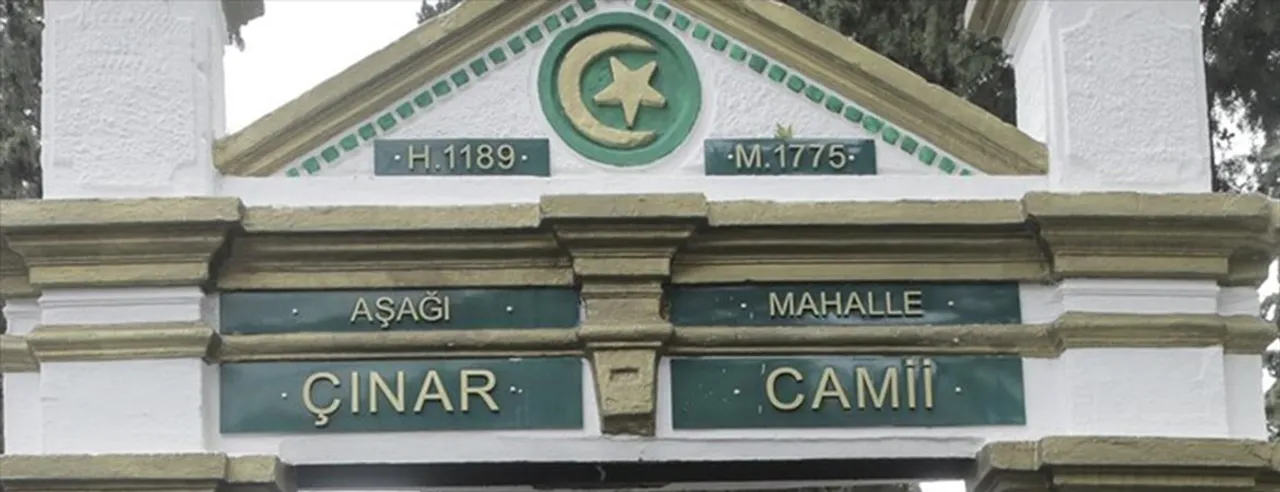
Their so-called crime: Blocking the entry of state-appointed muftis into the Cinar Mosque on October 11, 2024.
Later, the Iskece Single-Member Criminal Court of First Instance suspended and converted the sentences of Huseyin Baltaci, Ozan Ahmetoglu, Bahri Belco and Murat Kose to financial penalties.
Yet neither the verdict nor these technical details changed what truly mattered for the Western Thrace Turks gathered outside the courthouse.
The defendants' lawyers announced they would appeal the ruling and, if necessary, take the case to the European Court of Human Rights.
Western Thrace – bordering Bulgaria, Türkiye and Macedonia – is home to an estimated 150,000 ethnic Turks, who were placed under Greek jurisdiction under the 1923 Treaty of Lausanne. The treaty explicitly states that the community would preserve its identity, faith, language and institutions under the protection of international law.
But what has unfolded since then is a systematic denial of the Turks’ rights and a policy of erasing their very identity by the Greek state, from shutting down Turkish-language schools, to confiscating properties and banning the use of the word ‘Turkish’ in association names.
Huseyin Baltaci, one of the accused and a former president of the Western Thrace Turkish Minority Graduates Association, says that the latest case is not just about four individuals but the entire community.
“This is not (just) the case of Huseyin, Ozan, Murat or Bahri. This is the case of the Turks' struggle for existence.
Those seated in the defendant's chair today may be us, but what is truly on trial is the will of the Western Thrace Turks," he tells TRT World.
Western Thrace is a historically Turkish region where ethnic Turks comprise approximately a third of the population.
In 1913, the Turks of Western Thrace established what is considered the first Turkish republic in history, long before modern Türkiye was founded.
Flashpoint Cinar Mosque
The 18th-century mosque in the city of Xanthi is named after a plane tree -- Cinar in Turkish -- at the entrance and is one of the most prominent in Western Thrace.
On the morning of October 11, 2024, three muftis appointed by the Greek government, in open disregard for the sentiments and will of the Turkish people, arrived at the Cinar Mosque in Iskece to lead Friday prayers.
They were met with protest by the minority community and were not allowed to enter.
The Treaty of Lausanne guarantees the Turks of Western Thrace the right to elect their own religious leaders, under the protection of international law.
Yet the Greek state has effectively suspended this clear treaty provision for decades, attempting to impose its own muftis on the community through bureaucratic pressure.
Baltaci describes the protest of October 2024 as “the conscience of a people that had been suppressed for decades, finally making itself heard”.
Emphasising that the Athens-appointed muftis hold no legitimacy in the eyes of the community, Baltaci states that the stance the congregation took at the mosque that day was yet another demonstration of the minority’s determination in its struggle for rights.
"Our community's response was unequivocal and legitimate…What we stood against was this political provocation, carried out under the guise of worship and the sacred,” he says.
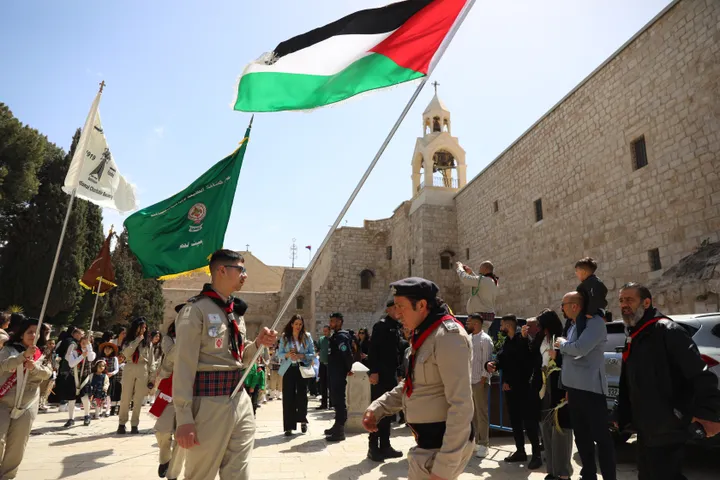
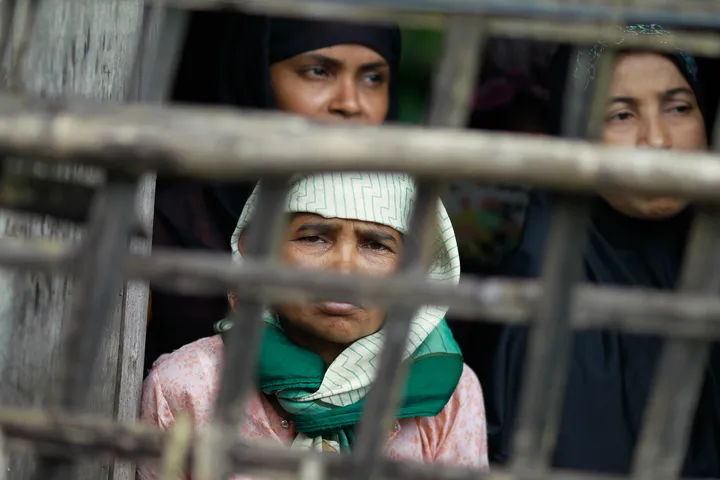

Underlining that the 17-month prison sentences handed down by the court cannot be explained by any legal logic, Baltaci argues that Athens has turned the judiciary into an instrument of punishment.
Stating that the struggle for rights cannot be criminalised, he lays bare the ideological underpinnings of the court's decision:
"This verdict is openly political. You cannot dispense justice by declaring those who seek their rights to be criminals. The principles of democracy and the rule of law cannot be sacrificed to political calculations. We used no violence, nor did we disturb public order. We simply defended the rights of our people that have been usurped.”
In April this year, Türkiye also issued a strongly worded statement calling on Greece to uphold the rights of elected Turkish minority religious leaders in Western Thrace.
Ankara has been the most vocal critic of Greece’s treatment of the Turkish community, and the issue has long been a sore point in Turkish-Greek relations.
Baltaci also called out Greece's hypocrisy, noting that it seeks to defend democratic values as an EU member while disregarding international law and the European Convention on Human Rights (ECHR).
“The rule of law, human rights and democracy are the very foundations of the European Union. If these values are truly universal, they must apply to the Western Thrace Turks as well," he adds.
A mockery of justice
Ozan Ahmetoglu, a former president of the Iskece Turkish Union and another defendant in the case, also sees the events at the Cinar Mosque as a reflection of the minority community's instinct to stand up for its faith and rights.
Criticising the verdict handed down by the Greek justice system, Ahmetoglu argues that the court has not only departed from its legal foundations but has also been instrumentalised to bring the minority into line.
He also denied Athens' allegations of violence and obstruction of worship.
"The allegation that we obstructed religious worship does not reflect the truth; it was not us but the arrival of the state-appointed muftis at the mosque that interrupted the Friday prayer…there were peaceful and democratic protests, but no physical intervention or violence of any kind took place whatsoever.”
He pointed out that people from outside Iskece were brought to the court, including members of the FETO terrorist group, to intimidate the minority Turks and create a sense of Greek supremacy.
One of the most striking moments in the fourteen-hour trial was the contradictory stance displayed by the state-appointed mufti who took the witness stand.
Ahmetoglu recounts the stark contrast between the mufti’s written statement and his conduct in court.
"In his written statement, he had indicated that he did not want anyone to be punished over this incident and had not requested that charges be filed. Yet in court, he said the defendants should be punished as a deterrent,” Ahmetoglu says.
Stating that the true purpose of the case was not to punish what had taken place at the mosque but that it was rooted in the mufti dispute that has remained unresolved for over forty years, Ahmetoglu argues that the state intended this verdict as a warning to the minority community.
Stating that the court verdict will not deter them from their path, Ahmetoglu charts the course of the struggle ahead.
"No democratic struggle for rights comes to an end because of pressure…we will of course continue our struggle within the framework of law and democracy."
Mustafa Trampa, the elected mufti of Iskece, also underlined that behind the events at the Cinar Mosque in October 2024 lies a century-long struggle for freedom of belief.
"The events…are, in fact, a manifestation of the mufti dispute that has been ongoing since 1985. That is, the incompatibility between the will of the community and the practices of the state,” he tells TRT World.
Stating that the show of Turkish solidarity outside the Iskece courthouse represented not an individual but a collective stand, Trampa also called on the international community to speak up for the minorities of Western Thrace.
"This is not a personal matter; it is a case of existence and identity, shaped by the profound sense of belonging shown by the Muslim Turkish minority,” he adds.