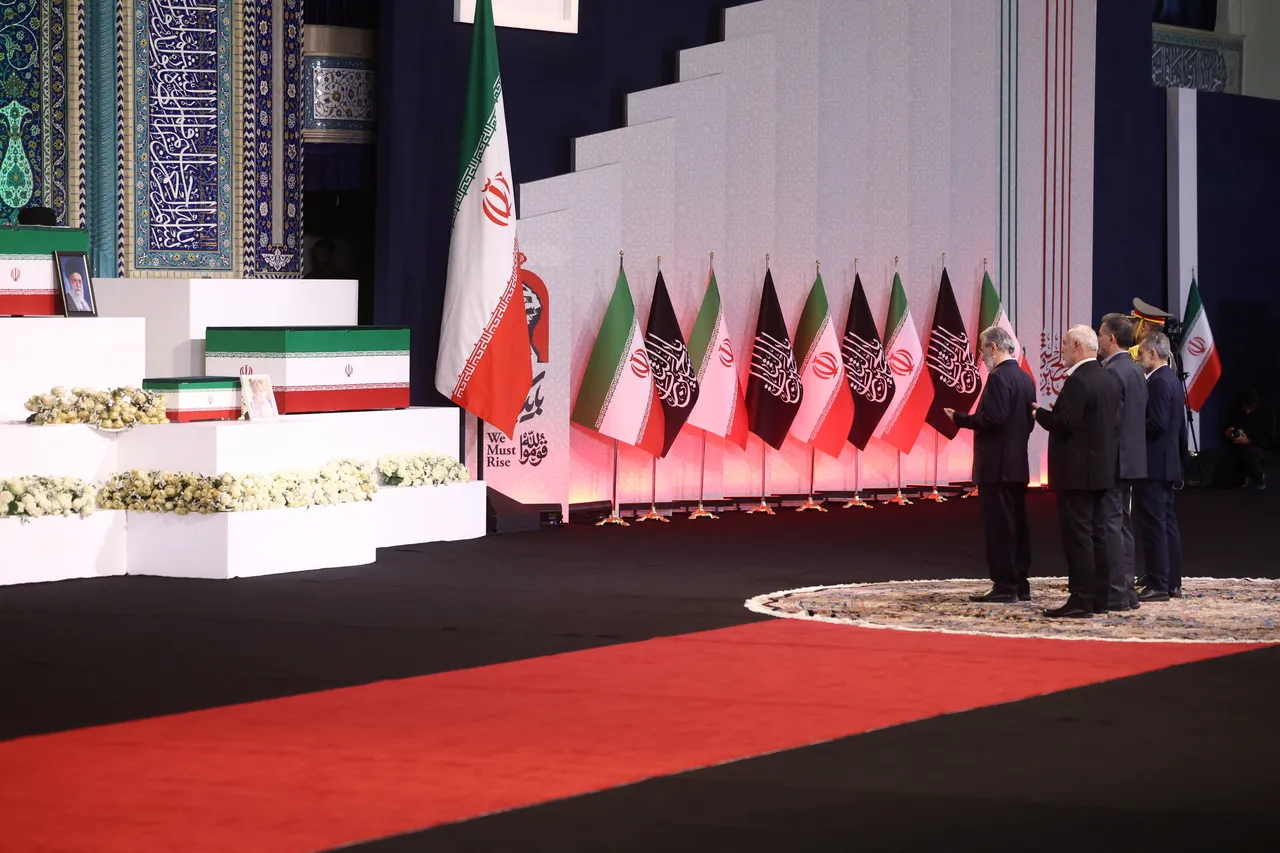
With riot police posted and barricades springing up, the venue for assassinated Iranian supreme leader Ali Khamenei's funeral resembled a fortified camp, but that did not deter crowds from gathering for a nearly 10-hour wait before it opened.
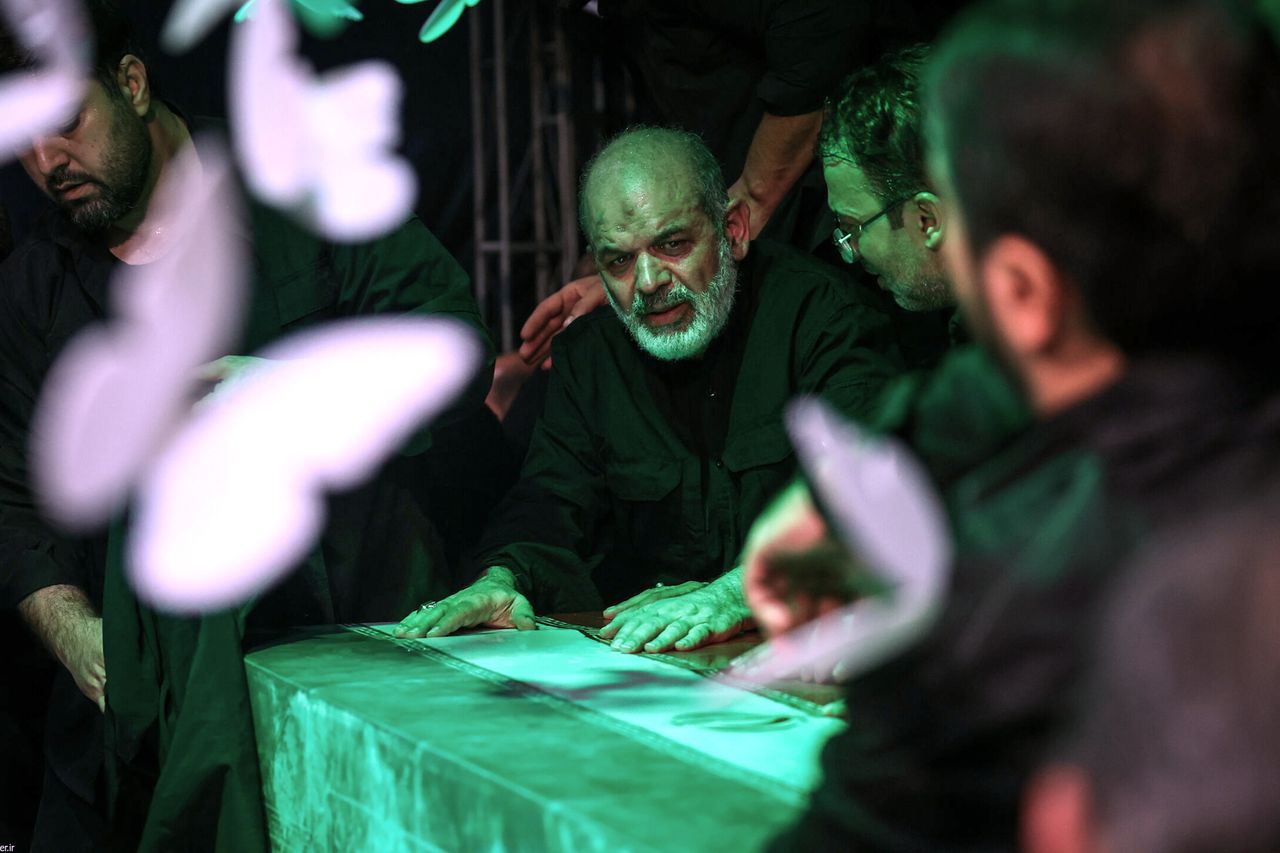
The supreme leader's remains will lie in state day and night until Monday within the Grand Mosalla complex, which opens to the public on Saturday at 6:00 am local time (0230 GMT).
Teacher Somayye Hamedi was determined to be among the first to get close to his coffin on Friday evening.
"We were told the doors might open as early as tonight," said the 44-year-old, dressed in a black chador and standing in front of the main entrance of the Mosalla.
"We want to say a final goodbye to our leader, which is why waiting like this isn't painful or difficult for us," she told AFP news agency.
Hundreds of people had already gathered outside the venue, with some weeping while others sat patiently on the sidewalk.
In the background, poems and eulogies were being recited and religious chants broadcast.
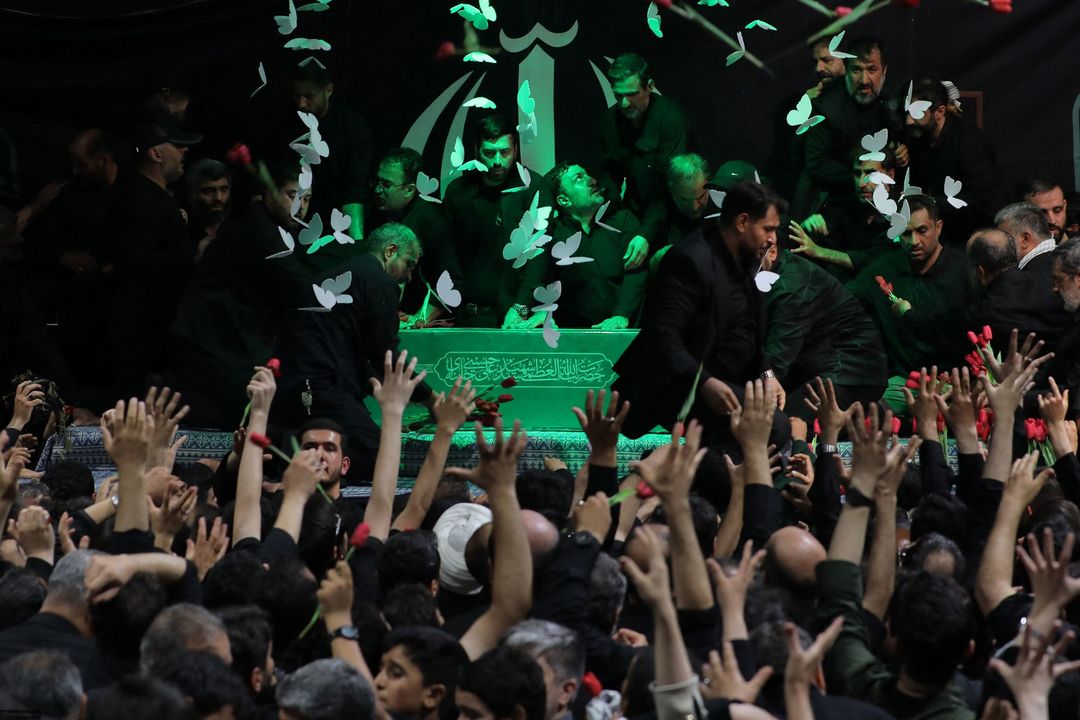
'Loss of a great man'
"Ten or 12 hours [of waiting] is nothing," said Mahdi Shokri, a 21-year-old student who described Khamenei's death as "the loss of a great man" in Iran's contemporary history.
The complex's walls are covered with large portraits of Khamenei, black flags of mourning, and red ones symbolising martyrdom and vengeance.
A massive security operation has been deployed all around, with armed personnel on high alert.
Strict security checks are required to approach the funeral site, and no vehicles are permitted within a radius of more than a kilometre.
All surrounding roads were closed in the evening several hours ahead of schedule, catching some motorists off guard.
Water trucks deployed
"Coming here is the last and only thing one can do" for Khamenei, who "sacrificed his life" for Iran, said Fatemeh Nowdehi, a 25-year-old student from northern Iran who came to volunteer and assist other visitors.
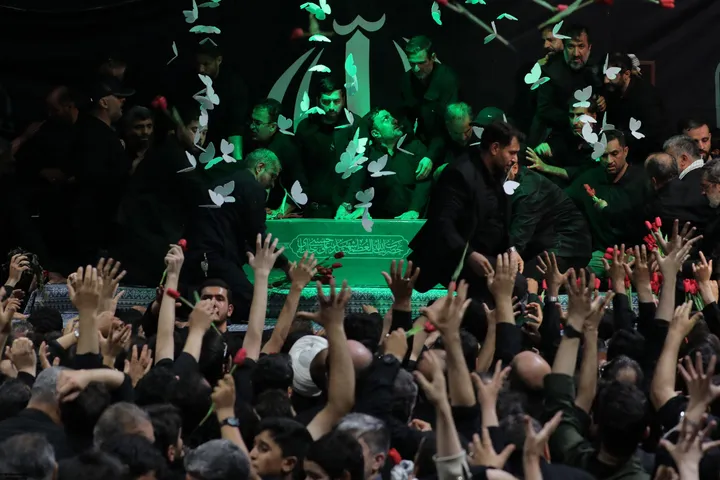
"If they suffer from heatstroke or have any other problem, we will help them... with water or food," she added, as temperatures were expected to exceed 35 degrees Celsius (95 degrees Fahrenheit) on Saturday.
In recent days, state television has been broadcasting frequent warnings on how to protect against the heat and prevent crowd crushes.
In 2020, more than 50 people died during the funeral of Qasem Soleimani — the last event comparable in terms of crowd size.
On Monday, Khamenei's remains will be carried through the streets of Tehran for a final farewell, before the funeral procession travels to the holy city of Qom the following day.
In preparation, water tanker trucks have already been positioned along the path from the Grand Mosalla to the iconic Azadi Square, ready to cool down the crowd.
Iranian authorities have planned a marathon six days of funeral ceremonies to commemorate Khamenei, who ruled Iran as its number one from 1989 until his assassination in a joint strike by US and Israel on the first day of the US-Israeli war on February 28.
After five weeks of fighting, the war is on hold following an initial Pakistan-brokered accord between Iran and the US.
Foreign guests
The coming days will be closely scrutinised for signs of Khamenei’s son, Mojtaba Khamenei, who has communicated only by written statements and is said to have been wounded in the same strikes, though the extent of his injuries was never made clear.
Other relatives killed in the strikes will also be buried, including Khamenei's infant granddaughter.
Officials and international dignitaries also paid their last respects to the man who ran the country for three-and-a-half decades.
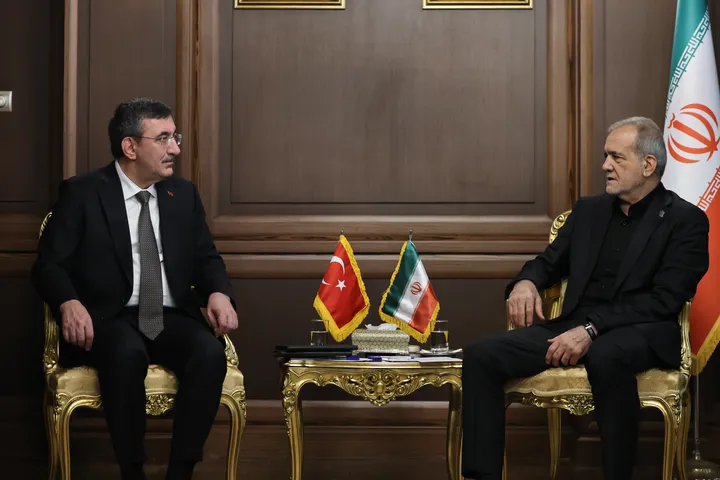
Türkiye Vice President Cevdet Yılmaz leading a delegation of senior Turkish officials to pay their respects.
Among the international guests was Pakistani Prime Minister Shehbaz Sharif, whose country has been mediating between Iran and the US, and who attended alongside the Pakistani army chief Asim Munir.
Russian ex-president Dmitry Medvedev, now deputy head of the Russian security council, attended on behalf of President Vladimir Putin.
Hamas Shura advisory council leader Mohammed Darwish represented the Palestinian resistance group, while relatives of the former leader of Lebanese group Hezbollah, Hassan Nasrallah, assassinated in an Israeli strike in 2024, were also present.