 Haluk Dogan
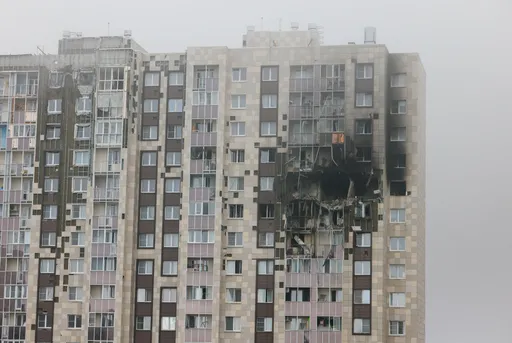
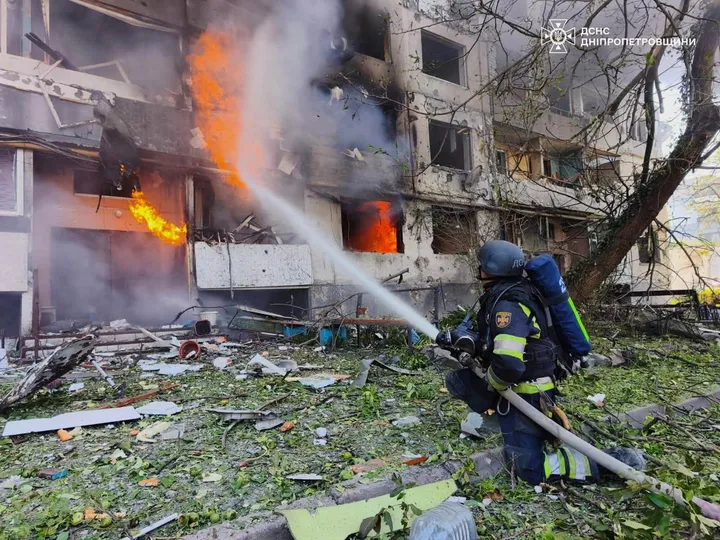
Following a long period of escalation, Russian President Vladimir Putin has ordered troops into Eastern Ukraine’s two breakaway regions, prompting immediate Western condemnation and an emergency UN Security Council meeting. While Moscow stands accused by the West of increasing acts of aggression on the Ukrainian border, the invasion was not a one-sided event.
For months, the Anglo-American bloc has been unwilling to de-escalate the crisis. Washington and London have aimed to resuscitate the case for the NATO alliance, to invalidate arguments for a separate European Union-wide security arrangement, and to weaken Russia in seeking to prevent the emergence of rival blocs in Eurasia and the Asia-Pacific regions.
However, to put it bluntly, this strategy will not reverse the decline of American hegemony.
Is the ‘transatlantic alliance’ back?
A couple of days before the invasion, Ukrainian President Volodymyr Zelenskyy expressed his disappointment at the failure of his Western “friends” to support Ukraine vis-a-vis Russian aggression. This perception is consistent with Ukrainian officials’ previous accusation that US President Joe Biden gave Moscow a “green light” to invade.
Kiev’s disappointment is completely understandable.
Giving Moscow the green light is as much about transatlantic relations as it is about West-Russia or Ukraine-Russia relations. The US’ post-World War II hegemony is predicated on its domination in continental Europe, with NATO acting as the principal mechanism for achieving American primacy.
The Anglo-American strategy now focuses on preventing European states from acting independently. The Russian threat is thought to serve that aim, pushing Europe to be in need of American and British power.
The Anglo-American bloc has never been happy with France’s attempts to establish an alternative European security mechanism, or with Germany’s relations with Russia – especially in terms of cooperation on the Nord Stream gas pipeline. The growing economic ties betweenthe European Union and China are also causes of concern for the Anglo-American alliance.
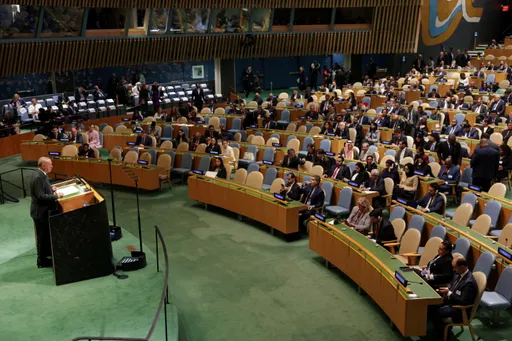
In this context, it is not surprising Biden pointed out at the 2021 Virtual Munich Security Conference: “America is back. The transatlantic alliance is back…The partnership between Europe and the United States, in my view, is and must remain the cornerstone of all that we hope to accomplish in the 21st Century, just as we did in the 20th Century.”
Eliminating Russia in the ‘Great Game’?
Neither NATO nor Western states will go to war with Russia over the invasion of Ukraine. The invasion justifies their efforts to undermine Russia economically and politically.
However, the strategy of weakening Russia is not only about its military activities in Eastern Europe. The Kremlin has long embraced an approach that emphasises Russia’s great power status in a multipolar world, in direct opposition to the US’ vision of a unipolar world in which it reigns supreme.
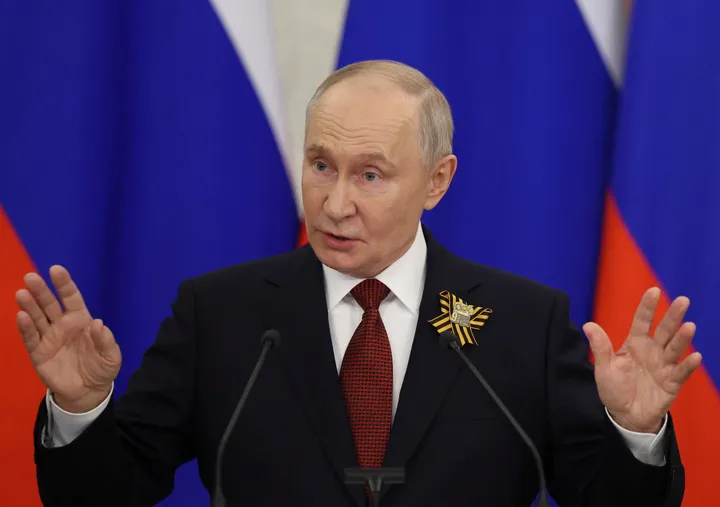



Therefore, the Anglo-American goal is not only to weaken Russia via economic sanctions, or harm Moscow’s economic interests in Europe, but also to divert its attention and energy away from the Indo and Asia-Pacific in particular, with the aim of hindering Russia’s partnerships with India and China.
India has decades-long ties with Russia, andNew Delhi recently started receiving Russian S-400 defence systems. But India is also a member of Quad – an alliance involving the US, Japan, and Australia, which aims to counter China’s growing assertiveness. Both the US and Britain have long been pushing India to cooperate with them in dealing with China.
At the last Quad meeting, the US requested that India stand by its side in the face of the Russian invasion of Ukraine. Another important topic for discussion was the growing economic and diplomatic relationships between Russia and China.
The Anglo-American bloc hopes that the Ukraine invasion will severely wound Russia, preventing it from being an important rival actor in their confrontation with China.
The question of American decline
Anglo-American domination will push Europe into submission to some extent, and Russia will be wounded. But will this reverse the unravelling of American hegemony in the long term?
As Russian President Vladimir Putin made clear in his televised speech just before the invasion, sanctions imposed by the West will not dissuade Russia from attempting to preserve its standing on the world stage.
NATO has already lost prestige and power, and the invasion of Ukraine will only worsen this situation. Increasing the Anglo-American bloc’s weight in Europe due to the conflict in Eastern Europe will also have a negative impact on their ability to contain China in Asia.
As it follows Russia’s annexation of Crimea, Russia’s invasion of Ukraine will not cause France to abandon its call for strategic autonomy for the EU entirely, nor will it change the interdependence of Europe and Russia on gas.
The Anglo-American coalition’s gas diversification efforts in favour of Europe will affect the strategic dynamics in the Mediterranean and the Middle East. Yet it is not likely to obstruct the Nord Stream 2 project, despite Washington wanting to see this. Due to the steady erosion of the US’ hegemonic position in the world economy, it appears that China will continue to be the EU’s biggest trading partner.
India has already signalled that it will remain neutral on the Ukraine crisis, which implies that Russia’s invasion of Ukraine will have little impact on the close ties between Moscow and New Delhi.
More crucially, this situation appears to have given Moscow and Beijing further reasons to act together and get closer, despite their conflicting interests in Asia. They share a common desire to challenge the Western-dominated international system. Should Russia be wounded by Western sanctions, it will rely on China in economic terms to some extent, while their collective security actions will hasten the demise of US hegemony.
In the case of the Russian invasion of Ukraine, there is no absolute winner. Indeed, nothing will change in terms of the ongoing and gradual unravelling of global American hegemony.