 Kazim Alam
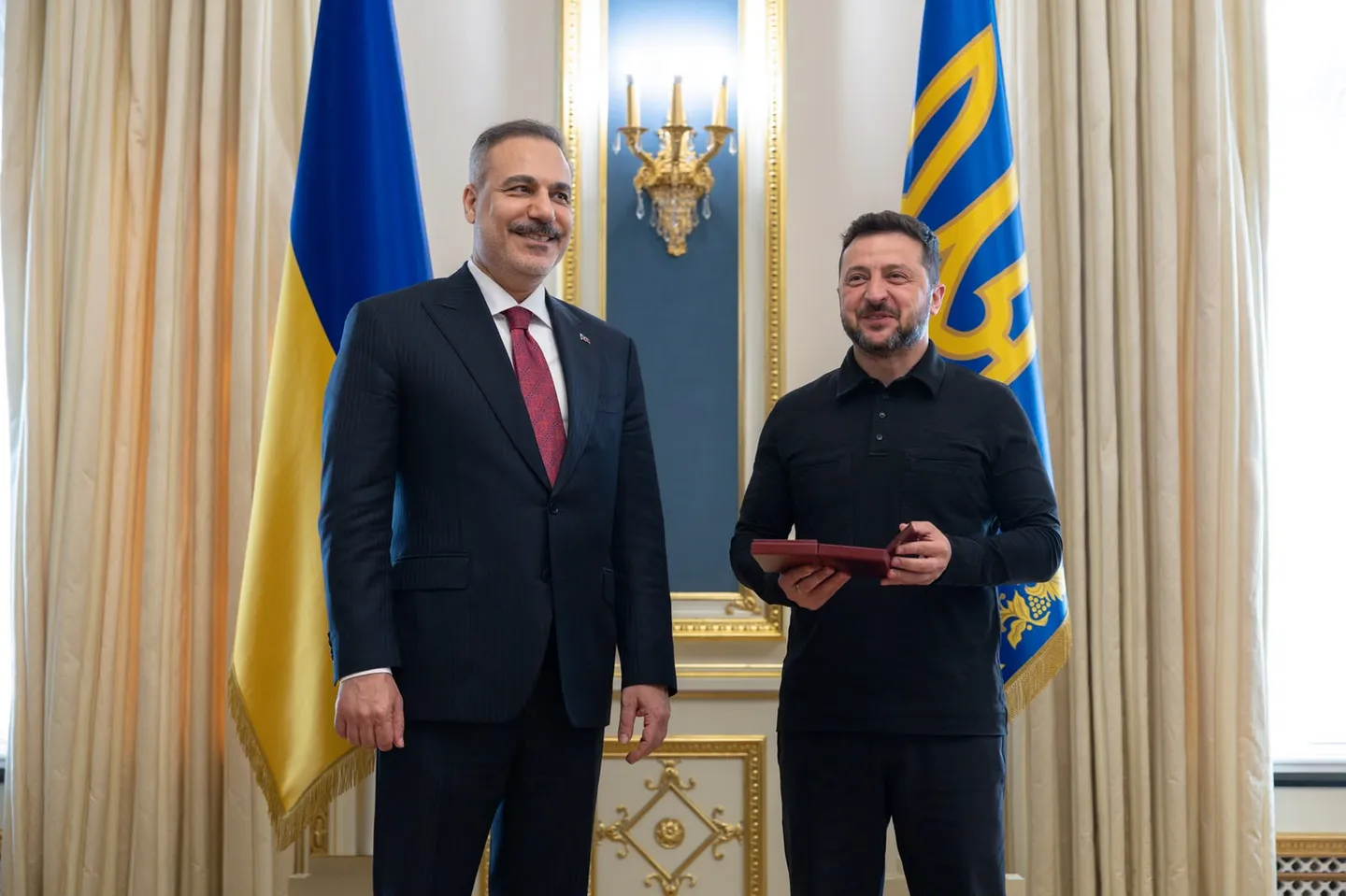
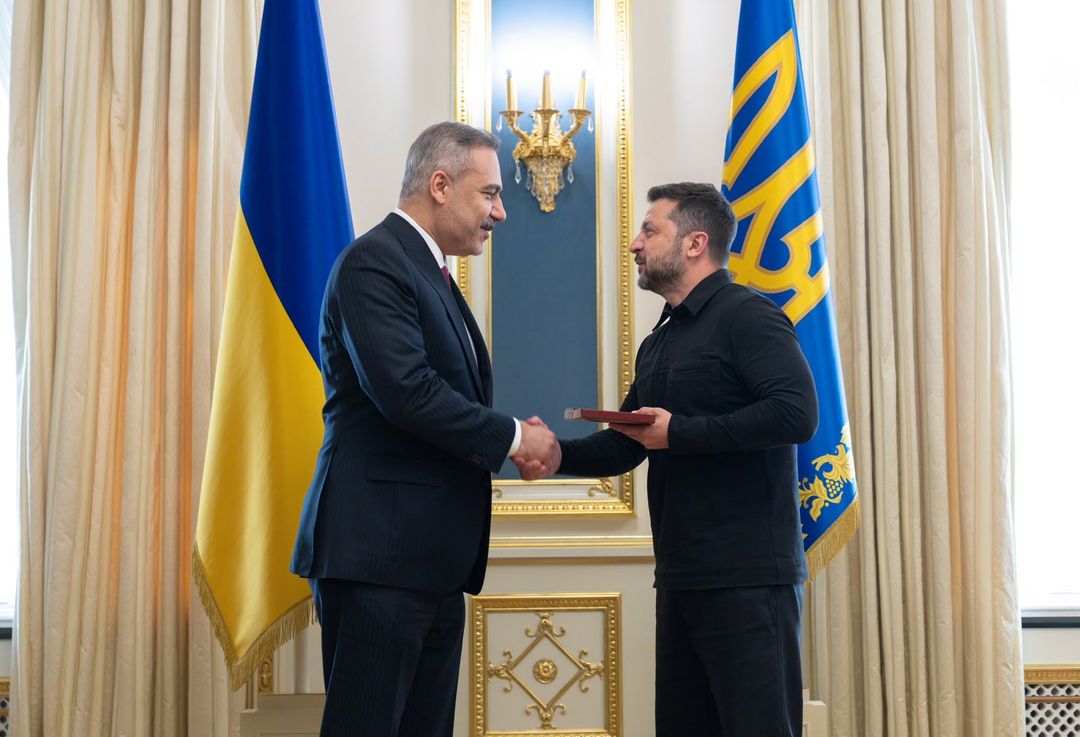
Turkish Foreign Minister Hakan Fidan’s recent visit to Kiev serves as a window to Ankara’s broader diplomatic doctrine rather than a narrow bilateral development.
Experts say the visit demonstrates Türkiye’s commitment to maintaining high-level channels during periods of conflict, protecting its enduring interests in the Black Sea, and pursuing cooperation across political, economic and security domains – all without locking itself into rigid geopolitical alignments.
Yasar Sari, director of the Haydar Aliyev Centre for Eurasian Studies at Ibn Haldun University, describes the Turkish approach to the Russia-Ukraine conflict as one of strategic autonomy exercised through “strategic ambiguity” and “hedging”.
Rather than choosing sides, Ankara maintains a flexible posture that allows it to increase its influence with multiple parties simultaneously, he says.
“This isn’t indecision but a strategic choice, reflecting (Ankara’s) position as a middle power navigating overlapping security frameworks – NATO, the Black Sea region, and economic ties with Russia,” Sari tells TRT World.
He notes that Fidan made it a point during the visit to express Türkiye’s established position on Ukraine’s sovereignty and territorial integrity, while also underscoring the strengthening of the bilateral strategic partnership.
At the same time, Fidan reaffirmed Türkiye’s readiness to facilitate the return of both parties to negotiations – a role sustained by Ankara’s continued diplomatic and economic engagement with Moscow and its decision not to join Western sanctions regimes.
This combination shows how Türkiye positions itself as an “indispensable power broker” and a “stabilising force” capable of engaging all relevant actors.
Sabir Askeroglu, a Russia and Eurasia expert at the Istanbul-based think tank Dunya Siyaseti, places Fidan’s visit within Türkiye’s concept of a “flexible balancing central power”.
However, that strategic autonomy does not mean distancing from NATO, he says.
“Rather, it refers to Türkiye’s capacity to pursue its own regional security priorities through independent diplomatic initiatives, while remaining committed to (NATO’s) core principles,” he tells TRT World.
Askeroglu says Ankara combines military deterrence with proactive diplomatic engagement, distinguishing it within NATO at a time when the US has signalled a more limited role in European security.
The Kiev meetings should also be seen as preparation for the post-war period, Askeroglu says.
Ankara’s aim is to contribute to the preservation of Ukraine’s state capacity through sustained cooperation in reconstruction, infrastructure, trade, energy and defence-industrial partnerships, Askeroglu notes.
These elements form the economic and institutional dimensions of Türkiye’s understanding of security – not as a purely military concept, but as long-term regional stability built on multiple pillars, he says.
Türkiye as a middle power
Helin Sari Ertem, professor of international relations at Istanbul Medeniyet University, says Türkiye’s conduct as a regional power has evolved within a wider global transition.
“It would be illogical to redivide the world into concrete blocks through which states would be obliged to take sides,” she tells TRT World, noting that the 21st century demands resilience through flexibility.
Emerging middle powers, such as Türkiye, operate with strategic autonomy, investing in open communication channels with diverse actors rather than confining themselves to fixed ideologies or blocs, she says.



Ertem invokes the idea of a “world of variable geometry”, in which states establish multi-sized, multi-tasked alliances according to specific needs.
Türkiye has exemplified this possibility over the past four and a half years by keeping communication lines open with all sides in pursuit of peace in the wider Black Sea basin.
This flexibility, rather than any shift towards one party or another, defines the doctrine on display in Kiev, she says.
Teoman Ertugrul Tulun, an Ankara-based political analyst at the Eurasian Research Center, describes the evolution of Türkiye’s approach as a maturation “from reactive crisis management into a proactive peace framework generator”.
“Rather than adopting a bloc-centred approach, Ankara continues to pursue a pragmatic diplomacy that emphasises regional ownership, de-escalation, and constructive engagement,” he tells TRT World.
He points to Ankara’s push to reactivate the Istanbul Framework – diplomatic groundwork laid during the 2022 Russia-Ukraine peace negotiations to end the ongoing conflict – as concrete evidence of this proactive orientation.
Responsible regional stewardship
Beyond the immediate context of the visit, experts converge on the centrality of the Black Sea – a crucial body of water between Europe and Asia touching six countries, including Türkiye, Ukraine, and Russia – to Ankara’s long-term doctrine.
Sari highlights Fidan’s emphasis on the unacceptability of attacks on ports and commercial vessels “under any circumstances”.
This position serves Türkiye’s national security and economic interests by safeguarding vital shipping lanes and asserts Ankara’s role as regional custodian and guardian of the Montreux Convention, the 90-year-old agreement which reaffirmed Türkiye’s sovereignty over the Turkish Straits as the country’s internal waters.
Askeroglu recalls the Black Sea Grain Initiative – a Türkiye-brokered agreement in 2022 allowing Ukrainian grain exports – as one of the most significant diplomatic efforts to limit the economic fallout of the Russia-Ukraine conflict.
He notes that ongoing strikes on ports and maritime assets undermine regional trade and energy security, reinforcing the need for sustained diplomatic engagement to reduce costs for all parties.
Tulun frames the Black Sea as a “vital strategic corridor” for global energy and food security.
Türkiye’s long-term strategy centres on keeping the sea a “stable, rules-based maritime space” rather than an arena for “great-power confrontation”, he says.
Practical proposals advanced during the visit – such as measures to protect energy infrastructure and commercial navigation – form part of broader confidence- and security-building efforts, he notes.
Tulun highlights Türkiye’s offer to lead the maritime security component of future arrangements for the region, while firmly upholding the Montreux regime.
The move reflects what he terms Türkiye’s “responsible regional stewardship” – a geopolitical concept in which a major state takes on the responsibility of maintaining stability within its geographic neighbourhood.
“This approach prevents the over-internationalisation of the basin while insulating critical trade corridors from land warfare,” Tulun says.