 Ibrahim Karatas
Türkiye, Greece and Greek-administered Southern Cyprus are neighbours in the Eastern Mediterranean, and their relations have long been marked by tensions over a range of unresolved issues.
With little progress towards resolving these disputes, friction is likely to persist. Greece and the Greek Cypriot administration have succeeded in internationalising some disputes with Türkiye, making a lasting settlement harder, while their growing military alignment with Israel risks further complicating relations.
The Türkiye-Greece relationship is burdened with several chronic disputes that must be settled before normalisation is possible.
Both countries currently hold six nautical miles of territorial waters in the Aegean. Greece wants to extend them to twelve, citing the law of the sea, while Ankara regards such a step as a casus belli because it would cut Türkiye off from waters it now uses.
Closely linked to this is the dispute over the continental shelf and exclusive economic zones (EEZs). The two sides have never agreed on how to delimit their maritime boundaries.
Ankara rejects Greece's position that islands close to the Turkish coast should generate maritime zones in the same manner as the mainland, arguing that this would disproportionately restrict Türkiye's continental shelf.
They also disagree over sovereignty over small Aegean islands and islets, which both claim. Greece further asserts a national airspace (FIR) of ten nautical miles even though its territorial waters extend only six, an evident inconsistency.
In addition, the Lausanne (1923) and Paris (1947) treaties provide for the demilitarisation of several Eastern Aegean islands and the Dodecanese, yet Greece has stationed troops and weapons on them.
The Cyprus question
Türkiye does not recognise the Greek-administered Southern Cyprus as representing the entire island because of the unresolved Cyprus conflict. When the Republic of Cyprus became independent in 1960, the Greek majority (80%) and the Turkish minority (20%) shared power, generally at a 70/30 ratio.
The Greek side considered this arrangement unfair and tried to forcibly reduce the Turks to minority status.
The dispute escalated into violence, and a coup backed by the Greek military junta ousted Makarios and declared the island united with Greece. Turkish forces intervened and divided the island, with the north becoming a home for Turkish Cypriots. The Turkish Republic of Northern Cyprus (TRNC) was proclaimed in 1983.
International efforts to resolve the Cyprus problem followed. The 2004 Annan Plan, which envisaged two federal states under a single sovereign Cyprus, might have solved it, but the Greek side rejected it.
Although the EU said it would not admit the Greek-administered Cyprus until the issue was settled, the country became a member just a week after the rejection.
One last dispute worth noting concerns Cyprus's offshore gas and maritime zones. The Greek-administered Southern Cyprus claims exclusive ownership of any oil and gas found in the island's waters, whereas Türkiye insists that Turkish Cypriots have equal rights to these resources.
At present, none of the major or minor problems between Türkiye, Greece and the Greek-administered Cyprus has been resolved.
The two Greek states have exploited their EU membership to have the Union adopt their disputes with Türkiye as its own, so maritime zones, the continental shelf and Cyprus's unity now involve Brussels as well. Greek veto power and pressure within the EU are clearly one reason Türkiye's accession process has slowed.
Yet no step against Türkiye is as dangerous as a military alliance with Israel. Israeli officials have called Türkiye an enemy since the fall of the Assad regime and have openly threatened to attack it.
As part of an effort to contain Türkiye, Israel, the Greek-administered Southern Cyprus and Greece agreed at their tenth trilateral summit in December 2025 to strengthen security, defence and military cooperation, including maritime security and the protection of critical infrastructure, with US backing.
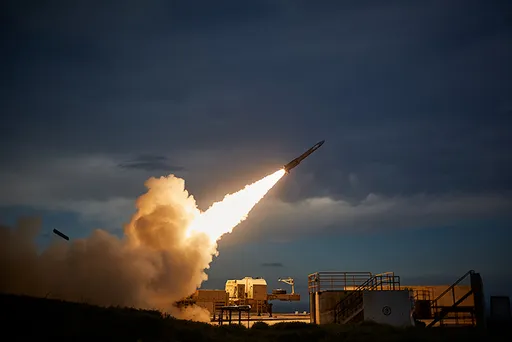
They have also built trilateral defence cooperation covering joint training, military intelligence sharing, naval and cyber security, and interoperability of their armed forces. Israel and Greece signed a €750 million PULS rocket artillery deal in April 2026 and a €3 billion "Achilles Shield" agreement in August 2026. On the Greek Cypriot territory, Israeli defence systems and intelligence facilities are already in place.
Türkiye says this alliance is meant to contain it, and Israeli PM Benjamin Netanyahu has hinted at the same. Athens and Nicosia have not named Türkiye directly, but their remarks make the intention plain.






Both Greece and the Greek-administered Southern Cyprus carry a historical fear of Türkiye.
Having lived for centuries under Ottoman rule, Greek states and society have developed a lasting suspicion of Turks.
Security or dependency?
The 1974 military intervention in Cyprus, Ankara's casus belli response to Greece's plan for twelve-mile waters, and Türkiye's expanding domestic weapons production seem to have alarmed them further.
Besides spending tens of billions of dollars on arms, the Greek side has found a partner in Israel to counterbalance Türkiye.
However reassuring the arms buildup and the new alliance may appear, they are hardly a way to settle disputes with Türkiye, and they put the two states' sovereignty at risk by tying them to Tel Aviv.
First, Greece and the Greek-administered Southern Cyprus have purchased sophisticated Israeli systems, including Barak MX air defence, PULS rocket artillery and anti-tank missiles. Such heavy dependence gives Israel leverage over how and when these weapons can be used, not to mention the possibility of arms and component embargoes.
Second, the alliance risks dragging them into Israel's wars. In 2024, Hezbollah threatened the Greek-administered Southern Cyprus over Israel's use of its territory.
If Israel uses Greek and Greek Cypriot soil to gather intelligence or strike Turkish targets, both states would become potential targets in wars that are not theirs.
Third, military and energy partnerships with Israel may weaken the Greek Cypriot side's incentive to compromise on a settlement, thereby entrenching the island's division.
Israel would also probably hold the upper hand in cooperation with them on oil and gas exploration and on undersea cable and pipeline networks.
Fourth, with Israel isolated by most of the world, closer ties with Tel Aviv are unpopular among the Greek public, according to media reports. The governments' alignment therefore opens a gap between them and their voters.
Fifth, Israeli analysts openly, and the Israeli government implicitly, portray Greece and the Greek-administered Southern Cyprus as a counterweight to Türkiye. In effect, Israel is saying it uses them as tools against Türkiye.
Ankara is aware of this, and if a confrontation breaks out, the two states would hardly be able to stay out of it.
There also seems to be an Israeli campaign to provoke Greeks and Greek Cypriots against Türkiye: in recent months Israeli media have carried analysts urging Greeks to defend their Aegean claims and to expel Turks from the island.
Such writing plainly aims to stir the Greek public into action. Israel would seem to want a Greek-Turkish war or, failing that, access to Greek and Greek Cypriot airspace and bases against Türkiye, since its other approaches are largely shielded.
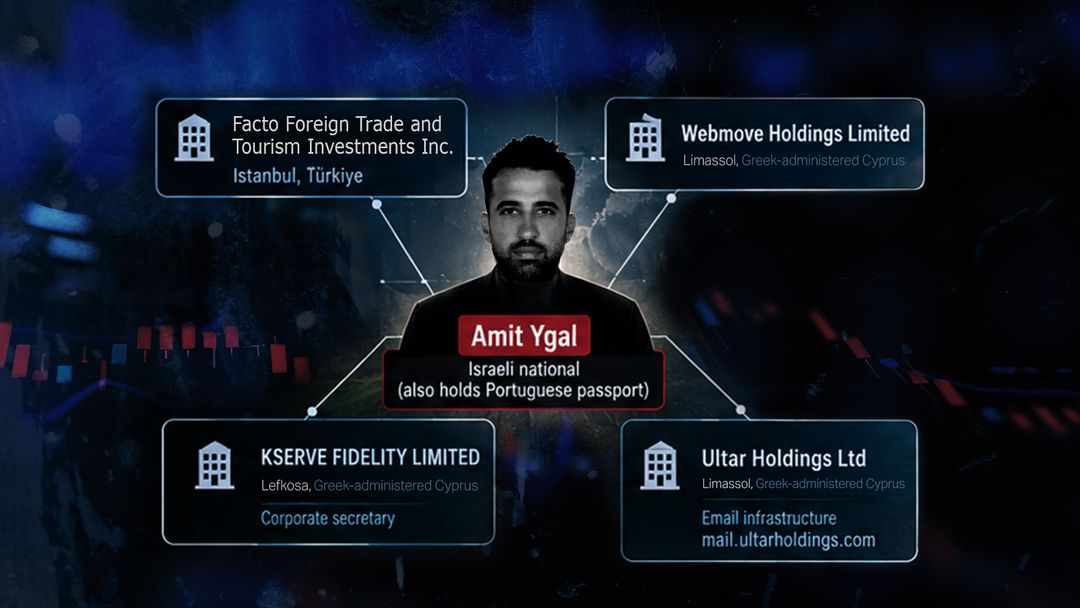
Finally, about 25,000 Israelis are reported to live in the Greek-administered Southern Cyprus already, and thousands more live on Greek islands, reportedly in private communities separate from the local population.
If such enclaves grow, questions of parallel security arrangements and legal jurisdiction could eventually arise, amounting to a state within a state and diluting sovereign authority.
While Greece and the Greek Cypriot administration have longstanding disputes with Türkiye, aligning with Israel instead of pursuing direct negotiations is neither plausible nor wise, as it risks heightening tensions with Ankara and facilitating a greater Israeli presence in the region.
Greece and the Greek Cypriots urgently need to reconsider, since the price of their latest choice, allying with Israel against Türkiye, could be higher than ever.