 Ahmed Najar
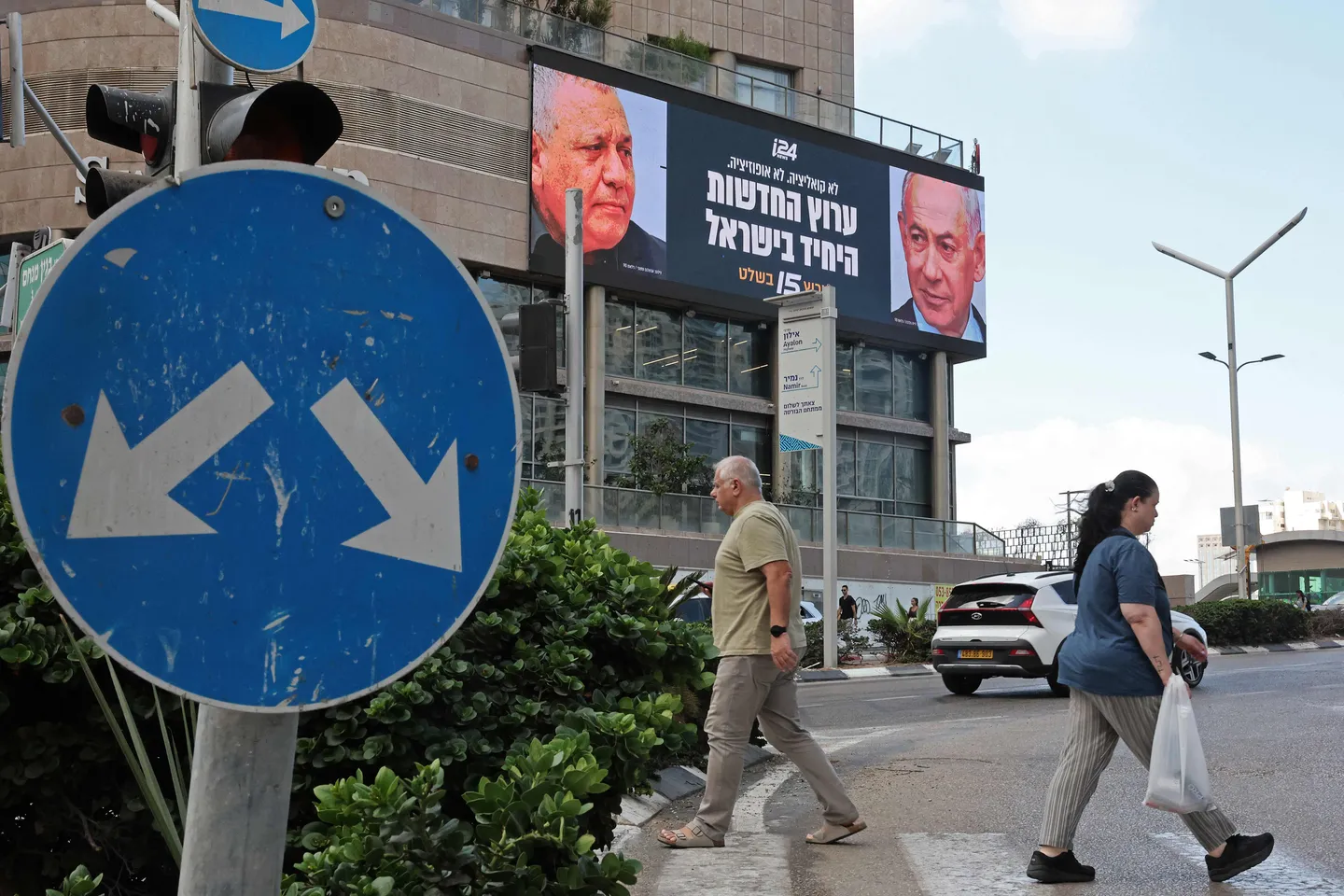
Israel’s first election advertisement to be banned for undisclosed use of artificial intelligence presented a scene of peace. In the fabricated video, opposition leader Gadi Eisenkot embraces Palestinian president Mahmoud Abbas.
The footage was produced by Bezalel Smotrich’s far-right Religious Zionism party to frighten voters with the suggestion that Eisenkot might reconcile with the Palestinians.
The irony is difficult to miss. A synthetic image of coexistence was deployed as a political threat by a movement whose ministers have openly advocated annexation, displacement and the destruction of Palestinian life.
Yet the fake video is only the visible edge of a much larger system.
As Israel approaches crucial national elections, AI is not simply being used to invent images. It is being used to manufacture voters, infiltrate private conversations, harvest personal information, and quietly shape what people believe is public opinion.
The Economist reports that Israeli technology companies have developed swarms of bots that masquerade as human voters, influence online conversations and distort informal polls.
More sophisticated AI avatars can have telephone numbers and even credit cards, letting them join WhatsApp groups and act like real people.
Political campaigns can combine information gathered through chatbots with commercial data on purchases, searches, viewing habits, and location, then tailor advertisements, messages, and lifelike robocalls to individual voters.
This should alarm anyone concerned with democracy. But there is a danger in telling the story as though Israel has suddenly discovered a menacing technology on the eve of its own election.
The machinery did not appear from nowhere. It was developed, funded and normalised through years of information warfare directed at Palestinians, Arabs and Western publics. What is new is not the weapon. It is the identity of some of its targets.

Money poured into Hasbara
Since October 2023, Israel has treated public opinion as another front in its genocidal war on Gaza.
Its government has poured extraordinary sums into hasbara, the state’s public diplomacy and influence apparatus.
Its 2025 allocation of roughly $150 million was already a dramatic expansion.
The 2026 budget reportedly raised that figure to about $730 million. An investigation by the Quincy Institute concluded that direct Israeli government spending on public diplomacy since October 2023 had exceeded $1 billion.
That money does more than purchase conventional advertising.
In 2024, OpenAI exposed an Israel-based influence operation it called ‘Zero Zeno’. The network, operated by the Israeli political marketing firm STOIC, used AI to generate articles, comments and fabricated online personas across Facebook, Instagram, X, YouTube and websites posing as independent organisations.
Its material attacked UNRWA, portrayed pro-Palestinian university protesters as “supporters of terrorism” and targeted audiences in the United States, Canada and elsewhere. Reporting at the time linked the wider campaign to Israel’s Ministry of Diaspora Affairs, which denied involvement.
The ambition has since become even more brazen. A 2026 investigation revealed that an apparently fictitious American think tank, the Hanover Institute for Public Policy, had published more than 560,000 words in nine days.
Its reports were dressed as neutral, sourced research on questions such as whether Israel was committing genocide, starving Palestinians or torturing prisoners.
The site was part of an Israeli-government-funded campaign designed to influence what AI chatbots tell users. One contract explicitly referred to delivering ‘GPT framing results’ in chatbot conversations.
This is more insidious than a clumsy deepfake. A false video can be identified, labelled and removed. But when thousands of synthetic accounts, pseudo-academic reports and engineered search results flood the information environment, propaganda begins to resemble consensus.
A user asking an apparently neutral chatbot about Gaza may never know that some of the material shaping its answer was created by a foreign government seeking to obscure its own conduct.








A manipulation apparatus
For Palestinians, this is not an abstract debate about technological ethics. The manipulation of information accompanies the destruction of lives.
While Palestinians document children killed, hospitals attacked, families starved and entire neighbourhoods erased, an immensely funded apparatus works to dispute the evidence, smear the witnesses and recast demands for accountability as “extremism” or “anti-Semitism”.
AI allows that apparatus to operate at a scale no team of human propagandists could match.
It also helps explain a familiar distortion in Western debate.
Palestinian voices are routinely treated as interested, emotional or unreliable, while Israeli state claims are repeated as the default account even when they later collapse under scrutiny.
Digital influence operations exploit that imbalance. They do not need to convince everyone. They only need to create enough noise, doubt, and artificial agreement to delay political action while facts on the ground become irreversible.
Now the same culture of manipulation is turning inward. Netanyahu and his allies have spent years building databases and election technology, while opposition-linked figures in Israel’s powerful tech sector are reportedly preparing to fight with similar tools.
The problem therefore cannot be reduced to one party or one politician. Once covert persuasion becomes an accepted instrument of statecraft, it does not remain neatly confined to foreign audiences.
A system designed to impersonate citizens abroad will eventually impersonate citizens at home.
There is another bitter contradiction.
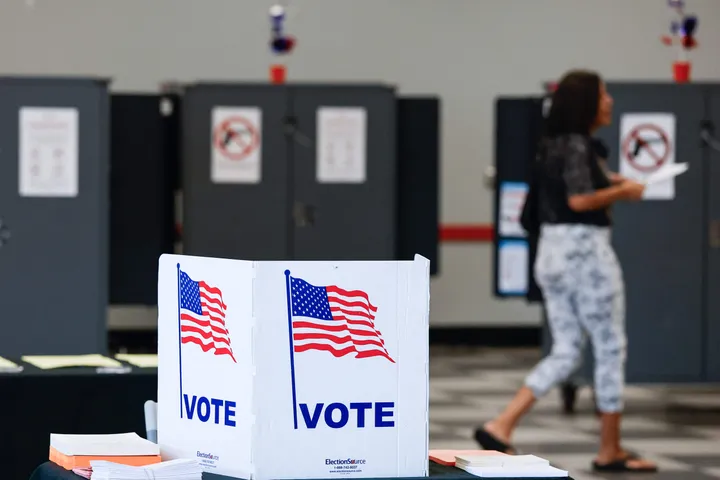
Israeli institutions are now discussing safeguards to protect Israeli voters from AI-generated deception, yet there has been little comparable concern for the millions of people abroad whose politics have already been targeted—or for Palestinians whose reality these campaigns were built to erase.
Democracy cannot mean defending Israeli citizens from manipulation while accepting the covert manipulation of Americans, Europeans and Arabs as legitimate public diplomacy.
Nor should governments in London, Washington or Brussels treat this solely as an Israeli election story.
Foreign interference does not become benign because it comes from an ally. If Russia, China or Iran financed fake American organisations, synthetic citizens and campaigns intended to alter what chatbots tell voters, Western officials would describe it as a threat to national security.
Israel should not receive an exemption from standards applied to everyone else.

‘Profiled, targeted and manipulated’
The lesson is larger than Netanyahu. Governments must require full disclosure of state-funded digital campaigns, enforce foreign-agent and data-protection laws, compel technology companies to expose coordinated inauthentic networks and create transparency around efforts to manipulate AI training and retrieval systems.
Political parties should be prohibited from deploying synthetic identities or using covertly harvested personal data to suppress or redirect voters.
But regulation alone will not answer the moral question. Israel’s influence machine exists because its leaders believe the problem is not what the state has done to Palestinians, but that the world has seen too much of it.
No algorithm can make mass killing humane, occupation democratic or starvation defensible. The more public opinion turns against these policies, the more money and technology are spent trying to correct the public rather than the policy.
Israel’s AI propaganda apparatus is now coming home. The danger to Israeli voters is real, but Palestinians have lived for years with the consequences of the worldview that produced it: that people can be profiled, targeted and manipulated; that inconvenient truths can be buried beneath manufactured narratives; and that technology can solve a political crisis created by domination.
A weapon does not become objectionable only when those who built it discover that it can be aimed at them.