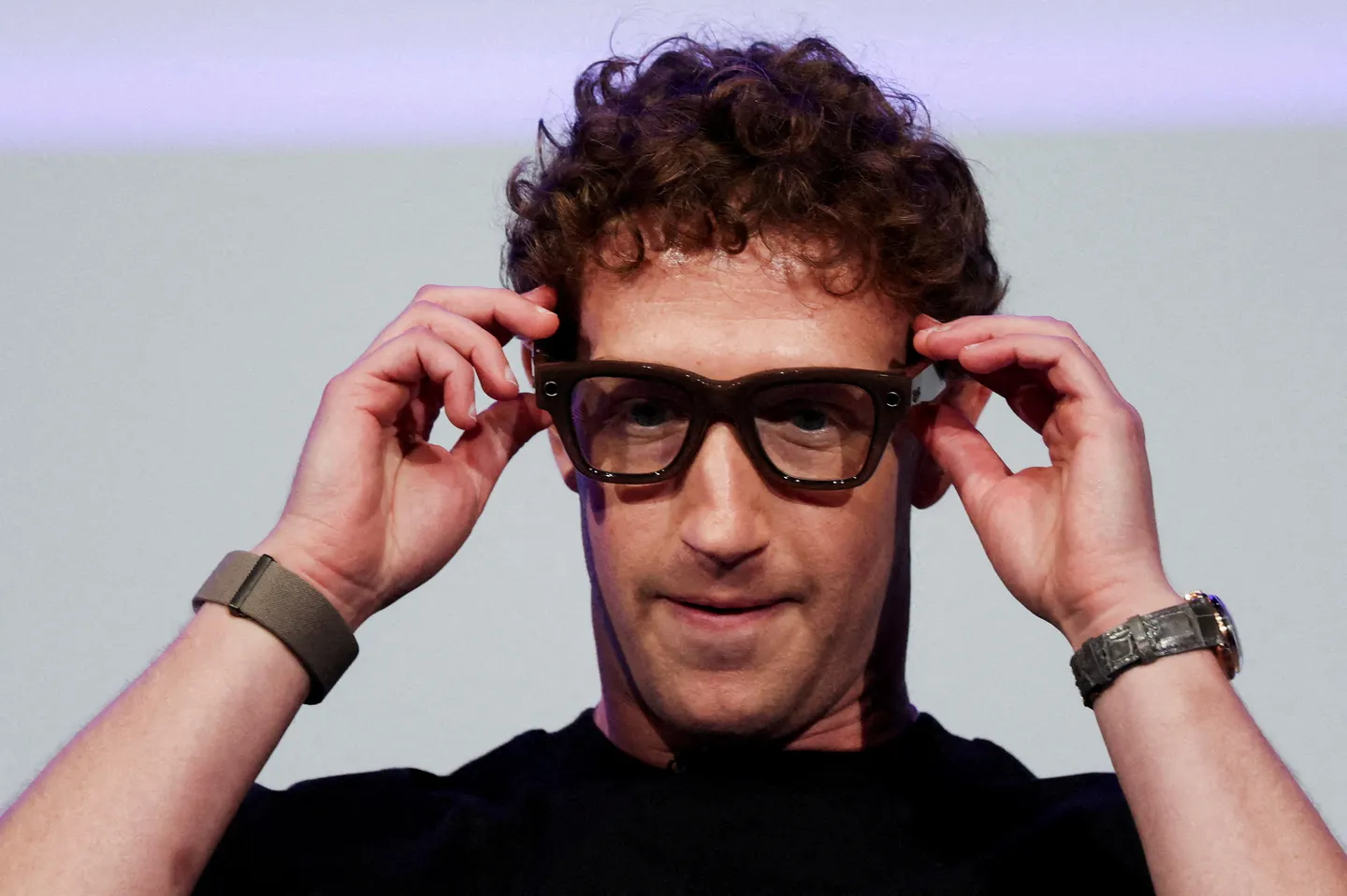
Meta has introduced a new model that can run on a personal computer, with CEO Mark Zuckerberg laying out a philosophy for the development and deployment of superintelligence, arguing that the technology should prioritise individual empowerment, invention, and a balance of power rather than centralisation in the hands of a few institutions.
In a detailed statement on Monday, Zuckerberg described the current era as an "incredible moment in history," predicting that within the next few years people will gain access to superintelligence exceeding human capacity.
This, he said, will enable the creation of extraordinary new things, the building of businesses, the expression of ideas, accelerated learning, and advances in health and quality of life.
The defining questions, according to Zuckerberg, are who will control superintelligence and to what ends it will be directed. He contrasted two paths: one in which the technology is centralised and restricted to a limited number of institutions, and another in which it becomes a widely available tool that empowers everyone.
The new model lunched by Meta, Muse Glimmer, is much smaller than leading AI models from rivals and is instead designed for agentic tasks and can run on a Mac or PC with a single graphics card, aiming to tap demand for AI systems that run directly on people's devices.
Open-weight models are typically cheaper than leading models from so-called frontier labs such as OpenAI and Anthropic. They also come with publicly accessible core components for easy customisation, unlike closed models that companies keep fully under their control.
Meta's launch comes as the social media giant seeks to strengthen its position after forming a costly, new superintelligence team last year to propel itself back into the high-stakes AI race.
Zuckerberg acknowledged that transformative technologies bring both opportunities and challenges, and that superintelligence’s scale will make those greater than any seen in recent lifetimes.
On job losses
He expressed surprise at the prevalence of "doom" in discussions among some AI developers, questioning why anyone who believes AI will eliminate most jobs and diminish human relevance would accelerate towards that outcome.
"The notion that AI is so dangerous that the only safe path is an extreme concentration of power seems inherently problematic. Historically, hoping that an absolute power will benevolently provide for humanity if sufficiently enlightened has not led to safe or positive outcomes," he said.
Drawing parallels to past technological shifts, Zuckerberg argued that fears of people being left behind have repeatedly given way to broader prosperity, health, and freedom.
He expressed confidence that AI will follow the same pattern if guided by values such as liberty, open inquiry, free enterprise, and equal opportunity.
He emphasised that invention, not mere automation, will be superintelligence’s greatest contribution.
"Early AI could answer questions and do routine work. Soon it will increasingly help discover new knowledge — ranging from discovering new drugs to cure a family member’s disease to finding new ways to improve your business. While the number of questions a person can ask in a day is limited, the number of valuable things superintelligence can invent to help achieve your goals is unlimited," he argued.
Zuckerberg also stressed the need to remain competitive against countries like China, among other issues.






"There are also national interest and national security aspects of development as well. American communities will have greater prosperity and security if America and its allies lead in AI compared to geopolitical rivals. Yet one significant disadvantage that the US has compared to countries like China is that it is more difficult to build infrastructure here," he said.
Rather than allowing a singular superintelligence or a small group of experts to decide what is best for humanity, Zuckerberg advocated distributing the technology so individuals can direct it according to their own goals and values.
"The history of democracy and economics has shown that there is no single objective answer to how people define the best life, and therefore the best approach is letting people decide what matters in their own lives," he stressed.
He compared this approach to the earlier democratisation of supercomputers and the internet. Meta, he said, is actively building towards this vision of personal superintelligence.
Data centre development
The Meta boss also addressed risks including job displacement, local impacts of data centres, cybersecurity and biological misuse, government overreach, and the need for democratic countries to maintain leadership while ensuring humanity retains control.
Amid growing public opposition to data centre development in the US, Zuckerberg added that Meta is launching a fund to directly support communities around its facilities.
He rejected the view that aligning a single superintelligence resolves these issues. Humanity lacks uniform values, he argued, so no single system can align with everyone's competing interests.
Instead, he proposed viewing the challenges through the lens of power balance, similar to democratic institutions.
Widely distributed superintelligence, he said, would enable people and institutions to check one another, producing fairer and more secure outcomes — whether in legal representation, cybersecurity, or economic competition.
“If superintelligence remains concentrated in a few hands — whether individuals, companies, governments, or AI systems themselves — outcomes will favour those few at the expense of others.”
Meta’s focus on personal superintelligence for everyone, Zuckerberg concluded, is intended to tip the balance of power towards individuals and produce a future reflecting the full range of human values and perspectives.
"The arc of human civilization has bent towards putting more power in people’s hands to live and shape the world in the ways we believe are best. Superintelligence holds the promise of giving everyone that power, and building a positive future for everyone," he added.