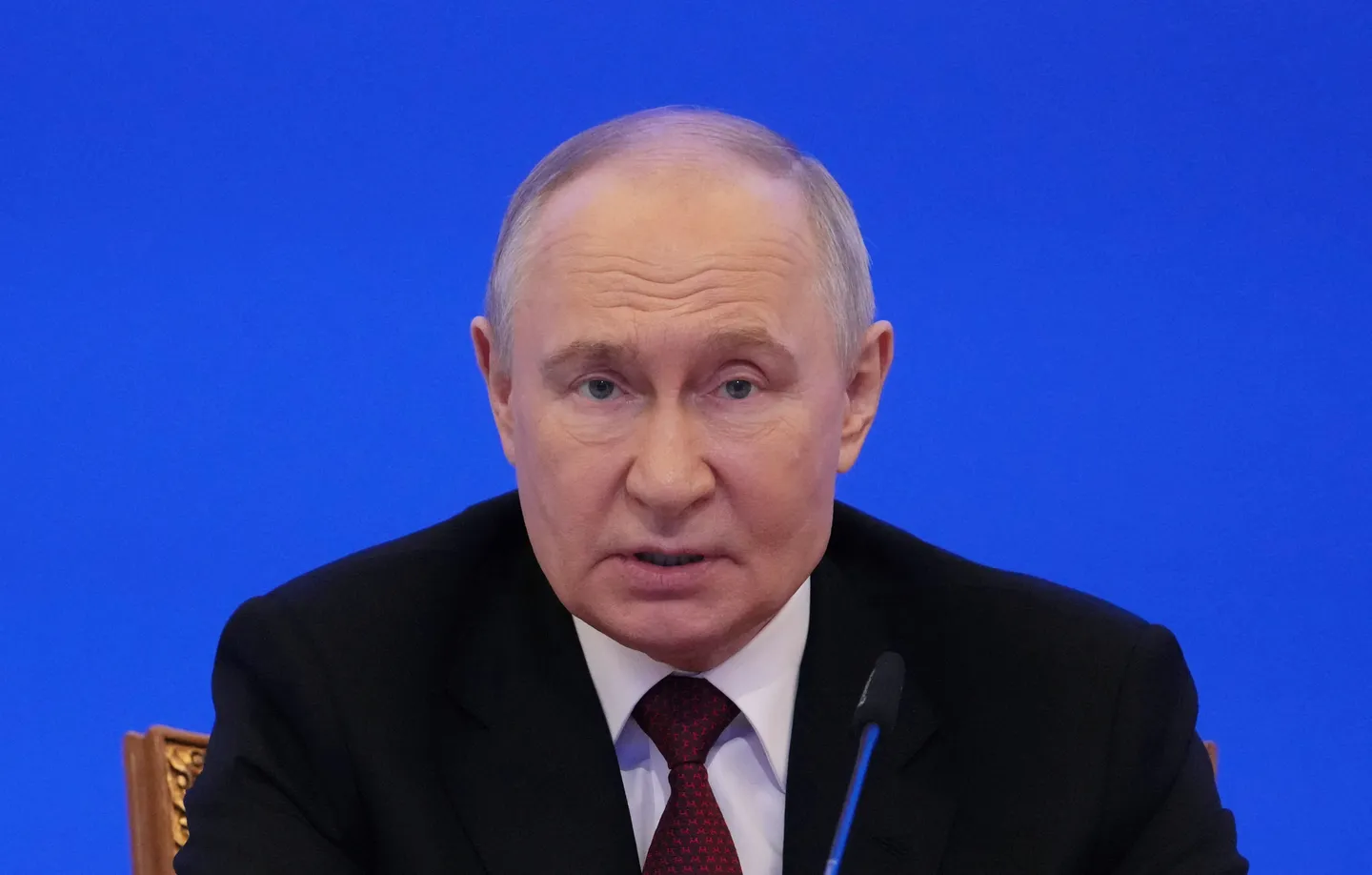
Russian Security Council Secretary Sergey Shoygu has said that the Russian-US peace initiative on Ukraine was "stalling".
“The main obstacle to its implementation remains the complete absence of political will for peace on the part of the Kiev regime and its constant desire for escalation,” he said at the International Security Forum in the Moscow region on Thursday.
Shoygu argued that the Ukrainian leadership feared a settlement because it would have to answer for the consequences of its policies, including what he described as a demographic crisis in the country.
“I want to emphasise once again, we stand for peace and propose it,” he said.
“We understand that it is in the interests of the population living in Ukraine to move towardS a long-term peaceful settlement. But for this, confrontation and neo-Nazi Russophobic ideology must be rejected.”
Shoygu also argued that Kiev had an economic interest in prolonging the conflict because of its dependence on Western financial assistance.
“Ukraine’s budget depends entirely on Western aid, and no one will allocate money without a war,” he said.





He also claimed Ukraine was facing growing economic difficulties, including rising debt and dependence on Western financial support.
“How and with what Kiev will repay these debts is unclear,” Shoygu added.
UN warns against attacks
Meanwhile, UN High Commissioner for Human Rights Volker Turk warned against a further escalation between Russia and Ukraine.
“I strongly urge restraint. Resume negotiations and end the suffering,” Turk said in a statement.
He said the "dangerous" escalation in hostilities has led to a sharp rise in civilian casualties, with the number of civilians killed or wounded in Ukraine during the first four months of 2026 increasing by 21 percent compared with the same period in 2025.
According to UN figures, 815 civilians were killed and 4,174 were wounded between January and April this year, compared with 682 killed and 3,453 wounded a year earlier.
The vast majority of casualties occurred in territory controlled by Ukraine.
He also referred to a Ukrainian attack on an educational complex in Starobilsk on May 21-22. According to Russian authorities, 21 people were killed, and 44 were wounded.
The UN Human Rights Office said publicly available information indicated civilians, including students, were among the victims.
“International humanitarian law demands that parties to a conflict take all feasible precautions to avoid civilian harm. These are not simply suggestions or recommendations but binding obligations carrying legal responsibility for those involved,” Turk said.
“And as if all these casualty figures weren't horrifying enough on their own, following these attacks, Russian officials have publicly threatened to increase attacks across Kiev,” Turk said.