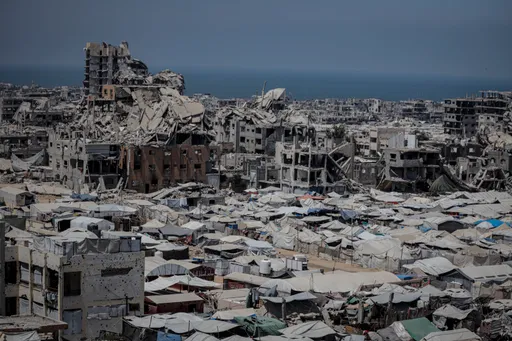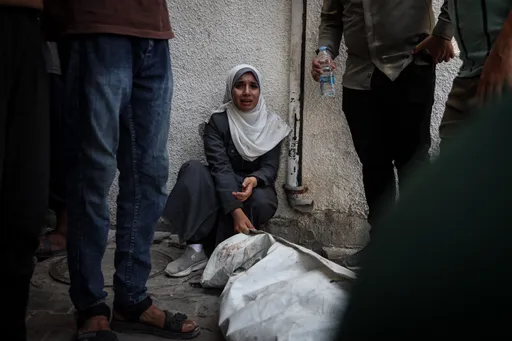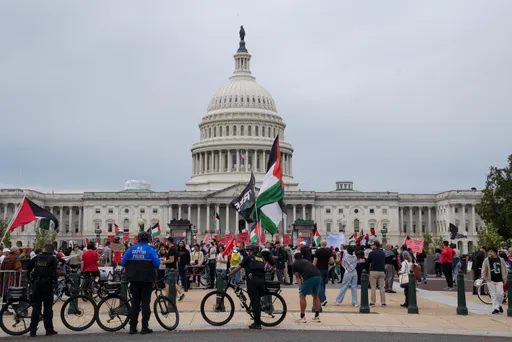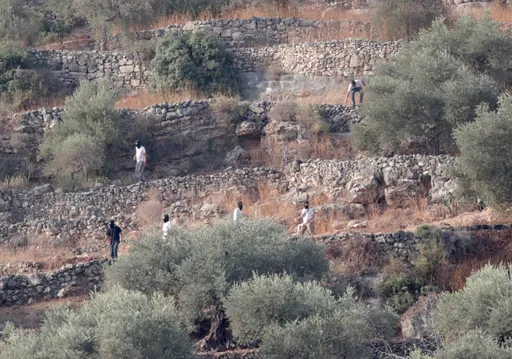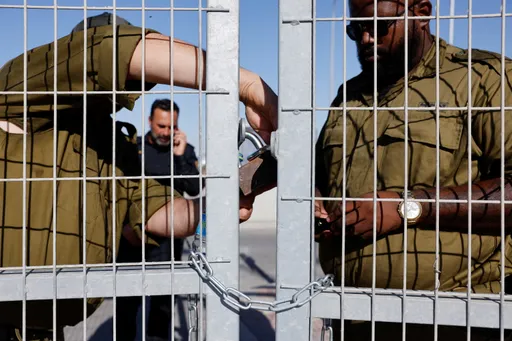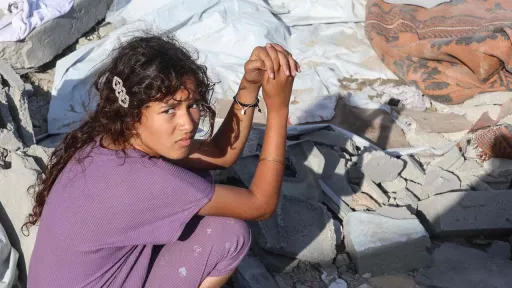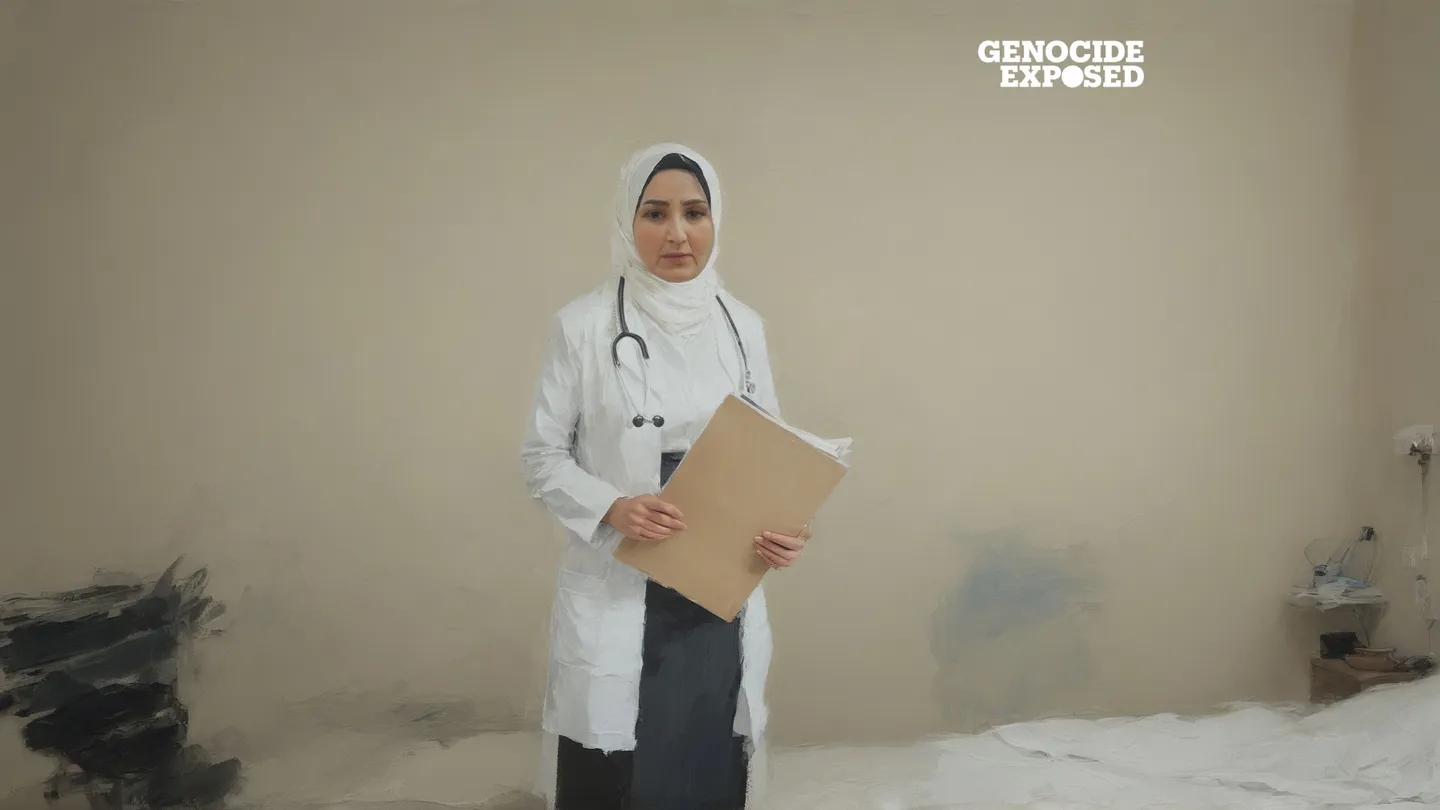
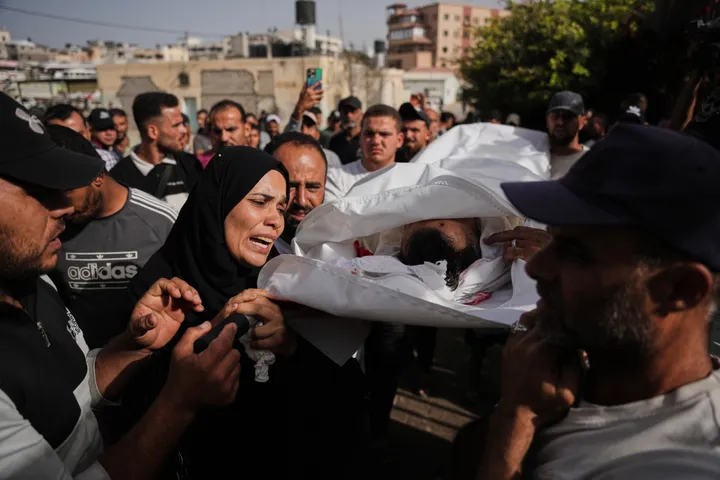
Gaza today is a graveyard. A dystopian landscape where thousands of people and millions of dreams lie buried under a once vibrant city, laid to waste by Israel’s genocidal war. Two years into the war that has killed more than 66,000 people, most of them women and children, TRT World tells the story of Gaza through the words of Dr Amal Al-Heila – a story of struggle and survival, of dreams and death and, above all, resistance and resilience.
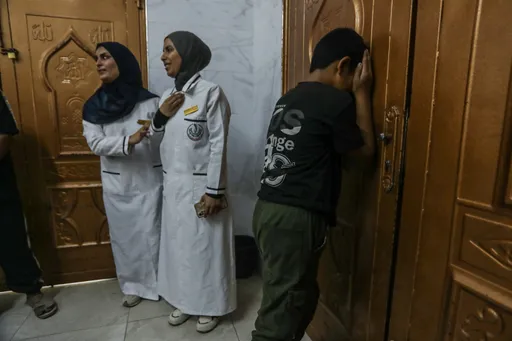
Thirty-eight years old, a mother of three and pregnant with her fourth, Al-Heila is a cardiologist at Nasser Medical Complex, working tirelessly to save lives as bombs fall around her.
She studied medicine at Al-Azhar University in Gaza—the second-largest university in Palestine—now reduced to rubble and turned into a shelter for the displaced.
“I am responsible for three children, and I am also pregnant with my fourth child, now in my seventh month. Being a doctor and a mother while displaced, amidst war and destruction, is an immense responsibility,” Al-Heila tells TRT World.
Amid hospital bombings and a severe shortage of medical supplies, Al-Heila continues her life-saving work despite the constant danger from Israel’s relentless attacks on Palestinians in Gaza.
The two-year Israeli war on the enclave has reshaped not only her work but also her family life and dreams in a way she describes as “learning to live with loss every day”.
Her days are split between saving lives in the wards and, with the bit of strength and time she has left, shielding her children through Gaza’s darkest nights.
Morning: Mother Amal
Al-Heila starts her day by bathing her children, cleaning, and preparing breakfast in a displaced camp.
“We consider ourselves lucky if we get to eat breakfast, especially under the current conditions and soaring prices,” she says.
“If I have work that day, I leave home around 5 a.m. I first prepare my children, then head to my job. I have been displaced from the Al-Qarara area to my family’s house in Khan Younis, near the hospital.
“From Al-Qarara, I used to walk about two kilometres to reach the main road and catch the ministry’s transport to Nasser Medical Complex,” she says.
“It causes extreme exhaustion and shortness of breath, and I simply could not continue like that,” she says.
Now, from her family’s house in Khan Younis, it takes her about 15 minutes to walk to the hospital.
She says each time she leaves the house, she whispers a prayer, asking God for mercy and protection for her children.
Noon: Doctor Amal
Al-Heila says she takes one day off, occasionally two, depending on the emergency cases at Nasser Medical Complex.
Her time off is a fragile balance between rest and readiness, she says.
Most days, she sleeps in the hospital, her white coat bearing a significant responsibility and a great challenge.
“I have to save lives without essential tools,” she says.
“Many patients come to us who only need a simple cardiac catheterisation—a life-saving procedure—but it is unavailable.”
Since the Gaza European Hospital was closed after an Israeli attack in May, which left it severely damaged and inaccessible, catheterisation tools and stents have become scarce.
Al-Heila says patients collapse in front of her while she stands helpless, unable to offer the treatment that once defined her profession.
“This often means a patient can die in front of you,” she says.
“With the medicine shortage, even the simplest medicines are missing.”
One case haunts her in particular.
“There is a patient in our department who has been waiting for two and a half months for a stent or, as a last resort, open-heart surgery to save his life,” she says.
“The patient cannot stop his blood-thinning medication, otherwise it triggers severe chest pain. He is only one example among many. The mortality rate among cardiac patients has risen sharply.”
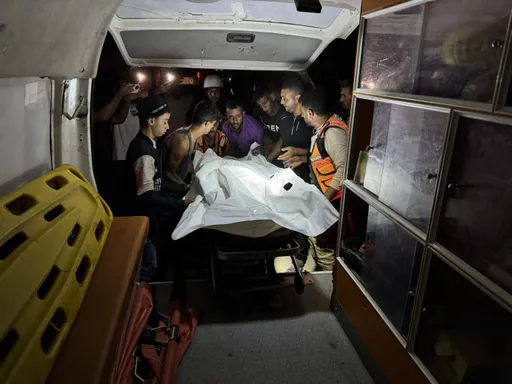
Beds are often so short at the hospital that families bring their own mattresses to sleep on.
On some days, Al-Heila works for 30 hours straight—entering at 7:30 a.m. and leaving the next day around 2:30 p.m.
By the time she reaches her tent by walking, it is nearly 4:00 p.m.


“Two entire days disappear from my life,” she says.
“I don’t see my children. I feel disconnected from them.”
And yet, she continues to say, “We will do everything we can to save our people.”
Evening: Al-Heila between patients and peril
Even on the road to home, Al-Heila cannot stop worrying about her patients.
“Even treatments such as catheterisation and pacemakers are not available, despite being small devices,” she explains.
“Cardiac surgery services have completely stopped across all of Gaza. It used to be provided at the European Hospital, but since it went out of service, this critical service has disappeared from the entire region.”
In theory, a few services still exist in the north. However, reaching them is another challenge.
“We appealed to the Red Cross several times, but they said there is no official coordination for an ambulance to transport a patient from their tent to hospitals,” Al-Heila says.
“This is extremely dangerous for our patients. Many refuse to be transferred, even though services exist there—although in very limited capacity.”
Fuel shortages have made matters worse.
“The ambulance service has completely halted for days because of lack of fuel—we went nearly three weeks without it,” Al-Heila recalls.
“If a patient needed a cardiac catheterisation, there was simply no service. Unfortunately, we lost patients as a result of this.
“We had a 26-year-old patient with no chronic illnesses who suffered a heart attack and needed catheterisation to save his life. The lack of services means we lose our patients.”
She says how once-manageable illnesses now spiral into life-threatening conditions.
“A patient with angina or a heart attack used to recover over time with regular medication, interventions, or stents. Now, with the severe shortages, the patient develops heart muscle weakness and can’t even perform daily activities.”
The collapse of care is not only devastating for families but also for the health system itself.
“It is an injustice to the people, the ministry, and the medical staff themselves because it adds so much to our burden. We don’t know what to do.”
One night, she recalls, after a punishing shift, Al-Heila walked toward the obstetrics department for IV fluids—her blood sugar dangerously low, her blood pressure began dropping—when an air strike hit the building next to her.
Shrapnel and stones tore through the air. She fell to her knees, stumbling away from the blast site.
“I didn’t feel anything at first but thank God, He protected me and gave me another chance at life,” she says.
“When they heared the hospital has been targeted, my children call me, crying. My husband too. My whole family rushes to check on me, terrified something has happened.”
Nights: Housewife Al-Heila
“You hear explosions, and you don’t even know where they are happening. The intensity of the bombardment at night is terrifying in itself,” Al-Heila says.
At night, Al-Heila and her family huddle in silence, their phones useless as air strikes tear through the sky.
“Imagine fleeing at night with three children and another unborn. Where could I go? Where could I run with them in the middle of the night?”
Her voice falters as she recalls the decision to leave her home in Al-Qarara.
“I worried all the time if an air strike was to happen and if tanks entered the area, where would I go with my children?”
When her children are finally asleep, Al-Heila allows herself a brief moment of rest—before gathering her strength and returning to the hospital once more.
“We have had enough,” she says.
“Too much destruction, killing, bloodshed, suffering. I only wish for relief—for the war to end, for us to live safely again. Until then, I will continue to help my people, God willing, until the very end.”