 Aysegul Colak
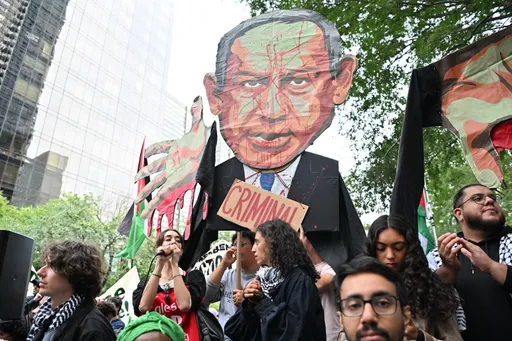
On August 26, migrant business owners in Magdeburg, the capital of the eastern German state of Saxony-Anhalt, closed their shops for five hours and gathered outside the state parliament.
The Migra-Streik (migrant strike) came days before the state election on September 6. It targeted the prevailing political climate.
Most participants are German citizens who work, employ people, and pay taxes in the state, yet find their place in the country once again under discussion.
The far-right Alternative for Germany (AfD) is polling around 41 percent in Saxony-Anhalt, compared with roughly 23 percent for the Christian Democrats (CDU).
If that holds, AfD's lead candidate, Ulrich Siegmund, could become the first far-right politician to lead a German state government since 1945, heading a party branch that the domestic intelligence agency, the Verfassungsschutz, has classified as “confirmed right-wing extremist”.
On Sunday, voters in Saxony-Anhalt will elect a new state government. They will also answer a second question: is the citizenship of people born here fair game in an election campaign?
The answer becomes uncomfortable when considering who Germany's migration debate actually describes.
The debate started in 1961, not 2015
Germans usually date the migration debate to 2015, when close to a million asylum seekers arrived and “Wir schaffen das” (we can handle this) entered the political vocabulary. But the debate is older.
Under the 1961 labour recruitment agreement between West Germany and Türkiye, hundreds of thousands of “guest workers” arrived assuming they would one day leave. Many did not.

They settled, brought their families, built businesses and raised children and grandchildren who speak German as a first language and staff the country’s schools, hospitals and town halls.
According to federal statistics, around three million people of Turkish origin live in Germany, and roughly half hold German citizenship.
Not every complaint about “too much migration” is about new arrivals. Some of it lands on Germans.
In Munich, far from Saxony-Anhalt, three German citizens with Turkish family backgrounds spoke on condition of anonymity.
The first, a public-sector employee in her late twenties, was born and raised in Germany. “I was born here. I work here. I pay taxes here,” she tells TRT World.
“I should not have to explain, again and again, that I belong here.”
She does not object to Germany discussing migration policy. Her concern is that migration has become a catch-all explanation for problems with housing, schools, public safety and local administration.
The second, a logistics worker in his early forties who was also born in Germany, has little patience for parties that treat public frustration as prejudice.
“People see crowded schools, long waits at public offices and rents going up,” he says. “If politicians call everyone racist for talking about that, they leave the argument to AfD.”






He supports stricter migration rules but made clear that this should not put his own place in Germany into question. “This is my country too.”
The third, a corporate lawyer in her early thirties, was born in Munich to a family that arrived from Türkiye in the late 1960s. “My generation did everything the integration textbook asked of us,” she says.
“We went to university, we speak German better than we speak Turkish, we pay into the system.”
Watching mainstream politicians discuss whether citizenship can be withdrawn has changed how she views that record.
“If three generations are not enough to make you permanent, then nothing is. The requirements move whenever you meet them.”
Their views differ, but together they point to a double failure: a political debate that turns citizens with migrant roots into permanent suspects while dismissing concerns about strain as prejudice.
What happens when a state election is fought over belonging is not hypothetical. Germany has been here before.
In 1999, the CDU's Roland Koch won the election in the western state of Hesse after campaigning against the Schröder government's plan to allow dual citizenship. The result cost the governing coalition its majority in the Bundesrat, Germany's upper house, and the citizenship law that took effect in 2000 was narrower than originally proposed.
Children born in Germany could acquire German citizenship, but many had to choose between German and another nationality by age 23. That compromise shaped the debate for two decades.
Koch's CDU was not the AfD. The mechanism, however, was similar: a state election fought over belonging had national consequences for people who were hardly the subject of the vote.
What Sunday's vote could mean
The same mechanism — a state election that turns belonging into a campaign issue — is at work again.
The difference is that in 1999, the mainstream led it; today, it follows. The CDU and the Social Democrats (SPD) have responded to the AfD by moving between avoidance and imitation, and that imitation is no longer just rhetorical.
Chancellor Friedrich Merz's government has rolled back the three-year fast track to naturalisation introduced by the Scholz coalition in 2024, while proposals to strip dual nationals of German citizenship have moved from the AfD's platform into mainstream political debate.
Each step has been presented as a way to win voters back. But polls in Saxony-Anhalt suggest this has done little to slow the AfD.
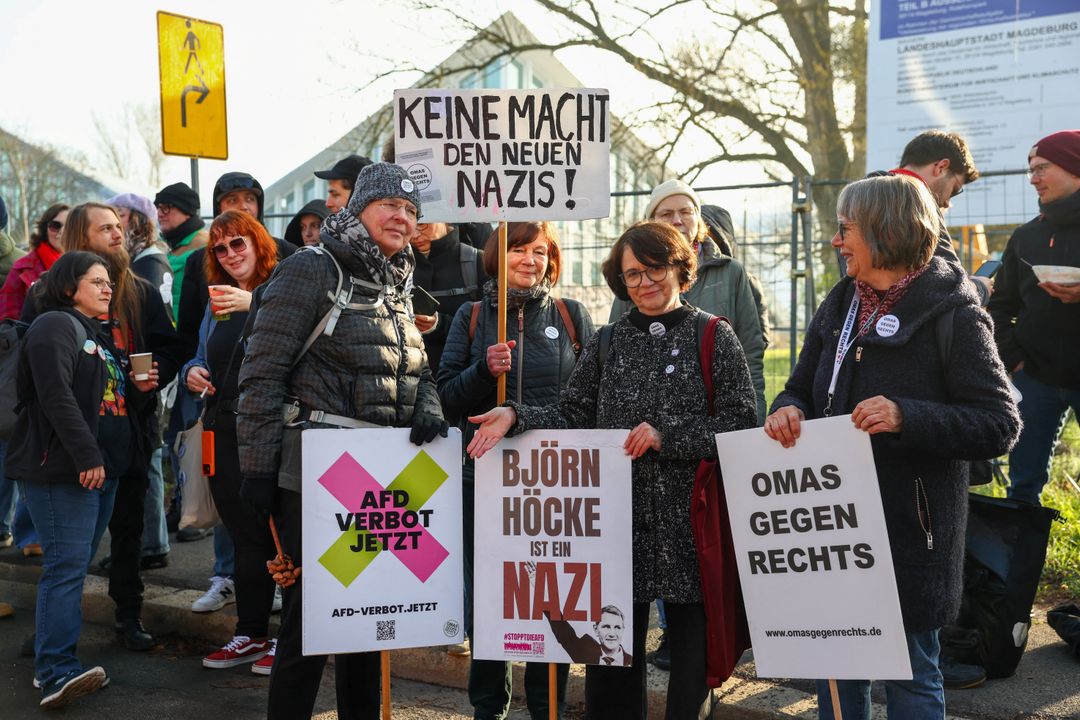
Instead, mainstream parties have adopted parts of its framing while leaving the AfD as its most prominent advocate. Its influence on Germany's migration debate has extended well beyond its own vote share.
That is the choice the Migra-Streik pointed to in Magdeburg: whether to discuss migration as a policy issue or allow it to become a question of who counts as German. Germany faced a similar question in 1999, and its answer shaped the debate for two decades.
It faces that question again. How mainstream parties respond could determine whether German citizens with migrant backgrounds, in Munich as much as Magdeburg, once again feel that their place in the country is up for debate.