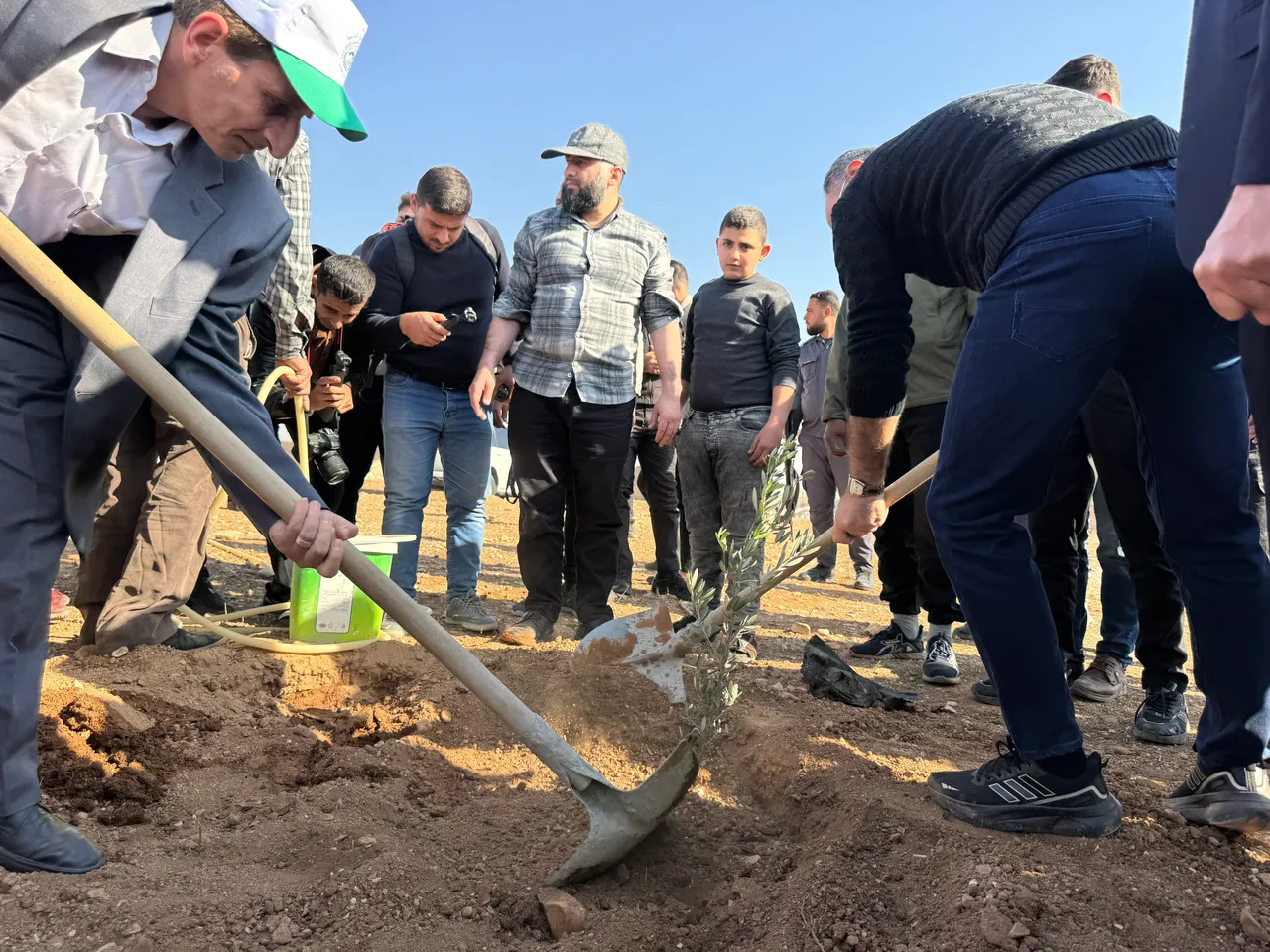
When Omar Al-Sayyah first arrived over a year ago at a hillside in the northern countryside of Idlib, there was little greenery left.
Years of logging had stripped the area of much of its vegetation, leaving behind eroded soil and a degraded landscape. Today, however, young saplings are beginning to take root as part of a community-led effort to restore the region's forests.
"The land was entirely stripped of its greenery," Al-Sayyah tells TRT World.
"Today, holding these saplings, I feel a deep sense of pride."
His work as a volunteer is part of a broader reforestation campaign aimed at reversing environmental damage and rebuilding Syria's shrinking green spaces.
Years of conflict took a heavy toll on Syria's vegetation cover.
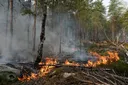
Forests and woodlands suffered damage from drought, illegal logging, wildfires, overgrazing, military activity, and years of neglect.
However, since the previous regime fell in 2024, volunteer-led reforestation efforts have started in various regions, uniting local residents, students, civil society groups, and aid organisations to help restore green spaces affected by war and climate change.
One such initiative is the "Together to Make Idlib Green Again" campaign, organised by the Ministry of Agriculture and the Idlib Governorate.
The project has mobilised local residents, schoolchildren, the Syrian Civil Defense (White Helmets) and volunteer groups to plant trees and rehabilitate damaged land.
For 29-year-old volunteer Walid Al-Hassan, the work carries a significance that extends beyond the environment.
"Planting trees has become a 'message of hope' for me, reflecting the deeply rooted desire of Syrians to rebuild their community and environment," Al-Hassan tells TRT World.
"Reforestation days have turned into social gatherings, bringing youth and families together in volunteer activities with a profound national and humanitarian purpose."
Al-Hassan says the campaign has focused on city entrances, public parks, roadsides and forestry areas, while also running awareness programmes in schools and local communities.
As part of the initiative, 200,000 olive saplings have been distributed to help restore agricultural land damaged by years of logging.
"These campaigns go beyond environmental restoration," he tells TRT World.
"They are vital in fostering a sense of belonging and collective action among Syrian youth, especially after enduring a protracted war that left massive environmental scars."
Preserve and expand native species
Similar efforts are underway in other parts of Syria.
In the western and northern countryside of Hama, authorities have launched a reforestation campaign to plant 30,000 saplings across more than 50 hectares.
"The organisation has initiated this forestry campaign in Hama's countryside to expand vegetation cover and rehabilitate areas damaged by wildfires and illegal logging," says Engineer Abdul Aziz Al-Qassem, Director General of the General Organization for the Management and Development of Al-Ghab.
According to Al-Qassem, the project covers five locations — Hayalin, Al-Karakat, Mirdash, Kanfo and Al-Mashel — and includes a mix of conifers, eucalyptus and Syrian ash trees.
The latter have been included to help preserve and expand the population of the rare native species.
He adds that the reforestation of the Hayalin woodland will be carried out in two phases, beginning with land preparation before planting begins.
In Latakia's countryside, similar initiatives are drawing support from volunteers eager to help restore forests damaged during years of conflict.
Among them is 33-year-old Ismail Al-Hawas, a volunteer with the Ministry of Defense, who recently took part in a tree-planting campaign under the slogan "A Tree for Every Soldier".
The initiative forms part of wider efforts to restore ecological balance in areas where forests and woodlands were damaged by years of fighting and bombardment.
"Protecting the land and contributing to its rebuilding is not confined to the battlefield," Al-Hawas tells TRT World.
"It extends to being an active partner in all forms of public service, as we are an army born from the people and dedicated to them."
Al-Hawas says the campaign began in the Kabina area of northern Latakia, a location chosen for both its environmental and symbolic significance.
He describes Kabina as a strategic area that witnessed intense fighting during the Syrian conflict due to its elevated position overlooking parts of Idlib, Hama and the Al-Ghab Plain.


By launching the initiative there, organisers hoped to highlight efforts to restore life to a landscape long associated with conflict and destruction.
According to Al-Hawas, the campaign also reflects a sense of shared responsibility between local communities and state institutions in protecting the environment and rehabilitating damaged land.
But restoring Syria's forests requires more than local initiatives.
Türkiye has also emerged as a key partner in Syria's agricultural recovery.
Ankara and Damascus recently agreed on a roadmap for cooperation that includes support for crop and livestock production, agricultural planning and infrastructure development.
Türkiye has already pledged assistance for farmer registration systems, while plans are underway to construct a 50,000-square-metre greenhouse complex to help revive agricultural production.
Disruption of forest biodiversity
Officials say years of conflict, wildfires and environmental degradation have left a lasting impact on the country's vegetation cover, making reforestation efforts increasingly urgent.
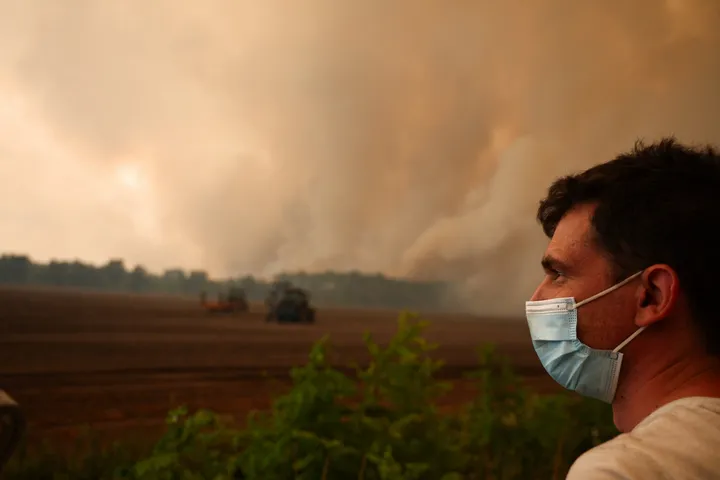
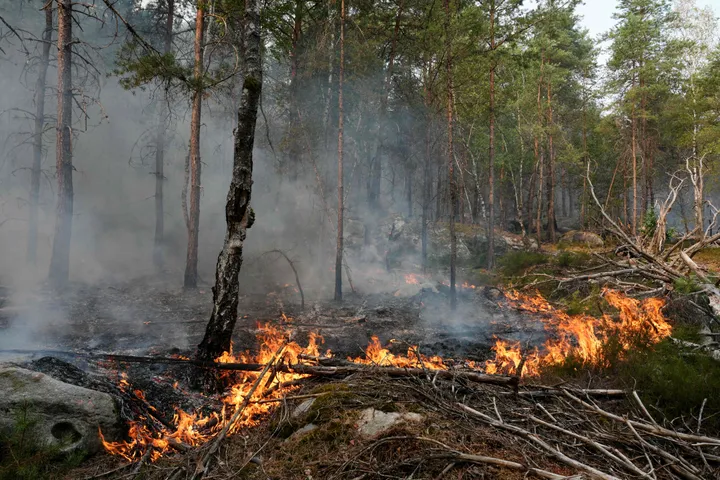
"Syria’s green canopy—both forested and orchards—suffered severe degradation during the war years due to extensive wildfires. Between 2011 and 2021, the country averaged approximately 458 forest fires annually,” Majd Suleiman, Director of the Forestry Directorate at the Ministry of Agriculture, tells TRT World.
“The crisis peaked in 2020, which recorded 621 fires swallowing 132,772 hectares, making it the most devastating year for Syria's woodlands.
"This widespread damage has altered the botanical composition of the scorched sites and disrupted forest biodiversity."
Suleiman emphasised that forests play a critical role in mitigating and adapting to climate change.
"The loss of forest cover accelerates global warming and increases greenhouse gas emissions, which in turn severely impacts agricultural productivity," he says.
The damage extends far beyond the loss of trees.
Wildfires have devastated agricultural livelihoods, destroying crops, orchards, beehives and irrigation networks relied upon by rural communities, according to Suleiman.
The forests play a vital role in absorbing carbon, protecting biodiversity and sustaining ecosystems, meaning their loss can accelerate soil erosion, reduce wildlife habitats and weaken environmental resilience.
To combat this, Suleiman explained that expanding and developing woodlands through robust reforestation policies remains central to the national forestry vision.
The ministry has channelled significant effort into producing saplings that meet high technical and environmental standards tailored to specific planting sites.
This includes integrating fire-damaged forest zones into annual revitalisation plans for comprehensive restoration.
Fabric of our lives
In Aleppo, agricultural engineer Muhammad Al-Youssef shed light on the economic drivers behind the ecological crisis.
He says that deforestation was heavily exacerbated by severe fuel shortages and skyrocketing prices, forcing thousands of impoverished families to resort to firewood for heating.
This desperate survival tactic quickly evolved into a lucrative trade, especially with the vast majority of Syrians living below the poverty line.
Al-Youssef cites real estate speculation and the pursuit of quick profits as driving forces, particularly since agriculture has become an increasingly gruelling and costly livelihood.
This degradation was further compounded by the complete absence of regulatory oversight and the failure to enforce environmental laws that could safeguard the natural landscape.
Al-Youssef stressed that trees are cornerstone assets for human food security.
He warns that the loss of forest cover accelerates devastating environmental phenomena, including global warming, severe soil erosion, and a drastically reduced capacity for carbon sequestration.
As reforestation campaigns continue across Syria, organisers hope tree planting will become a lasting part of community life.
They see these efforts as essential not only for restoring landscapes damaged by war, but also for improving living conditions, strengthening environmental resilience and helping communities adapt to the growing challenges posed by climate change.
“This land is woven into the fabric of our lives. I truly believe these efforts will help bring back the forests we lost, protect the soil, and leave a healthier environment for the generations to come,” Omar Al-Sayyah, the volunteer who regularly plants olive trees and other native species, tells TRT World.
“Every single sapling we plant today is an investment in the future of our village and our children."