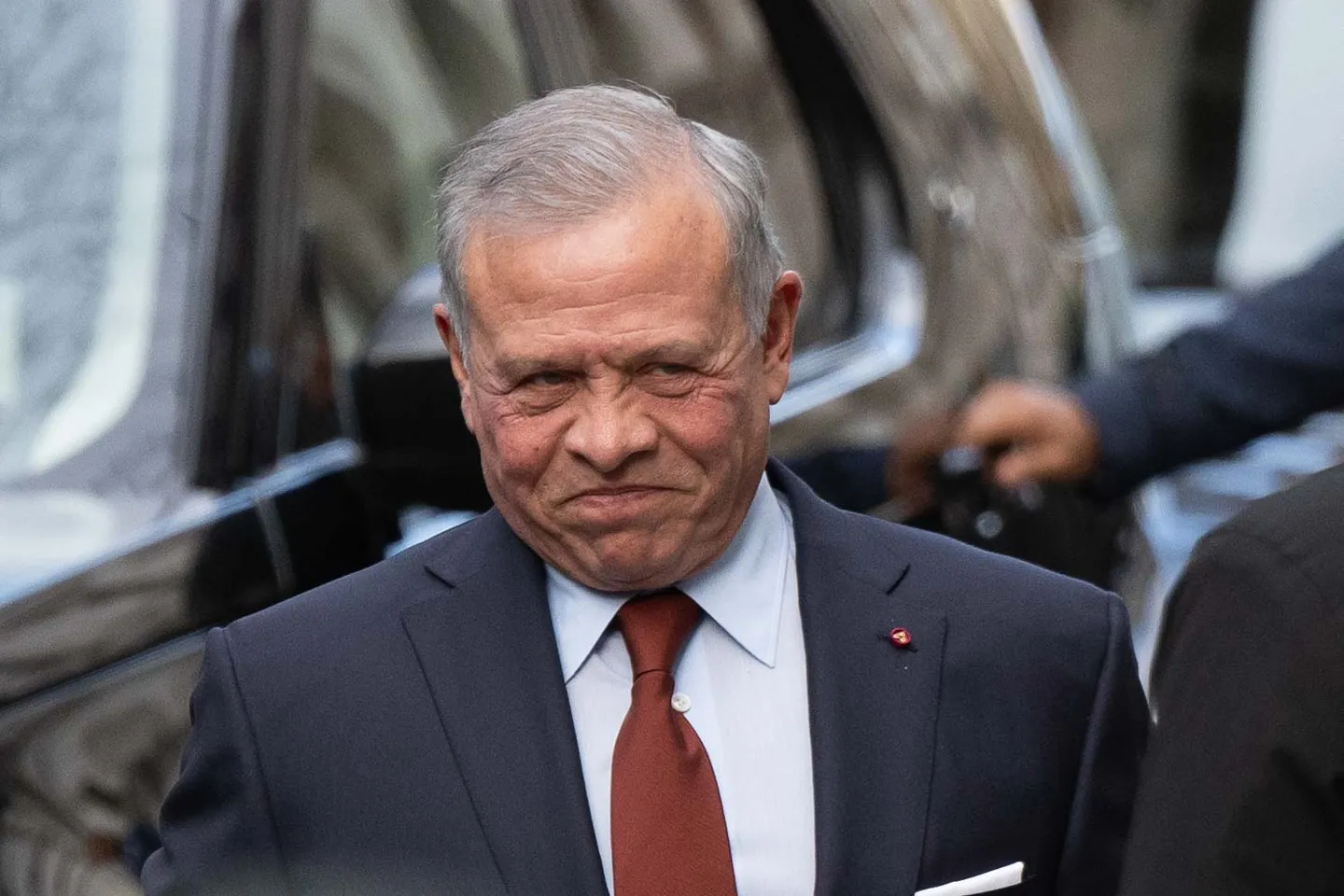
Jordan's King Abdullah II has begun a visit to China, meeting CEOs of leading Chinese companies in Shanghai, according to the Royal Court.
The meeting focused on opportunities for economic cooperation and the exchange of expertise, the court said in a statement on Tuesday.
Abdullah arrived in China for a week-long visit at the invitation of Chinese President Xi Jinping amid the lingering Middle East conflict and energy crisis.
Organised by the Shanghai Council for the Promotion of International Trade, the meeting with CEOs of leading Chinese companies was also attended by Prince Hashem bin Abdullah and Princess Salma bint Abdullah.
The king highlighted “recent strides in enhancing Jordan's business environment, its strategic location as a gateway to regional and global markets and its skilled workforce”, according to the statement.
The trip marks Abdullah's ninth visit to China since he was enthroned in 1999.
Besides meeting Xi, Abdullah will also visit Shenzhen.



Xi and Abdullah will exchange views on bilateral, regional and international issues, according to the Chinese foreign ministry.
The visit aims to “make positive contributions to regional peace and stability”, the ministry said.
Abdullah will also meet Chinese Premier Li Qiang and top lawmaker Zhao Leji. His visit will conclude on August 24.
China and Jordan established diplomatic ties in 1977, and bilateral trade has grown to $6.7 billion, with China becoming Jordan's top trading partner last year.
Ahead of the visit, Abdullah told Xinhua news agency that Jordan's strategic location, resources and skilled youth, coupled with China's economic strength, technological expertise and global reach, create opportunities to broaden cooperation.
He said China could leverage Jordan's position as a regional manufacturing and export hub, benefiting from its natural resources, skilled workforce, stable business environment, strategic location and extensive network of trade agreements.
Abdullah also said Jordan seeks to coordinate with China as a key global player and partner to help advance a two-state solution to the Palestine issue.