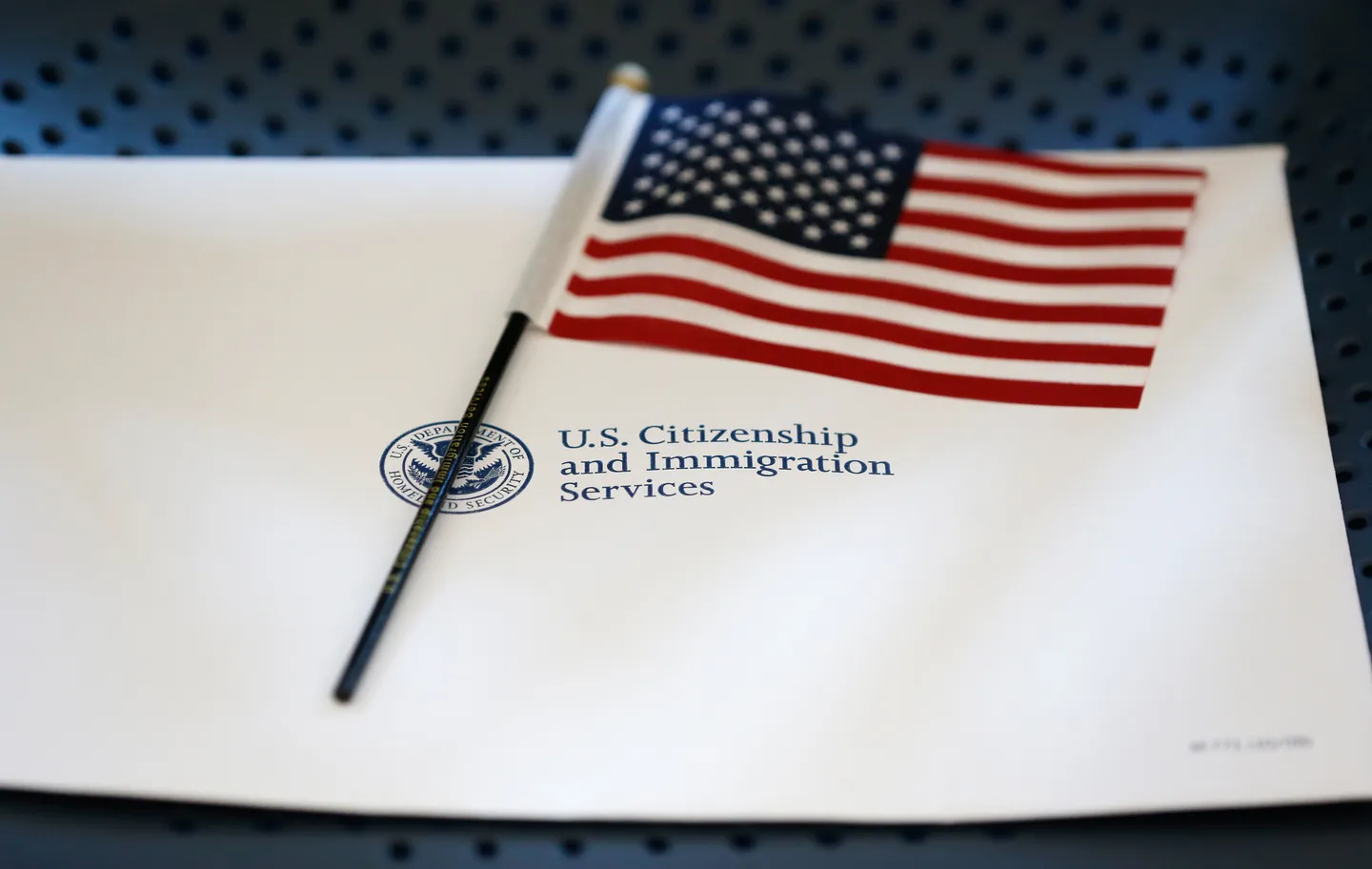
The US government said on Thursday it is suspending some of the world's biggest tech and IT firms, including Microsoft, Cognizant and Capgemini, from a key green card programme that allows skilled foreign workers to gain permanent residency through their employment.
Senior US officials cited alleged fraud as the reason behind the move, saying companies have been using the programme to replace American workers with cheaper foreign workers. The decision is part of the Trump administration's broader efforts to tighten oversight of employment-based immigration programmes.
What has been suspended?
The suspension targets a key employer-sponsorship mechanism called the Permanent Labour Certification, or PERM, used by major technology companies and outsourcing firms.
The US government said it would not accept new PERM applications or process any pending ones for certain companies.
PERM took effect in 2005 to speed up the long processing times under the previous paper-based "Alien Employment Certification" program.
Under the programme, the US Department of Labour (DOL) allows an employer to sponsor a foreign worker for permanent residency. Qualified US employers initiate the process, not individual workers.
The Labour Department must certify to US Citizenship and Immigration Services that there are not enough qualified, available US workers for a given job opportunity and that employing the foreign worker will not affect the wages and working conditions of similarly employed Americans.
Outside of PERM and family-based routes to permanent residency, individuals can also self-petition for green cards through processes such as the EB-1A application for individuals with extraordinary ability or the EB-2 National Interest Waiver.
Why does the programme matter?
The PERM programme serves as a critical bridge between temporary work status and a green card for many foreign skilled workers.
Many IT firms employ hundreds of thousands of workers who typically start on temporary work visas such as the H-1B, and later seek permanent residency.
Without the option to be sponsored by their employer under PERM, foreign workers could lose a key route to permanent residency and would have to stay on temporary visas for longer.
For companies, recruiting foreign talent could become harder, as many workers overseas view the path to permanent US residency as a key reason for taking a job.
Which companies are affected by the suspension?
The US said it is suspending Microsoft and Adobe along with some of the largest IT firms in the world, including Cognizant, Infosys, Tata Consultancy Services, Wipro, HCL Technologies and Capgemini.
Other companies such as Meta, Amazon or Alphabet's Google remain free to participate in the programme.







Why is the US putting applications on hold?
The Trump administration says the restrictions are intended to strengthen oversight of employment-based immigration and protect job opportunities for American workers.
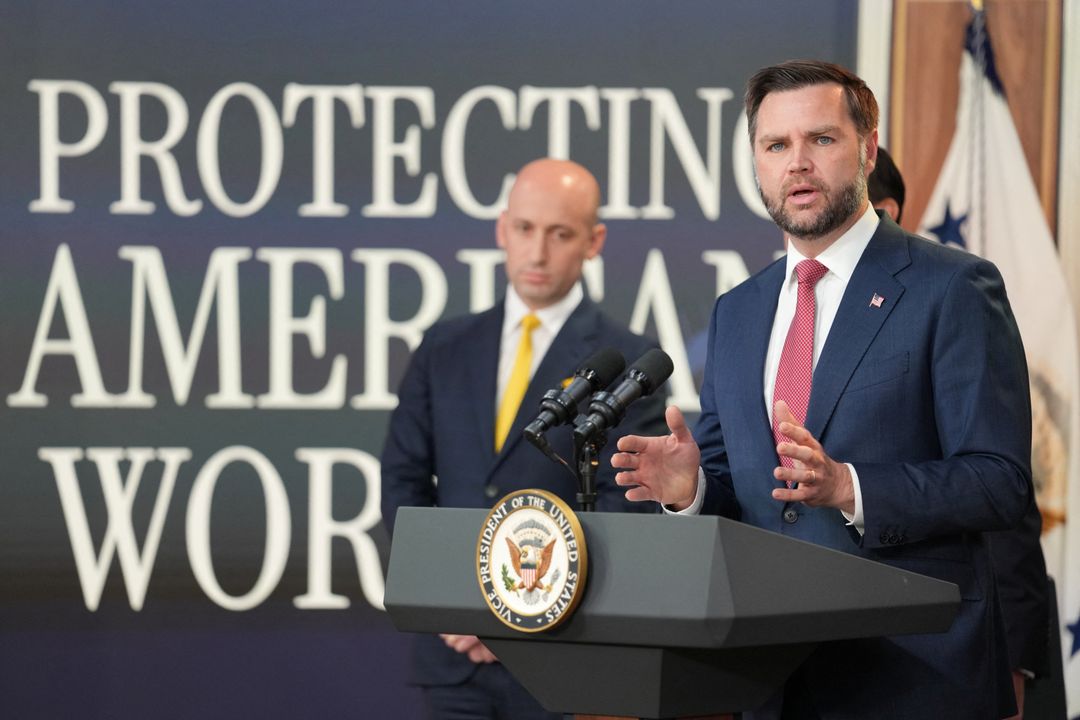
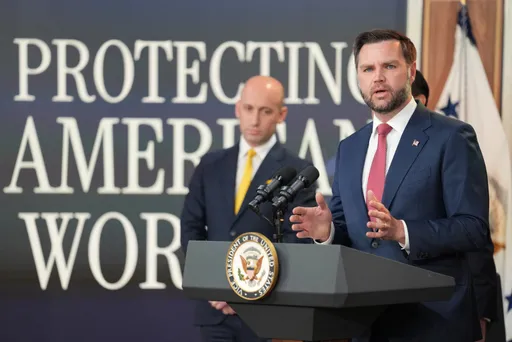
Vice President JD Vance said companies are using the PERM programme to replace American employees with foreign workers and undercut their wages.
Vance said on Thursday: "Our message to Microsoft is: You're a great American company, but you've got to hire great American workers."
The suspensions follow President Trump's move to impose a one-time $100,000 fee on new H-1B visa petitions for highly skilled foreign workers, which federal courts have blocked.
How does PERM differ from H-1B?
An H-1B is a temporary work visa that lets skilled foreign workers work in the US, generally for up to six years.
PERM, meanwhile, is a permanent labour-certification process.
The freeze does not appear to affect current H-1B visa holders directly.
What could restricting PERM do?
The restrictions have prompted differing assessments of their potential impact on the US labour market and technology sector.
The Trump administration argues that tighter controls on employer-sponsored immigration can help prevent misuse of the system and prioritise American workers.
Some experts said that while PERM suspensions might target specific companies, such policies risk making the US less globally competitive by deterring highly skilled foreign talent.
"It is a fallacy to think that you can protect American workers by keeping skilled foreign workers out of the country.
You think that foreign talent competes with Americans within our borders, they'll certainly compete with Americans by working abroad," said Chad Sparber, Director of the Lampert Institute for Civic and Global Affairs at Colgate University.