 Kazim Alam
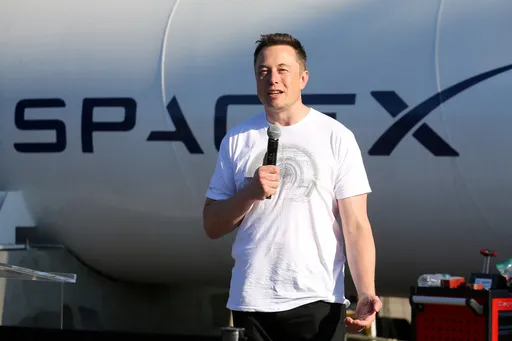
Among thousands of man-made objects drifting through space is Elon Musk’s personal cherry-red Tesla, which the world’s first trillionaire launched on February 6, 2018.
With a space-suited mannequin nicknamed "Starman" strapped to the driver's seat, and the stereo set on a loop playing David Bowie's "Space Oddity" and "Life on Mars?”, Musk sent his personal car into space as a publicity test payload for the maiden flight of SpaceX’s Falcon Heavy rocket.
Scientists say the car is likely to keep drifting in space for “tens of millions of years” before crashing into the Earth or Venus.
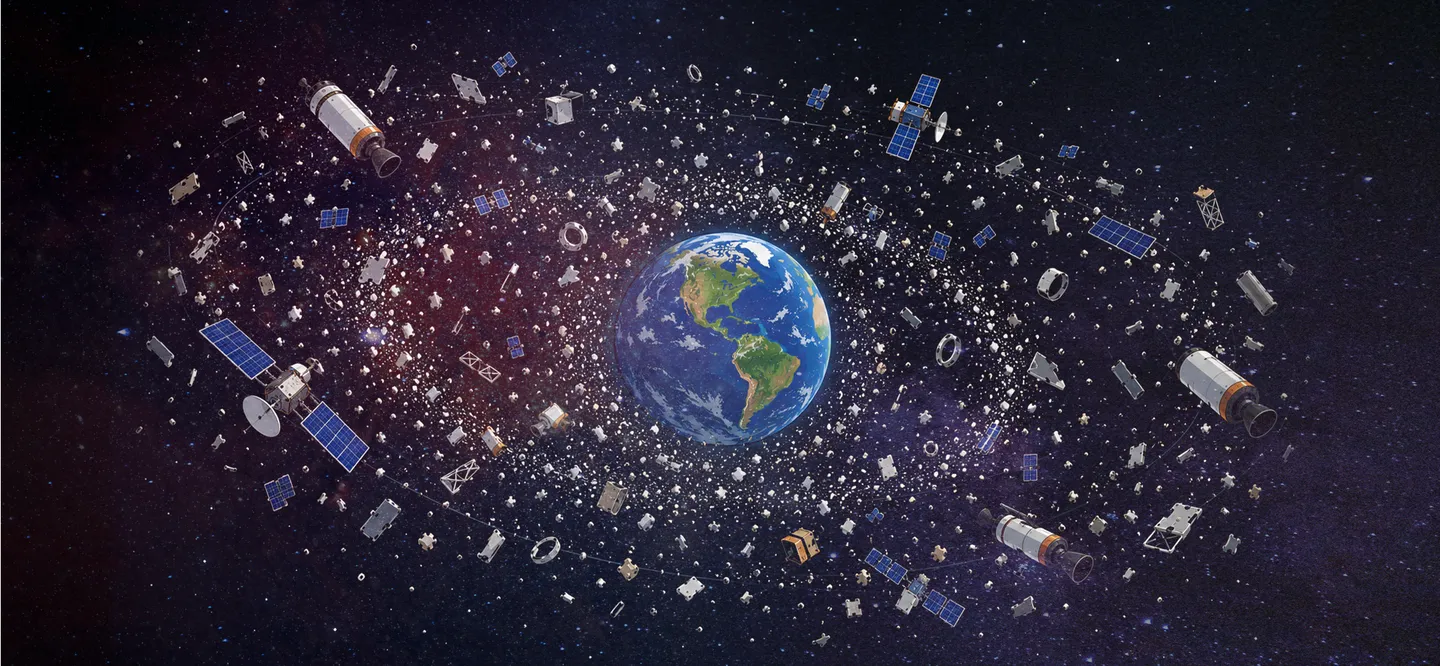
Musk’s car is one of the tens of thousands of man-made objects – called “space debris” consisting mostly of spent rocket bodies and metal pieces – that now share the once-empty space with a rapidly growing fleet of satellites.
The resulting congestion has created operational problems that put space infrastructure at risk of collision.
Space debris travels at a high speed of up to eight kilometres a second. After splitting from a satellite or rocket, it keeps cruising at the same speed without losing momentum in the absence of any air resistance.
The problem is becoming more serious by the day as companies like SpaceX plan to deploy a million more spacecraft, including sunlight-powered data centres, in the coming years.
Experts say the risk of serious space collisions is no longer theoretical.
The reason is not a lack of awareness. It’s actually the absence of a binding international mechanism – with powers to set rules and ensure enforcement – that’s making the threat of catastrophic collisions real, they say.
John L Crassidis, a professor at the University at Buffalo School of Engineering and Applied Sciences who works with NASA and other agencies to monitor space debris, tells TRT World that the risk of catastrophic collisions is rising rapidly as mega-constellations expand.
“The more objects we put in space, the greater the chance of catastrophic collisions,” he says.
A catastrophic collision between space debris and a satellite will not only decimate the satellite, but also create thousands of pieces of fast-moving shrapnel, each capable of destroying other operational satellites or spacecraft.
Jonathan C McDowell, a space sustainability analyst who worked at the Harvard-Smithsonian Center for Astrophysics for 38 years, says the constellation designers work hard to ensure collision avoidance.
“Nevertheless, the risk is real, and I expect collisions to start happening in the coming decade,” he tells TRT World.
Dedicated science and space publications have documented a sharp rise in last-minute dodges as mega-constellations fill the most useful altitudes in outer space.
SpaceX’s Starlink network of satellites alone has performed more than 355,000 collision-avoidance manoeuvres in a single year.
It means each satellite had to dodge debris and other spacecraft on an “almost weekly basis” during the year-long period.
Experts have warned that proposed mega-constellations can lead to the Kessler syndrome, a hypothetical scenario in which repeated collisions generate so much space debris that entire orbital regions become unusable.
Crassidis describes how the present warning system works.
“Currently, we track about 54,000 objects that are 10cm or greater in size,” he says. Operators compute a probability of collision “between all two-object pairs”.
“If the chance is greater than one in 10,000, then we will call one of the satellite companies and tell them they should move to avoid a possible collision.
“(SpaceX founder Elon) Musk reduced that down to one in 1,000, and that information is uploaded directly to the Starlink satellites, which automatically move,” he says.
“They actually move a lot every day to avoid debris,” Crassidis adds.
“If things are done smartly, then the risk of issues with mega-constellations can be reduced,” he notes.
But that “if” is quite expensive.
Satellite operators already spend $2 billion a year on just avoiding “very improbable” collisions.
What can go wrong if a million data-centre satellites carry out a billion avoidance manoeuvres every year – an extreme scenario that looks increasingly possible given the scale of planned expansion for new constellations?
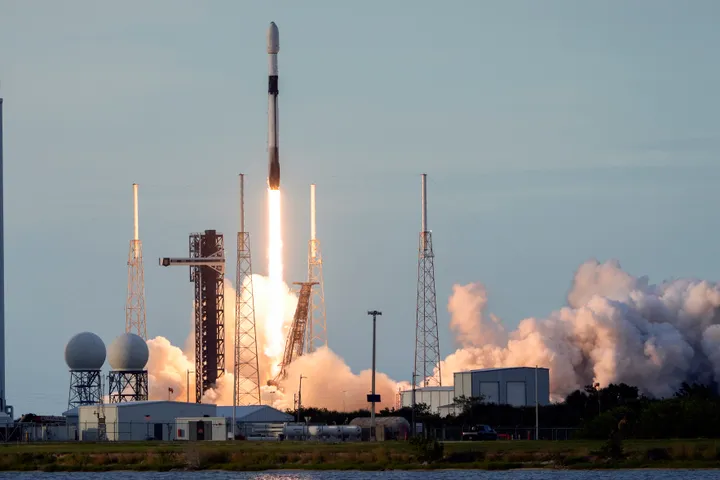
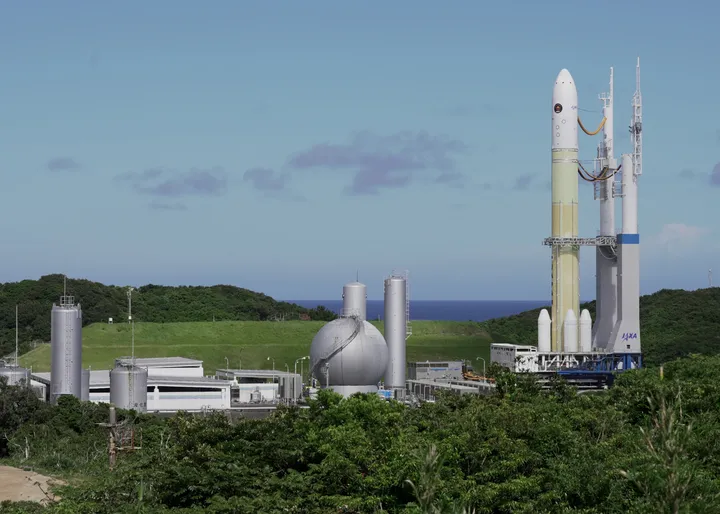
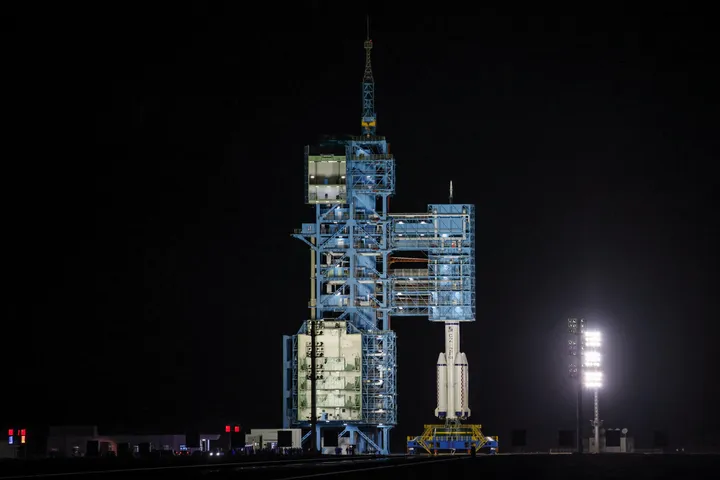
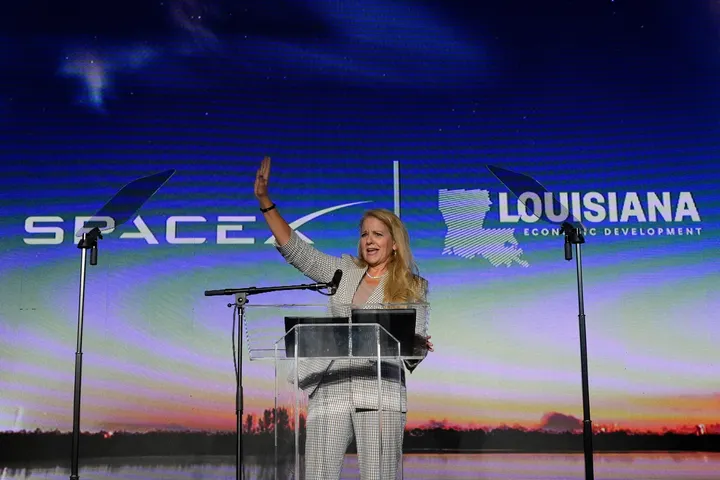

Crassidis points to the fuel-related challenges.
“There is only a limited amount of fuel on each satellite,” he says.
Operators will need to either supply satellites with more fuel, which will be costly, or face the possibility of more collisions, he says.
According to McDowell, space could become the scene of the Kessler chain reaction, where collisions become more and more common.
“Eventually, the space services, which are now an integral part of our economy, start to degrade,” he says.
No single regulatory body
Even a single high-speed collision in space can create a massive cloud of debris consisting of thousands of fragments detrimental to space infrastructure.
For example, the 2009 collision between the active Iridium-33 satellite and the defunct Kosmos-2251 produced more than 1,800 pieces of debris measuring 10cm or larger.
Scientists, however, did not just wake up to the urgent threat posed by potential space collisions. After all, humans have been sending satellites into space for decades now.
Yet, there is no single international authority for orbital traffic and debris control.
Crassidis blames a lack of international cooperation.
“The problem is that we currently don’t have any modern-day treaties between nations,” he says.
The US and its allies have created rules governing space traffic and debris, “but not all countries in the world follow them”.
The UN also put out guidelines in 2010, which were updated in 2024. Those documents matter, but they are not enough.
“We need leaders to get together to make these guidelines into an international treaty that all countries will follow,” he says.
McDowell says the bottleneck exists in the existing legal architecture under the UN umbrella.
The Outer Space Treaty governs space activities under the UN Committee on the Peaceful Uses of Outer Space (COPUOS), he notes.
“But COPUOS works by consensus, and it’s hard to get anything done, especially in the current era where certain countries are resistant to international agreements,” he says.
The Outer Space Treaty remains the cornerstone of space law, while COPUOS debris-mitigation guidelines are voluntary. So are the 2021 Guidelines for the Long-term Sustainability of Outer Space Activities.
National regulators can fine their own licensees. But they cannot easily force a foreign operator, or a state that never adopted the same standard, to follow these guidelines.
Crassidis gave the example of what enforcement looks like when national regulators choose to take action against domestic companies.
On October 2, 2023, the US Federal Communications Commission (FCC) fined Dish Network $150,000 after its EchoStar-7 satellite “ran out of fuel unexpectedly, which left it 160km short of the agreed graveyard orbit”.
“We need an international body to enforce rules and impose penalties for those who break the rules,” he says.
The FCC itself described the settlement as its first space-debris enforcement action.
McDowell says a world body must have the operational powers needed to fix what's broken in space law enforcement.
“We’d need them to be able to define rules of the road: who moves when, how much separation you need from other traffic, and so on – just like air traffic control today,” he says.