 Zeynep Gizem Ozpinar
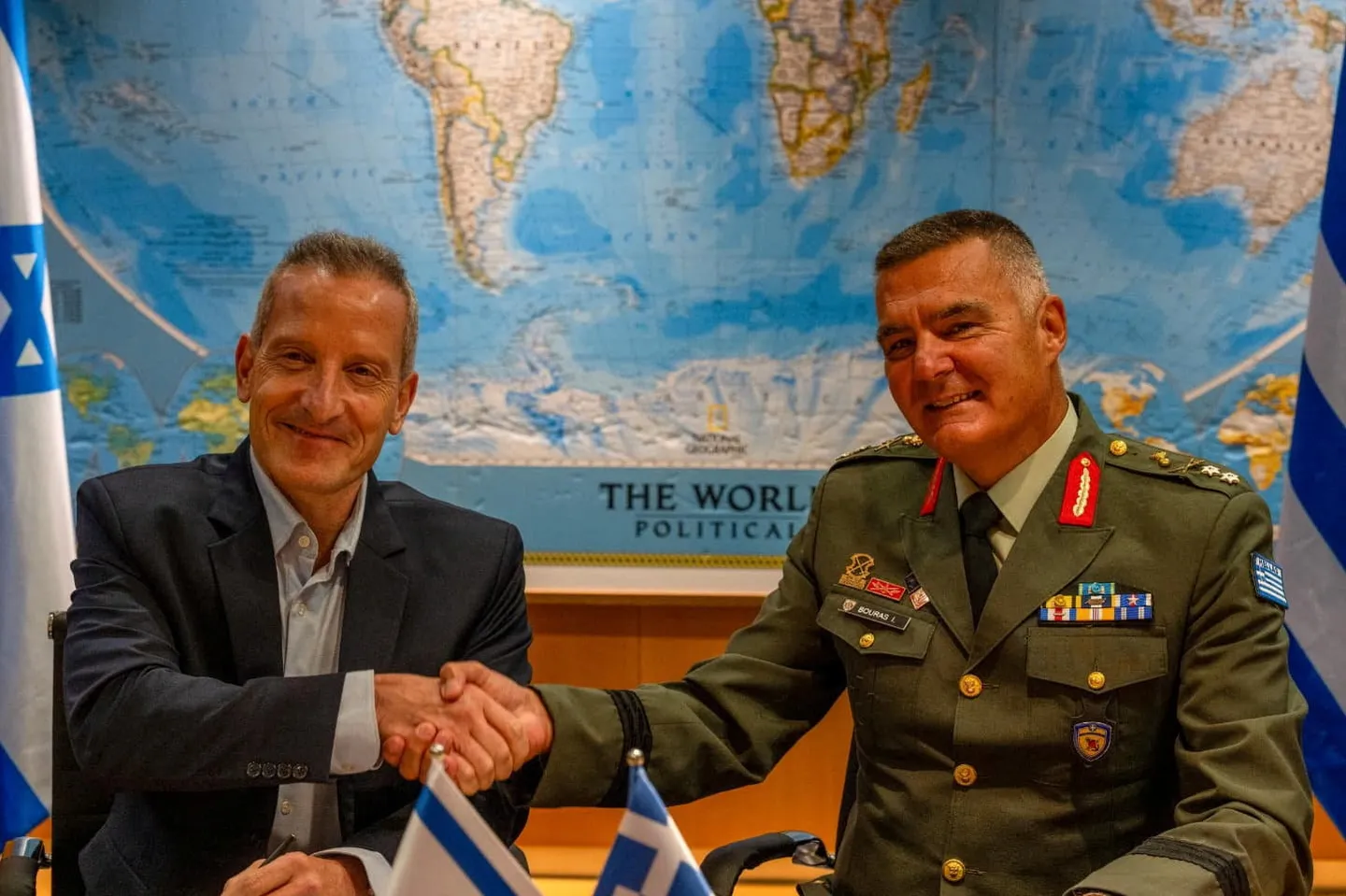
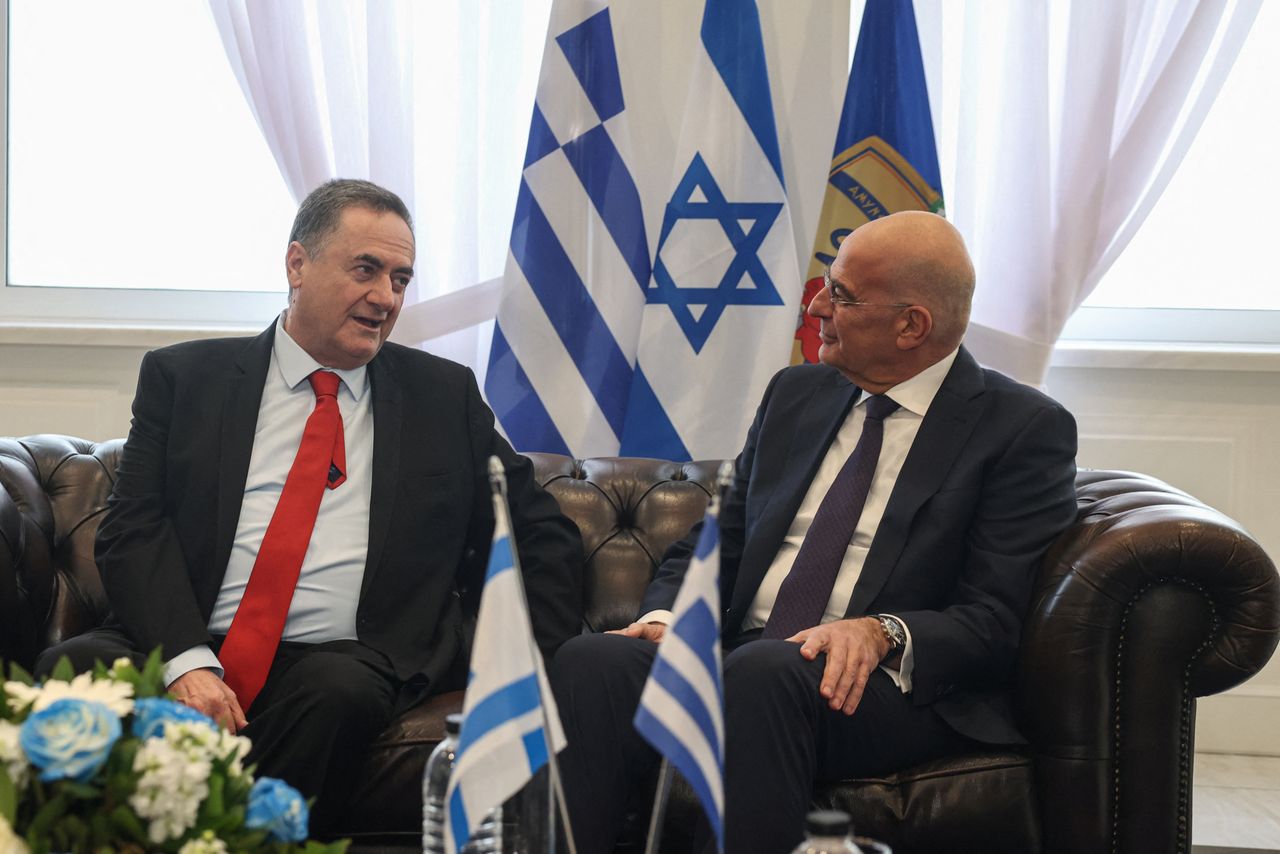
Last month, Greece signed an air and missile defence agreement with Israel in Tel Aviv worth more than €3 billion, placing one of the largest defence bets in its history.
Named the ‘Shield of Achilles’, the project aims to turn the air defence architecture of the Aegean and the Eastern Mediterranean into a single digital network woven together by the David's Sling, Barak MX, Spyder and MMR systems.
According to the government, it will reach full operational readiness within 35 months.
Yet by entrusting the nerve centre of its national security to a foreign state, Athens has chosen to disregard both the sharp objections rising from its own public and a murky network of actors entangled in a spyware scandal.
Borrowed from Homer's epics, the name may evoke the image of a powerful shield.
What has actually emerged, however, tells a more fragile story: a system whose money is Greek, whose name is Greek, but whose brain is entirely Israeli.
Who holds control?
The most striking feature of the agreement is that Greek industry's share of the project remains at around a meagre 25 percent.
A substantial portion of the radars, the command-and-control software, the missiles and the sensor systems will be supplied by Israeli companies; the new national command-and-control system will be developed under Rafael's lead.
Israel's Ministry of Defence has officially said that the system will be built on "Israeli architecture", laying that dependence bare.
For a country to tie the software backbone of its air defence so tightly to another state's supply chain raises the question of how far Athens can preserve its own say over its systems in a moment of crisis.
That question has been raised from within Greek domestic politics.
In a statement released on the day of the signing, the opposition SYRIZA argued that the New Democracy government was deepening Greece's military dependence on the administration of Israeli Prime Minister Benjamin Netanyahu, who is the subject of an International Criminal Court arrest warrant.
It also stressed that signing the agreement through a direct intergovernmental procurement had removed it from public scrutiny, and that the bill had been passed to Greek taxpayers.
The Communist Party of Greece (KKE) called the agreement "dangerous", warning that preparations for war were accelerating.
According to Nea Aristera's calculation, once the €650 million allocated to the Israeli-made PULS rocket system is added, the total bill reaches €3.75 billion.
The same statement noted that the missiles, the radars and the software of the system are Israeli, while only the money and the name are Greek, adding that it would be more accurate to call the project "Netanyahu's Shield".
The opposition's shared emphasis converges on one point: in a period of fiscal strain, billions of euros in spending were approved with transparency mechanisms switched off.
The transparency problem is not confined to the opposition's general rhetoric. It rests on a concrete contradiction.
In a formal parliamentary question and request for documents submitted to Defence Minister Nikos Dendias, PASOK MP Mihalis Katrinis asked the government to explain the cost of the Shield of Achilles, the role of Greek companies in the project and the national control of the central command and control system.
The questions went unanswered.
Lost source code
Before long, the source code question moved from theory to a concrete contradiction.
In an interview with the newspaper Kathimerini, Moshe Patel, head of the Israel Missile Defence Organisation, was asked whether Greece would have access to the source code associated with command and control capabilities.
His answer was plain: "No. Because the source code was not part of the usage licence agreement."
The sentence he added immediately afterwards revealed the nature of the dependence: they were there to provide support and maintenance, and they would provide whatever support and maintenance might be needed in the future.
Soon the interview itself became the subject of a transparency dispute. In the newspaper's online version, the question and answer on the source code were absent from the initial publication, although they appeared in the print edition.
The online version was later updated following backlash on social media, with the question and answer added alongside updated information from Israel's Ministry of Defence.
Patel's statement directly contradicted the assurance Dendias gave on July 23, when he said that, apart from very specific exceptions, the Greek Armed Forces would not purchase any system without its source code. Dendias had repeated that pledge openly on August 30, just a day before the signing.
Four MPs from Nea Aristera also demanded that the text of the contract, including the terms of access, intervention and oversight for the command and control system, be submitted to parliament.
Main opposition leader Nikos Androulakis addressed Prime Minister Mitsotakis directly in the middle of the dispute: "In the end, are we held hostage or not? Do we have access to the source code or not? The Prime Minister himself must answer this question today."
As public pressure mounted, Israel's Ministry of Defence issued a different statement on September 8, arguing that Greek companies would develop their own "Greek source code" and that it would remain entirely under Greek control.
That statement, however, only sharpened the attacks, as it became apparent that Greece would receive only the code for the interconnection software that links the Israeli-made systems.
The source code of the systems themselves, such as SPYDER, BARAK MX and David's Sling, remains out of its reach.



This is precisely where the critical distinction lies. Owning a system's source code and owning the code of the central software that links different weapons systems together do not amount to the same authority.
Athens will control the code of the layer that binds them, while remaining without access to the internal software of the weapons systems that make up the shield. Who will hold the system's cryptographic keys and control its network connections in a moment of crisis remains unclear.
The nature of the statement is also notable. The text in question was not a communiqué published on the official website of Israel's Ministry of Defence, but merely a note conveyed to the media by the press office.
The only official announcement still posted on the ministry's website remains the one dated August 31, which makes no mention of transferring any source code to Greece.
Another detail Patel gave in the same interview further narrows the limits of autonomy: David's Sling's ability to connect with other systems is subject to Washington's approval, owing to the American stake in the programme.
Nor did the debate end there. The government's silence in response to Nea Aristera's demand was partially broken.
Yet the contradiction deepened: Deputy Defence Minister Athanasios Davakis and the parliamentary rapporteur, New Democracy MP Yorgos Amyras, stated in successive announcements that the source code would be "Greek" and would remain "under full Greek control".
These statements do not clarify the scope of Dendias's pledge. The distance remains between the interconnection code described by the Israeli side and the system source code Dendias pointed to, and Dendias has so far made no new statement explaining that difference.
Indeed, on September 18, the KKE posed a fresh parliamentary question to Dendias, stating that it still remained unanswered who holds operational and technical control of the command and control system, and that even if a "Greek code" is produced for the central layer, this alone does not resolve the question of autonomy over the system as a whole.
It asked for the contract to be brought before the plenary of parliament with all its annexes.
This uncertainty over the scope of the source code shows that Athens cannot give its own people a clear and definite answer on the most critical element of the system it is paying for.
Names left in the shadows
Another uncomfortable shadow falls over the debate on dependence and transparency: allegations of a link between the Israeli defence network behind the Shield of Achilles and the Predator spyware scandal that has shaken Greece for years.
Predator is spyware developed by the North Macedonia-based Cytrox and later marketed under Intellexa.
A court ruling established that the phones of at least 87 people in Greece were surveilled with this software, including ministers, senior military officers, journalists, and civil society figures.
In February 2026, an Athens court found Israeli citizen Tal Dilian, who marketed the software, and three others guilty of violating the privacy of telephone communications, sentencing each of them to 126 years and eight months in prison. Under Greek law, the term actually to be served for these offences is capped at eight years, and the ruling is pending appeal.
Moreover, the Predator surveillance scandal is a separate controversy in its own right, given the Mitsotakis government's political responsibility and the surveillance of individuals, including members of the opposition.
The truly contentious claim is that there are points of intersection between the figures in this scandal and the names negotiating the Shield of Achilles agreement.
According to an investigation published by the Greek outlet Pronews, Stavros Komnopoulos, founder of Kestrel SA and the Greek representative of Israel's Rafael Advanced Defense Systems and Aeronautics Defense Systems, is alleged to have provided housing in Athens in 2020 to Rotem Farkash, the developer of Predator, with the rental guarantee provided through a company belonging to his nephew.
The same report notes that Komnopoulos's name does not appear anywhere in the final report of the prosecutorial investigation, which has been interpreted as an attempt at a cover-up.
This uncertainty alone constitutes a serious problem. That suspicions this grave can circulate in public around the intermediaries and representatives of a €3 billion national security agreement indicates how poorly the government has performed on transparency.
If Athens considers these allegations baseless, it must clarify why the prosecutor's report makes no reference to these names at all. Otherwise, the suspicion will continue to leave a more lasting mark than the shield itself.
The threat pretext
The Greek government is ignoring these striking allegations as it tries to shift public focus elsewhere, repeating the same sentence each time: the need for deterrence against regional threats, and above all against Türkiye.
Through this rhetoric, the Mitsotakis government is both seeking votes in next year's elections and showing its domestic audience only the part it wants them to see, while the root of the problem lies in Athens's unilateral and maximalist claims.
Greece has long maintained maximalist claims in the Aegean and the Eastern Mediterranean that are incompatible with international law, and it has not refrained from building hostile alliances directed against Türkiye.
These include the extension of territorial waters in the Aegean to 12 nautical miles, the claim to 10 nautical miles of national airspace, the approach that FIR responsibility confers sovereign authority on Greece, the militarisation of islands with demilitarised status, claims of sovereignty over islands, islets and rocks whose sovereignty was never ceded to Greece and which Türkiye designates as EGAYDAAK, and search and rescue activities.
Athens also ties the Aegean disputes to European security language. On his most recent visit to Meis (Kastellorizo), whose demilitarised status Greece violates, Mitsotakis emphasised that the island's soil is "European soil", which shows a desire to pull bilateral problems with Türkiye onto the Türkiye-EU axis.
The "Turkish threat" narrative is turning into a convenient armour that conceals this aggressive foreign policy line and constructs an image of victimhood before international opinion. Athens presents the tension it itself builds as grounds to take shelter behind a shield.
Seen through this lens, the Shield of Achilles serves as a justification that lends legitimacy to an armament and alliance strategy already in force.
In the end, what lies before Greece is an example of layered fragility. In trying to protect itself against imagined external threats through this project it calls the ‘Shield of Achilles’, Athens appears to have produced a new security vulnerability by sacrificing domestic political oversight and institutional transparency.
Homer's hero Achilles lost his strength through the single weak point in his heel. Only time will tell whether Greece's modern shield has a similar weakness, and perhaps at the most critical moment.