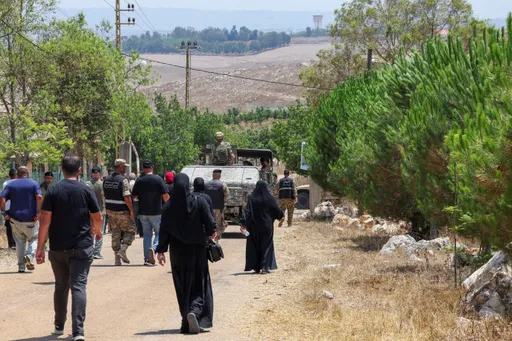
Imagine Amazon warehouses being attacked on American soil, workers getting killed and injured, big financial losses and the supply chain of daily-use things getting disrupted. This is what is happening deep inside Russian territory.
In the space of a few days, Kiev has targeted Russia’s largest online retailer, Wildberries, numerous times.
Why are the attacks happening?
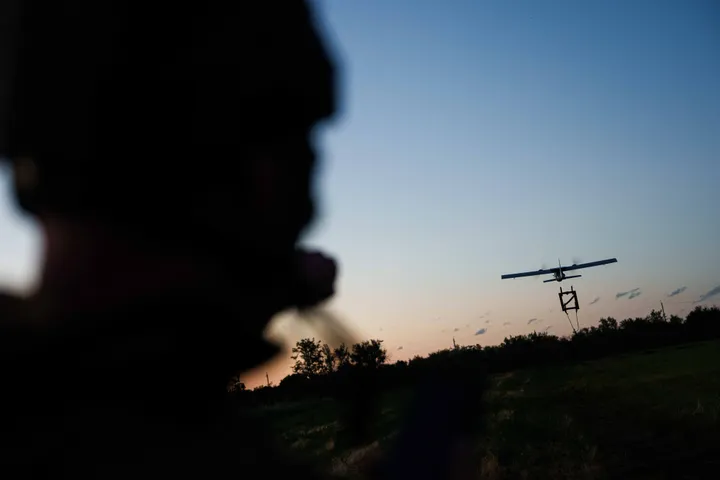
Ukrainian President Volodymyr Zelensky accuses the Russian military of using Wildberries to source and transport dual-use electronics, sanctioned items, and critical drone components.
Serhii Kuzan, chairman of the Ukrainian Security and Cooperation Centre, a Kiev-based analytical think tank, says striking Wildberries’ warehouses is central to damaging the supply line of Russian weapons.
"The primary rationale for striking Wildberries' warehouses is to disrupt Russian logistics and the supply of dual-use goods, critical electronics, sanctioned goods and the like to the Russian army and Russian arms manufacturers," he said to the BBC.
But it’s not just the military that Ukraine is targeting. Kiev wants to inflict maximum cost on the Russian economy.
"The collateral damage from such strikes could also have a serious impact on the Russian economy, as well as a psychological effect on Russian society and, likely, on continued support for the war,” Kuzan said.
Kremlin spokesman Dmitry Peskov denies accusations from Ukraine that Wildberries handles military supplies.
The attacks on the online retailer also serve as asymmetric retaliation for Russia's relentless strikes against Ukraine's various civilian infrastructures and its domestic postal service, Nova Poshta (New Post).
What happened to Nova Poshta?
Russian forces had damaged or destroyed more than 400 of Ukraine’s postal service’s branches and terminals by the start of 2026.
June 15 saw three Russian ballistic missiles striking Nova Poshta’s largest sorting centre in Kiev. And on July 19, a terminal in Kharkiv was destroyed.
The Russian Ministry of Defense justified these attacks by claiming that civilian logistics hubs are being used to store Ukrainian military cargo, foreign equipment, or drone manufacturing components.
Is it a war cime?
The attacks on Wildberries have raised an important question: are Ukraine and Russian attacks on civilian facilities a war crime?
The opinion is divided, according to Meduza — an independent Russian media outlet.






Some analysts say the allegations involving the sale of dual-use goods alone are not enough to target Wildberries and Nova Poshta.
According to international humanitarian law’s definition of military objectives, it prohibits attacks on civilian objects if there is no effective contribution to military action.
And a presumption of civilian status also applies if it is normally dedicated to civilian purposes. If there is any doubt at all, an object cannot be considered military and cannot be attacked.
Also, if weapons make up only a negligible share of the goods stored in warehouses, the intensity of attacks also plays a factor in deciding if the strike was unjustified.
Supporters of the strikes against Wildberries say the lines between civilian and military facilities have been crossed and therefore makes it a legitimate target.
Who are Wildberries?
Wildberries is Russia’s undisputed e-commerce titan — frequently referred to as the Russian equivalent of Amazon, employing more than 40,000 people. It was founded in 2004.
Wildberries founder Tatyana Kim is Russia's wealthiest woman.
The RWB group, which combines Wildberries with advertising company Russ, was valued at about $12.6 billion by Forbes Russia in 2026.
Wildberries is estimated to command more than 50 percent share of Russia's entire e-commerce market.
The company says its nationwide warehouse network is capable of handling over 20 million orders a day.
How much do Russians rely on it?
Russian society is profoundly dependent on Wildberries for meeting daily life needs.
Millions of small and medium-sized Russian businesses rely entirely on Wildberries to list, store, and ship their inventory.
The initial drone strikes on the Moscow and Tambov hubs instantly wiped out as much as $2-3 billion worth of seller goods, according to research agency Data Insight.
Wildberries updated its seller terms on July 7 to include force majeure exemptions for drone strikes and military action.
As a result, thousands of small business owners whose inventory was incinerated face catastrophic financial losses without a guaranteed right to full compensation.
Wildberries has taken on a critical socio-economic role since Russia-Ukraine war began in 2022.
When Western retail brands pulled out of Russia en masse, Wildberries became the primary pipeline for everyday households to access imported goods. It became a major channel allowing a massive parallel-import ecosystem where third-party vendors could bypass direct sanctions.