 Zeynep Conkar
US President Donald Trump has wanted Greenland for years, repeatedly threatening to take the autonomous Danish territory, even by force, if needed.
He first expressed interest in acquiring the island in 2019 and, during his second term, escalated his rhetoric, at times refusing to rule out military or economic force to bring it under US control.
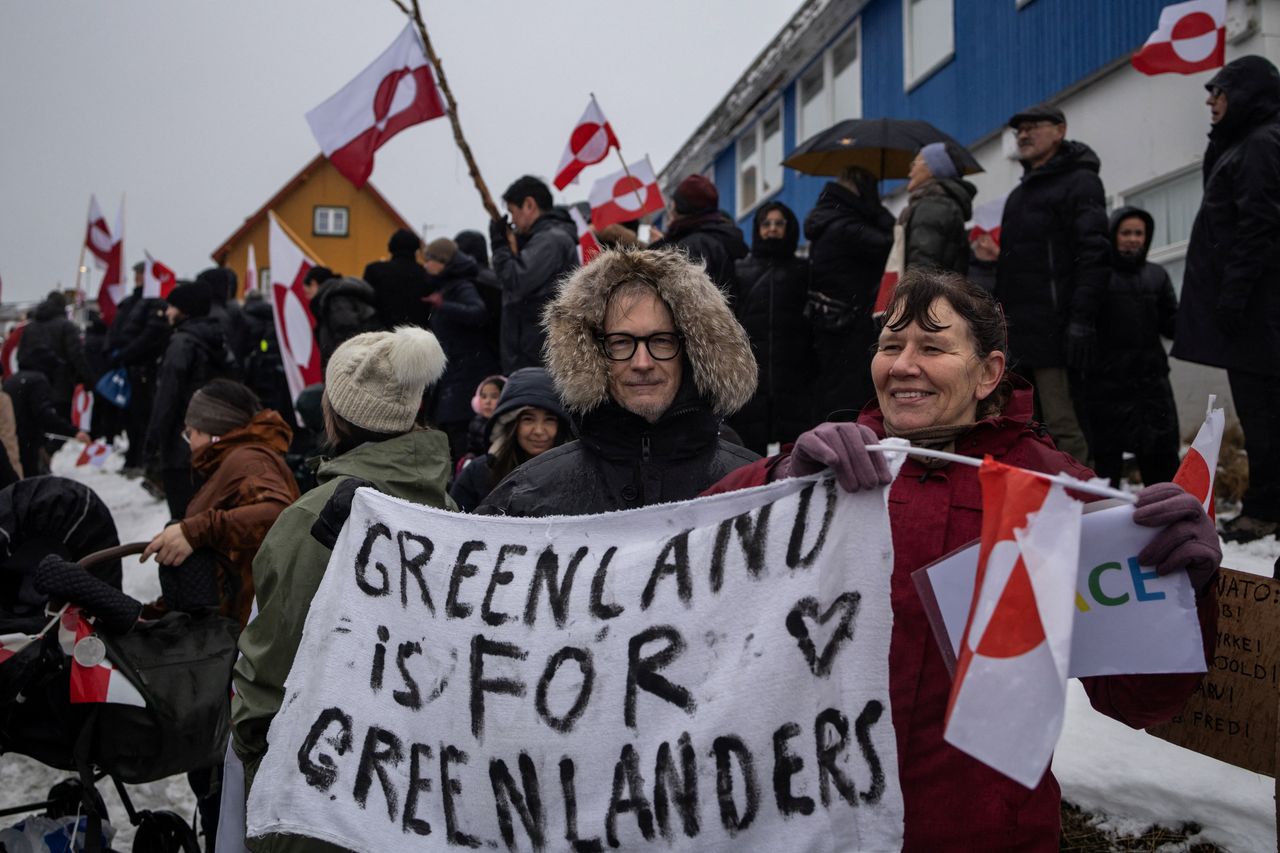
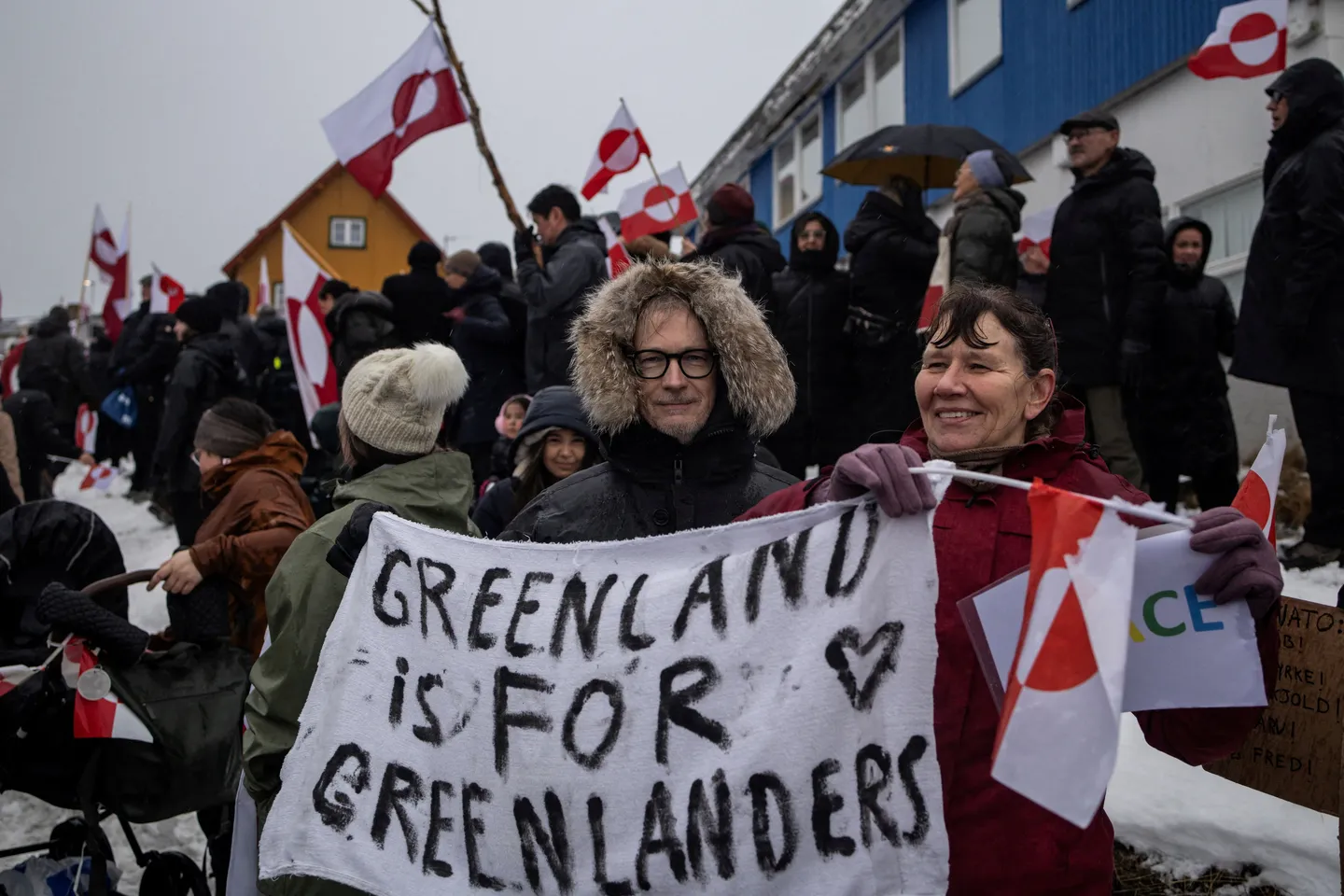
Polling shows an overwhelming majority of Greenlanders have rejected the idea.
Despite that, Trump continued to push the issue, and on Friday, he said that the US had finally reached an agreement with Denmark and Greenland, giving Washington “permanent control” over security and “all other needs” on the island.
The arrangement would cost the US nothing and have an “Infinite Life”, while barring US adversaries from establishing bases, stationing military personnel or making sensitive investments in Greenland without American approval, the president added.
But the deal Trump is presenting as a sweeping expansion of US power falls short of his earlier demand to “take Greenland”, according to experts.
The Danish and Greenlandic governments have framed the agreement differently. Danish Prime Minister Mette Frederiksen said it preserves the sovereignty and territorial integrity of the Kingdom of Denmark, while recognising Greenlanders’ right to self-determination.
Greenland Prime Minister Jens Frederik Nielsen called it a “win win win agreement”.
The agreement appears to be a compromise between three different perspectives, according to Hasan Akintug, researcher at the Centre for Nordic Studies, University of Helsinki.
“On the American side there seems to be a desire to exercise unrestricted sovereignty on the island in the domains of security and defence policy. From the Danish perspective, the agreement maintains that Greenland is a part of the Kingdom of Denmark,” Akintug tells TRT World.
“From the Greenlandic perspective, the new agreement also explicitly refers to Greenland as a factor in international politics and a potential independent state within this agreement. The preamble of the agreement is particularly important in terms of understanding the different interests of the three actors involved.”
“There are elements that are appealing to all sides, and it would not be surprising if each would actively attempt to frame the agreement as a victory from their own point of view,” Akintug adds.
The agreement was signed Tuesday on the sidelines of the UN General Assembly in New York. Its terms allow Washington to “modernise and expand” its activities at Pituffik Space Base and establish defence areas at Narsarsuaq in southern Greenland and Mestersvig in the east.
Secretary of State Marco Rubio described it as a deal that “permanently and completely” addresses Washington’s national security concerns.
That leaves a basic question: how much of what the US side is calling “permanent control” is actually new?
The US already has broad military rights
Washington has already had extensive military access to Greenland since the 1951 Defence of Greenland Agreement with Denmark.
The treaty allows the US to establish and operate defence areas agreed with Denmark under NATO defence plans.
Where Washington is responsible for a defence area, it can construct, install, maintain and operate military facilities, station personnel, store supplies and control the movement of ships, aircraft and vehicles within the area.
US forces also have free access between defence areas through Greenland, including by land, air and sea, while US aircraft can fly over and land across Greenland subject to agreed limitations.
The agreement also gives the US exclusive jurisdiction over defence areas for which it is responsible, while explicitly preserving Danish sovereignty over them.
The arrangement was updated in 2004, when Greenland’s home rule government became a party to the agreement. The amendment also provided for new defence areas and updated the framework for US military activities on the island.
In other words, Washington has had a legal framework for maintaining a substantial military presence in Greenland since the early Cold War. During the Cold War, the US maintained 17 military installations and more than 10,000 personnel on the island. Today, Pituffik Space Base is the only US military installation there.
The word “permanent” is also less transformative than President Trump’s language suggests.







According to Akintug, the 1951 agreement also did not have an explicit termination clause.
However, he notes that Article XI of the 1951 agreement implicitly acknowledges the possibility of termination, referring to the removal of US facilities and equipment “at any time before the termination of this Agreement or within a reasonable time thereafter.”
“The 2026 agreement mentions that there is no ‘end date’ and that it can only be amended by mutual agreement. It also mentions that an independent Greenlandic state commits to remaining part of NATO and would take over defence-related responsibilities from the Danish government,” Akintug says.
“This could be seen as a restriction of Greenland’s defence policy options and, consequently, its sovereignty, should it become independent,” he says.
It is not clear what practical implications the ‘no end date’ clause will have or what would happen to the agreement if the parties later decided to terminate it, Akintug adds.
What is new?
The new agreement does add something tangible: a framework for expanding the US military presence beyond its existing installation at Pituffik.
The accord allows Washington to establish defence areas at Narsarsuaq in southern Greenland and Mestersvig in the east, while also permitting additional defence areas and stronger US military operations or facilities elsewhere on the island.
The agreement also places clearer limits on potential rival military activity. No non-NATO country can establish its own manned or unmanned military installations in Greenland or maintain a persistent military presence unless the signatories agree otherwise.
However, Akintug says no publicly available information indicates that any non-NATO country is actively attempting to establish a military presence in Greenland.
“Regarding sensitive investments, the US has not previously hesitated to express its discomfort with certain investments (such as Chinese investments in airports and telecommunications) in either autonomous territory (Greenland and the Faroe Islands) in the Kingdom of Denmark.”
“It is not clear if the new agreement will cause a major shift in US policy in this regard. Perhaps it could be seen as an explicit acknowledgement of existing practice,” he adds.
Emphasis on NATO
Greenland sits between North America and Europe and has long been strategically important for monitoring the Arctic and North Atlantic.
The agreement puts US military access to Greenland within a broader NATO security framework, with the signatories saying they share an interest in US access to defend Greenland, the NATO area and the American continent.
Greenland itself is a party to the new arrangement. If Greenland eventually becomes independent, the agreement says it can remain in force provided Greenland remains in NATO and assumes Denmark’s rights and obligations under the deal.
The agreement therefore creates a long-term framework for US military access regardless of whether Greenland’s constitutional relationship with Denmark changes in the future.
The agreement’s emphasis on NATO also needs to be understood in the context of Greenland’s existing relationship with the alliance, according to Akintug.
“The Greenlandic government in its 2024 strategy clearly defined Greenland as a part of the ‘Western Alliance’ and opinion polls from 2024 also showed that 65% of interviewees had a positive view of NATO, with 31% having a neutral view and only 4% viewing NATO negatively,” Akintug says.
“The emphasis on NATO is somewhat surprising considering the current US administration’s general rhetoric. It is also important in light of a shift in Canadian foreign policy, with Ottawa taking a more NATO oriented approach to its Arctic territory after decades of skepticism.”
“It is very difficult, if not impossible, to predict what the broader implications are for the Nordic countries. But considering the new orientation of Sweden and Finland within NATO, the other Nordic countries are likely to welcome a stabilisation on the US-Denmark-Greenland axis,” he adds.