Two years of Israel's genocide in Gaza, multiple displacements, and the killings of her husband and father in Israeli strikes have reduced Lamis Dib's life in besieged Gaza to a relentless fight for survival.
"It's indescribable," the 31-year-old mother of two said of the Israeli genocide that continues to devastate the Palestinian territory.
"Friday, October 6, 2023, the last day before the war, was a beautiful day," she recalled.
Her oldest daughter, Suwar, five at the time, had just started kindergarten, and Dib would watch her come home every afternoon from the window of their apartment in Sheikh Radwan, a middle-class neighbourhood in the north of Gaza City.
Her son Amin, then three, "was taking up all of my time", said Dib, who would often bring him to the nearby seaside.
Dib had studied to become a social worker, but could not find a job in Gaza's impoverished pre-genocide economy, partly stunted by a strict Israeli blockade — from land, sea, and air — since 2007.
But she had built "a happy family" with her husband, an accountant who ensured that she "never lacked anything".
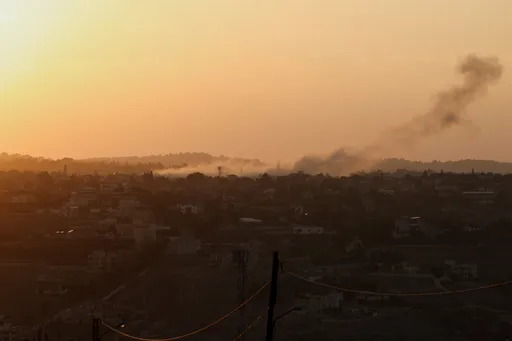
Their neighbourhood was one of the first to be bombarded by Israel following October 7.
The raid resulted in the deaths of 1,219 people on the Israeli side — most of them civilians. Many were killed in haphazard Israeli response and doctrine called Hannibal Directive.
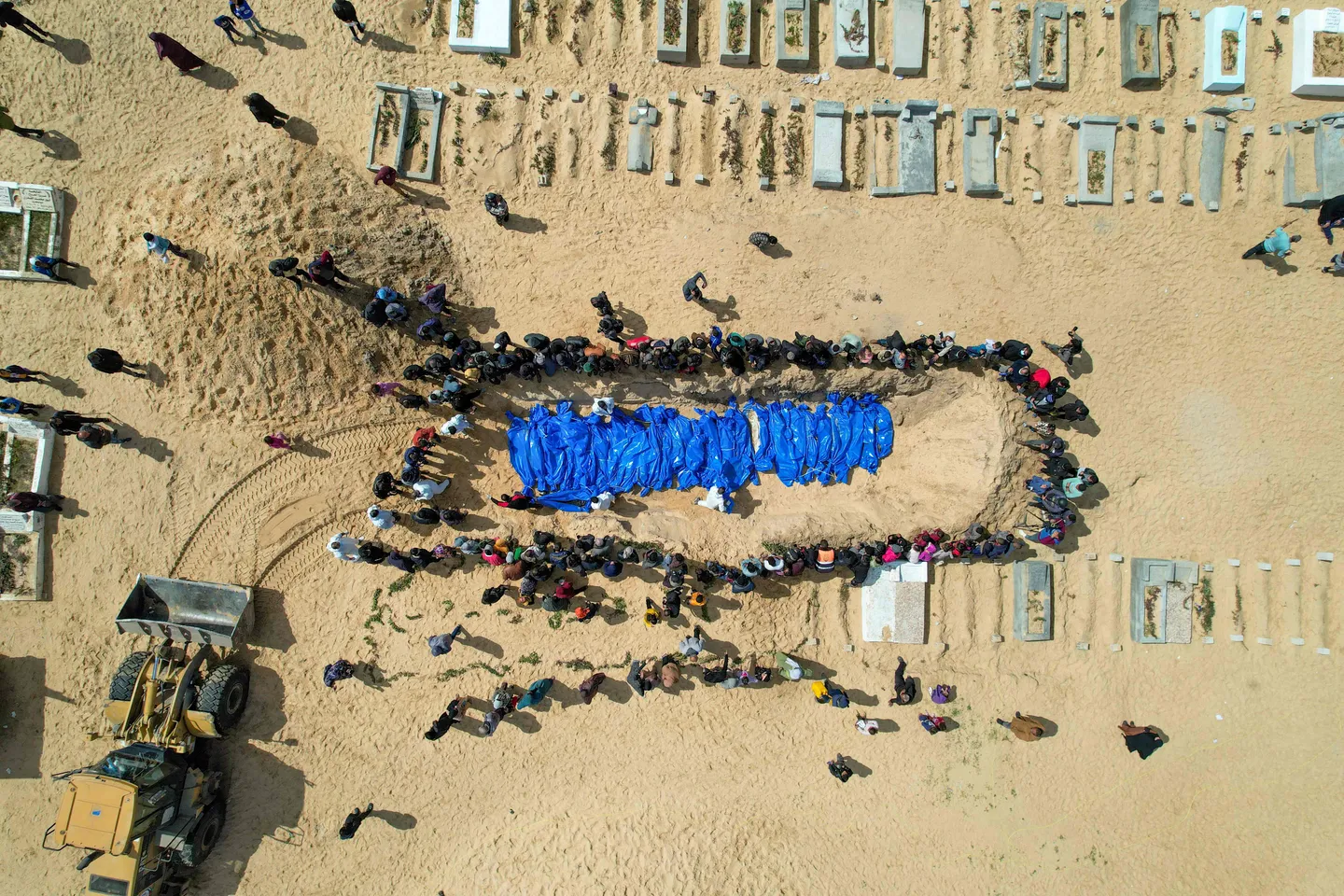
Israel's campaign of genocide has since killed around 67,000 Palestinians in Gaza, also mostly civilians. The victims do not include some 11,000 Palestinians feared buried under rubble of annihilated homes.
Experts, however, contend that the actual death toll significantly exceeds what the Gaza authorities have reported, estimating it could be around 200,000.
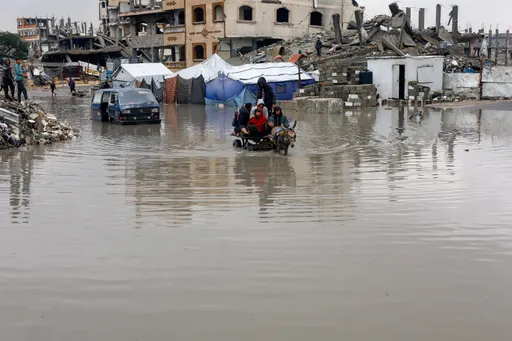
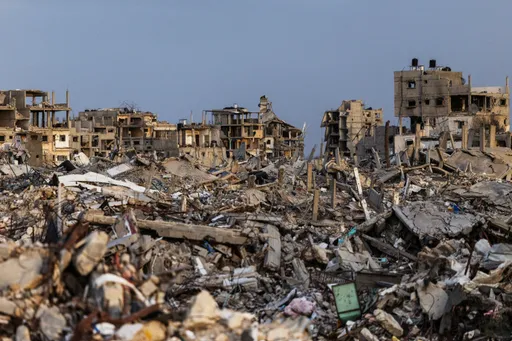
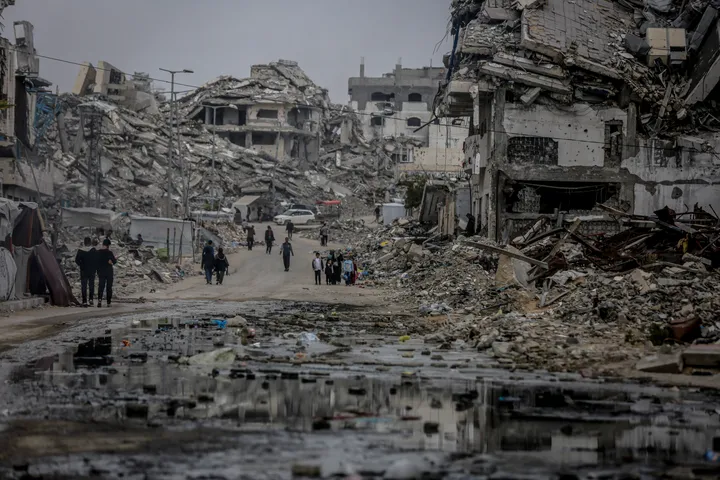
The destruction in Gaza is vast, with entire neighbourhoods flattened and millions of tonnes of rubble now covering areas where families once lived.
Buildings, hospitals, schools, water and sanitation systems have borne the brunt of Israeli attacks, and the humanitarian consequences for the territory's more than two million people have been severe.
Hundreds of thousands of homeless Palestinians have crowded into shelters, makeshift camps and open areas, lacking even basic protections.

'Race against death'
When Dib's area was struck by Israel, she and her family fled to a nearby district — the first of a series of expulsions — before fleeing northern Gaza for the city of Khan Younis in the south.
"One of the most difficult days of our lives," Dib said, describing their long expedition along torn-up roads and through Israeli military checkpoints.
She and her children have been expelled 11 times.
"Each move was a race against death, under air strikes. It was as if I was on autopilot, I carried my kids, held them against me, and ran without looking back, without knowing where we were going," she said.
When the family relocated to the southern city of Rafah for a time, shortages and overcrowding were the norm.

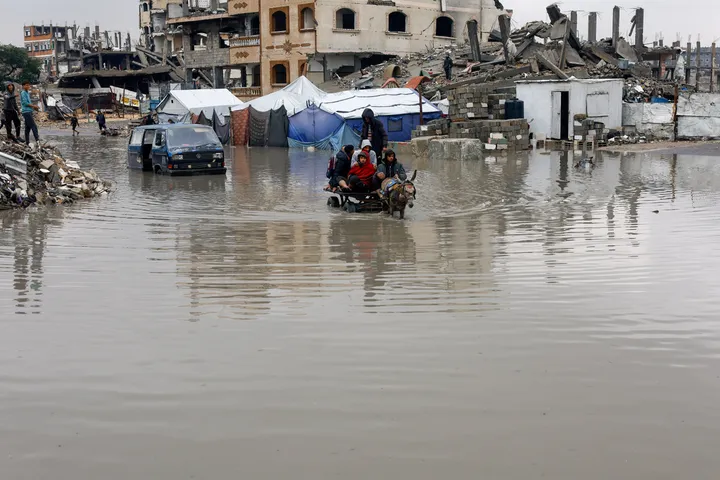


"For six months, in Rafah, 30 of us would sleep in a single room with no toilets. It was hard to express what we felt: confinement, nonstop air strikes, hunger, thirst, lack of hygiene and a total absence of privacy," she said.
In August 2024, the family was living in the central Gaza refugee camp of Nuseirat when Dib's life changed again.
"On a Friday at 6:00 pm, my husband and my father were on the rooftop with five young people from the family, when we heard the sound of a missile and saw smoke," she said.
"I ran towards the rooftop, and the scene was unimaginable; they were all dead.
"My husband's body seemed intact, I thought he was alive. I tried to wake him up, but he had been struck in the head. And then I found my father's body... his hand had been blown off."

'A little bit of peace'
From that day on, Dib had to care for her children alone, just when life in Gaza was at its hardest.
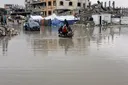
She moved into a tent in Al-Zawayda, a camp where thousands of Palestinians share the same harsh daily life, living under tarps that flap in the wind, bake under the summer heat and leak during the winter rains.
"Everything is difficult," she said from inside her shelter.
While her friends can appeal to their fathers or husbands for help, Dib must weather the unending financial difficulties by herself.
In May 2025, Israel eased a total blockade on supplies that it imposed in March, but the humanitarian aid trickling in since then has not been enough, the UN says.
"Our children were robbed of education, food, and a normal life," she said as Suwar and Amin studied on her knees.
Sometimes, they look at photos of their father and relatives killed during the genocide on Dib's phone.
"We'll return to our home," she said. "We will rebuild it, but we just want a little bit of peace."
Like their mother, Suwar and Amin are mostly preoccupied with survival, tasked with filling up the family's jerrycans at a temporary water station near the tent.
For them, the Israeli genocide's consequences may outlast the air strikes.
The UN's agency for children, UNICEF, estimated in 2024 that every child in Gaza was in need of psychological support.