 Aysegul Colak
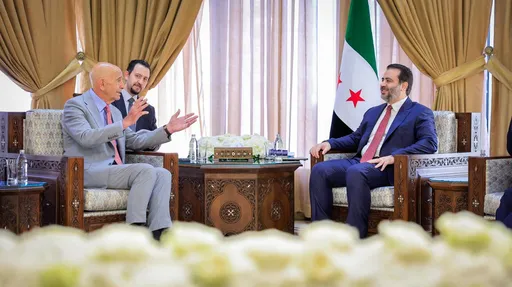
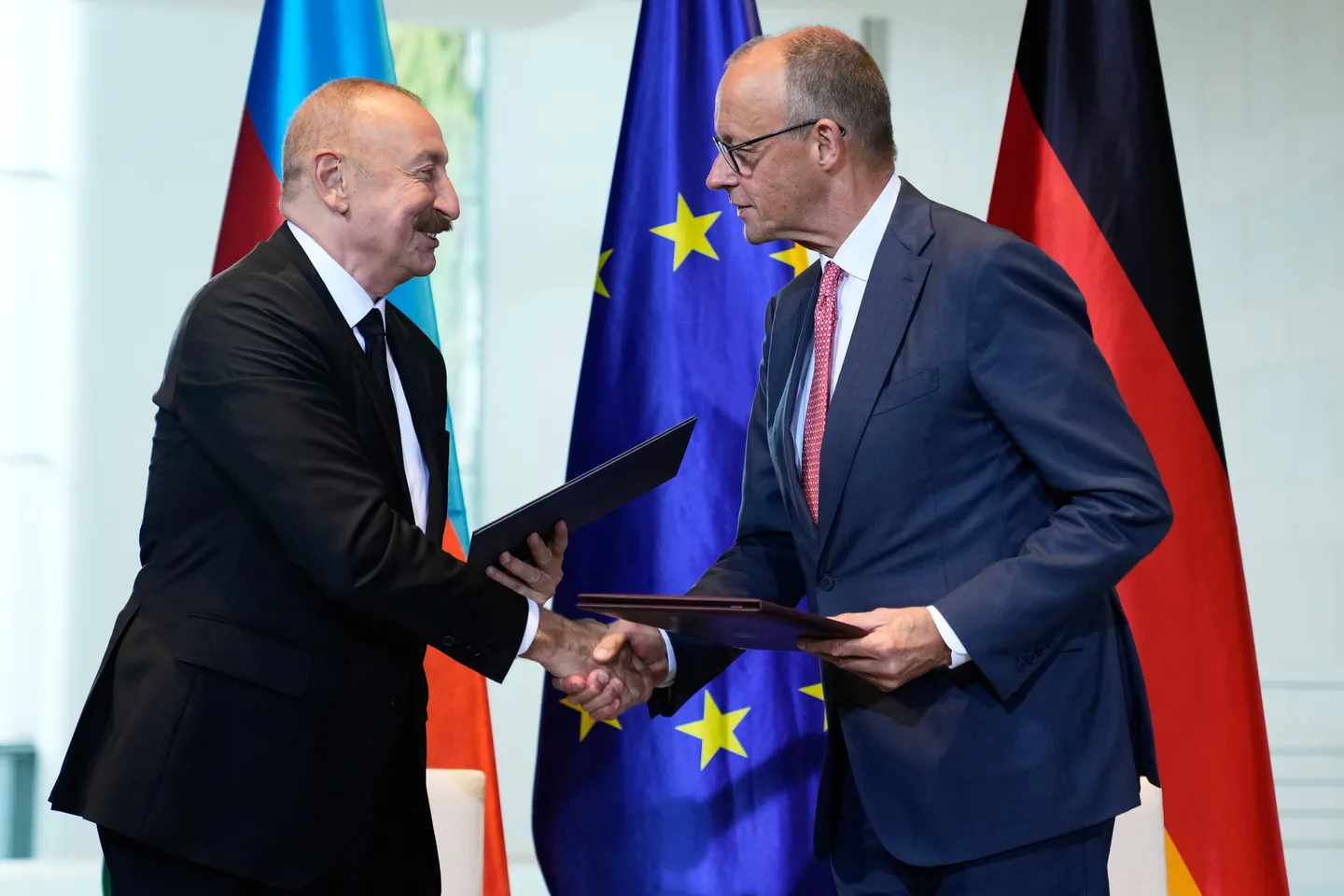
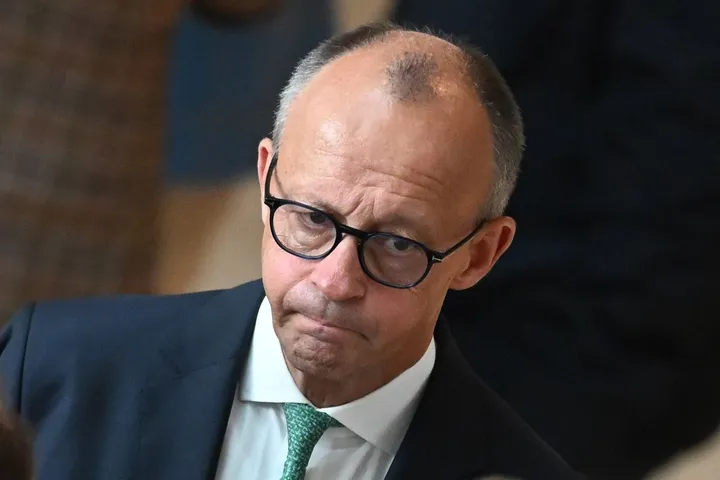
Azerbaijani President Ilham Aliyev visited Berlin in July to hold talks with German Chancellor Friedrich Merz and German President Frank-Walter Steinmeier, culminating in a Joint Declaration on a ‘Strategic Agenda for the Bilateral Partnership’ and the establishment of an Economic Council.
It followed a series of high-level EU engagements with Baku earlier that year, including visits by European Commission President Ursula von der Leyen in July and European Council President Antonio Costa in March.
These contacts reflected the EU's growing attention to the South Caucasus.
The Russia-Ukraine war, which began in 2022, revealed Germany’s reliance on Russian energy and prompted a rapid policy reassessment. The energy shock arrived at a difficult moment for the German economy.
Inflation eroded household purchasing power, higher borrowing costs held back investment, and weak external demand constrained an export-oriented industrial base.
These short-term pressures also interacted with more persistent constraints, including underinvestment, labour shortages, and the costly transition facing energy-intensive manufacturing.
Real GDP consequently contracted by 0.3 percent in 2023.
In this context, Berlin’s sudden enthusiasm for Azerbaijan appears less like a visionary strategic realignment and more like panic-driven opportunism, as Berlin and other EU actors sought alternatives to Russian energy and new connectivity routes through the South Caucasus.
Azerbaijan has become relevant to Germany’s regional planning, as several of Berlin’s priorities intersect there, including diversifying energy supplies away from Russia, developing overland connections to Central Asia, and supporting stability in the South Caucasus.
Energy diversification after 2022
Gas from the Southern Gas Corridor began reaching Germany in early 2026 via the Trans Adriatic Pipeline and onward connections.
Azerbaijani officials have indicated that annual deliveries to Germany could reach around 2 billion cubic meters in the near term, giving Baku a more visible role in Berlin’s diversification effort.
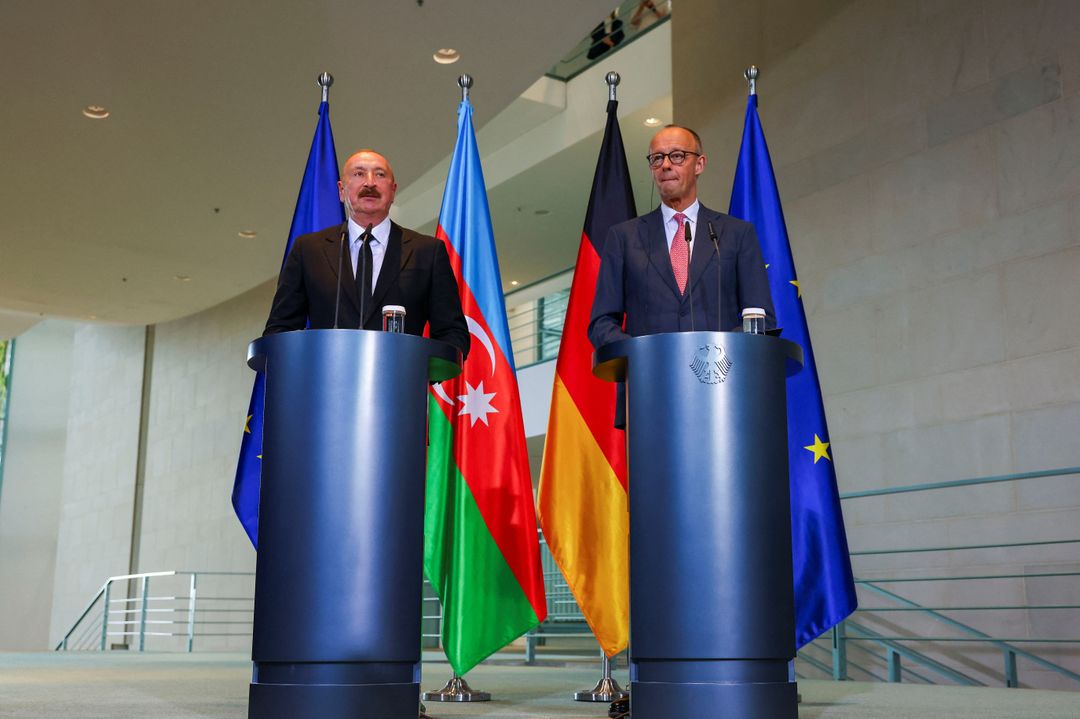
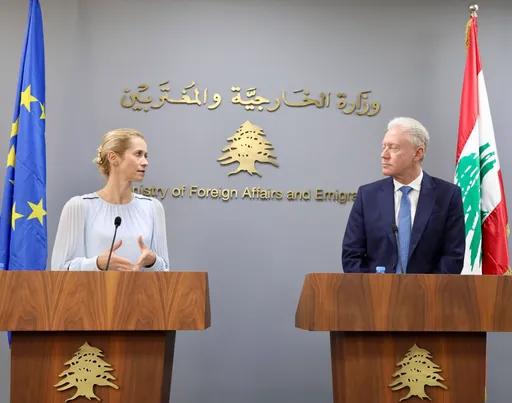
At their joint press conference in Berlin, Merz described Azerbaijan as one of the few countries in the region with an energy surplus and said Germany was keen to diversify imports, including gas.
Aliyev replied that Azerbaijan was prepared to increase supplies but made clear that further volumes would require new interconnections and new gas pipelines, as well as European investment.
Aliyev’s response made clear that Baku was prepared to expand supplies, but on terms that required Europe to match its demand with long-term commitments, new infrastructure, and investment.
Azerbaijan’s export profile helps explain Germany’s more active engagement.
In 2025, Azerbaijan exported 25.2 billion cubic metres of gas, of which 12.8 billion cubic metres went to Europe, confirming its position as an established supplier to European markets rather than a new entrant.
Within five months of its first crude shipment to Germany, Azerbaijan exported more than 360,000 tonnes of oil and petroleum products worth roughly 210.9 million dollars.
Germany’s foreign ministry lists Azerbaijan among its ten most important crude oil suppliers, while German debate has increasingly placed Baku in wider discussions of European energy security.
These developments point to a more structured place for Azerbaijan in Germany’s diversification strategy.
Azerbaijan is not a substitute for Russian supplies; nonetheless, it is positioned to expand its role if European buyers match their diversification ambitions with firm demand, new infrastructure, and investment.
Berlin’s interest, therefore, reflects Azerbaijan’s growing leverage as both an energy producer and a transit state at a time when European governments are seeking to reduce exposure to a narrower set of suppliers and routes.
With its export-led economy faltering, Germany is scrambling to repair fragile supply chains and find alternatives to the limited transport routes its trade has long depended on.


Beyond energy, Azerbaijan has emerged as part of that search.
Exports account for a large share of German GDP, and recent disruptions to shipping in the Red Sea, together with the effective closure of the northern route through Russia, have constrained some of the paths German goods use to reach markets.
In this environment, the Middle Corridor, which connects China and Central Asia to Europe via Kazakhstan, the Caspian Sea, Azerbaijan, Georgia, and Türkiye, has become a focus of new connectivity initiatives in Brussels and is increasingly seen in Berlin as an interesting prospect for the German economy.
Azerbaijan is a key transit country along this corridor. Investments in the Port of Baku, the Baku–Tbilisi–Kars railway, and the Alat Free Economic Zone are intended to attract higher-value cargo such as automotive components, industrial machinery, and electronics.
More than 250 German companies operate in Azerbaijan in sectors such as manufacturing, construction, logistics, and energy.
Bilateral trade reached about 1.7 billion euros in 2025, with German exports of machinery and transport systems accounting for a notable share.
The European Union has committed significant funding to connectivity projects in Central Asia and along the Middle Corridor, suggesting this route is part of a broader European strategy rather than a marginal experiment.
For Germany, decisions about supply chains and export markets therefore increasingly involve a corridor in which Azerbaijan is an important link.
Regional stability as a condition
The political dimension of the partnership links Germany’s bilateral engagement with its wider interest in regional stability and connectivity.
The Joint Declaration signed in Berlin is not limited to trade and energy.
It welcomes what the two sides describe as “historic progress” in Armenia–Azerbaijan relations, referring to the 8 August 2025 Washington Summit, where the parties initialled a peace agreement text in the presence of the United States.
The text states that Germany “reaffirms its full support” for efforts to achieve lasting peace in the region and underlines the strategic importance of Azerbaijan’s partnership with the European Union.
These elements are consistent with a broader European approach.
The EU has paired its peace diplomacy with programmes for connectivity, mine clearance, and community resilience, treating normalisation as a condition for infrastructure projects and cross-border economic integration.
During Aliyev’s visit, Merz referred to the South Caucasus as “a key connectivity hub linking Europe and Asia” and drew attention to Germany’s interest in peace, security, and stability there.
Although Germany’s influence over the peace process is limited, linking its bilateral agenda to the peace track suggests that developments around Azerbaijan now have a more direct bearing on German policy than they once did.
It also exposes a gap between Berlin’s expanding strategic interests in the region and the limited tools it has deployed to influence the political conditions on which connectivity and investment depend.
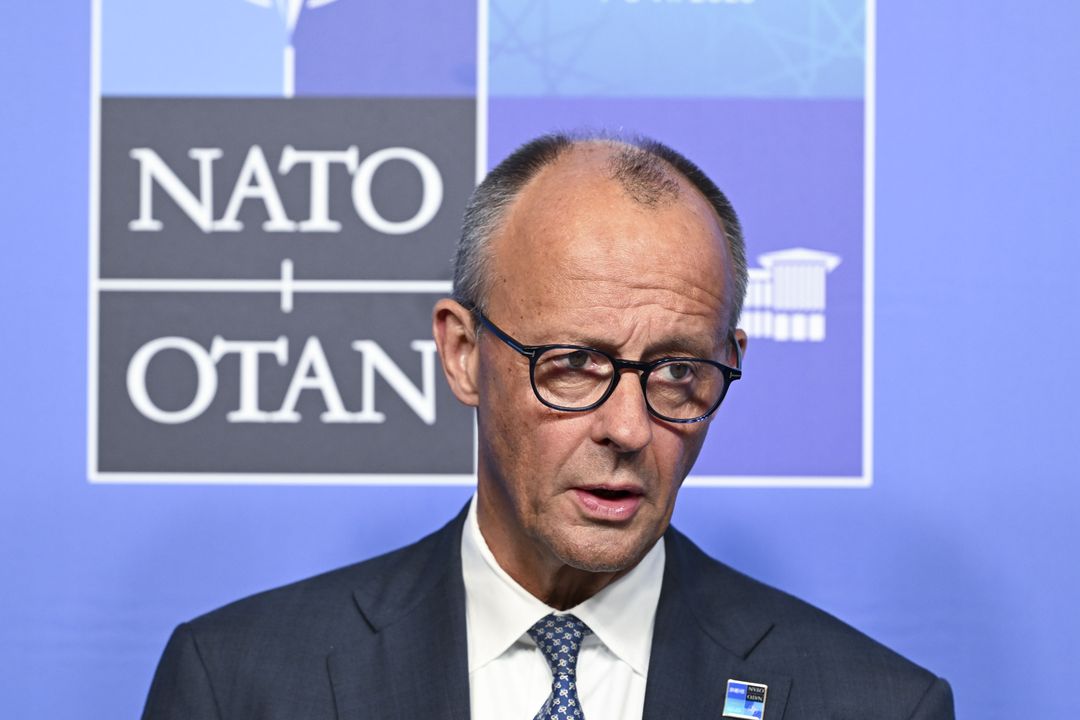
Germany’s engagement with Azerbaijan has gained momentum as Russia’s war on Ukraine exposed the costs of Berlin’s earlier reliance on Russian energy and its limited attention to alternative regional partnerships.
Berlin’s growing recognition of Baku’s strategic relevance beyond a single policy area reflects a reassessment of its approach to the South Caucasus, particularly in debates over energy security, industrial competitiveness, and regional stability.
This does not amount to a complete strategic reset. It does, however, show that Germany will pursue pragmatic partnerships wherever they serve its energy interests.