Zeynep Conkar
Content warning: This article contains descriptions of sexual violence and abuse that readers may find distressing.
Sexual violence against Palestinians has become part of a widespread and systematic pattern of abuse under Israeli occupation, with a new report laying out incidents of rape, genital torture, forced nudity and sexual humiliation across detention facilities, military operations and displacement sites.
The report in the British Medical Journal collates evidence from medical, humanitarian, and human rights organisations and examines the scale of the abuses to highlight the failure to secure accountability.
The report comes a few weeks after the third anniversary of the start of Israel’s genocidal war against Palestine that has killed more than 75,000 people and displaced millions in the devastated enclave of Gaza.
Sexual violence is part of a wider campaign of abuse that terrorises Palestinian communities and helps drive their forced displacement, according to Dr Nick Maynard, an Oxford-based consultant surgeon who has travelled to Gaza multiple times to provide medical care and co-author of the new report.
“It is important to understand that the evidence we have provided of sexual violence against Palestinians must not be considered as isolated incidents but a part of a widespread systematic pattern of severe physical and sexual abuse of Palestinians throughout the (occupied) West Bank and in Gaza,” Maynard tells TRT World.
“This behaviour is designed to break the will of the Palestinian people and clearly represents a fundamental and core part of their policy of forced displacement of Palestinian people and ethnic cleansing,” he adds.
In March 2025, the UN Independent International Commission of Inquiry concluded that sexual and gender-based violence against Palestinians was increasingly being used as a method of war.
It found that forced public stripping, sexual harassment and assault formed part of Israeli security forces’ standard operating procedures, with sexualised torture committed with explicit orders or implicit encouragement from senior civilian and military leadership.
The Commission documented a pattern of sexual violence, torture and other inhumane acts amounting to war crimes and crimes against humanity.
The evidence includes rape and sexual assault against Palestinian detainees, attacks targeting their genitals, threats of rape against detainees and their family members, and repeated strip searches conducted in degrading circumstances.

Life-altering injuries
The documented abuse against Palestinian detainees includes sexual violence and beatings that have left them with devastating and sometimes permanent injuries.
In one documented case, a Palestinian detainee suffered a rectal rupture requiring surgery and the formation of a stoma.
Other accounts describe detainees losing one or both testicles after beatings targeting their genitals.
The abuse has also extended beyond detention.
Palestinian men, women and children in Gaza were subjected to prolonged forced nudity during Israeli military operations, including being forced to walk naked in public.
Israeli soldiers also photographed and filmed Palestinian women’s underwear in homes they had raided, posting images online to humiliate them.
The UN’s 2026 report on conflict-related sexual violence verified sexual violence against 31 Palestinian men, women and children in Gaza and the occupied West Bank across 2023 to 2025.
Nine victims were subjected to rape or gang rape, in some cases repeatedly. The documented abuses included genital violence, forced nudity, threats of rape and invasive searches without apparent security justification.
Maynard, who has travelled to Gaza repeatedly since 2010, including on three occasions since October 7, 2023, says he witnessed appalling atrocities including mass casualties caused by bombings in densely populated civilian areas, with children among those killed.
During his work, Maynard collected detailed testimonies from two healthcare workers and one civilian who had been abducted and detained in Israeli prisons. Their accounts included descriptions of torture and sexual violence.
“I have worked in the hospitals with many patients who died because of the lack of resources, and clearly many of them would have survived if we had had adequate resources.”
“The lack of adequate medical resources, as a direct result of the direct targeting of healthcare facilities and the Israeli blockade stopping adequate aid and resources coming into Gaza, meant that patients suffering from trauma often were not able to get adequate medical care and support and this applied to those with trauma from sexual violence,” Maynard says.
“Those who were tortured and underwent sexual violence in Israeli detention centres and prisons were also denied medical care while in custody,” he adds.







Sexual violence drives fear and displacement
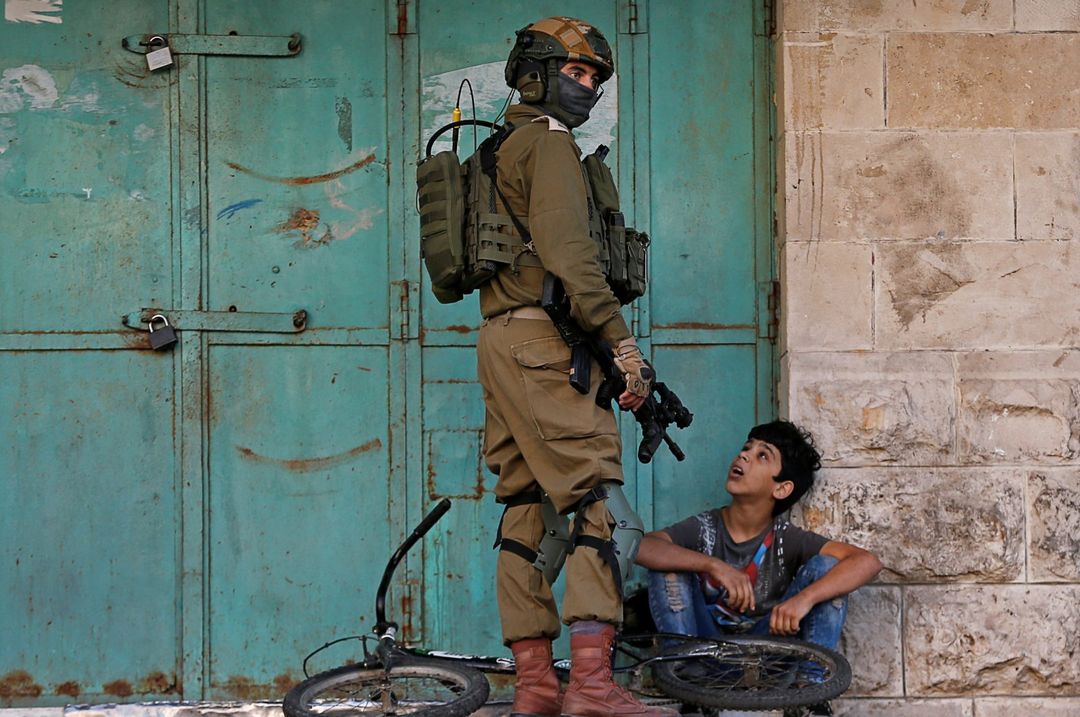
For Palestinians, sexual violence and threats have also shaped everyday life under occupation, including during military raids, at checkpoints and in displacement sites.
Reports document women being forced to undress in front of soldiers, subjected to sexual assault and threatened with rape, sometimes in front of their children.
Other accounts describe Israeli soldiers exposing their genitals to women and girls, while Palestinian women in the occupied West Bank have faced sexual harassment and threats from Israeli settlers.
In one study involving 39 displaced households in Area C of the occupied West Bank, more than 70 percent identified threats to women and children, particularly sexualised violence, as a decisive reason for leaving their homes.
The findings illustrate how sexual violence can contribute to an environment of coercion and displacement, alongside other forms of violence and intimidation faced by Palestinian communities.
Children are also among those affected.
In 2025, more than half of 165 Palestinian children aged 12 to 17 who had been detained by Israeli authorities reported witnessing or experiencing sexual violence in detention, including rape threats, forced stripping and genital assault, according to research cited in the BMJ article.

Underreporting and impunity
The scale of documented abuse is compounded by the barriers survivors face in reporting violence and obtaining care.
Fear of reprisals, shame, stigma, and distrust of complaint mechanisms can keep survivors from coming forward. Limited access for independent investigators also limits evidence collection and verification.
“We believe these abuses are greatly underreported for many reasons. Victims frequently refuse to report their injuries out of fear of further abuse and attacks on themselves and their families,” Maynard says.
“It is challenging to document the full extent of sexual violence as Israel has repeatedly refused to allow independent investigators to review what is going on,” he adds.
The accountability record is also troubling.
The UN Commission found that the Israeli civilian and military justice systems had failed to ensure accountability for sexual crimes against Palestinians.
Of 1,260 cases of offences by Israeli soldiers against Palestinians known to the military law enforcement system between 2017 and 2021, only 11 resulted in indictments.
Neve Gordon, professor of human rights and humanitarian law at Queen Mary University of London, said credible allegations required independent investigation, including into those who ordered or enabled the abuse.
Sexual violence can constitute a war crime and, where the legal requirements are met, a crime against humanity.
Establishing criminal responsibility requires investigators to examine individual incidents, preserve evidence and determine the roles of direct perpetrators and those in positions of command.
“The UN needs to be allowed to send in independent teams to investigate such reports of sexual violence and ensure not only that victims of this violence have access to all appropriate specialist medical care but also that perpetrators must be held accountable,” Maynard says.
“Western governments such as the UK government have an obligation under international law to prevent these violations and to make sure international humanitarian law is upheld.”
“These governments must do more to protect Palestinians and must insist on independent monitoring and investigation,” he adds.