 Uli Brückner
German Chancellor Friedrich Merz has promised to lead Europe and aims to make his country the continent's largest conventional military power by 2039.
This is a historic ambition, marking a fundamental departure from decades of restraint since the founding of the Federal Republic.
However, while Berlin is making a bold statement on security policy, a different picture emerges in another, hardly less crucial area: German foreign economic policy towards Beijing is riddled with contradictions.
The first visit to China by Federal Minister of Economics Katherina Reiche at the end of May reveals a worrying gap between Germany's claim to leadership in Europe and a one-sided Berlin practice driven by corporate interests and wishful thinking.
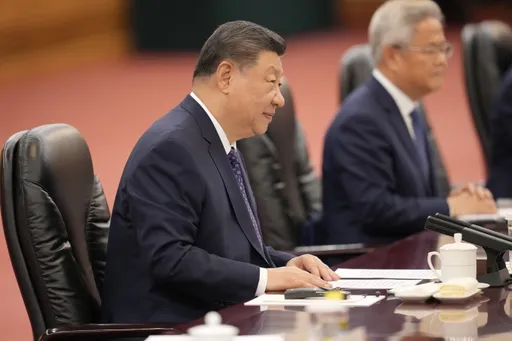
The timing of the trip was remarkable. On the very day that Reiche was in Beijing negotiating with Vice Premier He Lifeng and Commerce Minister Wang Wentao, the European Commission presented its revised China strategy in Brussels.
With a new overcapacity instrument and the Industrial Accelerator Act, Brussels is pursuing a noticeably tougher, structural approach against Beijing's trade practices.
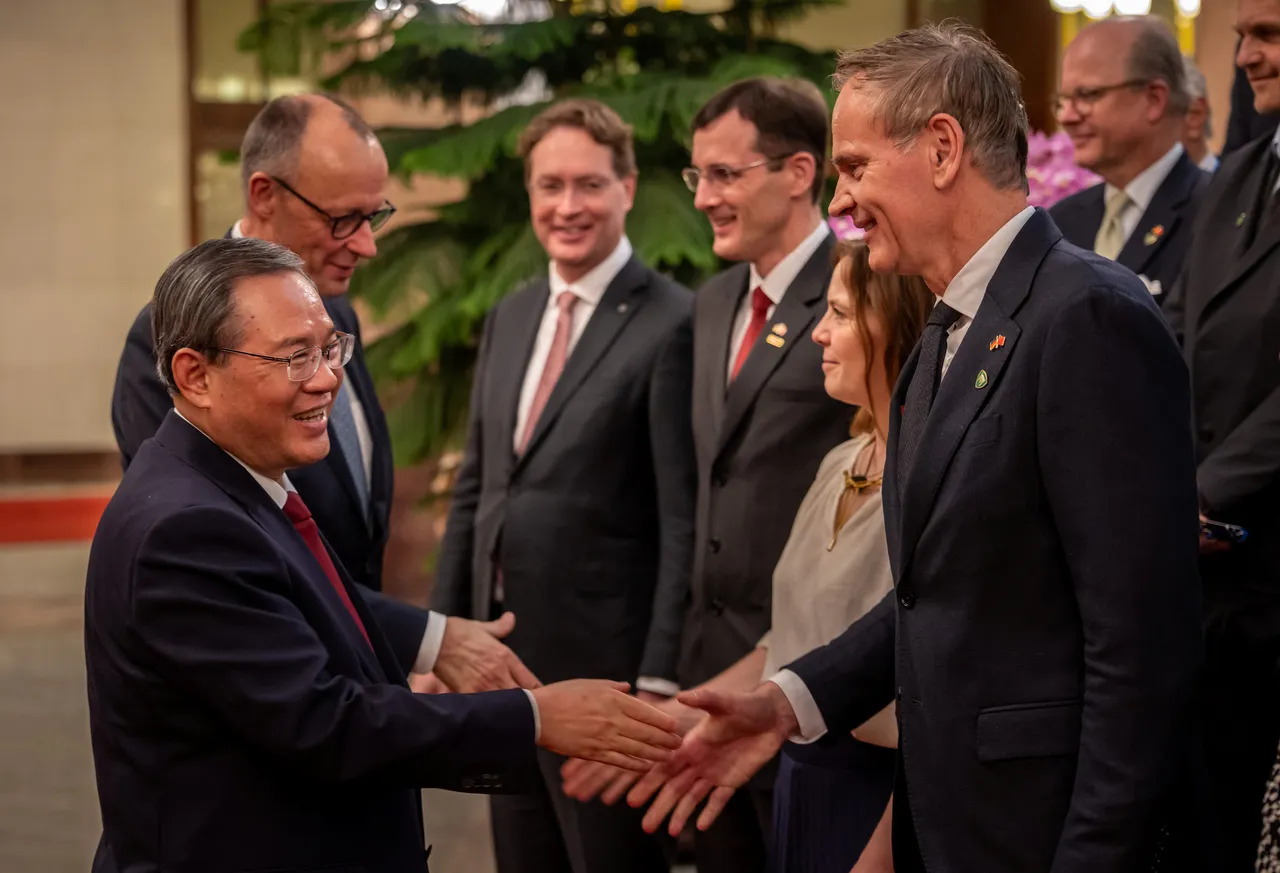
Berlin, on the other hand, sent its Economics Minister, accompanied by some 40 high-ranking business representatives – including the CEOs of BASF, Thyssenkrupp, and Siemens Energy – on a traditional trade mission.
This simultaneity is no coincidence, but rather an expression of a conceptual divide.
While the EU Commission is attempting to organise European capacity for action through economic resilience and stronger safety nets, the continent's largest economy is signalling one thing above all in Beijing: Please, no disruptions, business must go on
‘China shock 2.0’ and Berlin’s hesitancy
The economic situation in Germany is alarming.
The latest report from the Centre for European Reform (CER) analytically outlines the implications of the so-called ‘China Shock 2.0’: the Asian giant’s economic model does not operate in accordance with the rules of the ordoliberal EU single market.
Fair competition with China is impossible. Massive state subsidies, estimated at 4.4 percent of gross domestic product – around USD 800 billion annually – targeted import substitution, and controlled currency devaluation have led to gigantic overcapacities that exceed what global markets can absorb.
Since tariffs imposed by US President Donald Trump have rigidly closed off the American market, these subsidised goods are flooding Europe even more.
In the first quarter of 2026, Chinese export volume grew by 15 percent year-on-year.
The consequences for Germany are not only painful; they threaten the backbone of the German economy. Industrial output has been shrinking for six consecutive years.
The CER estimates that almost 40 percent of Germany's GDP shortfall since the pandemic is attributable to lost export markets and displacement by Chinese suppliers.
Looking at Minister Reiche's positions, a remarkable diagnostic alignment with the economists at the CER becomes apparent.
Reiche precisely identifies the "flood of highly subsidised products" in the steel, chemical, solar panel, and electric-vehicle sectors in public discourse.
Her demand for "reciprocity"—that is, equal market access for German companies in China—also sounds logical and resolute.
But where the diagnosis agrees, the solutions diverge. The CER calls for a "European 301" regulation as a structural response: a sector-wide instrument that can provide blanket protection for entire industries without the need for laborious proof of subsidies for each individual product.
Reiches' approach, on the other hand, focuses primarily on dialogue, pragmatism, and advocacy for fair rules of the game, hoping that this more constructive stance will be rewarded with access to the Chinese market for German champions.
New trade restrictions are considered a last resort, partly due to concerns about Beijing's retaliation.
The wrong signal at the wrong time
This stance reeks of wishful thinking and falls short of the structural realities. It treats a deep-seated systemic rivalry as a mere misunderstanding that could be resolved through better negotiation.



Worse still, it weakens Europe's negotiating position at the very moment when unity is most crucial.
By refusing to actively support the EU Commission's new overcapacity instrument, the German government is presenting itself as Europe's weak flank.
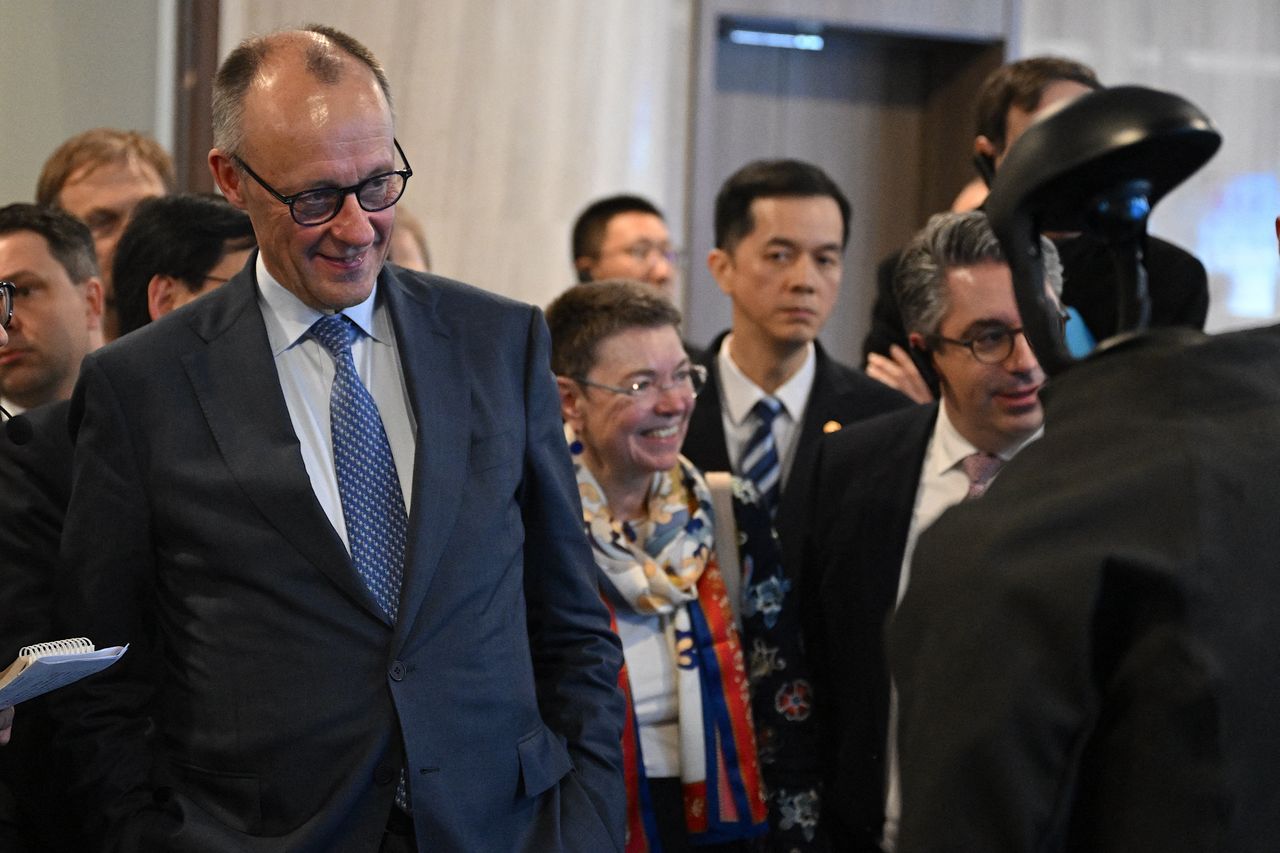
An alliance of five EU nations – France, Italy, Spain, the Netherlands, and Lithuania – is pushing for a tougher approach, while Berlin is blocking and obstructing progress from the background.
Behind this lies an unmistakable prioritisation: the protection of large, deeply invested DAX-listed companies in China dictates the guidelines of German policy.
When a giant like BASF invests billions in its new mega-complex in Zhanjiang, it has a vital interest in ensuring that the EU does not impose tariffs that could provoke countermeasures from Beijing.
For the large corporations, de-risking means continued engagement in China; for smaller companies, it means quite the opposite.
Reiche is acting here as a protector of corporate interests, accompanying their representatives.
However, the price for this apparent pragmatism is being paid by another sector of the economy: Germany's small and medium-sized enterprises (SMEs).
While large corporations often have the resources to relocate parts of their production directly to China to serve the Chinese market "from within," this option is hardly feasible for medium-sized machine manufacturers, suppliers, or speciality chemical companies.
They are defenceless against direct competition from highly subsidised Chinese imports in their European home market.
Moreover, a recent study by the Friedrich Naumann Foundation shows that Germany's import dependency on strategically critical goods has actually increased since 2023.
The much-vaunted "de-risking" is proving to be, in practice, a rhetorical pacifier without any real substance.
A strategic error
Given a bilateral trade volume exceeding €251 billion, decoupling from China is not an option. However, reducing the highly asymmetrical dependencies is strategically necessary. This is not about economic alarmism, but about strategic coherence.
If Germany claims the right to lead and protect Europe in terms of security policy, it cannot simultaneously shirk its responsibility in the core economic sphere and pursue national policies that weaken the already laborious compromise-making machine that is the EU.
A strong Europe needs an economic policy that not only serves the interests of a few large corporations but also considers the industrial base of the entire continent – including small and medium-sized enterprises.
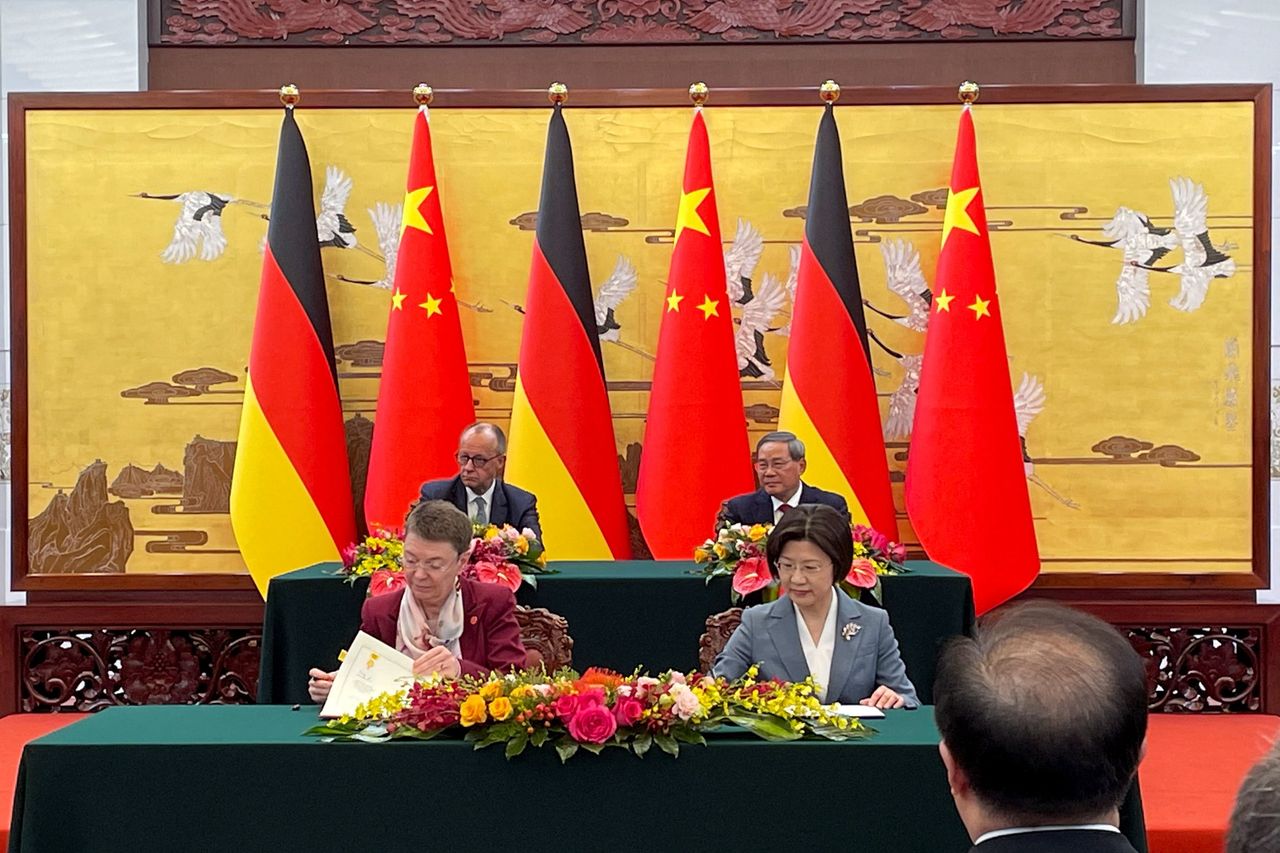
Reiche's trip may have met the wishes of the accompanying managers. However, as a signal for a future-oriented European China policy, it was a step backwards.
If Berlin is not prepared to support uncomfortable structural decisions and set real, European limits on China's trade practices, it will lose prestige and the trust of its partners.
One cannot demand leadership in Europe if, at the crucial moment, one only serves particular interests. China has an interest in precisely this, because it copes better with a divided Europe than with a united one.
Viewed more charitably, the simultaneous visit of Reich and the presentation of the new trade instruments by the European Commission can also be interpreted as follows:
China has a choice: if it accepts the German offer, opens its markets, and works towards constructive compromises, the success story of globalisation, in which both sides have become wealthy, will continue.
If it continues its aggressive confrontational strategy, the EU knows how to react and has the appropriate instruments ready. Then Germany will probably also switch sides, if it isn't too late by then.
This story was initially published on TRT Deutsch.