 Huseyin Alptekin
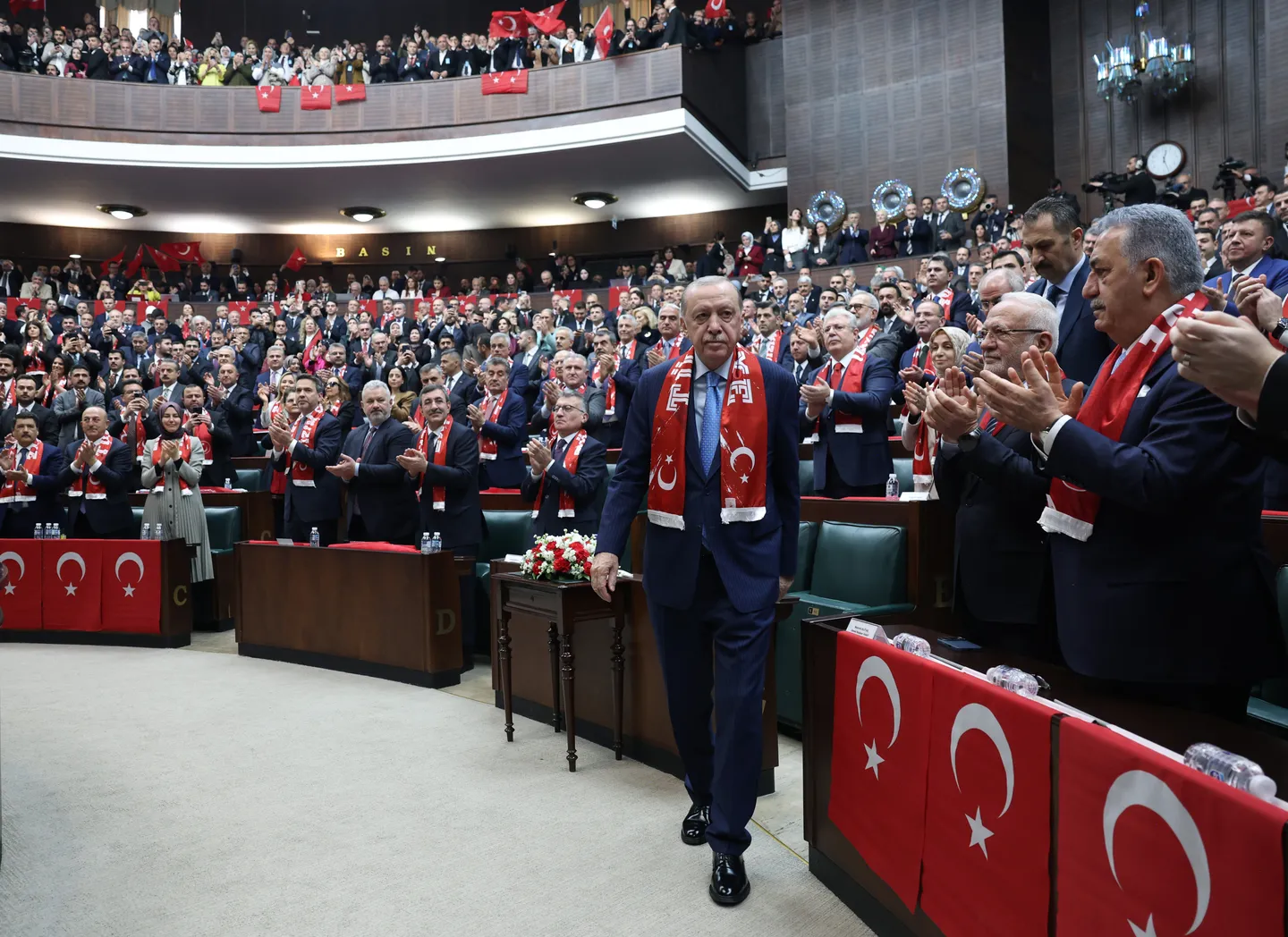
We are witnessing the AK Party’s 25th anniversary this week. The party competed in the national elections just about a year after its formation and won its first election.
And now, it has governed Türkiye under single-party governments for almost 24 years, including the eight years since the country transitioned to the presidential system in 2018.
This is a phenomenal track record given Türkiye’s modern political history. But putting it in perspective makes its scale even clearer.
Türkiye spent the decade prior to the AK Party’s rise under a succession of coalition governments from 1991 to 2002.
The longest continuously governing party in Türkiye’s democratic history was the Democratic Party, which held power for a full decade from May 1950 to May 1960.
Nevertheless, despite winning three consecutive elections, the party was overthrown with a military coup in 1960; its leader and Prime Minister Adnan Menderes was executed along with the ministers of foreign affairs and finance.
The party was banned, and its members were persecuted. This was when the military tutelage system took hold in Turkish politics.
This was a system in which the military bureaucracy drew red lines over a very rigid formulation of secularism and over matters related to Türkiye’s foreign-policy alignment.
Elected governments were expected, even dictated, not to cross those lines.
When governments failed to comply, they were toppled by the military, sometimes through direct intervention (the 1960 and 1980 coups) or through harsh ultimatums (the 1971 and 1996 coups).
The fragmented, shaky, and short-lived coalition governments and the military tutelage system reinforced each other. This pattern continued into the AK Party era.
The AK Party also made considerable efforts to erase those lines and avoid being dictated to by the military.
The picture in 2002 was rather bleak in this regard.
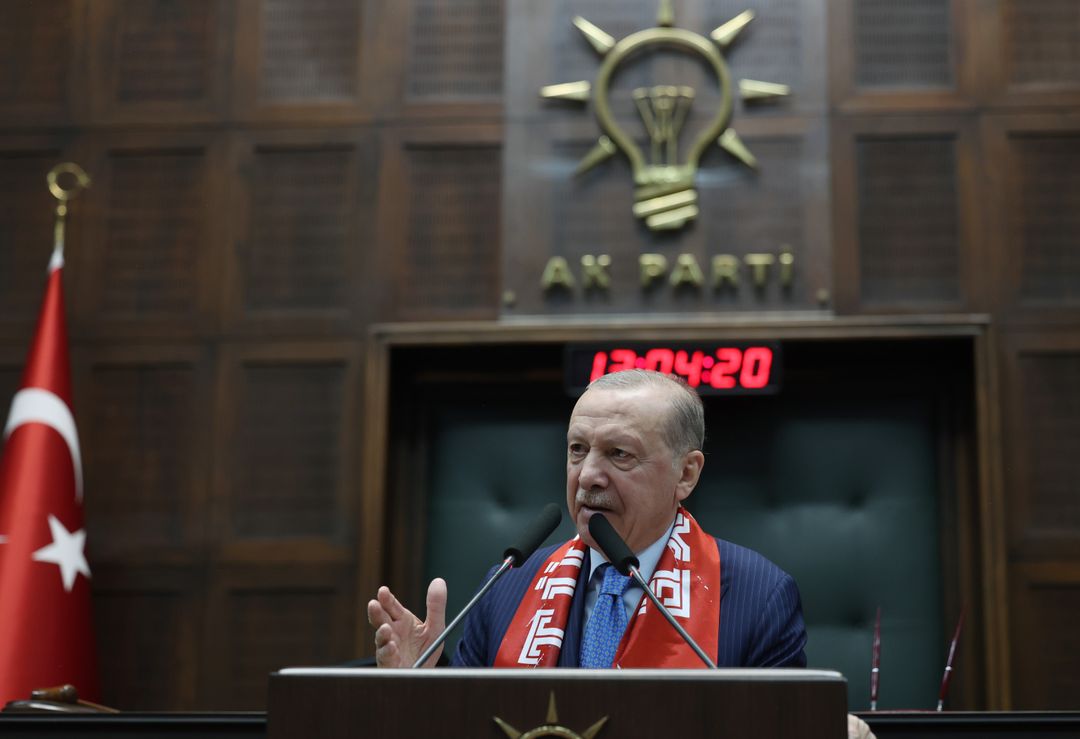
The military elites challenged the AK Party’s right to govern and sought to impose their terms, as demonstrated by the 2007 e-memorandum.
Throughout its almost 24-year rule, the AK Party has distinguished itself from its predecessors by not trying to reconcile with the military bureaucracy.
Recep Tayyip Erdogan, during his tenure as party leader, prime minister, and president, has been quite vocal about the idea that whoever wins an election has the right to govern the country without seeking permission from bureaucrats.
From the 2007 ultimatum to the 2016 FETO coup attempt, he never yielded and consistently resisted such pressure.
In the most recent coup attempt in 2016, an assassination squad targeted Erdogan’s residence, many public buildings, including Parliament, were hit by fighter jets, and 253 citizens were killed by fire from FETO terrorists.
Nevertheless, for the first time since 1960, Türkiye has normalised its civil-military relations. From legal reforms to military education, a wide range of institutional reforms has brought the military under democratic oversight.
Rights were restored
As democratic decision-making and implementation became the norm following the military’s withdrawal from domestic politics, two processes of normalisation proceeded hand in hand.
Two of the country’s largest excluded communities—the Kurds and pious Turks—also underwent major changes.
As for the Kurds, the AK Party years lifted restrictions on the Kurdish language and culture through a series of major reforms.
The first private Kurdish-language institutes opened in 2004 across many places, from Batman to Istanbul.
The public broadcasting agency TRT started its own Kurdish TV channel in 2009, which still operates as TRT Kurdi.
The same year, Kurdish-language institutes began operating at Turkish universities.
Looking back today, all of this may seem like a distant past, but it was very recent and met with strong reactions not only from the established bureaucratic class but also from the main opposition parties.
Another normalisation concerned Türkiye’s population.
Women who wear headscarves, and comprise more than half of Türkiye’s women, were barred from accessing education.
Such a ridiculous policy was considered normal at the time, with the backing of the bureaucratic class from the military to the high judiciary.
AK Party’s removal of such bans again faced backlash not only from this bureaucratic class but also from the main opposition parties and many so-called civil society and business circles.
These rights were restored not through broad social consensus but through President Erdogan’s bitter struggle with entrenched power centres in bureaucracy, politics, and business.
His voters wanted him to fight for these rights—and he did.
It was not just the large segments of society, such as Kurds or women wearing headscarves, whose long-denied rights were granted.
The changes extended beyond these larger communities. Smaller communities also found new space, including the opening of the first church to be built in 100 years for Istanbul’s Syriac Christians.
Refugees, too, were welcomed by Erdogan.
While almost every other party was playing the immigration card against him over the presence of some four million Syrian refugees in the country at the time, right before the 2023 presidential and parliamentary elections, Erdogan was clear in his vision.
“We will continue to keep our doors open to those in need. Yesterday, they came from Iraq, Syria and Afghanistan. Today, they are coming from Ukraine. Tomorrow, we do not know where they will come from. But this country will always be a refuge for the oppressed. You can have no doubt about that,” he had said at that time.
By staying committed to his belief, Erdogan managed to turn the tables on so-called liberal, leftist, and even Islamist parties that were using the issue against him.
Economic gains
What also distinguished the AK Party’s years in power was the socio-economic realm.
The party came to power after the devastating 2001 economic crisis.
While Greece’s GDP was 60 percent of Türkiye’s in 2002, Türkiye now has a greater GDP than all eight of its neighbours combined.
However, what made the AK Party years an era of economic transformation was not the cumulative figures themselves.
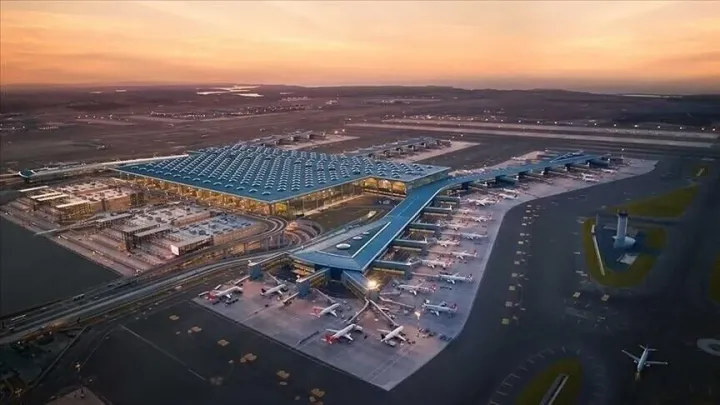
The years after 2002 are now remembered for numerous large-scale infrastructure projects, from intercontinental bridges and undersea tunnels to dams, airports, hospitals, and social housing.
Istanbul Airport, inaugurated in 2018, is the world's largest airport terminal building under a single roof and Europe’s busiest airport.
The 1915 Canakkale Bridge, inaugurated in 2022, is the world's longest suspension bridge, with a main span of 2023 meters between its towers.
Yusufeli Dam, inaugurated in 2022, is Europe’s tallest concrete arch dam.
The Avrasya Tunnel, inaugurated in 2016, holds the global record as the world's first two-story highway tunnel constructed underneath the seafloor.
The list goes on: the largest, the longest, the tallest. President Erdogan gained a reputation for building dozens of such monuments. But it is not just about making it into the record books for size.
President Erdogan also pushed the limits in terms of reaching the people in the street.
The Housing Development Administration of Türkiye (TOKI) has built and delivered approximately 1.76 million housing units nationwide since 2002.
TOKI has delivered over 455 thousand housing units in the earthquake-affected region alone since the tragic 2023 earthquake.
This is why the AK Party increased its vote share even in the earthquake-affected areas, despite the widespread pain and suffering in the region.
These are the major points that Western pundits overlook when trying to explain the AK Party’s electoral victories, one after another.
Of course, such a long tenure in office creates a substantial incumbent advantage for AK Party candidates, but you need more than that to sustain such an enduring legacy.
Defence industry outputs
Since the defence industry has become another hallmark of the AK Party years, it would be unfair to end this piece without touching on it.
AK Party dramatically changed the country’s self-conception with the skyrocketing defence industry outputs.
While Türkiye was once almost exclusively dependent on defence-product imports, its home-grown products now range from MPT infantry rifles and a broad family of unmanned aerial vehicles to warships and a wide variety of armoured combat and transport vehicles, including the Hurjet advanced jet trainer and light combat aircraft, as well as the T129 Atak attack helicopter.
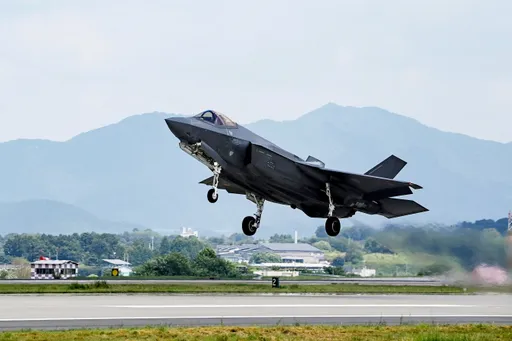
The industry is now making progress with its indigenously developed Altay tank and fifth-generation Kaan fighter jet.
This defence ecosystem has now placed five Turkish defence companies on the top 100 lists of global defence companies.
While export revenues increase year after year, Türkiye sees this defence industry boom as more than just economic gains and uses it to circumvent relevant sanctions and prohibitions on its own operations.
Further, Türkiye also uses this boom as diplomatic leverage to build new alliances and partnerships.
Overall, what the AK Party has delivered over the past two decades has transformed Türkiye across a number of domains, from energy drilling and refining infrastructure to healthcare services, from the transport network to the defence industry.
Erdogan’s rule has built a much higher state capacity in the country while delivering long-denied rights to the excluded and silenced majority.
The AK Party has faced one test after another and still seems to be by far the favourite in the 2028 elections.
All of this may sound straightforward, but the AK Party has already cemented its reputation as the longest-serving party in Turkish multiparty politics, despite a number of serious contenders.
The party's future will depend on its perseverance in delivering rights and services to younger generations, who have not faced the challenges and hardships of the early years of the AK Party.