 Kazim Alam
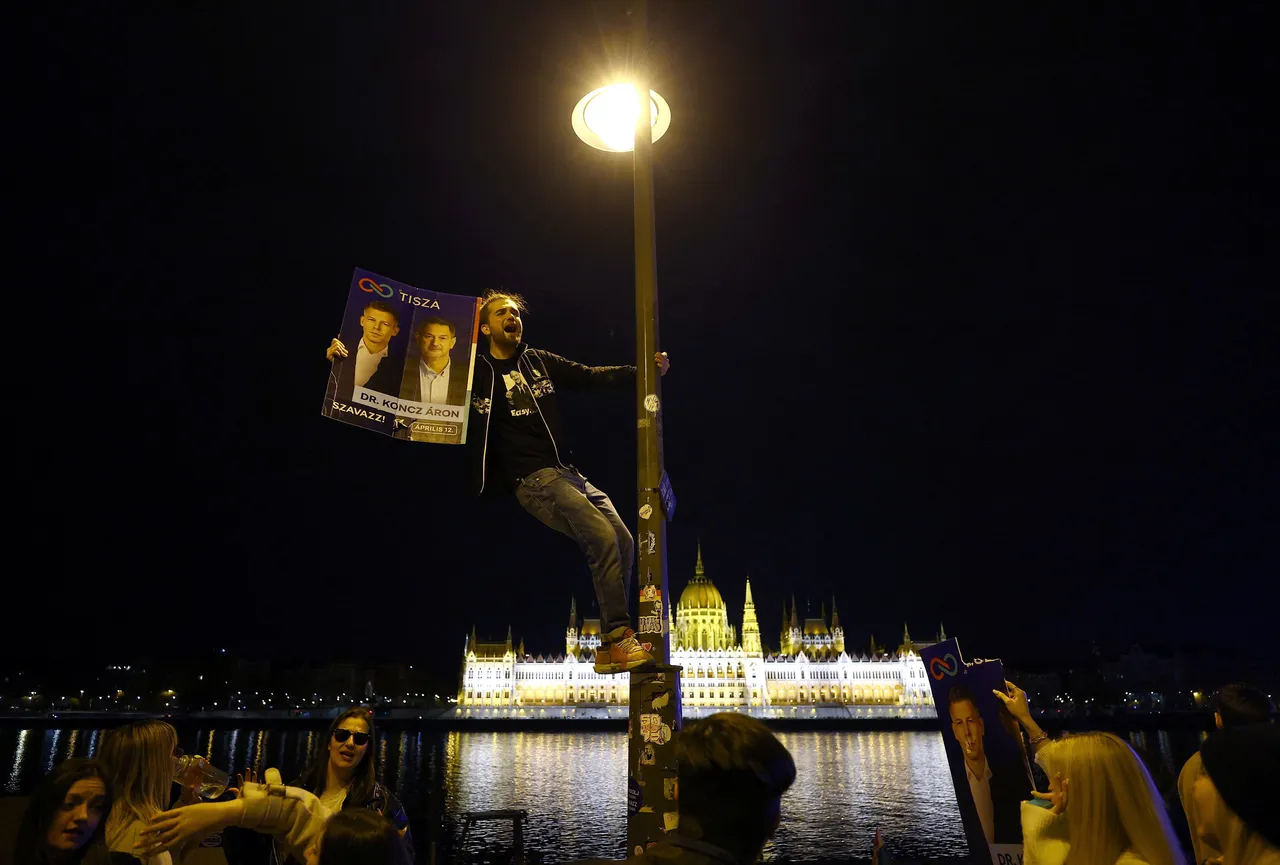
Viktor Orban’s 16-year rule in Hungary ended on April 12, following Peter Magyar’s centre-right Tisza party’s win of a two-thirds parliamentary majority in parliamentary elections.
A member of the European Union (EU) with a clear tilt towards Moscow, Hungary is a landlocked country in Central Europe that remained a satellite state of the former Soviet Union during the second half of the 20th century.
For years, conservatives in Europe as well as the United States put Orban on a high pedestal as the mastermind of the “illiberal” model of democracy built around nationalist rhetoric with a tinge of “traditional Christian values”.
Within the 27-member EU, Orban used Hungary’s veto power, accorded to each member of the bloc, to stall majority decisions on sanctions against Russia and on financial aid to Ukraine.
His government – which came to power in 2010 and won elections in 2014, 2018, and 2022 – blocked progress on a $105 billion EU loan for Ukraine.
At the same time, Hungary under Orban has obstructed the adoption of new EU sanctions against Russia.
With the Magyar Tisza party in control, experts say the EU may have more room to manoeuvre, even though the shift is unlikely to be dramatic.
Tinatin Akhvlediani of the Brussels-based Centre for European Policy Studies says that removing Orban’s systematic veto politics “could significantly improve” the EU’s capacity to act, particularly on Ukraine, as well as the bloc’s enlargement and neighbourhood policy.
“Orban’s use of veto power has repeatedly constrained the EU’s ability to act decisively, particularly on the war in Ukraine, which is today the most existential security challenge facing Europe,” she tells TRT World.
Yet, internal divisions in Hungary will persist, she says.
“I expect Hungary to still retain meaningful bargaining power, and a Magyar-led government would likely continue to use it selectively,” she says, adding that the key question will be how the new Hungarian leader balances EU alignment with domestic political constraints.
Juraj Majcin, policy analyst for defence and security at the European Policy Centre, tells TRT World that Orban's exit from power has resulted in Russia losing “one of its most valuable assets” within the EU.
“Magyar’s victory now creates an opportunity for the EU to move faster on major blocked files,” he says, referring to the $105 billion loan for Ukraine, the 20th sanctions package against Russia, and more than $7 billion in the European Peace Facility, a financing tool the EU uses to militarily support countries like Ukraine, which Hungary has held up since 2023.
Majcin says Magyar’s planned first official trip to Warsaw is “an important signal” after Orban’s pro-Moscow stance damaged Hungarian-Polish ties, potentially reviving the Visegrad Group – an alliance of four Central European nations formed in 1991 for integration into European institutions following the disintegration of the Soviet Union.
Denys Kolesnyk, an Eastern Europe analyst specialising in geopolitical risks, says the change in government in Budapest will “definitely boost” the EU’s overall cohesion and efficiency.
“Budapest will no longer block the issues regarding Ukraine or Russia-related sanctions regime,” he tells TRT World, adding that the EU’s ability to act on foreign policy issues will “definitely improve” going forward.

The Ukraine question
On Hungary’s stance towards Ukraine and Russia, all three experts foresee a pragmatic thaw rather than a full pivot.
Under Orban, Hungary blocked Ukraine’s EU accession talks and financial support while maintaining cordial ties with Moscow.
Akhvlediani expects a “more visible, though still measured” change under the new Hungarian government: lifting vetoes on aid and accession chapters for Ukraine and Moldova, and adopting a more cooperative posture in Euro-Atlantic frameworks that cultivate a closer relationship between Europe and North America.
“At the same time, domestic political sensitivities, economic considerations, and a broader culture of caution are likely to persist,” she says.
Majcin says Hungary under the new Magyar government will likely be “more pragmatic and less obstructive, but not a strongly pro-Ukrainian one”.
Direct military support for Ukraine remains off the table, while any assistance will likely be limited to humanitarian aid, he adds.
“Budapest may, however, become more constructive on Ukraine’s EU membership path,” he notes.
Kolesnyk agrees with this assessment.
Bilateral ties with Ukraine may improve, and obstructionism may end, with a $105 billion loan for Ukraine no longer being blocked by Budapest, he says.
Hungary under Magyar will still be cautious, even though its policy may become much more pragmatic, he adds.
Little change in migration policy






Hungary’s migration policy offers the clearest continuity under the new government, according to the experts.
Orban built a southern border fence, rejected EU migrant quotas, and positioned Hungary as a defender against “Muslim immigration” – a political stance that earned him praise from far-right circles worldwide.
Akhvlediani calls for tempering expectations of a liberal shift in Hungary’s immigration policy under Magyar’s government.
While Magyar positions himself as pro-European in institutional terms, Akhvlediani says his rhetoric and political instincts suggest continuity on migration, particularly regarding border control and societal concerns linked to immigration.
Magyar’s tone may soften, and Hungary could become “a less confrontational actor”. However, it will likely align itself with restrictive member states within the EU, she adds.
“This would slightly ease political tensions, but is unlikely to fundamentally alter the direction of migration policy,” she notes.
Majcin is equally categorical in his view on Hungary’s immigration policy going forward.
Magyar’s statements on migration have been “quite critical”, he notes.
“So any significant change in Hungary’s stance on the EU’s migration policy is not expected,” he adds.
Kolesnyk also maintains that Hungary’s “zero-tolerance policy” on irregular immigration will remain in force under Magyar.
“Migration remains an important issue among Hungarians and Tisza party (of Magyar) draws a strong support from the voters who demand strict border controls,” he says.

On Israel: A subtle recalibration
Hungary’s strong backing of Israel, cultivated over years through Orban’s personal alliance with Prime Minister Benjamin Netanyahu, may see a subtle recalibration, experts say.
Orban invited Netanyahu to Budapest despite an arrest warrant by the International Criminal Court and used pro-Israel rhetoric to frame Hungary as an “unbreachable bastion” of so-called “Judeo-Christian values”.
Akhvlediani anticipates a “more conventional approach” to Israel under Magyar’s stewardship: fewer unilateral vetoes to scuttle EU resolutions and greater coordination with EU partners.
“The shift would be less about substance and more about tone and alignment,” she says, while highlighting the EU’s own lack of unity on Israel’s genocide in Gaza.
Majcin foresees no fundamental change in Hungary’s stance on the crisis in the Middle East.
Central and Eastern European countries remain historically more supportive of Israel than Western counterparts, he notes.
“We may see some less unconditional support, as Magyar has not (had) such strong connections to Netanyahu,” he says.
But Kolesnyk ties any shift in Hungary’s Israel policy to Magyar’s pro-EU orientation.
Under Magyar, one should expect “less of pro-Israeli rhetoric” as Hungary would act “according to international law”.
Meanwhile, Budapest will align itself more closely with the broader EU line, but without anti-Israel sentiment, he says.
All in all, the experts paint a picture of meaningful, but incremental change under the new Hungarian government on issues ranging from EU cooperation and immigration to support for Israel.
The EU may become a “less obstructive partner” under the new Hungarian leadership, helping unlock funding for Ukraine and sanctions on Russia.
But domestic constraints, such as voter expectations and a centre-right political base, will prevent an abrupt liberal turn in Budapest.
“It remains to be seen how Magyar would translate rhetoric into practice, particularly given the high expectations following a political transition after 16 years of Orban’s rule,” Akhvlediani says.