 Saad Hasan
Every 10 or 15 years, a miraculous spectacle unfolds in the forests of Argentina and Chile. Tens of thousands of bamboo plants bloom almost simultaneously. Hundreds of kilometres of forested land are covered with brownish bamboo flowers, which produce seeds in a process scientists call masting.
Millions of seeds, each roughly the size of a grain of rice, ripen and fall to the ground. The bamboo plant has learned to survive in nature. By shedding so many seeds at the same time, it ensures that some will survive and reproduce.
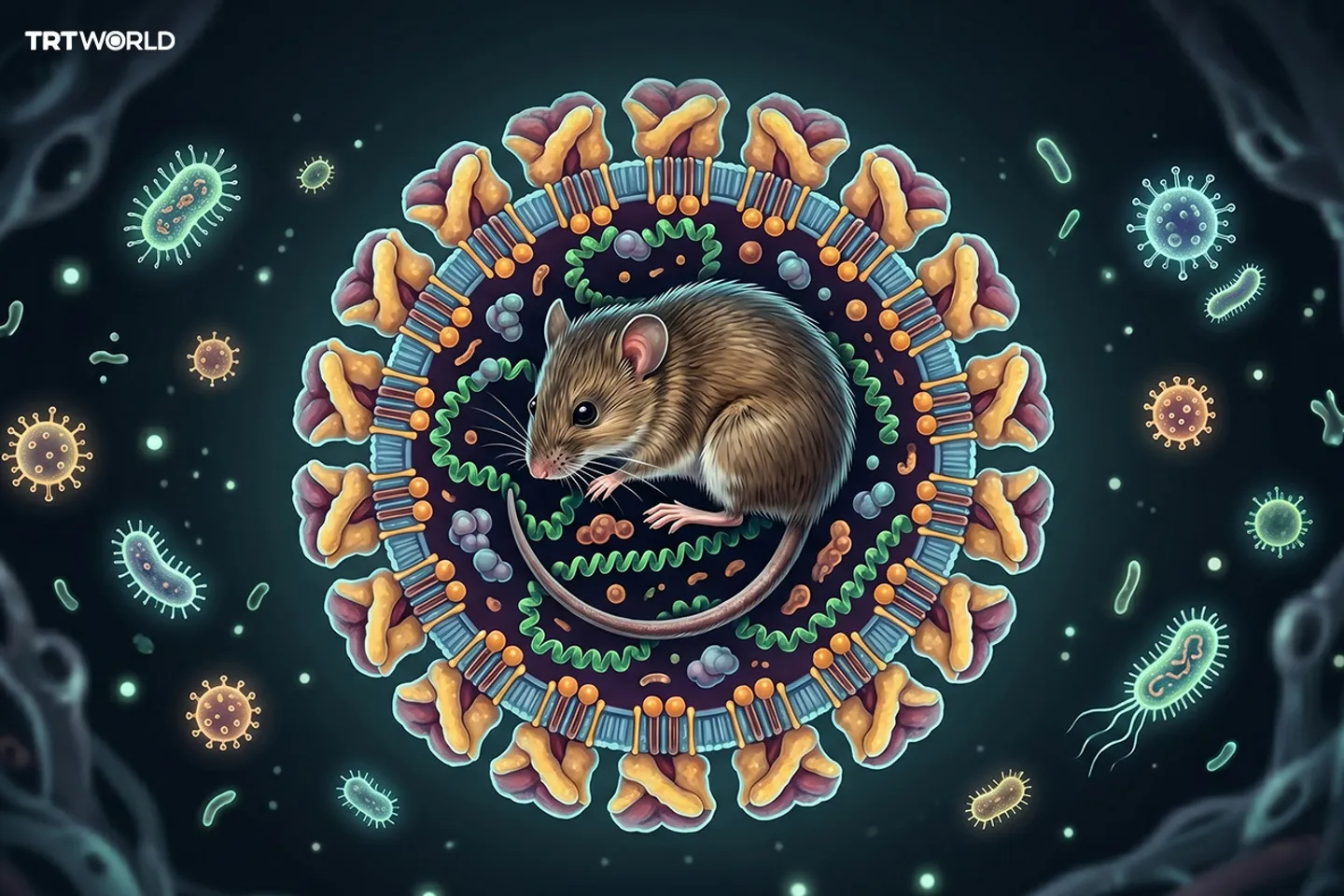
Lying on the forest ground, bamboo seeds become food for rodents, including the long-tailed pygmy rice rat or long-tailed colilargo (scientific name: Oligoryzomys longicaudatus), which is the culprit behind the recent hantavirus outbreak that has put health authorities in multiple countries on edge.
“It’s actually not a rat. It’s a small, cute mouse,” says Maria Victoria Vadell, an ecologist at CONICET, Argentina’s top science organisation. “It’s a forest-dwelling mouse. When we think of a rat, we think of the city rats, those big, ugly rodents. And it’s definitely not a cruise ship mouse.”
The long-tailed colilargo, which is small enough to fit in your palm with its tail hanging down your wrist, is the reservoir of Andes virus, the only member of the hantavirus family, known to be transmitted from one human to another.
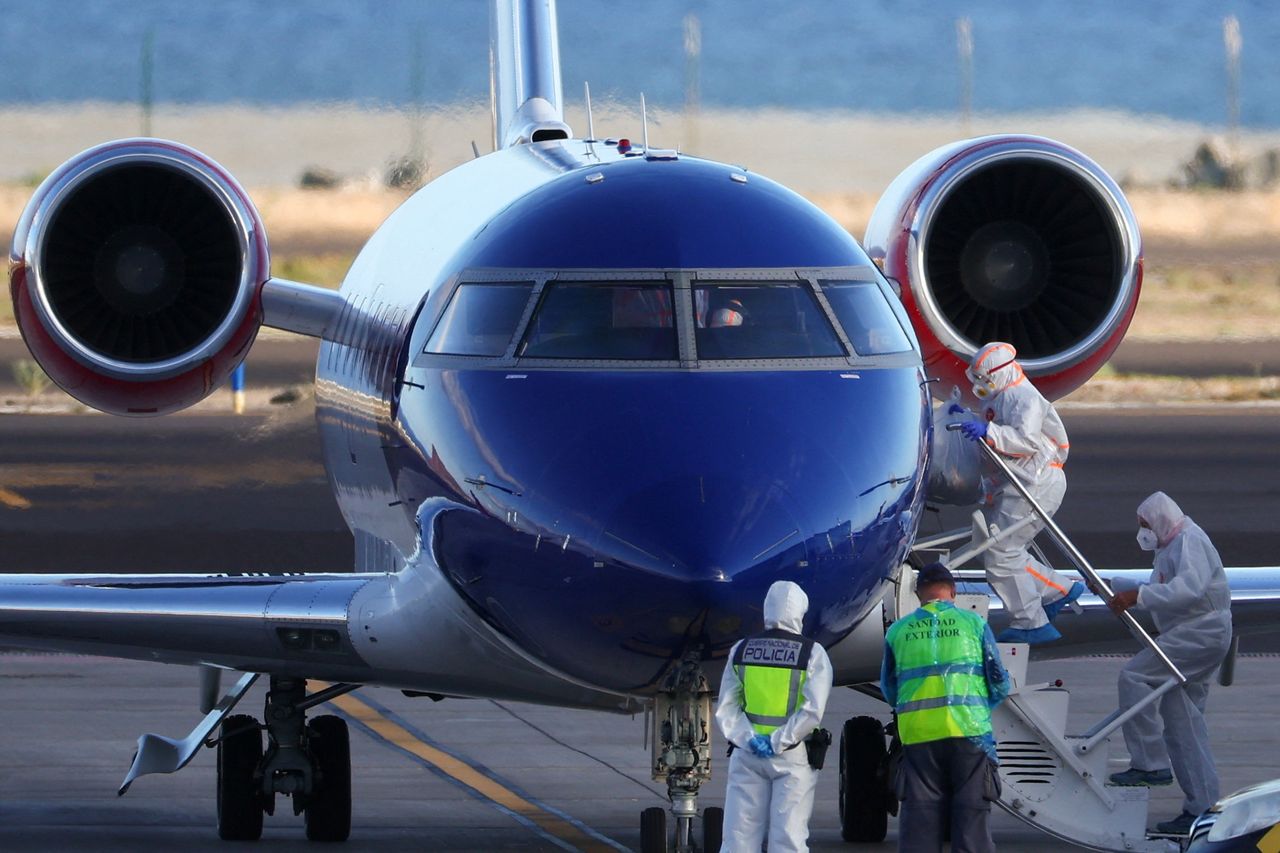
A Dutch couple that was among the passengers of the cruise ship MV Hondius is believed to have contracted the virus before they departed from Argentina’s Ushuaia city, known as the ‘End of the World’ for being the southernmost city on the planet.
The deadly Andes virus, which is also known as Hantavirus Pulmonary Syndrome, has killed at least three passengers, infected nine others and caused a global health scare.
Hantavirus is a zoonotic disease, which means its origin lies in the animal world, just like Ebola, AIDS, and SARS-CoV-2, which caused a global pandemic six years ago.
While the World Health Organization (WHO) says there’s no danger of pandemic-like spread of the hantavirus, authorities have yet to determine how exactly the pathogen made so many passengers sick on the cruiseship.
WHO says hantavirus can infect humans if they come into contact with rodents’ faeces, urine or saliva. That contact doesn’t have to be direct. The virus in the faeces or urine can become airborne and infect a person.
Since the confirmation of the Andes virus outbreak, Argentina and neighbouring Chile have descended into a blame game, undermining the international cooperation needed to investigate the outbreak.
The Dutch couple – husband died on the cruise ship last month while his wife passed away shortly afterwards at a hospital in Johannesburg – had travelled to Argentina, Chile and Uruguay before boarding MV Hondius. They travelled 1,800 kilometres across Argentina by car.
One theory that’s doing the rounds on social media says that the couple might have contracted the virus at a landfill site in Ushuaia, a popular spot for birdwatchers.
Vadell says it’s unlikely someone can get infected while wading through a forest, an open area or a landfill site where the long-tailed colilargo dwells.
“Hantavirus is really fragile. Wind and sun quickly kill it. In Argentina, people usually get infected when they go to a cottage or a shed that has been shut in winter, and they start cleaning, and then he or she breathes the particles that came from the excrement of the mouse,” she says.
“The point is it always happens in a forest, not in a city.”
The bamboo connection
Hantavirus was discovered by South Korean virologist Professor Ho Wang Lee in 1976, when he and his team determined that the mysterious illness killing people for decades was caused by a virus found in mice.
It was named Hanta because the infected mice were found near the Hantaan river on the border of South Korea and North Korea.
Before the discovery, the disease was known as Hemorrhagic Fever Renal Syndrome (HFRS), because it affected the kidneys.
The Andes virus (ANDV) strain is a relatively recent discovery. It was isolated from the long-tailed colilargo in the mid-1990s after an outbreak in Argentinian city of El Bolson that quickly spread to other cities. Up till that point, it was believed that hantavirus was a dead-end infection, meaning that it only infects the person who catches it from a rodent.
One of the worst Andes virus outbreaks occurred in November 2018 and February 2019 in Chubut Province, Argentina, when a person-to-person transmission killed 11 people.
The question of why the Andes virus is the only hantavirus to jump from one human to another has perplexed scientists for years.
“This is still an open question that cannot be replied with our current knowledge. However, inter-human transmission usually requires prolonged, close contact, such as those that occur in households,” says Nicole Tischler, the President of International Hantavirus Society.








“We have in Chile around 30-50 cases every year and in Argentina over 80. They are rare cases but constant and depend on the rodent population, which varies depending on the food availability, like rain and other things,” she tells TRT World.
Researchers have found that long-tailed colilargo’s population goes up with the blooming of bamboo plants in the Patagonia region, which covers parts of Argentina and Chile.
“Imagine there are a lot of years without seeds of bamboo, and then all the bamboos in a really large area all produce seeds. It’s like a supermarket of seeds,” says Vadell, the CONICET ecologist.
“That’s when the risk of virus spreading is the highest.”
As the seeds become scarce, the rodent population also drops.
Knowing how many long-tailed colilargo mice are out in the wild is difficult, but Vadell says that one research paper put the population at 150 per hectare.
According to one study, bamboo masting occurred over an area of 110,000 hectares in 2013 in Patagonia. That means millions of mice to be worried about.
“Look, these rodents live for one year, pass on the virus to other mice and die. Not all of them are infected, and even those who have the virus have it in small amounts. But once a mouse gets infected, the infection is there all the time,” says Vadell.
Culling long-tailed colilargo is not a good idea and can lead to unforeseen ecological and health crises, warns Vadell.
“People have floated this idea before. But the problem is it can disrupt ecological equilibrium.”
Vadell recalled the 1958 campaign in which millions of sparrows were killed to protect crops in China. The culling had a severe impact as it led to widespread infestation, including the lotus that are natural prey of sparrows. China had to endure one of the worst famines because of that decision.
Vadell, like other researchers, is more worried about the lack of funding that is needed to study the Andes virus and how it spreads.
The health and economic crises created by the COVID pandemic had raised hopes that funding for research on zoonotic diseases and the habitat of reservoir animals would increase. But Vadell says that hasn’t really happened.
Last year, US President Donald Trump’s administration shuttered the Centers for Research in Emerging Infectious Diseases, which was also working on a pilot project on the Andes virus.
Within Argentina, the situation is even more critical. Just this month, tens of thousands of people took to the streets in major cities to protest President Javier Milei’s decision to cut funding for public universities.
“I thought it was going to be easy to get international funding after COVID. But that’s not the case,” says Vadell, who works in Argentina’s northeastern province of Misiones, where she has identified hantavirus and the rodents which carry the virus.
“People are not being diagnosed correctly because this is a very poor region. So maybe many people who do not have access to good medical care do not get the proper diagnosis.”
“So there is a possibility that people might be getting affected, getting sick, maybe dying, without us knowing that this is happening because of hantavirus.”
Andes virus symptoms, including diarrhoea, abdominal pain and respiratory issues, can easily be confused with other diseases.
Vadell has pleaded for international financial assistance on hantavirus research.
“Please fund antivirus studies because there is a lot that we do not know about this particular strain that can transmit from one human to another.”