 Murat Sofuoglu
US President Donald Trump has always liked to talk about who holds the cards.
When he arrived in Beijing, Trump knew he still had leverage over Xi Jinping, but he also carried growing political and geopolitical headaches, from an inconclusive war with Iran to frustrated Americans facing high gas prices and widening fault lines within the Western alliance.
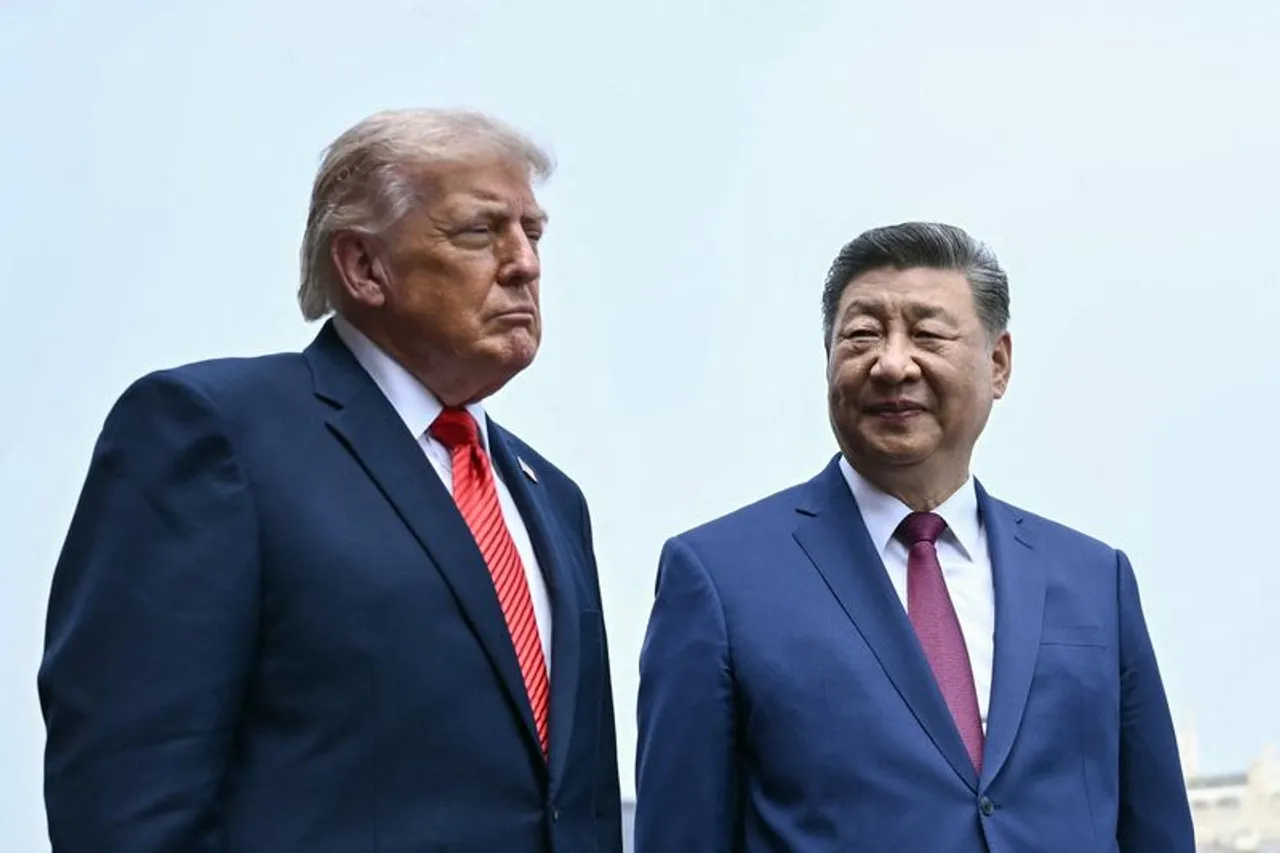
In their first meeting in Beijing, Xi, fully aware of Trump’s mounting pressures, pushed for recognition of China’s rising global status, warning of the dangers of the so-called “Thucydides Trap”.
Thucydides, the ancient Greek historian who chronicled the Peloponnesian War, argued that the conflict between Sparta and Athens was largely driven by Sparta’s fear of Athens’ growing economic and political power, which threatened Sparta’s dominance in Greece and the Aegean.
“Can China and the United States overcome the Thucydides Trap and create a new paradigm for relations between major powers?” Xi asked Trump at the Great Hall of the People, underscoring Beijing’s demand for recognition as a major power on equal footing with the United States.
Can they accept each other?
Xi’s reference to the Thucydides Trap reveals much about Chinese political psychology. But will Trump, who described Xi as “a great leader”, embrace that analogy?
“The two leaders will discuss the emerging world order under new standards. But they are also well aware of the fact that they can’t act on their own because of the nature of global politics, which makes nation-states so intertwined with each other from trade ties to technological developments,” Kadir Temiz, an expert on Chinese politics, tells TRT World.
“They will not come up with a grand bargain, but they are likely to reach a consensus on major issues,” according to the analyst, who argues that the US now appears more willing to deal with China on relatively equal terms, particularly in technology and finance.
“The other scenario is too costly for both sides.”
Temiz, who also heads ORSAM, an Ankara-based research centre, views the summit as a critical moment in an increasingly tense global environment and as an opportunity for both leaders to establish a working relationship and a broader political and economic framework that could shape future US-China ties.
Like Temiz, Hongda Fan, director of the China-Middle East Center at Shaoxing University, believes both sides have enough incentives to “reach some consensus on trade and technology.” The summit will “definitely bring something positive,” he tells TRT World.
“The Chinese leadership will first safeguard its own national interests, and then act in accordance with its responsibilities as a major world power.”
Despite such optimism, some analysts remain pessimistic, arguing that Washington and Beijing are moving towards a managed separation, with major disputes still dividing the two powers, including the US-Israeli war with Iran, tariffs, and Taiwan, which Xi has repeatedly described as the most sensitive issue in US-China relations.
While Beijing may flatter Trump with grand ceremonies and lavish displays, “in terms of substance, they feel they're winning again in the struggle against America,” Charlie Parton, a senior associate fellow at the Royal United Services Institute (RUSI), tells TRT World.
Chinese thinking increasingly follows the idea that “the east is rising and the west is falling,” says Parton, who also served as the EU’s former First Counsellor on China.
“They want as little turbulence as possible over the next several years as they build up their science and technology, ensuring their domination of new industries and increasing the dependencies of the US and the West on China while reducing their dependencies on the West and America, which is called self-reliance in their language,” he adds.
On the other hand, despite Washington’s long-discussed Pacific pivot away from the Middle East, the Trump administration still does not appear to have a coherent strategy for dealing with China, Parton argues, citing factors ranging from the fallout of the Iran conflict to internal bureaucratic and political turbulence in Washington.
Iran settlement
Some experts believe the Xi-Trump summit could also produce a framework to ease tensions over Iran. Tehran recently shared a peace proposal with Washington, which Trump reportedly dismissed as “garbage”, signalling a possible renewal of attacks on the oil-rich country.
But Temiz argues that the Xi-Trump meeting could yield an Iran settlement, with Beijing potentially emerging as the guarantor of a future deal between Washington and Tehran.
If both sides can reach an understanding over the Strait of Hormuz, including the double blockade and the wider Iran conflict, it could also pave the way for broader agreements on global issues, ranging from tariffs to energy security, according to Temiz.
Iranian Foreign Minister Abbas Araghchi visited Beijing ahead of Trump’s trip to China, reportedly holding positive discussions with Chinese officials.
According to various reports, China supported Iran during its conflict with the US through intelligence sharing and economic backing.
This gives Beijing leverage over Tehran, while China has also consistently supported Pakistani mediation efforts between the two sides. Pakistan itself maintains deep economic ties with China.




“Beijing might use its influence to bargain a deal between the US and Iran, persuading Tehran to transfer its enriched uranium to China, a contentious issue, which deadlocked the negotiations between the two sides,” Temiz tells TRT World.
“Then, both Iran and the US can declare victory”, as China will be credited by brokering the deal, he adds.
According to Temiz, a possible agreement could include guarantees that Iran would not face further US attacks, with Beijing acting as guarantor, and the Hormuz blockade would be fully lifted, allowing countries such as China unrestricted access to Gulf energy routes.
Fan shares a similar view, arguing that “based on their responsibilities as world powers”, both China and the US are likely “to take steps to ease tensions” in the Gulf. Even in the worst-case scenario, he adds, the summit “will not become an obstacle to quelling” the Iran conflict.
But not everyone is optimistic that the summit can achieve a breakthrough on Iran.
“I'm fairly pessimistic on that,” says Parton, the former British diplomat.
Parton sees little chance of China cooperating with the US to ensure Iran does not obtain nuclear weapons.
“I would be surprised if they're prepared to try to deliver on what the Americans want, which is no nuclear weapons in Iran.”
The British analyst also doubts that Beijing is “particularly inclined to help the Americans out of the mess they've got themselves into” with the Iran conflict.
According to Parton, Chinese officials calculate that they have limited ability to persuade the Iranians — who view Hormuz as leverage against the US — to abandon the blockade strategy in the Gulf.
Parton also points to what he sees as an intriguing parallel between Iran’s use of Hormuz and China’s claims over the Taiwan Strait. “I'm not suggesting that the Chinese are going to put tariffs on or require fees to allow passage across the Straits of Taiwan, but if it came to a potential blockade of Taiwan, we might see a rather strange parallel,” he notes.
Taiwan, one of the central flashpoints in US-China relations, is expected to be a major topic at the Xi-Trump summit.
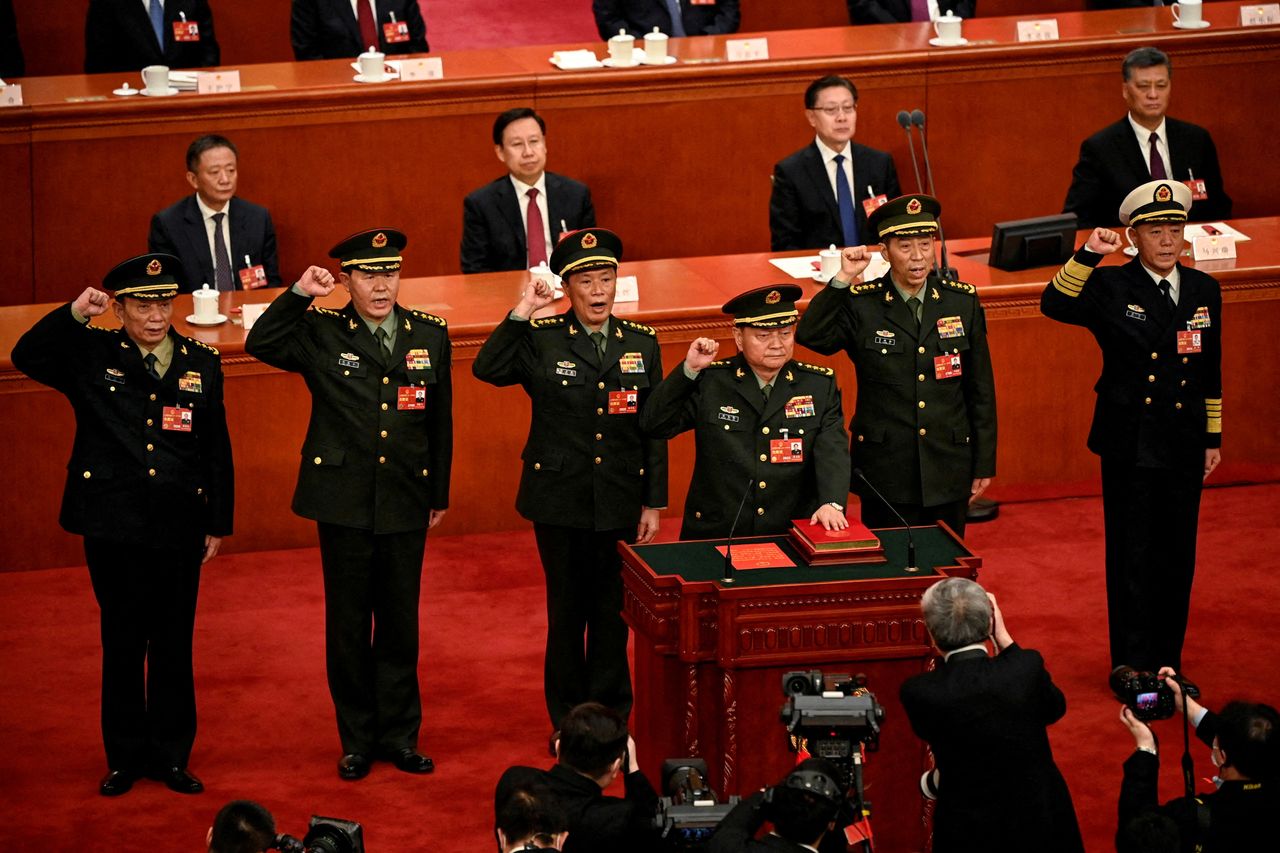
Xi aims to eventually bring Taiwan under Chinese control, says Temiz. Yet despite recent purges, China’s military bureaucracy still appears reluctant to launch a direct campaign against Taipei, he adds.
Power shifts
Last year’s trade war showed that both sides still hold significant cards, but that overplaying them can also come at a cost.
During the 2025 tariff confrontation, Washington and Beijing imposed tariffs of more than 100 percent on each other’s goods in a fierce tit-for-tat battle that pushed global markets close to panic.
Over the past decade, Beijing, having already experienced Trump’s first-term trade war, launched an extensive campaign to strengthen self-sufficiency across supply chains and high technology.
China also accelerated the development of its domestic AI industry and expanded green energy production to shield itself from future shocks such as the Hormuz crisis.
After China imposed restrictions on rare earth exports last year, a move that hit America’s automotive industry and disrupted Silicon Valley sectors dependent on specialised magnets, the Trump administration also moved to expand domestic rare earth production.
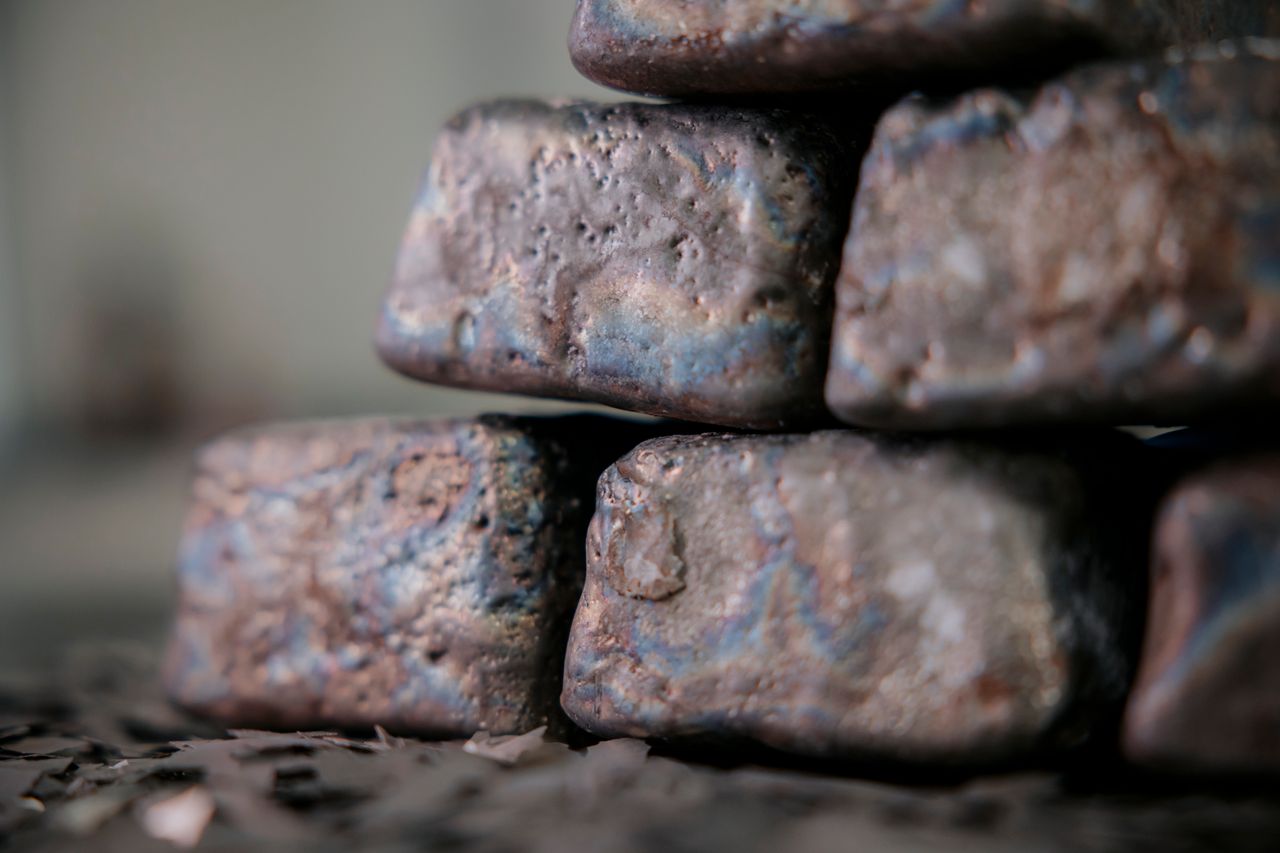
But experts say it could take at least a decade for the US to achieve meaningful self-sufficiency in the sector.
Under any scenario, both sides appear aware that the next phase of their rivalry will be even more intense as the world moves further towards a multipolar order, bringing major power shifts from South Asia and the Middle East to Europe.
“Trump will do his best not to allow Xi to close the gap with the US through these power transitions,” Temiz says.
“There is a declining America narrative and China is happy about that. It does not want to intervene in any conflict waiting for its incremental but inevitable rise, allowing the US to make more mistakes.”
For years, successive US administrations spoke of an “Asia pivot” aimed at countering China’s growing influence across the Pacific and beyond. But particularly after the Iran war, that strategy now appears increasingly off track.
“Undoubtedly, given the American involvement in the Middle East, whatever they meant by the pivot in Asia, to put it mildly, has become distracted, to put it in a more sensible fashion, it's completely lost balance,” Parton tells TRT World.
“It really depends on how quickly and how easily the Americans can extricate themselves from the mess in the Middle East. Until they have rebuilt their policies, stockpiles and everything else, it's pretty meaningless to talk about any attempts to pivot to Asia.”