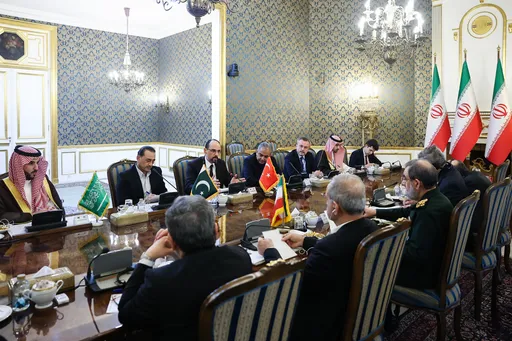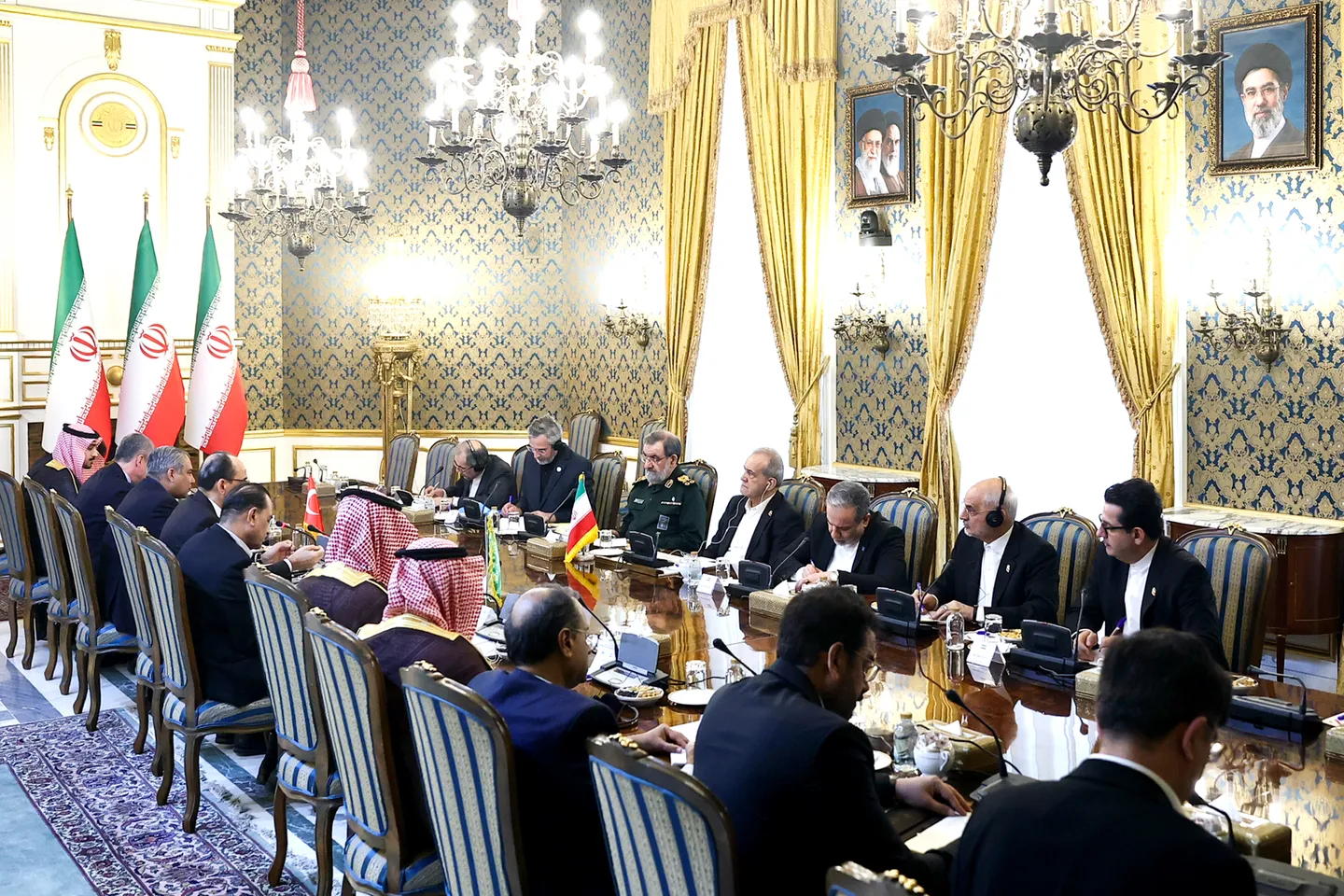
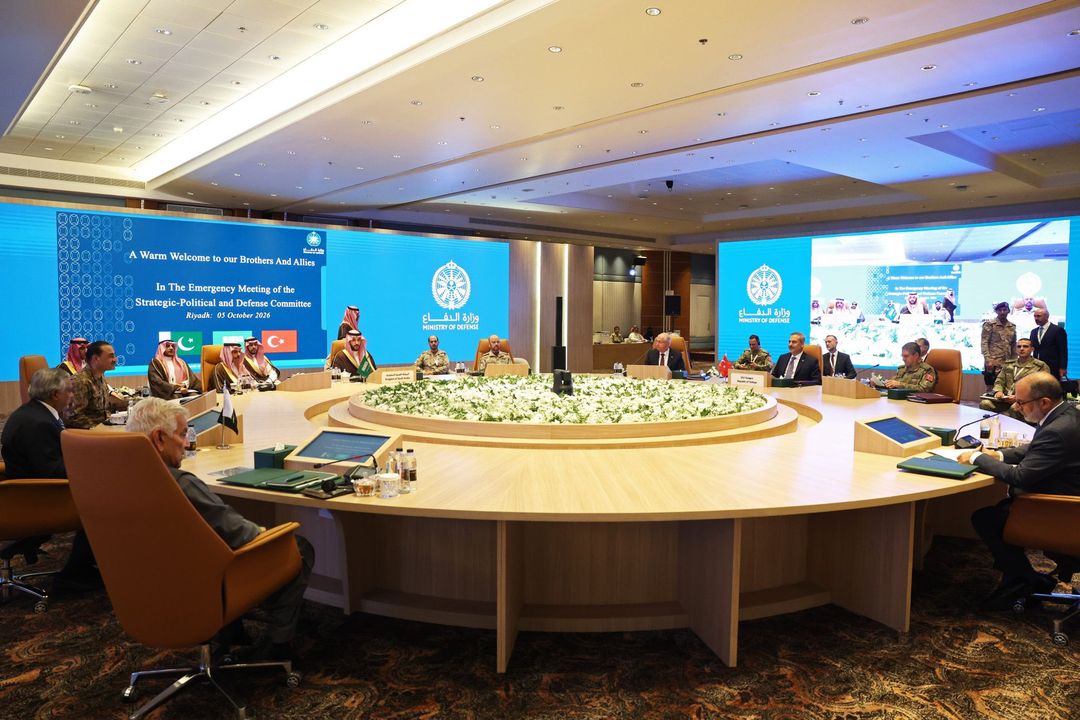
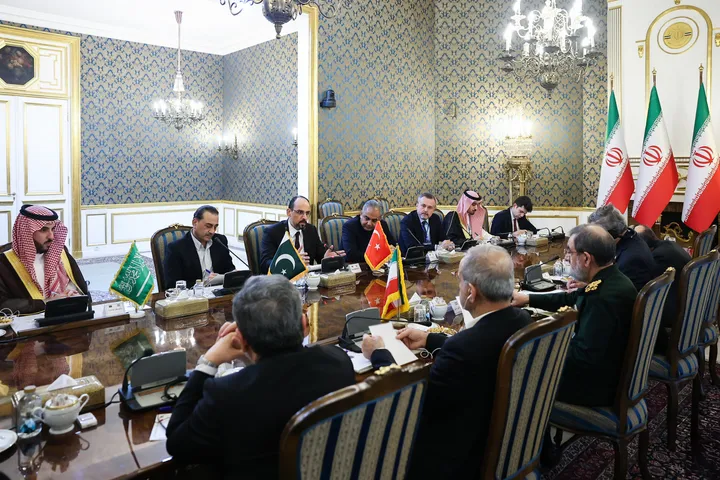
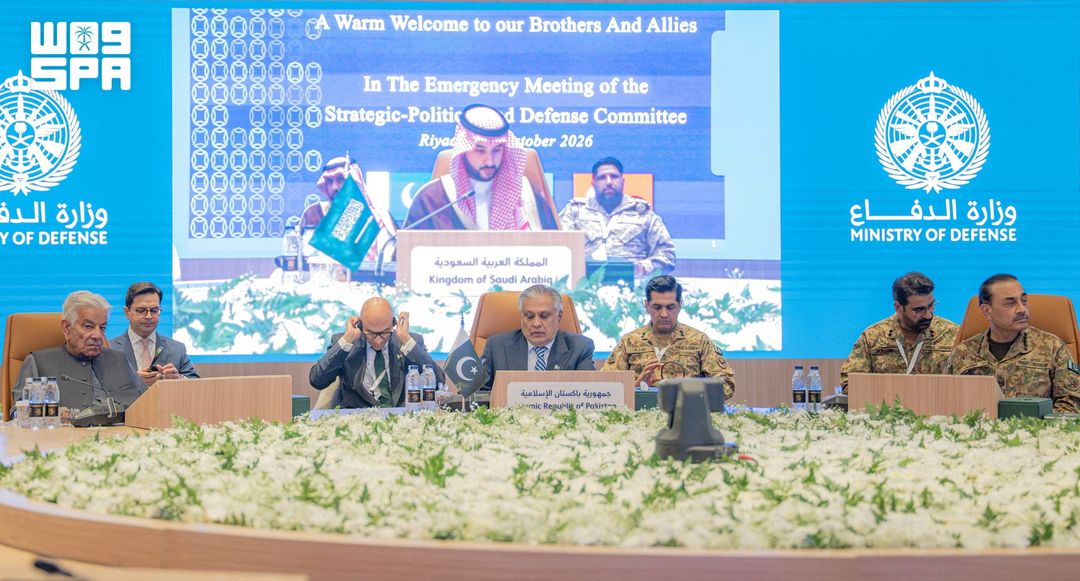
Türkiye, Saudi Arabia, Pakistan and Iran have agreed to continue talks aimed at strengthening cooperation on regional issues, including peace and security, according to a joint statement issued after a quadrilateral meeting in Tehran.
Monday’s discussions covered regional security, Israel’s activities across the region, and the latest developments in Palestine and Lebanon, reflecting the four countries’ focus on regional stability and cooperation.
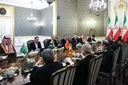
The meeting brought together senior security and military officials from the four countries, with Iranian President Masoud Pezeshkian and Foreign Minister Abbas Araghchi also in attendance.
Türkiye was represented by National Intelligence Organization Director Ibrahim Kalin, Saudi Arabia by Defence Minister Prince Khalid bin Salman, and Pakistan by Chief of Army Staff Asim Munir.
Iran’s delegation was hosted by Supreme National Security Council Secretary Mohsen Rezaei.
Pezeshkian calls for unity among Muslim countries
Speaking at the meeting, Pezeshkian said Iran was prepared to take concrete steps to deepen regional cooperation, address differences and strengthen ties among Muslim-majority countries, Iran’s official IRNA news agency reported.
“The Islamic Republic of Iran, with firm conviction and serious determination, is ready to take steps toward deepening regional cooperation, resolving differences and drawing on the shared capabilities of Islamic countries,” Pezeshkian said.
He added that Tehran supported any understanding that would promote regional unity, cohesion, security and development.
Tehran backs shared approach to regional challenges
Pezeshkian said Muslim countries could use their collective capabilities to present the world with a model based on justice and development.
The quadrilateral meeting comes as regional issues, including the situation in Palestine and Lebanon and wider security concerns, remain central to diplomatic engagement among countries in the region.
The four countries’ agreement to continue discussions signals a commitment to maintaining dialogue on shared challenges, although the joint statement did not specify a timetable or format for future meetings.