 Kazim Alam
The three Baltic countries – Estonia, Latvia, and Lithuania – are facing a sharp reduction in steel supplies from Russia following its years-long conflict with Ukraine and the resulting EU trade restrictions against Moscow.
This evolving geopolitical development has given Türkiye, already Europe’s largest steelmaker, an opportunity to emerge as a viable alternative supplier to these three EU members.
With no significant domestic steel production, these countries traditionally relied on imports. Russia accounted for a dominant share of regional supply before the EU stopped its members from importing steel from Moscow.
But the restructuring of trade relations after the Russia-Ukraine war has created space for established exporters, such as Türkiye, to fill the vacuum left by traditional trade partners of the Baltic states.
Lithuania imported approximately 1.45 million tonnes of steel in 2025. Türkiye supplied about 10.2 percent of the total, trailing only Poland.
A trade delegation to Latvia and Lithuania early this month, consisting of 19 Turkish steel producers and exporters, held more than 300 bilateral meetings with regional importers.
Media reports suggested they laid the groundwork for roughly $100 million in potential business deals.
Demand from the Baltic nations consists of reinforcing bars or ‘rebar’, which are embedded inside concrete to add tensile strength and prevent cracking.
Other items in demand are welded pipes, and hot-rolled flat products, such as steel sheets, coils, or plates that can be reshaped and used in heavy industrial equipment.
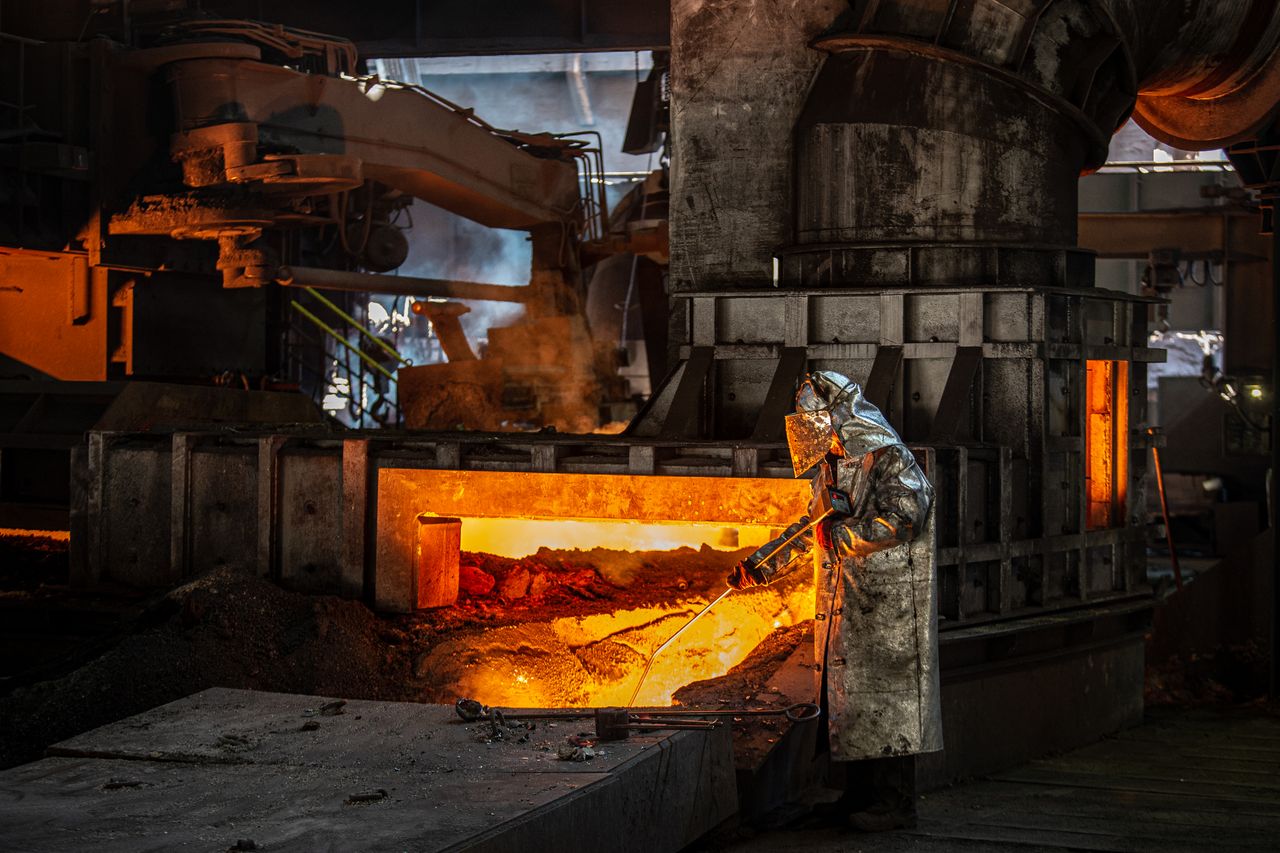
Last year, Türkiye surpassed Germany as Europe’s biggest steel producer. China leads global crude steel output by a wide margin, followed by India, Japan, the US, and Russia. This makes Ankara the world’s seventh-largest steel maker.
Experts say the competitiveness of Turkish steel should be judged on total delivered cost rather than headline mill prices.
“Turkish producers can be competitive in several product categories, particularly reinforcing bars, welded pipes and certain flat-steel products,” Baris Alpaslan, an economist and chief adviser at IC Holding, a Turkish conglomerate with energy interests, tells TRT World.
Türkiye benefits from an established steelmaking industry, a broad export network, and geographic proximity to European markets, which support competitive pricing and flexible delivery, he adds.
However, he cautions against blanket claims that Turkish steel is always cheaper.
Competitiveness varies by product, grade, production route, energy and raw-material costs, order size, freight, insurance, financing, and delivery reliability, he notes.
Regulatory factors matter too: the EU’s steel import regime, effective July 1, provides tariff-free quotas totalling 18.3 million tonnes a year across 26 steel product categories. There will be a 50 percent duty on out-of-quota imports of steel.
The Carbon Border Adjustment Mechanism (CBAM), the EU’s environmental policy tool that places a carbon price on carbon-intensive goods imported into the bloc, further elevates the importance of emissions data and verification, Alpaslan says.
Mian Waqar Badshah, assistant professor in the Faculty of Economics at Istanbul University, tells TRT World that Turkish steel is “well-positioned to compete in the Baltic market” in rebar, welded steel pipes, and hot-rolled flat steel categories.
Even though Turkish producers can offer an “attractive alternative” to European suppliers, EU producers still retain advantages in proximity, distribution networks, shorter lead times and, in some cases, lower regulatory or administrative friction, he insists.
The new EU quota regime and 50 percent out-of-quota duty can “materially affect” the economics of Turkish steel exports, depending on the product category and applicable quota conditions, Badshah says.
Can Turkish steel mills meet EU standards?
Solidifying its position in the global steel supply chain as a dominant player, Türkiye’s crude steel production increased 6.8 percent year-on-year to 26.6 million tonnes in the first eight months of 2026.
Exports of Turkish steel grew 3.1 percent to 10.3 million tonnes over the same period. The EU remained the largest export destination for Turkish steel.
On technical suitability, both experts say Turkish mills can supply the grades, specifications, and quality levels Baltic construction, infrastructure, and manufacturing need.
However, Alpaslan notes that compliance must be assessed at the product and producer levels.




“It would be inaccurate to assume that every mill produces every grade or meets every technical specification required by a particular customer,” he says.
Buyers need to verify the relevant European product standards, mechanical properties, chemical composition, and certification requirements, he says.
EU construction-product rules and CE-marking – a mandatory legal certification showing a product meets EU safety, health, and environmental protection standards – may apply depending on the product and use, he notes.
“Turkish origin is not, in itself, a barrier to meeting European technical requirements,” Alpaslan says.
“What matters is whether the particular product has been manufactured, tested and documented in accordance with the applicable standards,” he says.
Badshah is similarly optimistic about the capability of Turkish steel mills to meet grades, specifications and quality levels required by Baltic buyers.
“Yes. Türkiye has a mature steel industry capable of producing a broad range of construction and industrial steel products,” he says.
Potential to double market share?
Recent reporting shows that Ankara aims to double its market share in the Baltic region.
Alpaslan says the target is “achievable in principle” but conditional rather than guaranteed.
His optimism stems from the restructuring of trade and EU restrictions on Russian steel, which have encouraged Baltic buyers to diversify.
Another supporting factor is Türkiye’s established export industry and commercial links in the Baltic nations.
Recent trade-delegation activity that is developing relationships with importers and distributors is another positive sign, he notes.
The existing market in Lithuania for Turkish steel – roughly 10.2 percent of total steel imports – provides a foundation for market share expansion, he says.
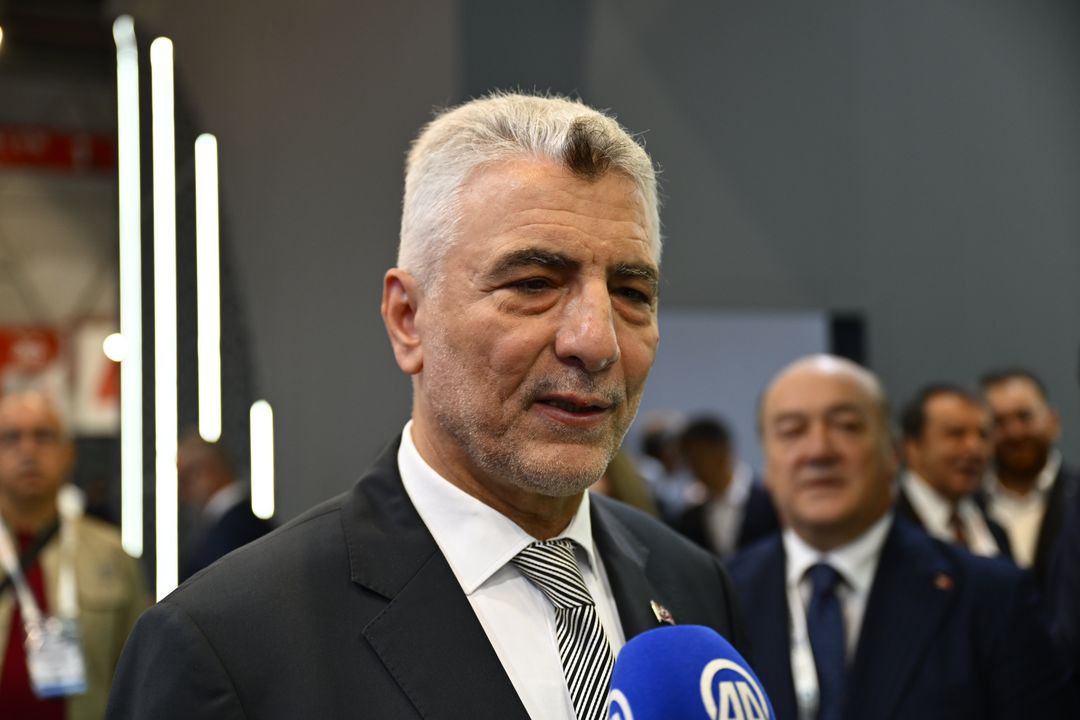
He notes that doubling share depends on total demand evolution, the speed with which buyers establish new relationships, and competitors’ responses on price, delivery, and availability.
EU quotas, safeguard measures, and CBAM remain major constraints, as does competition from EU and other international suppliers.
“My assessment is that doubling market share over the medium term is a credible commercial ambition, particularly if Turkish producers focus on product categories where they have a clear cost or delivery advantage,” Alpaslan says.
Achieving it will require sustained competitiveness, dependable logistics, product compliance, and long-term relationships, rather than merely filling a temporary gap left by Russian suppliers.
“Ultimately, the opportunity is not simply to replace Russian steel, but to establish Türkiye as a reliable and competitive long-term supplier to the Baltic region,” he says.
For Badshah, doubling Turkish steel exports and market presence is a “realistic ambition” if treated as a medium-term commercial target rather than an automatic outcome.
He says Ankara is in an “encouraging” starting position in Lithuania and that there is “room to expand”, especially in Latvia.
Constraints include competition from Poland and other European suppliers, freight costs, price volatility, trade restrictions, and carbon-border requirements.
Success depends on securing sustained customer contracts, maintaining consistent quality, building dependable distribution, and remaining competitive after logistics and regulatory costs, he says.