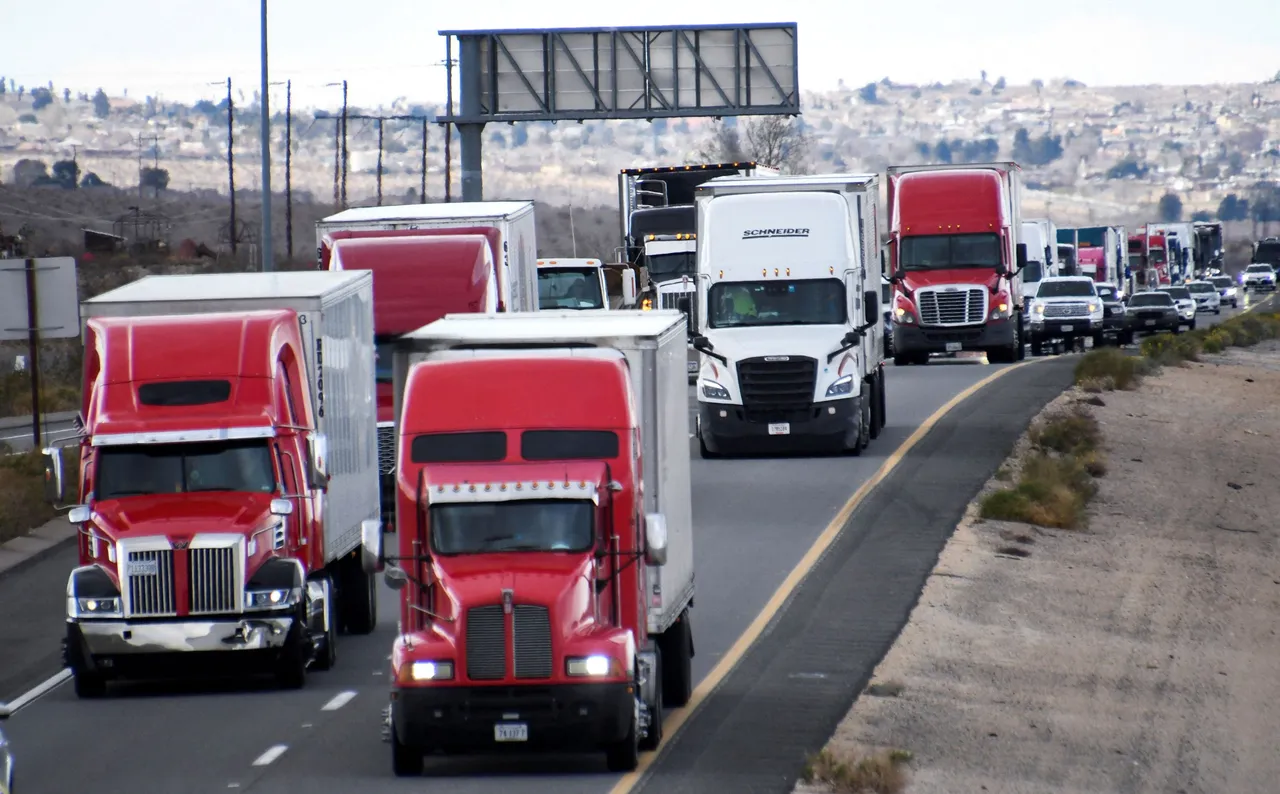
America’s truckers are being hit hard by surging diesel prices as the Middle East crisis drives oil costs to multi-year highs, squeezing margins across an industry that moves nearly three-quarters of the nation’s freight.
Diesel, which is the second-biggest expense for truckers, has jumped about 50 percent since the US-Israeli war on Iran disrupted flows through the Strait of Hormuz.
US fleets are now paying an average of $5.52 per gallon, surpassing the previous record set after the Russian invasion of Ukraine.
The spike is rippling through supply chains. Higher fuel costs are pushing up transportation expenses and, ultimately, prices for everyday goods.
With freight demand already under pressure, experts warn the industry faces a double hit: rising costs and weakening shipments.
“The numbers we’re seeing weren’t on anyone’s radar,” said Jason Miller, a supply chain professor at Michigan State University, highlighting how rapidly fuel prices have surged.
Domestic logistics for truckers
The US trucking industry is a cornerstone of the economy, with roughly 3 to 3.5 million drivers moving more than 70 percent of all domestic freight, according to data by the American Trucking Association.








In total, the sector supports around 8.4 million jobs, underscoring its vast reach and influence. As a result, any disruption affecting truckers — especially fuel costs — quickly ripples through supply chains and impacts prices paid by consumers nationwide.
Small operators bearing the brunt
According to industry data, nearly one in five trucking firms has halted operations due to fuel costs, while many others are cutting miles or rejecting less profitable loads.
Independent drivers who often pay for fuel upfront are particularly exposed, unlike large carriers that can negotiate discounts or pass costs to customers.
For drivers like Heather Hickson Griffith, fuel prices as high as $8 per gallon in California are forcing tough choices, from cutting personal spending to rerouting operations to cheaper regions.
The pressure is building across the sector, which generated $906 billion in revenue last year. Analysts warn that without relief, thousands of small carriers could be pushed out, tightening capacity and driving freight rates even higher.
The impact could soon reach consumers more directly. Transportation can account for over 20 percent of the cost of staples like milk, meaning sustained fuel spikes risk feeding into broader inflation.