 Muhammed Ali UCAR
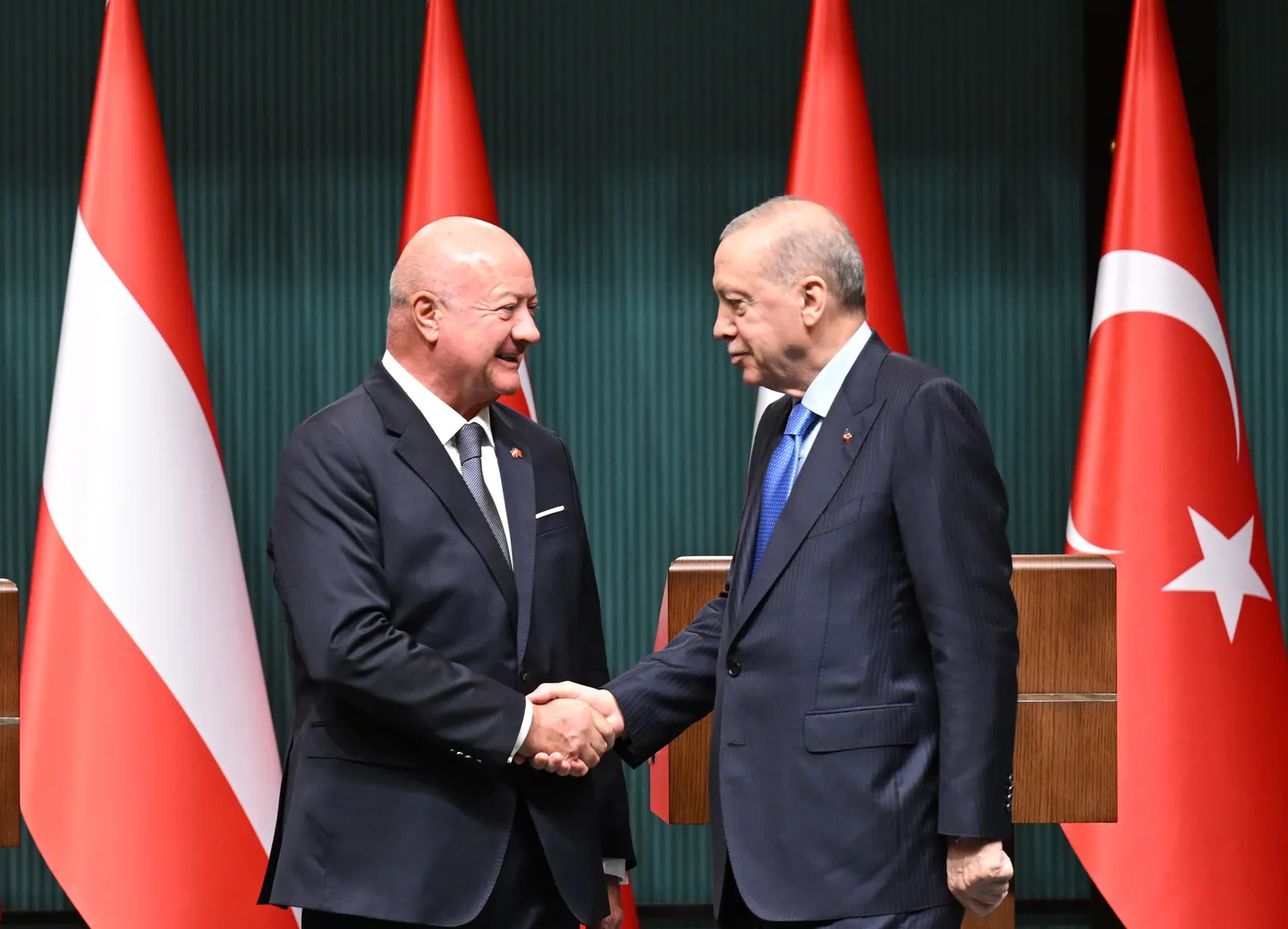
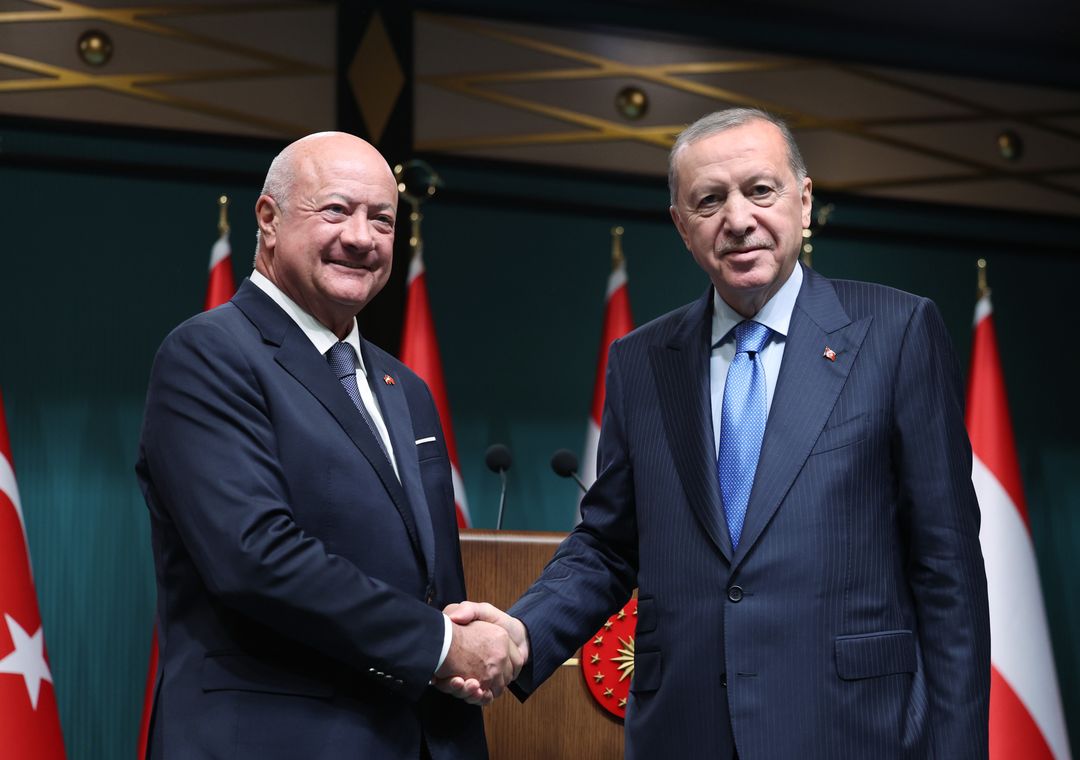
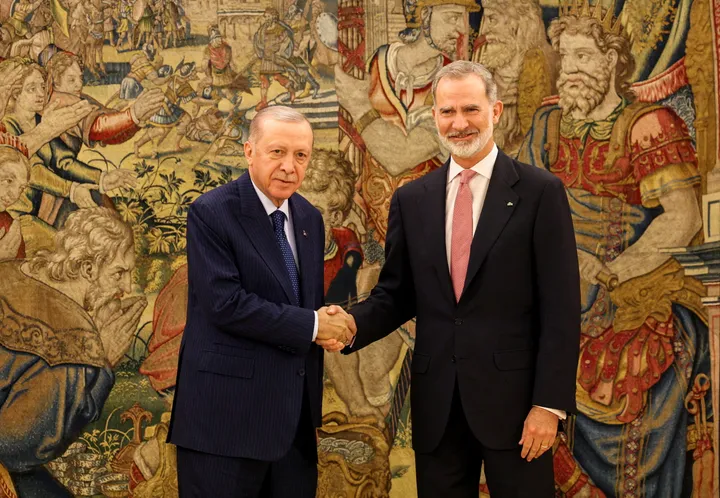
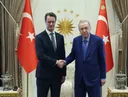
President Recep Tayyip Erdogan's reception of Austrian Chancellor Christian Stocker in Ankara for his first official visit to Türkiye carries a significance that extends beyond mere diplomatic symbolism.
The messages conveyed at the joint press conference were remarkably clear: relations have developed a positive dynamic that is now to be consolidated and extended to other areas.
This is also necessary. Europe and its neighbourhood are experiencing a period of exceptional instability.
The war in Ukraine, the conflicts in the Middle East, the future of Syria, migration, energy and supply security, and Europe's economic competitiveness present states with challenges that can hardly be overcome alone.
Austria and Türkiye should therefore talk less about what has divided them in the past and more about what they can achieve together today.
Relations between Vienna and Ankara have been fraught with political tensions for years. Debates about Türkiye's EU prospects and mutual political criticism, in particular, strained the relationship.
Against this backdrop, today's dialogue is particularly important. Erdogan explicitly spoke of the "positive dynamic" that had recently been achieved in relations.
Stocker, in turn, described Türkiye as a key country and praised Ankara's diplomatic role in both the war in Ukraine and the Middle East.
This demonstrates a political realism that both countries need. Good relations do not mean that Vienna and Ankara must hold the same position on every issue.
Rather, a resilient partnership is characterised by the fact that differing opinions do not hinder dialogue and cooperation.
Five billion dollars – and potential for significantly more
The new dynamic in economic relations is particularly noticeable. Bilateral trade volume reached approximately USD 4.5 billion in 2025. The target for this year is USD five billion.
More than 1,000 Austrian companies are active in Türkiye. Austrian direct investments there have now exceeded eleven billion dollars, while Turkish investments in Austria are approaching the billion-dollar mark.
This shows that economic relations have long since extended beyond traditional trade.
Erdogan's proposal to further develop existing institutional structures and establish a joint economic and trade committee in place of the current Joint Economic Commission is therefore all the more important.
If its first meeting can take place before the end of the year, the current political rapprochement would translate into a concrete institutional process.
The next phase should extend beyond existing trade relations. Green energy, critical raw materials, high technology, transport, and the defence industry offer considerable potential.
Cooperation on rail links and the Middle Corridor could also integrate Austria and Türkiye more closely into new trade and logistics networks between Europe and Asia.
However, the significance of this rapprochement cannot be measured solely in trade figures. Türkiye lies at a geopolitical crossroads where many of Europe's current challenges converge.
Syria is an important example of this. Erdogan made it clear that Ankara would welcome Austrian participation in Syria's reconstruction.
A more stable Syria is ultimately not only in Türkiye's interest. It is also in the interest of Austria and Europe – politically, economically, and not least with regard to future migration flows.

The same applies to the Middle East. The fact that both sides emphasise the importance of diplomacy and consider the uninterrupted supply of humanitarian aid to Gaza to be crucial creates a further starting point for cooperation.
In addition, there are the Balkan states. Both Türkiye and Austria have historical, economic, and social ties there. The stability of the Balkans, emphasised by both sides, is therefore a shared strategic interest.
Improved Austrian-Turkish relations could also positively affect Türkiye's relationship with the European Union.
Erdogan addressed two long-discussed topics in his conversation with Stocker: the modernisation of the customs union and the dialogue on visa liberalisation. Both issues should not be viewed solely through the lens of the political controversies of past years.
A modernised customs union could open up new opportunities for both European and Turkish economies in light of changing global supply chains and intensified international competition.
Progress on visa issues could simultaneously facilitate exchange between business, science, and society.
Austria should not adopt every position taken by Ankara. However, it can contribute to ensuring that relations between Türkiye and the EU are once again characterised more strongly by concrete interests, dialogue, and mutual benefit.
The current rapprochement between Vienna and Ankara shows that this is possible.
The Turkish community is part of this partnership
One factor that should not be forgotten is the people of Turkish origin in Austria. Since the 1960s, several generations have made a significant contribution to the country's economic and social development.
Today, people with Turkish roots are entrepreneurs, employees, doctors, scientists, cultural figures, students, and athletes. They create jobs, build businesses, and simultaneously contribute to Austria's cultural diversity.
This community should therefore not be viewed solely through the lens of migration and integration. It represents one of the strongest human connections between Austria and Türkiye.
When political relations improve, these social connections also benefit. Conversely, people who know both countries, languages, and cultures can play an important role in building new economic and social collaborations.
Stocker's visit ultimately demonstrates how drastically the tone between Ankara and Vienna has changed. Just a few years ago, relations were often characterised by confrontation. Today, the focus is on trade, investment, security, migration, diplomacy, transport, energy, and regional stability.
This is a development that both countries should take advantage of.
Austria lies in the centre of Europe, Türkiye on its strategic southeastern flank and at the interface with the Black Sea, the Caucasus and the Middle East. Precisely for this reason, the positive momentum should not be limited to isolated visits.
Regular political contacts, new economic mechanisms, more intensive social cooperation, and a more constructive dialogue between Türkiye and the EU can transform this into a long-term partnership.
The past between Vienna and Ankara has not always been easy. But given the challenges of the present, it would be a mistake to let it determine the future. Stocker's visit to Ankara is a positive sign that both sides have increasingly recognised this.
(This article was first published in TRT Deutsch)