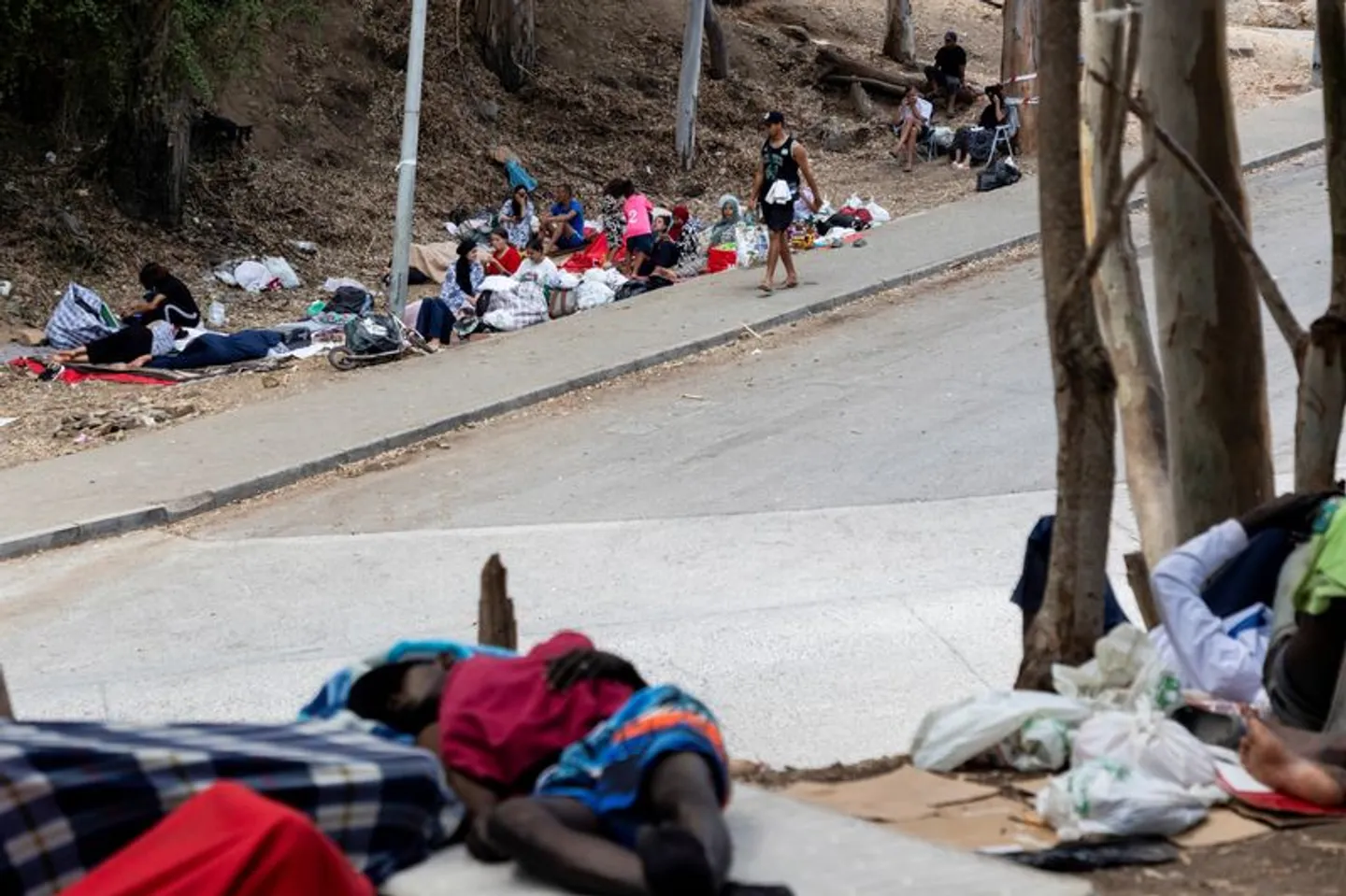
Mohammad had spent years moving from one temporary job to another in northern Morocco, unable to find stable work or a way to build the future he wanted.
At 26, like tens of thousands of other young Moroccans, he headed for the Spanish enclave of Ceuta in July, hoping to reach Europe by swimming across the sea.
What he thought might be his chance at a new life became what he describes as "the worst experience of my life".
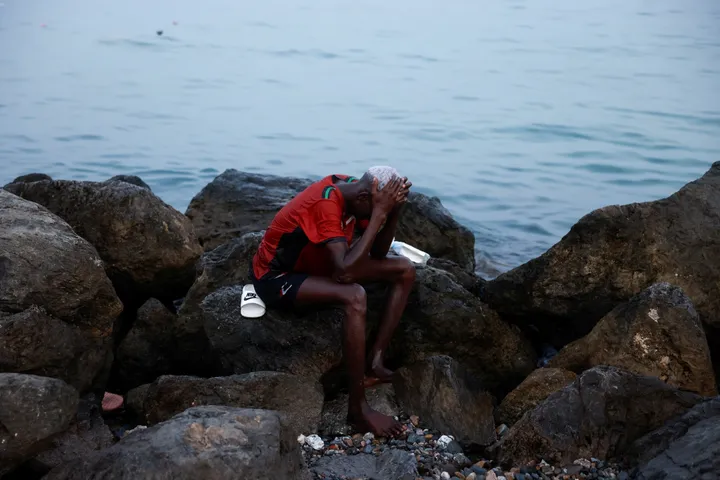
"Many people died, many parents cried, and many people disappeared," Mohammad, from the coastal city of M'diq in Morocco, tells TRT Español.
"There are many people in the forest, without food or water, suffering the undignified conditions they face there."
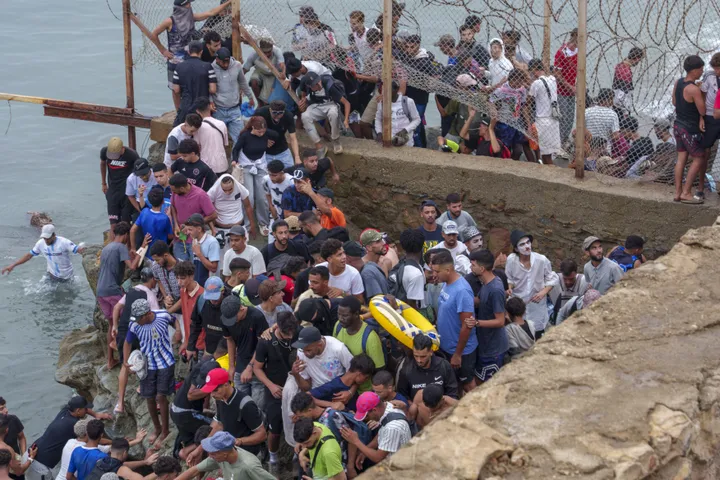
Mohammad was among an estimated 80,000 people who attempted to enter Ceuta in late July by swimming around the breakwater or climbing the border barriers, one of the largest irregular migration attempts in recent years.
He says he would have preferred to migrate legally, but believed opportunities were closed to people like him. "Each person has to try to build their own future," he says.
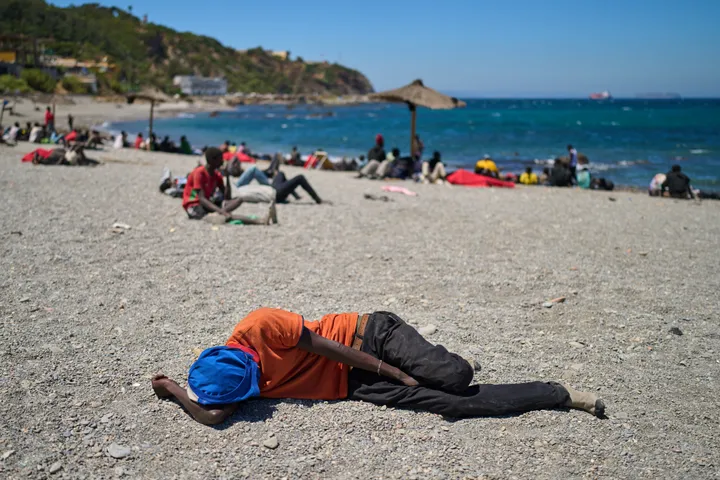
In Ceuta, he recalls that everything “was closed” while they went hungry for three days.
“Now they’re also expelling people,” he says. “If they find someone, they take them away.”
Analysts attribute the rise in migration attempts to a combination of economic hardship and mounting frustration among young Moroccans.
‘Very difficult experience’
Twenty-three-year-old Hamza, from the Moroccan city of Salé, also attempted the crossing.
"It was a very difficult experience," he tells TRT Español.
Hamza says he and a friend travelled from Tangier to Tetouan before continuing to Fnideq in northern Morocco, where they reached the Rif Mountains. After eating dates and watching police and military patrols, they entered the water.
"When we were near Spanish waters, I saw a boat passing. I told my friend, and we tried to hide," he says.
"We swam about 10 kilometres."
A cramp forced him to stop, and he lost sight of his friend.
Hamza says Spanish authorities later intercepted him and handed him over to Moroccan officials. He alleges he was beaten, denied food and mistreated while in custody, claims TRT Español could not independently verify.
He later learned that his friend had successfully reached Ceuta.
Undeterred, Hamza says he returned to try again.
"I bought the swimming equipment again and went back to Fnideq because I wanted to repeat the same route," he says.
"But I never got into the water because they had installed a metal barrier and the area was under heavy surveillance."
“It was a very difficult experience,” the aspiring footballer tells TRT Español.
“I came back after a horrible experience, in which I suffered police violence. I spent six and a half hours in the water.”
The mass attempt to reach Ceuta was not an isolated event but the culmination of long-standing frustrations, according to migration and international security expert Ali Zoubeidi.
“It shouldn’t be understood simply as another episode of irregular migration or as a spontaneous reaction to poverty. It’s more appropriate to understand it as the convergence of structural migration aspirations, social frustrations, digital mobilization, and a concrete perception that, suddenly, an opportunity to cross the border had arisen,” Zoubeidi tells TRT Español.
The desire to emigrate already existed before the events, he adds.
“What changed rapidly was the perception that this was the moment to act. Social media, rumors, videos, and word of mouth transformed, in a very short time, scattered individual intentions into a collective mobilization,” the Moroccan expert adds.
A key factor is the increasing share of the population facing this issue, which is not just about lacking income but also about the perception that opportunities for stability, social mobility, and a predictable future are limited, Zoubeidi says.
Yassine's story echoes many of the frustrations Mohammad and Hamza describe.
The 32-year-old truck driver from Beni Mellal, in central Morocco, earns around 3,000 Moroccan dirhams ($320) a month. After paying rent, food and other basic expenses, little remains. He dreams of continuing his education but says it is financially out of reach.
More than low wages, he says, it is the feeling of having no future that pushes many young Moroccans to consider leaving.
"I am one of the sons of this country and I know well what it means for a young person to have ambition, to want to work, to build a life, to help their parents and to live with dignity," Yassine tells TRT Español.
"But when they look for a job opportunity, they find the doors closed, the years go by and the dream begins to drift further and further away."

He points to his own family as an example.
"My brother has a master's degree, but he can't find a job," he says. "This is the reality in Morocco. When people see an opportunity, they leave."
When news of the mass crossing spread online, Yassine travelled to Tangier hoping to reach Ceuta, but says Moroccan police stopped him before he could try.
For him, the decision to migrate is driven less by a rejection of Morocco than by the belief that opportunities are slipping away.
"These young people didn't leave their country because they didn't love Morocco," he says.
"They left because some had lost hope of finding an opportunity. They wanted to work. They wanted to help their parents. They wanted to be independent. They felt their future was closed.”
Migration to Europe
Difficulty finding work, low wages, and limited prospects for career advancement have led many to view Europe as a place that offers better incomes, stability, and stronger social protections.
Success stories shared by previous migrants, amplified through social media, have further fuelled those aspirations.
That online ecosystem also helped drive the late July crossings. A New York Times report found that social media lent credibility to rumours of an alleged Spanish Supreme Court ruling that would allow migrants who reached Ceuta to remain in Spain.
For Zoubeidi, the rumours mattered less than how quickly they spread.
"Viral videos and rumours can create the perception that the border is temporarily accessible," he says. "That can transform individual aspirations into collective behaviour," a phenomenon he describes as "social contagion."
Madrid aims to speed up returns and address the issue of unaccompanied minors after the large influx of migrants in Ceuta. While affirming Morocco's cooperation with Spanish authorities, human rights groups have raised concerns.
Based on collected testimonies, Achraf Maymouni, a member of the Moroccan Association for Human Rights, describes some returns as “random, disorganised and illegal,” although TRT Español could not independently verify these claims.
According to Maymouni, in some cases people “are being turned back at an unofficial border crossing,” without registration or health screening.
Spanish authorities have registered at least 1,898 unaccompanied minors in Ceuta, though the figure is provisional. Reuniting them with their families is “a priority,” but the process is complex and requires locating them.
A video shared by TRT World shows Spanish soldiers escorting an unaccompanied Moroccan minor who was crying and begging not to be returned. Due to pressure from residents who insisted he was a minor, he was taken to the Civil Guard station instead of being repatriated.
In this context, Maymouni says he has received testimonies about what he describes as "the forced and illegal return of minors from Spain," and the suffering of families who have been unable to contact their loved ones, given the lack of clear guidance in Morocco on how to locate them.
“We are monitoring the area because there was chaos and unrest. Now we are trying to check if the situation remains stable. It seems that everything is almost returning to normal and the crossing is open,” he told TRT Español.
‘Not a guaranteed path’
Lately, Yassine says he has begun questioning his own desire to emigrate.
"I used to tell myself, 'Why not? Maybe I could find an opportunity in Spain, work, build my future and help my family,'" he says.
Watching others risk — and lose — their lives at sea has changed his perspective.
"The sea is not a guaranteed path to the future. A dream should not become a gamble with one's own life."
He says too many young Moroccans have disappeared chasing that dream.
"How many young people have left dreaming of a new future and never returned? How many mothers have been left waiting for their children? How many families have seen their happiness replaced by endless sorrow?"
Even those who survive the crossing, he says, often face hunger, homelessness and exploitation.
"Young people sometimes find themselves without food, shelter or protection. They endure violence, persecution and hardships that only those who have lived through them can understand. And the most dangerous thing of all is the sea."
For Yassine, the solution lies not in discouraging ambition but in creating opportunities at home.
"Morocco needs its young people, and young Moroccans are not a burden on the country; they are its future. But the future is not built with words."
He believes migration should be a choice, not an act of desperation.
"We don't want to see our young people die at sea in search of a decent life," he tells TRT Español.
"We want to see them building their lives here, with their families, and working for their country."
This article was first published on TRT Español.