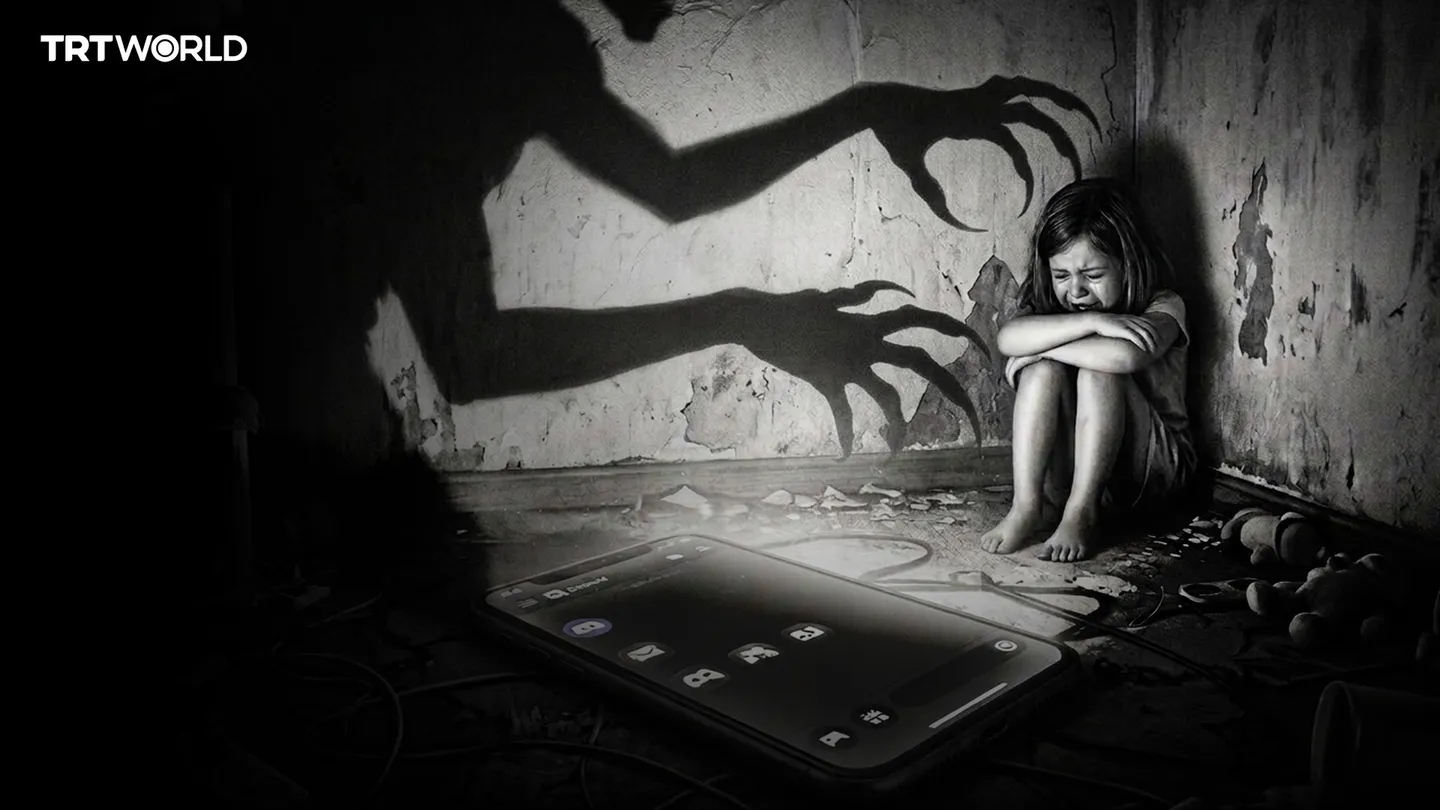
It started with the exchange of photographs. Then they started pressuring the child to do disturbing things.
A 14-year-old girl in Karachi, Pakistan, was coerced into killing her pet cat and threatened in ways that were intended to push her towards self-harm. The people targeting her were linked to 764, a shady online network known for exploiting and terrorising young people using social media and gaming platforms.
Pakistani investigators from the National Cyber Crime Investigation Agency (NCCIA) were alerted to the abuse case by a foreign agency. They then traced an IP address to a house in Karachi and seized electronic devices as part of their inquiry.
For the teenage girl, who was targeted via Instagram and Discord, what happened behind the screen was anything but a game. And for a parent, no matter how vigilant, the warning signs may have been easy to miss.
The case echoes others in a dark online subculture where predators manipulate, exploit and force young victims to harm themselves.
Daniyal Alam Khan, a Pakistan-based gaming journalist and enthusiast told TRT World that networks like 764 target and groom minors through various ways, with the first being online communities.
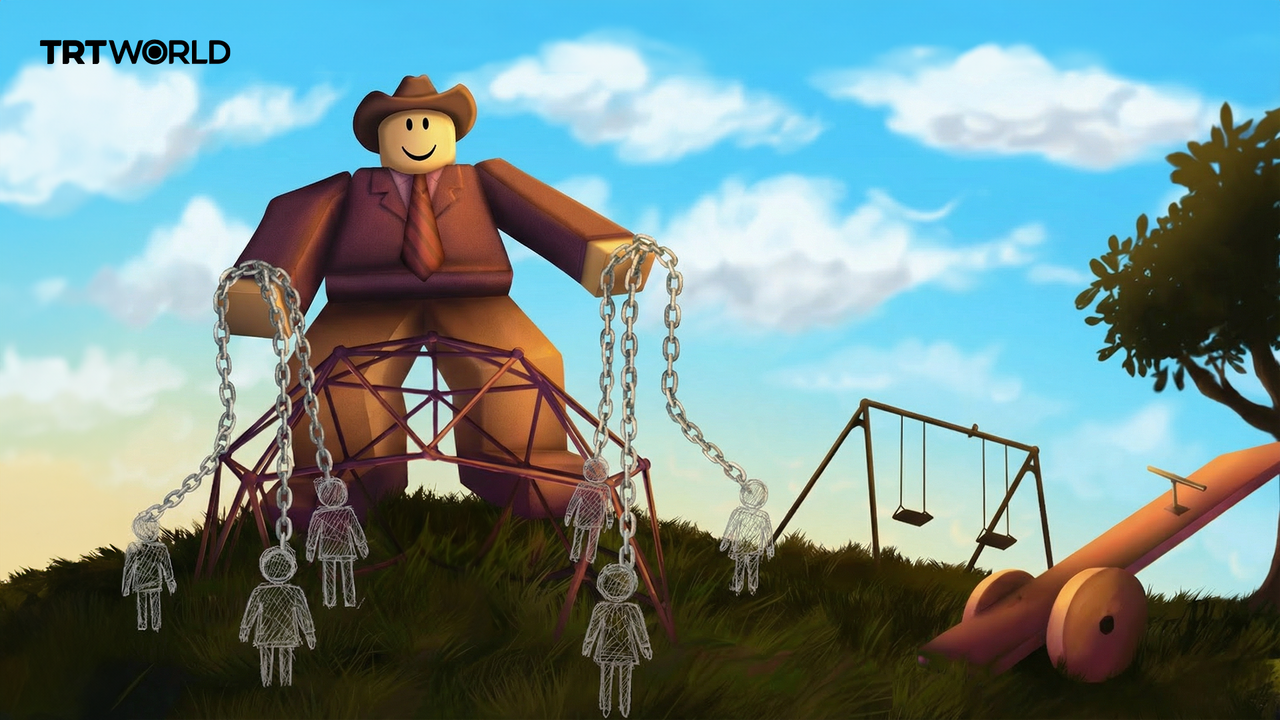
Discord, Reddit and Facebook, he said, are the three biggest contenders. “All you have to do is just search for a specific game, and hundreds if not thousands of different online communities pop up, for which most are just a click away to get into,” Khan explained.
The networks use these platforms to build trust with attention and flattery before turning that trust into coercion, using personal details the child has shared.
In another recent case, German police arrested an alleged online sadist accused of driving a 14-year-old US girl to hang herself, prosecutors said.
The suspect was linked to an online group called "Nefarious Maniac Kult" or "NMK", part of the 764 network, the Hamburg public prosecutor's office said.
The 18-year-old German was arrested in Hamburg and accused of being the indirect perpetrator of murder and grievous bodily harm.
Between September and October, the suspect, who was then 17, allegedly "exerted influence" over the girl from the US state of Indiana through the social network Discord. Prosecutors described her as "psychologically fragile". Discord is banned in Türkiye.
The suspect allegedly pressured the girl to cut herself and write the letters "NMK" on a wall in her own blood, and had her send him video recordings of these acts.
A few days later, she hanged herself in her bedroom, prosecutors said.
The suspect allegedly sought a video recording of her death, hoping to gain status within the group or to secure entry into it.

How it all starts
In an online environment, a stranger can easily become a friend, a gaming companion can become a confidant, and a conversation that seems harmless can turn into something a child is too frightened or ashamed to share with family or friends.
Networks like 764, which was founded in 2021, bank on this and exploit these vulnerabilities that draw children online in the first place — friendship, attention and a sense of belonging — and turn them into tools of control.
The Federal Bureau of Investigation (FBI), America’s domestic intelligence agency, warned of a sharp increase in 764 activity in a March 6 public service announcement last year.
The Department of Justice refers to 764 as a “nihilistic violent extremist" network. 764 is one of a number of online-based cybercrime networks within a broader network known as “the Com,” which includes violent and cybercriminal activity.
For experts working on digital rights, child protection and online behaviour, the problem is not simply that children spend too much time on the internet.
So how do such violent networks identify and trap children? How do ordinary interactions become instruments of control? And, are parents and technology companies equipped to recognise the danger before it escalates?
The Digital Rights Foundation (DRF), which operates a helpline for people experiencing online harassment and abuse in Pakistan, says there has been a “worrying escalation” in online abuse cases involving minors in recent years.
The organisation’s communications manager, Ayesha Babar, told TRT World its helpline recorded a 51 per cent increase in cases involving children in 2024, followed by a further 28 per cent increase in 2025, with abuse increasingly involving organised grooming and blackmail.
By 2026, the number of cases involving minors had already surpassed the total recorded in the previous year, the organisation said.
Babar identified that sharp increase is comes with an escalation in severity and possible harm, where previously most cases revolved around bullying or abusive language, now most cases include grooming, sexual exploitation and blackmail.

“What parents often fail to realise is that gaming and associated chat spaces are not isolated playgrounds. Perpetrators can use seemingly ordinary interactions to build trust and then move children across platforms or into private and encrypted channels, where grooming, coercion and sextortion can take place,” Babar highlighted.
She emphasised that the focus, therefore, needs to move beyond simply monitoring how much time a child spends gaming to understanding who they are communicating with, how those relationships develop, and whether conversations are moving into more private spaces.
Instead of simply monitoring, establishing trust-based relationships with children is becoming increasingly crucial, she said.
The 764 network has attracted growing attention from international law enforcement and researchers for its use of online grooming, sextortion, humiliation and threats to force victims into increasingly harmful acts.
The FBI’s March 2025 warning said that 764 uses tactics including sexual exploitation, coercion involving self-harm and threats of violence. Researchers have also documented connections between 764 and a broader ecosystem of online groups in which perpetrators can gain status by humiliating or harming others.
There is no reliable global count of children victimised specifically by 764. The network is not a single, clearly bounded organisation, but part of a shifting collection of connected groups, offshoots and individuals. This makes it difficult to distinguish confirmed cases involving 764 from those linked to related networks or other forms of online exploitation.
From friendship to coercion








Khan says online communities can be easy to enter, particularly when they are organised around popular games and interests.
Discord, Reddit and Facebook host numerous communities devoted to particular games, characters and gaming cultures. While many are legitimate spaces for conversation and shared interests, their accessibility can also create opportunities for people with harmful intentions to approach young users.
“Since these communities are created by the average Joe who's looking to make some money, all they want is the number of their members to go up, which is why entering such communities is pretty easy,” Khan told TRT World.
When large communities are easy to access and moderation is inconsistent, he added, people with ulterior motives may find opportunities to interact with children.

The danger is not confined to a single game or platform. Khan identified Roblox as a particular concern because of the number of children who use it and the recurring complaints about grooming and inappropriate contact on the platform.
He also described a familiar pattern in which someone befriends a child while playing a game, then encourages them to move to a separate communication service such as Discord, TeamSpeak or Facebook.
A child who first encounters someone in a shared gaming environment may not recognise the risks of continuing the conversation elsewhere. A relationship that appears to be about a game can gradually become more personal, with questions about a child's life, requests for photographs or pressure to keep conversations secret.
Gaming itself is not the problem. Nor does joining an online community automatically put a child at risk, says Khan.
The concern is that spaces built around common interests can provide an easy starting point for contact, while the movement between services can make the relationship harder for parents or moderators to follow.
Khan believes parents often underestimate how dangerous such relationships can become.
“The main thing I think parents misunderstand is the extent to which these groomers can take things,” he says. “It starts with just casual friendship but it can lead to much darker and sinister things.”
Why children may not speak up
Manizeh Bano, executive director of Sahil, a Pakistani organisation working on child protection, told TRT World the growing use of smartphones by children was making online safety an increasingly urgent issue. She also pointed to a lack of familiarity among many parents with the tools available to block unwanted contact, monitor online activity and recognise potential grooming.
“There has to be an awareness on how to recognise that you are being groomed for maybe some sort of sextortion,” she said in a voice message to TRT World.
Bano also warned about the wider online ecosystem in which abusive material and coercive behaviour can circulate.
“It is very important to remember that the dark web has got widespread tentacles and it is a very lucrative business with a mafia hidden behind it,” she said.
Her reference to the dark web reflected concerns about hidden online networks. She opined that these are the “real dangers” that needed to be reviewed.
Are platforms doing enough?
The problem also raises questions about the responsibilities of the companies that operate gaming and communication platforms.
Khan, the journalist, questioned whether platforms were doing enough to prevent abuse, particularly in environments used heavily by children. He said Roblox had previously taken steps to address concerns but believed the situation had worsened in recent years.
His assessment reflects concerns raised by users and parents, rather than an independently established measure of the effectiveness of Roblox's safety systems.
The questions are not limited to whether a platform has rules against grooming. They include how those rules are enforced, how quickly reports are acted upon, whether repeat offenders can return using new accounts, and how companies handle attempts to move conversations with children into other services.
Parents should familiarise themselves with the platforms and servers their children use and review privacy settings.
The recommendations by experts highlight the need for a response that combines parental awareness, platform accountability and law-enforcement intervention.

What parents can do
The advice from specialists is not to ban gaming outright, but to take a more active interest in the relationships children form online.
Parents should know which games their children play, which chat services they use and whether they belong to public or private communities. They should discuss the risks of accepting contact from strangers, sharing intimate images, disclosing personal details or agreeing to keep online relationships secret.
Experts recommend keeping conversations open and non-judgemental, tightening privacy settings and making sure children know they will not lose their devices simply for disclosing unsettling contact.
If a child reports blackmail or coercion, parents should listen calmly, reassure them that they are not to blame, and help them report the account and contact the relevant authorities.
Where it is safe to do so, they should preserve usernames, account links, messages and timestamps.
If a child faces an immediate threat of self-harm or serious injury, urgent help from local emergency services and appropriate professionals should take priority.
But perhaps the most important safeguard is making sure children feel they can speak up when an online relationship starts to make them uncomfortable, without fear of blame or punishment. As Khan pointed out, the danger can be difficult to recognise precisely because it often begins with something that seems harmless.
“The main thing I think parents misunderstand is the extent to which these groomers can take things. It starts with just casual friendship, but it can lead to much darker and sinister things,” he said.