 Emmett Imani
For centuries, the idea of Turkic unity largely existed in history books, intellectual circles and cultural memory — tied together by shared language, traditions and the legacy of a civilisation that once stretched across Eurasia.
Many leaders spoke of solidarity among Turkic nations, but few succeeded in turning that idea into a broader geopolitical vision capable of reshaping the region’s future.
Today, that vision is beginning to take a more concrete form.
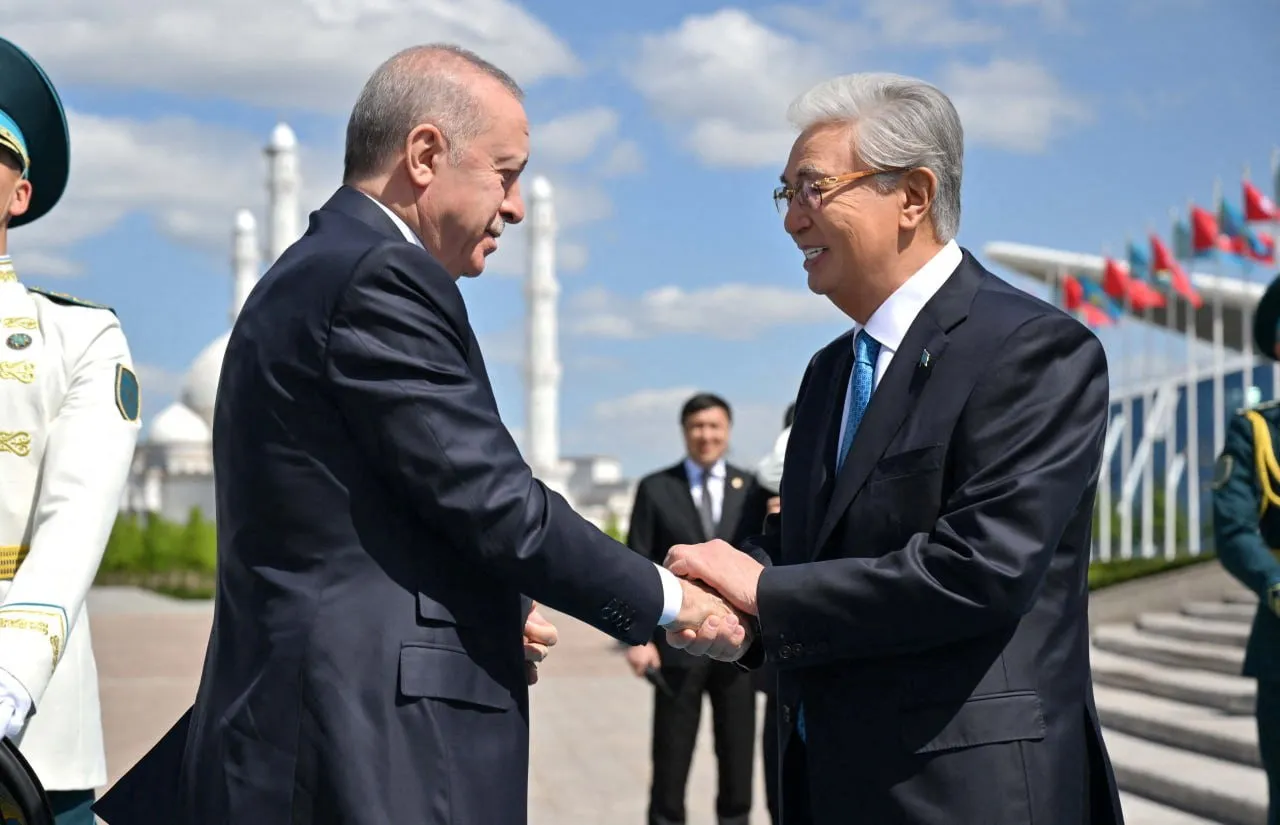
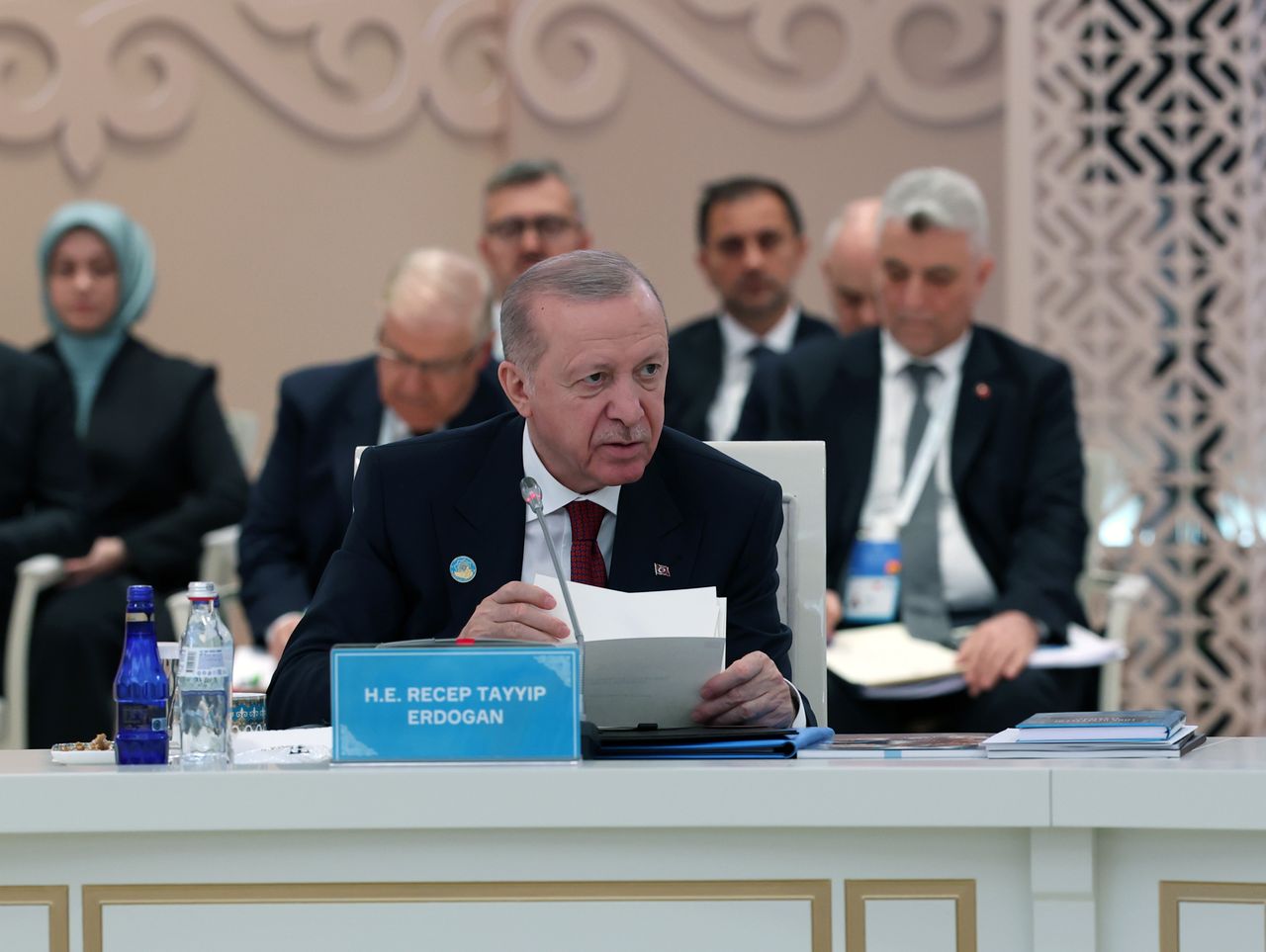
President Recep Tayyip Erdogan’s recent visit to Kazakhstan may ultimately be remembered as more than a routine diplomatic meeting between two closely linked nations.
It could come to symbolise a broader shift taking place across the Turkic world — one in which Central Asia is becoming more connected to global markets, strategic trade routes and international transport corridors through expanding political and economic cooperation.
Just as importantly, the Turkic world is increasingly being viewed as more than a loose collection of post-Soviet states.
These countries are beginning to project a clearer geopolitical identity of their own, shaped by shared interests, economic integration and growing regional coordination.
International perceptions of Central Asia are also changing.
For years, the region was often seen primarily through the influence of larger powers such as Russia and China.
But that framework is gradually shifting as Turkic states become more economically interconnected, diplomatically coordinated and strategically significant across Eurasia.
This transformation helps explain the growing prominence of the Organization of Turkic States in recent years, as member states seek to deepen cooperation in trade, infrastructure, energy, defence and regional connectivity.
What many observers once dismissed as a largely symbolic or cultural project is gradually evolving into something far more consequential: a geopolitical framework with growing international influence.
The Organization of Turkic States is no longer defined only by shared language, history or cultural identity. Increasingly, it is becoming tied to trade routes, transport corridors, energy cooperation, diplomatic coordination and regional strategic influence.
Türkiye has been central to that transformation.
Türkiye’s expanding reach
Under President Erdogan, Ankara is no longer viewed as a passive regional actor that can be overlooked in global affairs.
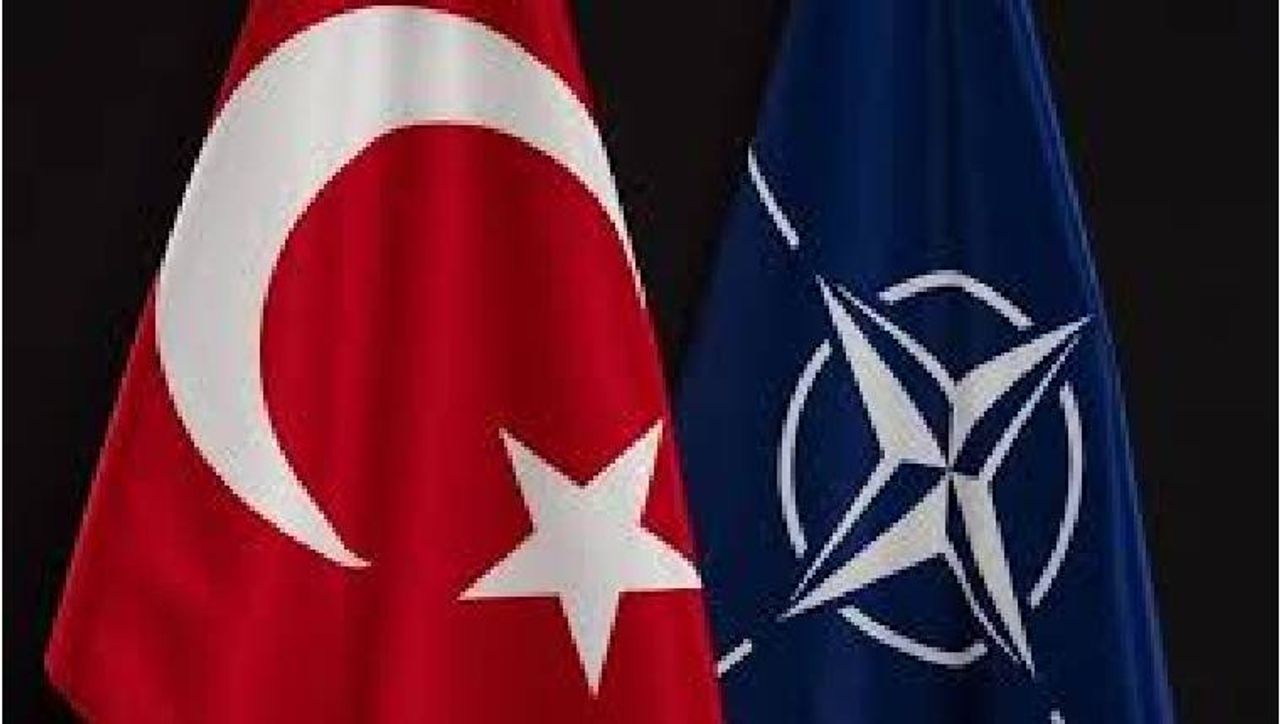
From NATO negotiations to Middle East diplomacy, the Russia-Ukraine war, energy politics and defence cooperation, Türkiye has positioned itself as a country of growing strategic importance.
That shift has also elevated the profile of the Organization of Turkic States. When a regional organisation is anchored by a country with Türkiye’s geopolitical weight, it inevitably gains greater visibility, credibility and international relevance.
The broader Turkic world also possesses significant collective capabilities — from military and diplomatic influence to strategic geography — giving it the potential to play a larger role in global affairs.
This transformation may be especially important for Central Asia. For centuries, geography constrained the region’s economic and strategic potential.
Despite vast natural resources, industrial capacity, agricultural output, and a young population, many Central Asian states struggled to integrate fully into global markets because of their landlocked status and dependence on external transit systems.
Now, however, a different regional vision is emerging. Through initiatives such as the Middle Corridor, Ankara aims to connect Central Asia more directly to Europe and the wider Turkic world via routes that cross the Caspian Sea, the Caucasus, and Türkiye.
At the same time, new transport and maritime links are being developed to strengthen regional connectivity.
The significance of the Middle Corridor extends beyond transportation alone. Supporters see it as part of a broader effort to reshape Eurasian trade routes and reduce dependence on older geopolitical and logistical frameworks.


If fully realised, the implications for Central Asia could be historic. A region long defined by geographic isolation could become one of Eurasia’s key trade and industrial crossroads.
Trade across Eurasia
Through stronger connectivity with Türkiye and the wider Turkic world, Central Asian economies could gain broader access to international markets and maritime trade routes, helping to expand exports, attract foreign investment, and deepen economic integration with Europe, the Mediterranean, the Middle East, and beyond.
Energy resources could reach larger and more diversified markets more efficiently.
Agricultural exports could expand significantly, while rare earth minerals, industrial goods and raw materials could move more easily across continents through new transport and logistics corridors.
Supporters of the project argue that over time, new railways, logistics hubs, ports, manufacturing corridors and financial centres could transform the region’s economic landscape.
Such changes could also create broader educational opportunities, technological partnerships, tourism industries and employment networks for younger generations across Central Asia.
But the transformation envisioned by Ankara goes beyond infrastructure alone. Supporters see it as an attempt to overcome many of the structural constraints that historically limited the region’s development and global integration.
This is why some observers view President Erdogan’s role as potentially significant in the long-term evolution of the Turkic world.
From culture to strategy
While many leaders previously framed Turkic cooperation largely in symbolic or cultural terms, President Erdogan has sought to develop it into a broader strategic model rooted in political coordination, economic integration and shared geopolitical interests.
Kazakhstan occupies a particularly important place within that vision. As the largest economy in Central Asia and one of the region’s most strategically positioned states, Kazakhstan serves as a bridge connecting different parts of Eurasia.
Türkiye’s growing ties with Astana suggest that Ankara’s engagement with Central Asia is increasingly becoming part of a longer-term strategy focused on regional integration, economic connectivity and strategic cooperation among Turkic states.
In that context, the emphasis on Turkic solidarity during Erdogan’s visit carries significance beyond symbolism alone.
Historically, many major geopolitical transformations began as civilisational or cultural ideas before gradually evolving into institutional partnerships, trade systems and strategic alliances. Shared identity can help build the trust necessary for long-term cooperation.
Today, the Turkic world appears to be moving cautiously in that direction.
However, significant challenges remain. Large-scale infrastructure projects require sustained investment, political coordination and long-term stability, while economic competition between regional actors is inevitable. Integration across such a vast geographic space will also take time.
Still, the momentum behind closer cooperation has become increasingly evident in recent years.
Türkiye has expanded its role not only as a regional power but also as a strategic partner across Eurasia, Africa and Asia.
What was once expressed mainly through speeches and cultural diplomacy is now increasingly reflected in trade routes, rail links, diplomatic institutions, energy cooperation and economic partnerships spanning Anatolia to Central Asia.
If that trajectory continues over the coming decades, President Erdogan may ultimately be remembered by some in Central Asia as a leader who helped connect the region more directly to the wider world and who challenged the geopolitical constraints that shaped much of its modern history.
For many across the Turkic world, greater access to international trade routes and global markets would be more than an economic opportunity.
It would symbolise a broader transformation — one in which Central Asia is no longer seen as an isolated region at the centre of Eurasia, but as an increasingly connected part of a wider Turkic geopolitical and economic space.