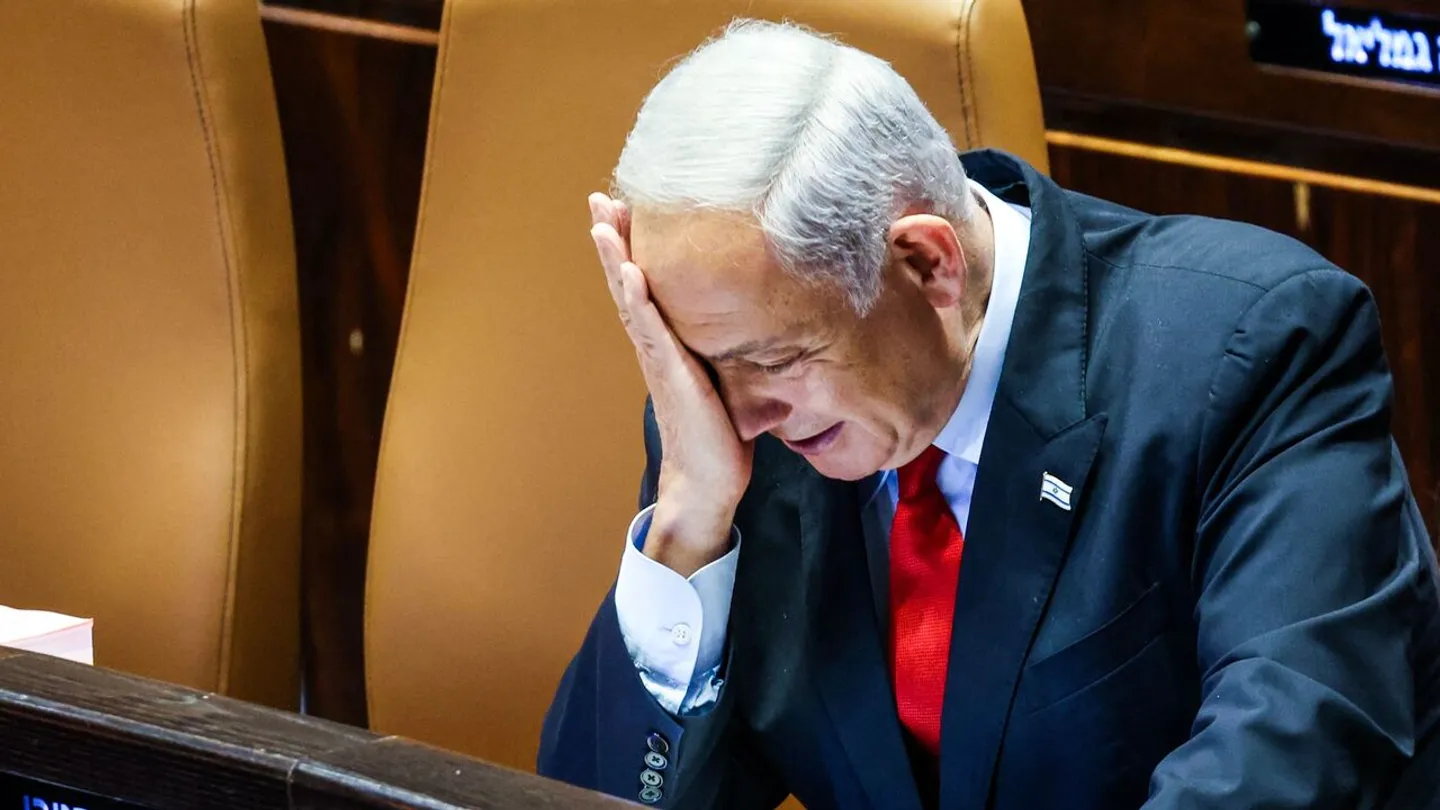
Support for Israeli Prime Minister Benjamin Netanyahu’s Likud party has fallen to its lowest level in nearly a year, while two prominent rivals have strengthened their positions in the race to lead the country, according to a new opinion poll published on Friday.
The survey by the Lazar Research Institute for Maariv newspaper found that Likud would win 22 seats if elections were held today, down three seats from the previous poll and marking its weakest result since August 2025.
The decline comes amid political disputes over military service exemptions for ultra-Orthodox Jews and renewed speculation about Netanyahu’s political future following comments by US President Donald Trump.
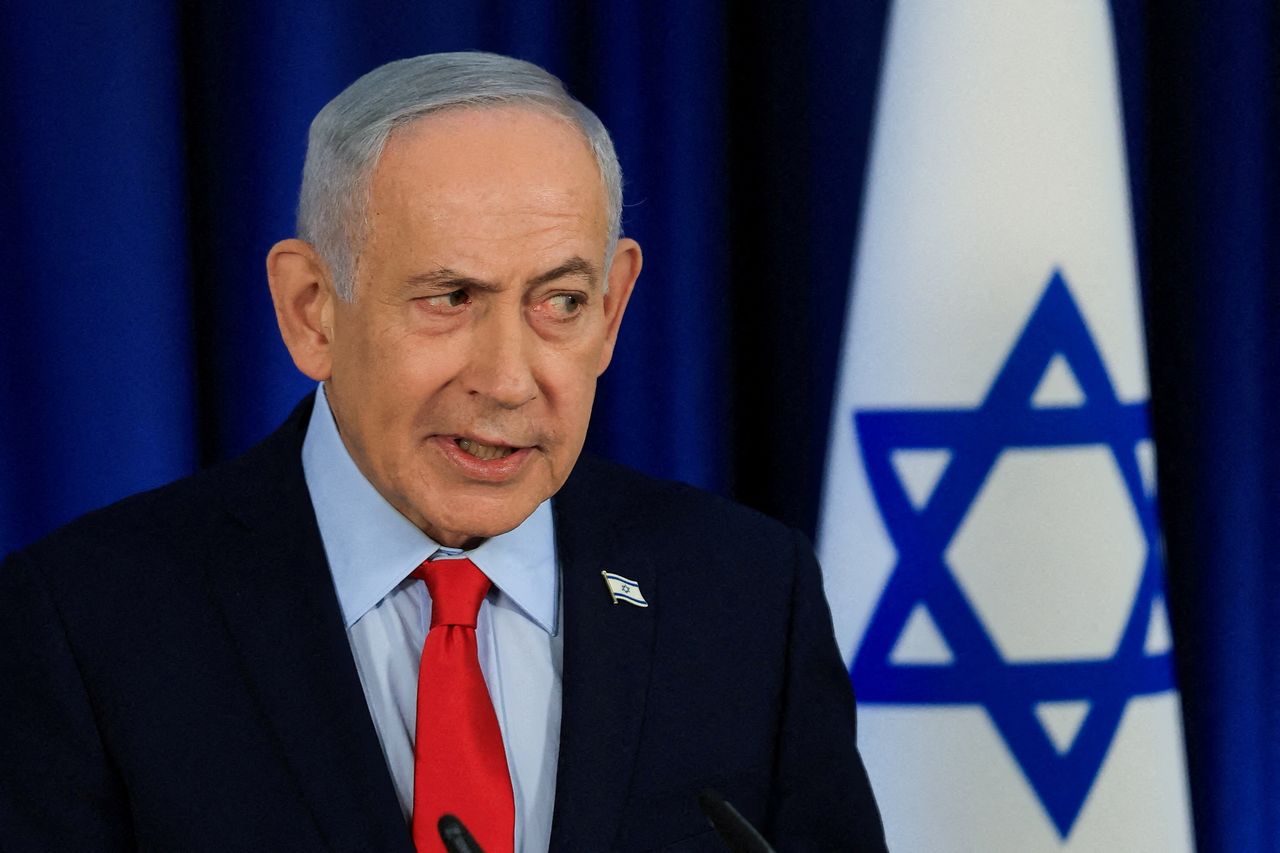
Rivals overtake Netanyahu in leadership race
The poll showed rising support for former military chief Gadi Eisenkot, whose Yashar party climbed to 20 seats, while former Prime Minister Naftali Bennett’s Together party remained a major force despite slipping to 21 seats.
In direct contests for the premiership, both men outperformed Netanyahu. Eisenkot led the prime minister by 44 percent to 40 percent, while Bennett held a 43 percent to 39 percent advantage.








Despite Likud’s decline, the survey suggests Israel remains locked in political stalemate. Parties aligned with Netanyahu would secure 50 seats, short of the 61 needed for a parliamentary majority, while Jewish opposition parties would win 60 seats and Arab parties 10.
Election outlook remains unclear
The current Knesset is scheduled to complete its term in October, with elections expected in September or October.
Although opposition parties collectively appear stronger in the poll, most Jewish opposition factions have ruled out relying on Arab parties to form a governing coalition, leaving no clear path to a majority government.
The findings underscore the uncertainty surrounding Israel’s political landscape as the country heads towards a potentially pivotal election season.