 Umer Bin Ajmal
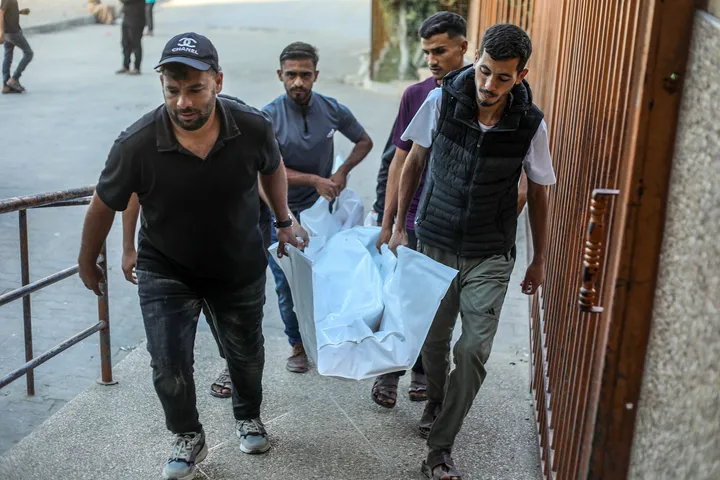
Two-year-old Alia was thrown from the second floor of a building by the force of an explosion near her home.
Although conscious, Alia appeared confused as she was rushed to hospital. At a makeshift emergency department, the doctors treating her suspected she had a brain bleed.
Nour Sharaf, an American emergency physician used to working in hospitals where urgent diagnostic scans are readily available, requested an immediate CT scan to assess her injuries and determine whether surgery could save her life.
But in Gaza, even that wasn’t simple.
It took four hours to obtain the scan. By the time the results confirmed the bleeding, the opportunity to save the little girl had passed.
“Even if we were able to get her [to] the operating room on time, they actually didn’t have the resources in the operating room to be able to save her life,” Sharaf recalled, citing a conversation with a paediatric neurosurgeon.
The toddler’s death exposed the grim reality of Gaza’s devastated healthcare system: patients were dying not only from their injuries but also because the means to treat them had disappeared.
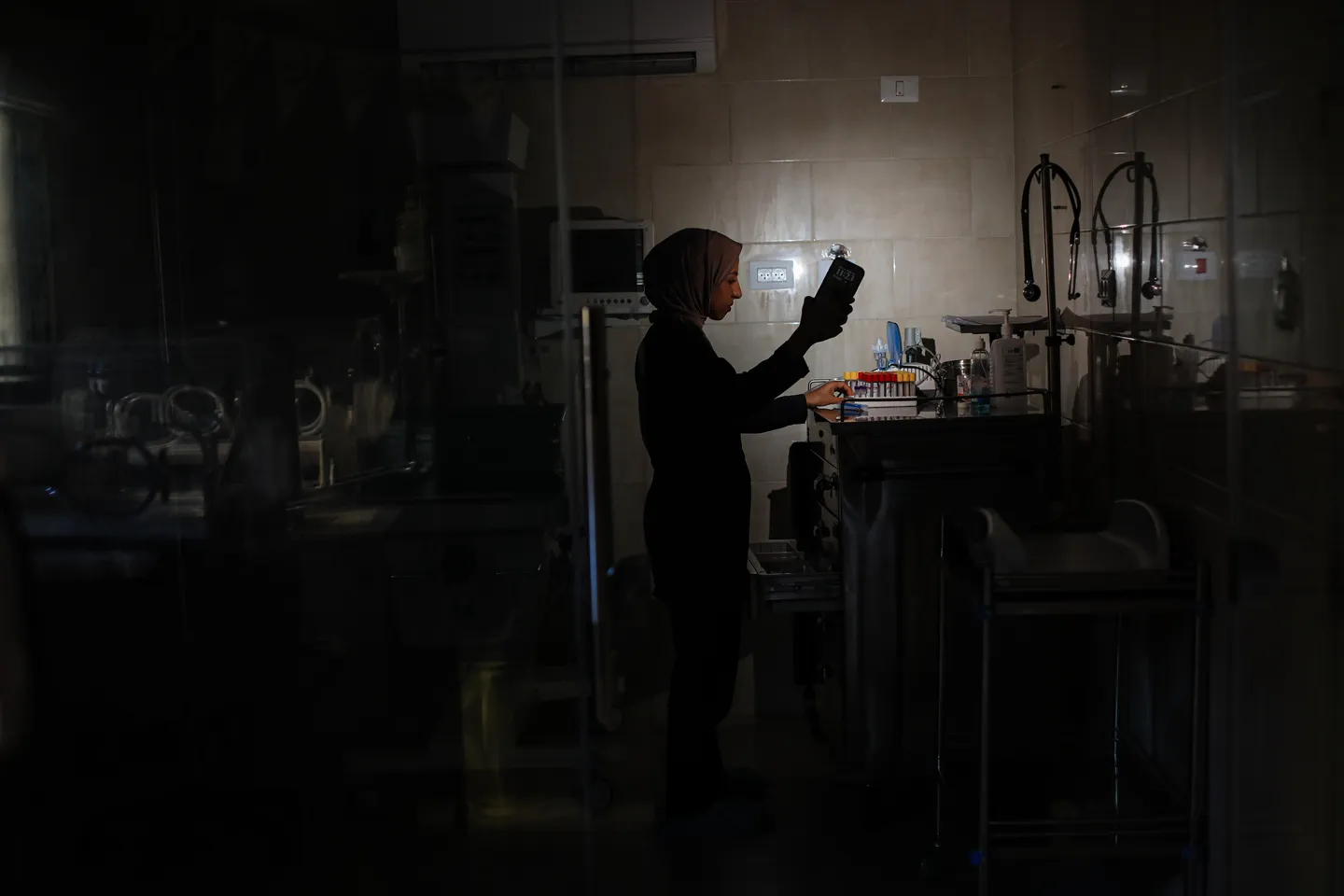
Years of Israeli bombardment, repeated attacks on medical facilities and severe restrictions on the entry of essential supplies have left Gaza's healthcare system struggling to function.
Hospitals that once provided specialised care have been damaged or forced to close, leaving overwhelmed medical teams to treat critically injured patients with dwindling resources.
In September 2026, the World Health Organization reported that only 19 of Gaza’s 36 hospitals were functioning even partially, with none fully operational. Essential medicines, diagnostic equipment and fuel remained critically scarce.
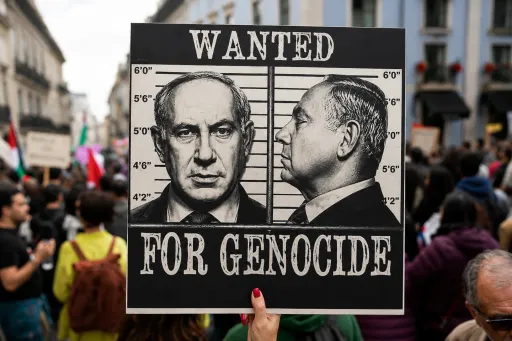
The deteriorating health conditions in Gaza come against the backdrop of findings from a United Nations commission of inquiry, which concluded in September 2025 that Israel had committed genocide in Gaza.
Israel rejected the findings, maintaining that its military operations targeted Hamas following the group’s October 7, 2023, attacks.
Hospitals without the means to heal
Sharaf visited Gaza three times between July 2025 and June 2026, working at Shuhada al Aqsa Hospital, Nasser Hospital, and al Shifa Hospital.
At al-Shifa Hospital, she recalled a makeshift emergency department, converted from outpatient clinics, where as many as 300 casualties could arrive simultaneously.
Patients lay on the floor; some arrived without relatives, while others needed procedures doctors could no longer perform with standard equipment.
“We actually ran out of chest tubes,” she said, describing how medical teams improvised devices to drain blood from patients’ chests.
Even routine cardiac care had become precarious. Sharaf said doctors lacked essential diagnostic tests and stents used to open blocked coronary arteries.
Mohammed Adeel Khaleel, a US-based spine surgeon who visited Gaza three times between April 2024 and August 2025, said the devastation was visible in operating theatres.
He recalled treating a man in his twenties whose spinal cord had been damaged by gunfire.
With no complete set of modern spinal fixation equipment available, Khaleel said staff recovered surgical instruments from another hospital that had ceased operating, piecing together mismatched screws to stabilise the patient’s spine.
The young man was unlikely to walk again, yet Khaleel remembered him smiling and joking with the anaesthesiologist before surgery.
“This is Gaza, everybody has an injury or a disability,” a hospital staff member told him.
Not every story ended in despair, though.
Khaleel also recalled operating on an 18-year-old girl paralysed after an injury. With only CT imaging available, he identified blood compressing her spinal structures and operated.

Before he left Gaza, she could move her toes, and months later, he learned she could walk again.
When treatment becomes impossible
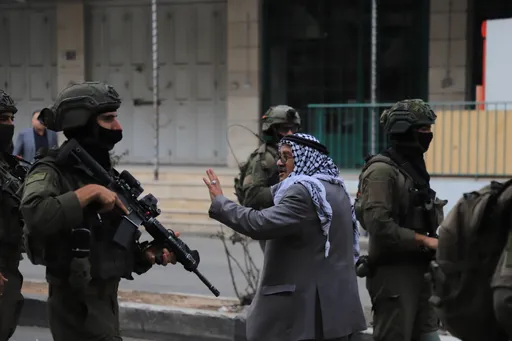
Both physicians described restrictions on bringing medical supplies into Gaza. Khaleel said Israeli authorities confiscated equipment from his medical team and denied them entry during an attempted return mission.
Their accounts echo findings by Physicians for Human Rights, which documented restrictions on essential supplies ranging from anaesthetics and chest tubes to surgical instruments and orthopaedic screws.
In a March 2026 WIRED investigation, Israel’s Coordinator of Government Activities in the Territories (COGAT) acknowledged that customs officials confiscated microsurgical instruments carried by another American surgeon because they had not received prior approval.
COGAT rejected allegations that it was deliberately undermining medical services, saying restrictions were necessary for security and to prevent equipment from being diverted for non-humanitarian purposes.
For doctors inside Gaza, the consequences of shortages were immediate.
Khaleel recalled hospitals removing metal pins used to stabilise fractures from deceased patients, sterilising them and reusing them because replacements were unavailable.
Sharaf said many patients who might have survived in American hospitals died in Gaza.
When hunger became another emergency
By Khaleel’s third visit in August 2025, starvation had compounded the injuries arriving at hospitals. He recalled a badly burned child with a partially amputated hand gesturing towards his mouth to indicate hunger.
Other patients arrived with gunshot wounds after attempting to collect food at distribution points operated by the Gaza Humanitarian Foundation.
The UN Human Rights Office documented at least 2,319 people killed while seeking assistance between late May and September 17, 2025, including 1,202 near militarised distribution sites. Most deaths were reportedly caused by live fire.
Khaleel said he treated children and teenagers with gunshot wounds to the chest and other parts of the body. He believed some injuries suggested deliberate targeting.
An October 2025 ceasefire reduced the scale of bombings but did not end the killings. Israeli strikes and gunfire continued to cause casualties, while hospitals struggled with patients suffering from untreated chronic illnesses.
Neither Khaleel nor Sharaf encountered Hamas fighters, weapons or tunnels in the hospitals where they worked.
The lasting memory for Khaleel was not only of destruction, but of Palestinian medical workers who continued treating patients despite the danger.
Among those who stayed with Khaleel was a young Palestinian general surgeon hoping to pursue specialist training. Despite the strain of working in Gaza’s overwhelmed hospitals, they discussed medical exams and qualifications.
Those ambitions have become increasingly difficult to realise amid the destruction of Gaza’s healthcare system.
“These are normal people with hopes and dreams,” Khaleel said.
Sharaf says seeing families who, despite having little food themselves, insisted on feeding visiting medical workers left a lasting impact on her.
Both doctors, returning to their lives in the United States, carry memories of patients they could not save.
“I absolutely would go to Gaza,” she said.
“If it’s easy [to] turn off the channel or scroll past it, just remember that people in Gaza or anywhere in the world where they’re suffering, they don’t have that choice.”