 Gurkan Demir
The world has entered an era of instantaneous information warfare. Nations have begun positioning themselves as the righteous party in the court of global opinion — and their capacity to generate information has become their most decisive weapon.
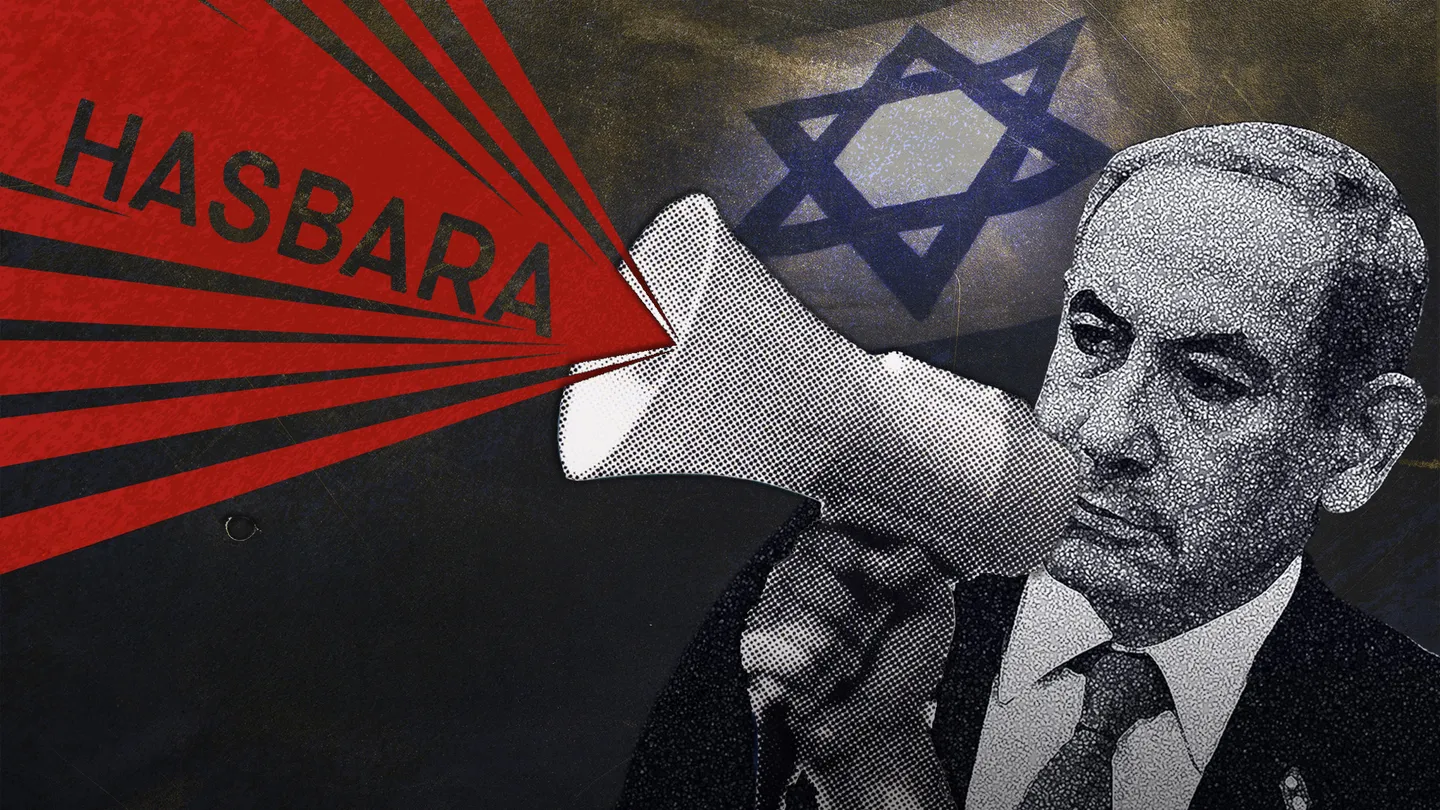
Israel, among the earliest states to grasp this reality, took the ancient practice of hasbara and fused it with 21st-century digital infrastructure, forging it into a systematic information warfare machine.
Derived from the Hebrew word meaning "to explain," hasbara is officially described by the Israeli state as the activity of communicating its policies and actions to the international public.
In practice, however, this definition functions largely as a euphemism. Today, that apparatus spans a vast spectrum: from official government statements to viral social media campaigns, from coordinated mainstream media messaging to paid influencer networks operating in the shadows.
Academic literature draws a theoretical line between public diplomacy and propaganda. But in practice, Israel's hasbara operations are overwhelmingly oriented not towards truth, but towards the construction of a particular truth — a manufactured reality.
At this point, what presents itself as public diplomacy reveals itself to be something far closer to manipulation and propaganda.

Digital transformation: from 2006 to the present
The information warfare infrastructure Israel operates today did not emerge overnight — it took shape through a slow, deliberate metamorphosis.
The 2006 Lebanon War marked a decisive inflection point. Israel witnessed firsthand how footage streamed directly from the battlefield by Hezbollah profoundly shifted international public opinion.
That experience made the strategic weight of digital communication impossible to ignore. The 2008–2009 Gaza offensive then served as the effective opening chapter of a new era in state-sponsored digital propaganda.
In its aftermath, the Israeli Foreign Ministry publicly announced the formation of a dedicated unit tasked with monitoring and messaging across social media platforms in multiple foreign languages.
By 2012, social media had become the primary theatre of information warfare. During the 2014 Gaza offensive, coordinated content campaigns engineered to cast Israel as the victim reached their apex.
It was during this same period that the Act.IL application emerged — the first mass-scale digital mobilisation tool of its kind, designed to enable volunteer activists to amplify targeted content or flag it for removal with surgical efficiency.
Israel even went so far, in this period, as to offer university students scholarships in exchange for conducting online hasbara operations.
In the aftermath of October 7, Israel's digital propaganda infrastructure underwent a dramatic leap — both in scale and sophistication.
The state budget allocated to public opinion shaping and hasbara operations surged roughly twentyfold compared to pre-2023 levels, reaching $150 million for 2025.
By 2026, Israel announced it would devote an extraordinary $730 million to its digital propaganda apparatus. Dedicated coordination units were established within both the Foreign Ministry and the Ministry of Diaspora Affairs.
The Israeli Government Advertising Agency — known as Lapam — published approximately 2,000 advertisements throughout 2024; in just the first eight and a half months of 2025, that figure surpassed 4,000, with half of those advertisements targeting international audiences.
As these revelations circulated publicly, Israeli Prime Minister Netanyahu met with a group of Jewish-American influencers in New York, delivering a pointed message: "We need to fight back in this digital arena, on social media."
The multilingual siege: The case of Türkiye

One of the most compelling dimensions of Israel's digital war is its strategy of reaching target audiences in their own languages — a tactic that grows even more striking when applied to countries with which Israel maintains its most strained diplomatic relations.
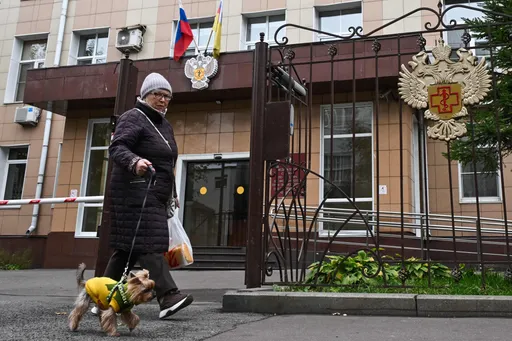
In March 2025, the Israeli military launched official Turkish-language accounts on both X and Telegram.
The account's cover photo featured Israeli soldiers saluting both the Turkish and Israeli flags side by side.
That the Israeli military chose to open a Turkish-language channel at a moment when Türkiye-Israel relations had plunged into deep crisis following October 7 makes this an unmistakable public opinion management operation, not a gesture of goodwill.
Türkiye had imposed sweeping trade restrictions on Israel, and President Erdogan had emerged as one of the most vocally and persistently critical voices against Israel on the international stage.
In a similar vein, the X posts directed at Erdogan by then-foreign minister Yisrael Katz began attracting scholarly attention in international academic circles, catalogued under the rubric of "digital diplomacy and diplomatic crisis."
Katz's visually reinforced tweets entered the record as a concrete specimen of provocative digital diplomacy — one state's minister directly and aggressively targeting the head of another sovereign state through social media.
The fact that the Israeli army maintains active social media accounts across dozens of languages leaves little room for ambiguity: this is a centrally coordinated targeting strategy, executed at industrial scale.

The Gaza reality and the collapse of the narrative
Yet for all its resources and sophistication, Israel's digital propaganda machine has encountered serious limits, and those limits deserve examination.
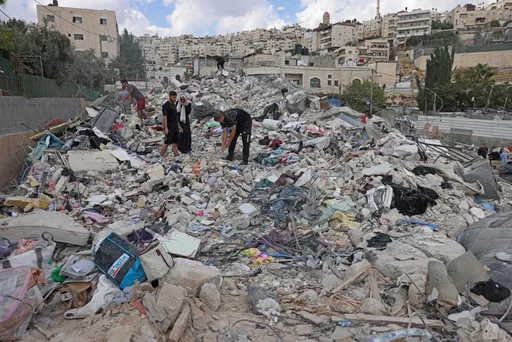
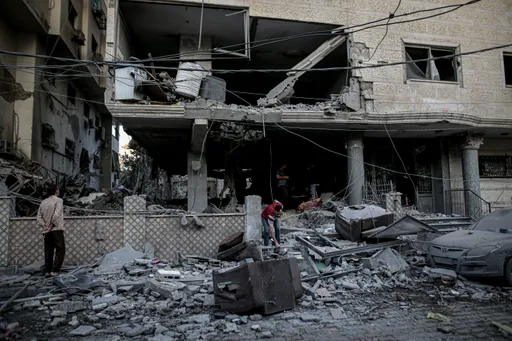
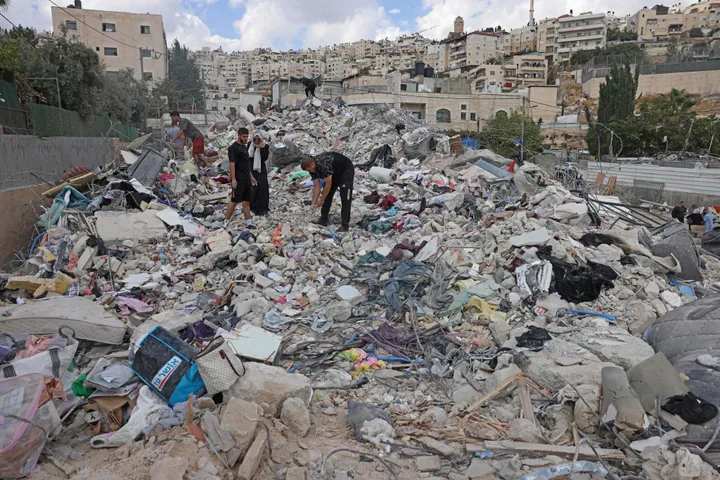
The first is the irreducibility of reality. No matter how powerful the narrative, it cannot fully bury the truth. The sheer scale of death and destruction in Gaza generated a lived reality that directly threatened the one-dimensional story that Israeli hasbara sought to maintain.
Palestinians with smartphones were able to transmit what was actually happening on the ground to millions of people in real time — fundamentally eroding the narrative control that had defined earlier eras.
The second is the erosion of trust. When repeated claims begin to unravel as false or grossly exaggerated, the credibility of the source collapses with them.
Numerous international media outlets that had initially relied heavily on Israeli-sourced information were subsequently forced to issue corrections — pushing critical audiences to scrutinise the narrative with far sharper scepticism than before.
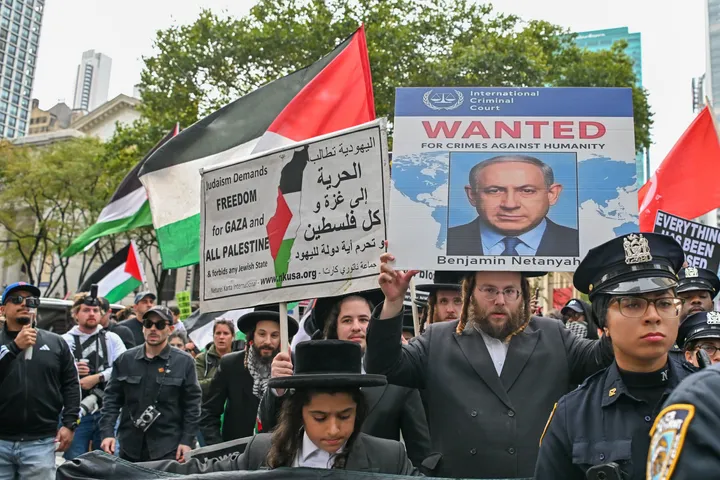
The third constraint has arrived through international legal processes. The posture adopted by the International Court of Justice and the International Criminal Court demonstrated concretely that digital manipulation cannot transform legal reality.
More unexpectedly still, the entry of digital content into court records meant that hasbara campaigns began generating evidence that worked directly against the very interests they were designed to serve.
The digital-age incarnation of hasbara offers the most thoroughly documented case study available of how states weaponise information.
Far more personalised than the radio propaganda of the Cold War era, far more scalable, and operating with far less transparency, this approach presents a serious and growing problem for the international communications environment.
Setting aside the political and moral debate surrounding these operations entirely, one conclusion emerges that applies to everyone: questioning who produced the content we consume on social media — for what purpose, and with whose financial backing — is no longer optional. It is a necessity.