 Murat Sofuoglu
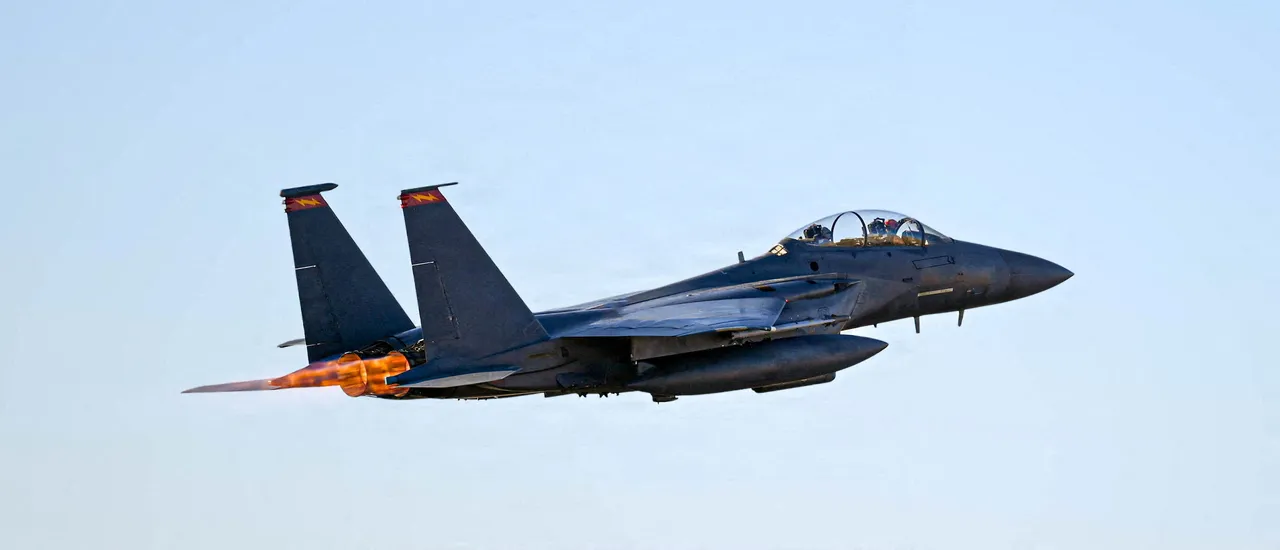
The US government’s account of a daredevil military operation to rescue a pilot of an F-15E jet believed to have been shot down inside Iranian territory has triggered a flurry of theories debunking the American narrative
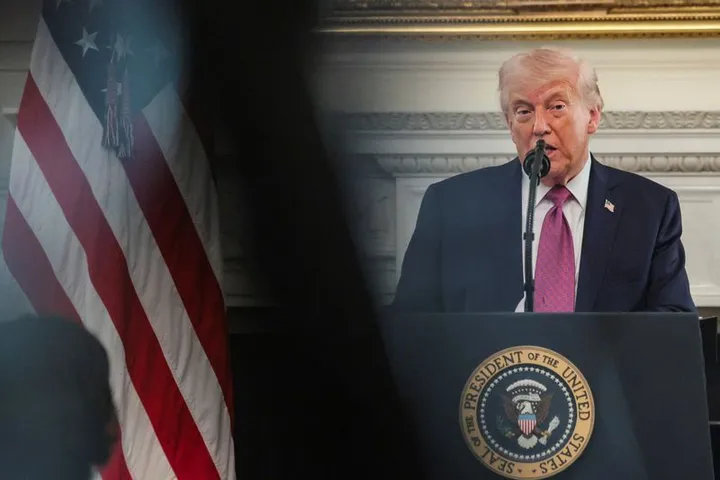
Both US President Donald Trump and Pentagon chief Pete Hegseth have said that the US conducted a heroic operation to rescue their “highly respected” airman, but many on social media claim that this claim was aimed at hiding a separate operation.
While mainstream American media has continued to run stories on the US combat search and rescue (CSAR) operation, including one on Hegseth comparing the rescue mission to the resurrection of Christ, independent analysts and politicians see many gaps in the Pentagon’s account.
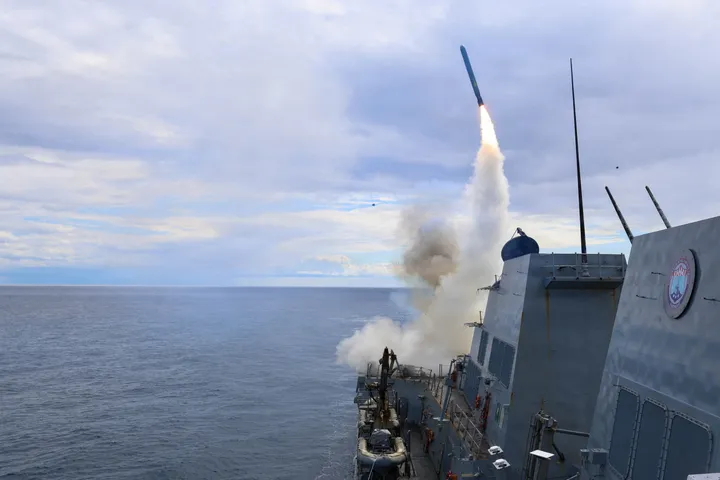
The Trump administration said that the army needed hundreds of troops and more than 150 aircraft – including four bombers, 64 fighters, 48 refuelling tankers and 13 rescue aircraft – for the operation of the weapons system operator (WSO) who, unlike the pilot, ended up in Iranian territory, according to the Pentagon.
Among all tasked aircraft during the rescue operation, there were also two MC-130 military transport planes, which were deployed to an airstrip near Isfahan, a city 200 miles away from where the F-15E was shot down by Iranians.
But even more interestingly, these MC-130s alongside several army helicopters were destroyed by the US army because they could not take off from the Isfahan airfield due to sand, according to an official explanation. US military personnel of destroyed aircrafts were rescued by three Dash-8 aircrafts deployed to the region, according to reports.
Iran claims that its forces destroyed several American aircraft alongside several army helicopters in the region.
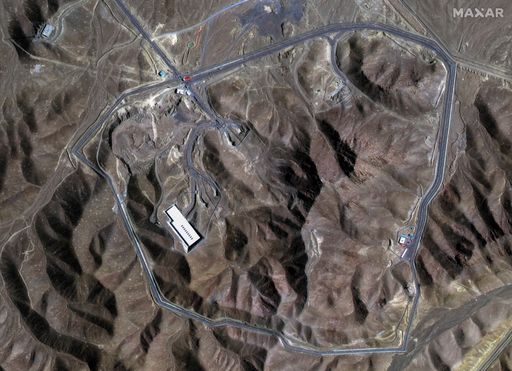
Analysts and former military officers are questioning why hundreds of troops and several US aircrafts and helicopters were located in Isfahan, which houses most of Iran’s highly enriched uranium (HEU), far away from where the F-15E crashed.
“Emerging evidence suggests that US operations south of Isfahan (marked in red on the map) were unrelated to any pilot rescue mission,” wrote Arash Reisinezhad, a visiting assistant professor at Tufts University’s Fletcher School and visiting fellow at London School of Economics’ Middle East Centre, on X.
“The downed American pilot was reportedly located in southwest Iran, near Kohgiluyeh and Boyer-Ahmad Province (marked in blue on the map), not central Iran. Instead, this appears to have been a failed heliborne insertion aimed at locating uranium within Iran,” he added.
Reisinezhad also pointed out that the recent dismissal of top American generals, including US Army Chief of Staff Gen. Randy George, “may not be coincidental”, reflecting “internal resistance to such high-risk operations.”
In normal circumstances, the army chief would be one among the top military and political leaders to take the final decision on such a dangerous special force operation (SFO) to extract Iranian uranium.
“Given Iran’s increasingly effective air defense, and the apparent failure of this mission, the viability of future heliborne incursions deep into Iranian territory is now in serious doubt and may ultimately be abandoned,” he added.
A new Bay of Pigs?
Reisinezhad is not alone in his assessment of the alleged CSAR operation.
Ron Paul, a respected former Republican congressman and a leading Libertarian voice whose son Rand Paul is a Republican senator, compared the alleged operation to the US fiasco in the Bay of Pigs in Cuba in 1961 that aimed to overthrow the Fidel Castro-led communist government of the Central American island.



“Over the weekend a large US military operation was launched inside Iran, close to where some believe the 60 percent enriched uranium is stored. The stated goal was to retrieve F-15 pilots who were shot down in the area. But nothing at all adds up,” Paul wrote on X.
“Did the CIA or Mossad or someone else convince the US President that he could snatch Iran's uranium like he snatched Maduro out of Venezuela? Whatever the case, the operation was a spectacular failure, with at least six US military aircraft shot down. Will we learn the truth about what happened?”
In the same period of the alleged CSAR, a US A-10 Warthog was also hit by Iranians near the strategic Strait of Hormuz, which has been partially blocked by Tehran, and its “lone pilot” was reportedly rescued by Americans, according to reports.
None of the rescued pilots have been seen since their rescue operations nor have any information been released about their identity, while there is no update on the WSO of the F-15E who was seriously injured, according to the US president.
Barnett Rubin, a leading American political scientist on Afghanistan and South Asia, was furious at both Pentagon’s recent removals of top generals and its general messaging in regard to Iran operations.
“I hesitate to answer because I don’t know what to start with — their stupid racism or racist stupidity. I cannot bring myself to do serious analysis of this out of control clown car driven by a decompensating psychotic,” Rubin tells TRT World, referring to Trump.
On the other hand, "Hegseth is a bloodthirsty religious fanatic Crusader without knowledge or ethics," the American academic adds.
‘Stuck’ in sand?
Analysts have also questioned the Pentagon’s claim about the destruction of US aircraft at the airstrip near Isfahan. The Pentagon said that the US army destroyed its own aircrafts because they were stuck in sand and could not take off from the ground, reasoning that they did not want them to be captured by Iranians.
Anthony Aguilar, a retired United States Army lieutenant colonel and special forces officer (Green Beret), doubted that US aircrafts were stuck in Isfahan airfield due to sand.
“I have seen MC-130Js plow through dirt, mud, snow, gravel, etc. I doubt they were stuck. It is more likely that the aircraft took hits upon entry and also likely took hits and damage while on the ground at the hasty FARP at the old airfield in Isfahan, "conveniently" close to where the suspected uranium may have been stored,” he wrote on X.
FARP refers to forward arming and refueling point in military terminology and is used for a special force operation.
Aguilar hypothesises that American aircrafts faced Iranian fire from the very beginning of the SFO and were destroyed by not the US army but forces aligned with Tehran.
While the US has claimed there were no troop casualties during the operation, during which it could have lost eight to twelve aircraft –from warplanes to transport planes, helicopters and drones – analysts have expressed surprise.
“In all this, after the multiple planes and helicopters destroyed or shot down, the documented heavy clashes, the "hundreds of special forces troops and military personnel" operating deep inside Iran, not a single US soldier was reported killed "or even wounded",” wrote Arnaud Bertrand, a commentator on economics and geopolitics, on X.
Bertrand also questioned the White House’s early assertion that the US has "achieved overwhelming air dominance and superiority over the Iranian skies", repeatedly claiming that Washington obliterated both Iranian nuclear capabilities and air-defence, adding that “the whole episode” on the weekend happened “because Iran shot his planes out of the sky.”
According to American media estimates, the weekend aircraft losses might cost the US hundreds of millions of dollars.