 Baba Umar
United Nations, New York – The contrast couldn't be starker.
When Palestinian President Mahmoud Abbas delivered his address to the UN General Assembly (UNGA) on Thursday, he did so via a video recorded in Ramallah in the occupied West Bank, after the US denied him and his delegation visas for the second consecutive time.
Abbas's speech drew applause from delegates.
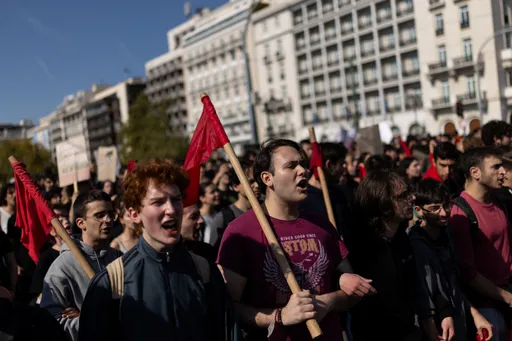
Hours later, as Israeli Prime Minister Benjamin Netanyahu addressed the Assembly in person, demonstrators near the UN headquarters in New York were already protesting against his presence.
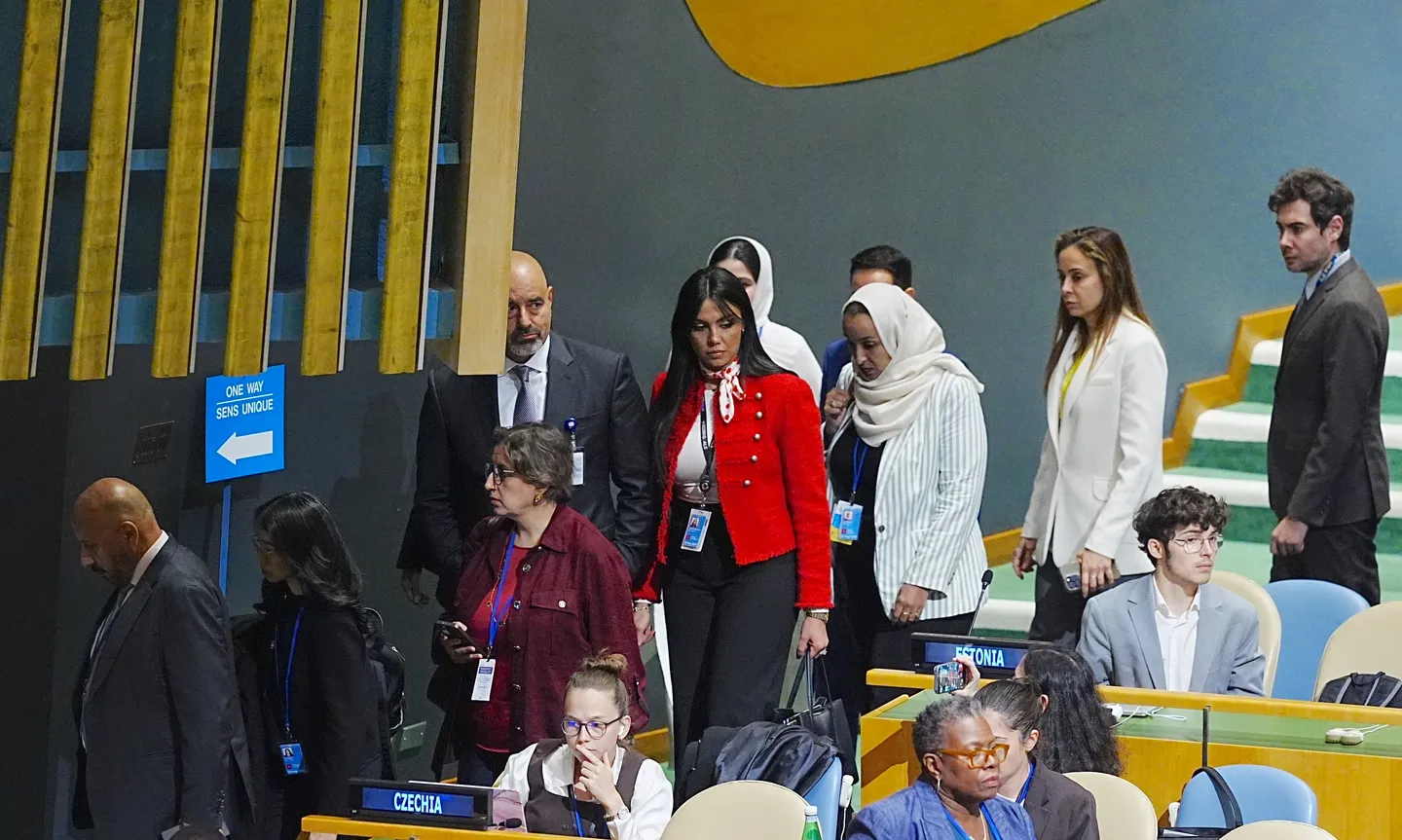
Netanyahu's speech then triggered a mass walkout, with dozens of diplomats vacating the hall in protest, reflecting widespread international opposition to Israeli actions in Palestine.
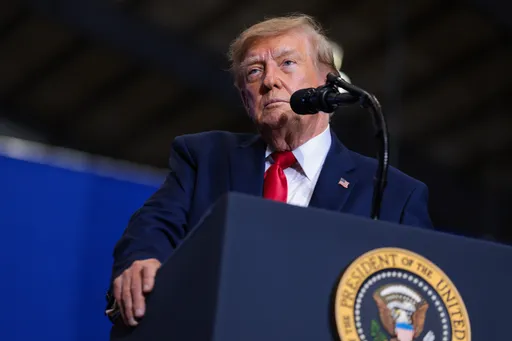
Furious and combative, Netanyahu declared protesting diplomats and demonstrators outside "moral cowards", denied there was a genocide in Gaza, called violent settler youth targeting Palestinians in occupied West Bank as "handful of juvenile delinquents" and attacked Britain and France for past colonialism while thanking US President Donald Trump, who was in Washington DC, busy with talks with Chinese President Xi Jinping.
"Without the ability to give a victory speech and more unpopular and isolated than ever before both at home and abroad, Netanyahu was on the defensive during his UNGA speech," Mairav Zonszein, a senior analyst on Israel at the International Crisis Group, told TRT World.
"He took jabs at the leaders of Syria, Türkiye, Qatar, France and Britain and maybe most of all, New York mayor, inciting against him with outrageous accusations of antisemitism and linking him to Hamas," Zonszein added.
Abbas, who was unable to make it to the UNGA for the second consecutive time, called it an "unlawful punitive measures", stressing that the Palestinian people cannot be punished because they demand an end to the Israeli occupation.
However, the audience fell silent when he stated that the Palestinian people face "one of the most dangerous periods in their history."
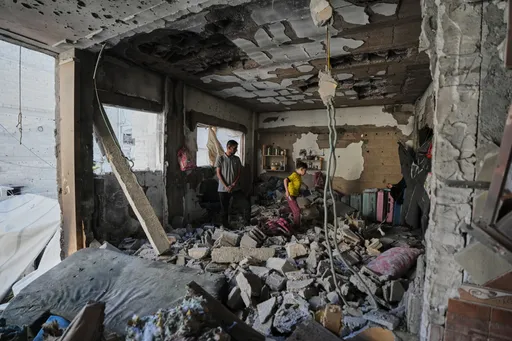
"Our people are being subjected at the hands of the Israeli occupation forces to killing, destruction, starvation and attempts at displacement, as well as a genocidal war in Gaza that has created an unprecedented humanitarian catastrophe," he told the UNGA.



Contrasting path towards peace
Abbas accused Israel of targeting all the basic necessities of life and the "future of entire generations", adding in the occupied West Bank, including occupied East Jerusalem, Israel is accelerating illegal settlement expansion, splitting West Bank and judaising East Jerusalem.
"While the crimes of land theft, home demolition checkpoints and raids continue under a system of laws, measures and practices All built on racial discrimination, ethnic cleansing and state terrorism," he told the UNGA.
The Palestinian pleaded the international community to stop Israel from "undermining" the two-state solution, emphasising that Israel threatens the "very existence of the Palestinian people."
Israeli extremism is expanding its colonial project to create the so-called Greater Israel, he noted, urging the world leaders, "We warn you today: do not allow another Nakba to occur."
He also welcomed US President Trump's 20-point Gaza plan and UN Security Council Resolution 2803 but expressed disappointment that the next phase had not been implemented and the ground situation in Gaza remained unchanged, a year since the formation of the Board of Peace.
The Palestinian leader spoke for around 20–24 minutes while Netanyahu spoke to the sparsely filled hall for about 40 minutes.
Abbas touched on international law, UN resolutions, peace, recognition by 160 member states and two-state solution. Netanyahu portrayed much of the UN as hypocritical and antisemitic while claiming Israel was protecting the world from Iran while omitting any mention of a two-state solution.
Abbas was measured and legalistic, mixing threats his people face with an offer of peace. He did not target any international leader. Netanyahu was combative, mocked walkouts and blamed several world leaders for criticising Israeli policies.
"As Trump has called him (Netanyahu), he certainly is a 'wartime prime minister' and it is evident that he is at war with everyone," said Zonszein of the Crisis Group.
Both the speeches underscored contrasting path towards peace and isolation — Abbas speaking remotely after 152-3 vote in General Assembly that allowed his video participation, and Netanyahu speaking to a hall that largely emptied as he began speaking.