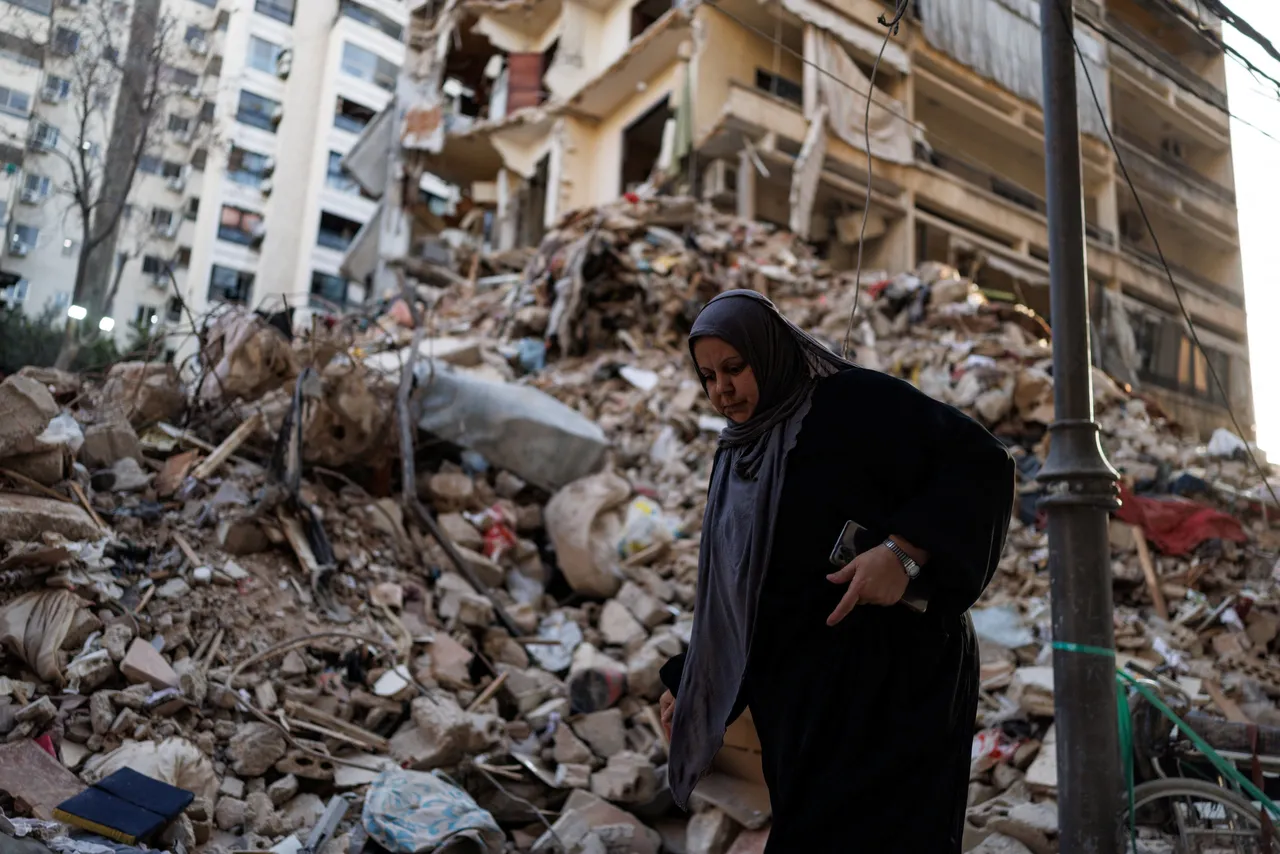
Lebanese and Israeli representatives are scheduled to meet in Washington on Tuesday for US-mediated talks on ending the war in Lebanon.
The meeting mediated by US Secretary of State Marco Rubio will include Israeli ambassador to the US Yechiel Leiter, Lebanese ambassador to the US Nada Hamadeh Moawad, and US ambassador to Beirut Michel Issa.
Israeli strikes on Lebanon, including a devastating attack on Beirut on April 8, have killed more than 2,000 people and displaced more than one million since March 2, despite international calls for a ceasefire. Israel has also carried out a ground invasion in southern Lebanon.
Hezbollah and Israel resumed fighting following the killing of Iran’s Supreme Leader Ali Khamenei in an Israel-US attack on February 28. The two sides had maintained an uneasy truce since November 2024.
"The Israeli and Lebanese governments are engaging in open, direct, high-level diplomatic talks, the first such talks since 1993, brokered by the United States," a US official said.
"This conversation will scope the ongoing dialogue about how to ensure the long-term security of Israel's northern border and to support the government of Lebanon's determination to reclaim full sovereignty over its territory," the official added.
Lebanon pushes for a ceasefire
On the Lebanese side, President Joseph Aoun said on Monday he hoped the Washington talks would yield "an agreement on a ceasefire in Lebanon, to start direct negotiations between Lebanon and Israel."
Lebanon's foreign minister said Beirut would use face-to-face negotiations to press for a ceasefire.
Lebanon’s government is in a tight spot. Under immense international pressure, it was trying to disarm Hezbollah and distance Beirut from Tehran.
In 2024, Israel targeted Hezbollah leadership and killed its members by exploding rigged pagers and walkie-talkies. Israel also killed Hezbollah’s longtime leader Hassan Nasrallah on September 27 of the same year.
Hezbollah rejects talks
Naim Qassem, the leader of Hezbollah, has called for the latest talks to be scrapped before they even began, describing them as "futile" and urging the Lebanese government to focus on confronting Israeli aggression.
Qassem stressed that they "will not surrender, and the final word will be decided on the battlefield".
"Israel clearly states that the goal of these negotiations is to disarm Hezbollah, as Netanyahu repeatedly states. So how can you go to negotiations whose objective is already clear?”



Israeli agenda
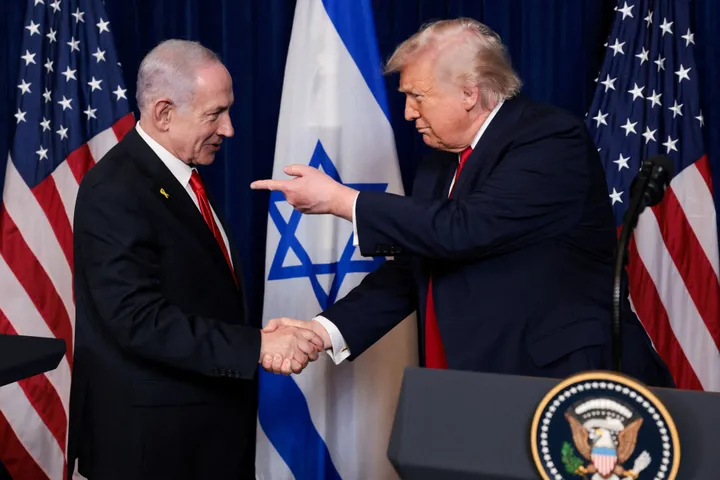
Israeli Prime Minister Benjamin Netanyahu said on Saturday that "we want the dismantling of Hezbollah".
"This dialogue between Israel and Lebanon is aimed at disarming Hezbollah, removing them from Lebanon, and establishing peaceful relations between our two countries," Israeli government spokesperson Shosh Bedrosian told journalists on Monday.
"We will not discuss a ceasefire with Hezbollah, which continues to carry out indiscriminate attacks against Israel and our civilians," Bedrosian said.
Israel has prepared to present Lebanon with a plan calling for “a long-term Israeli military presence” inside southern Lebanon, Israeli media reported.
The proposal is expected to be discussed during Israeli-Lebanese talks, according to Israel's Channel 14.
Israel’s ground invasion in southern Lebanon has focused on establishing control over a border strip extending towards the Litani River, roughly 30 kilometres north of the border.
Israeli forces have already encircled and are close to fully controlling Bint Jbeil, the town, located about five kilometres from the border.
To make matters more complicated, Israel’s far-right leaders have issued statements that undermine Lebanon’s territorial integrity and point to Israeli intentions of occupying its land.
Israel's Defence Minister Israel Katz has said that a “buffer zone” will be set up inside southern Lebanon and that Israel will keep security control over a swathe of the territory even after the end of the war.
He also said all houses in Lebanese villages near the Israeli border would be demolished, prompting UN aid chief Tom Fletcher to say that "this will compound a situation that is already critical".
Canadian Prime Minister Mark Carney called Israel's deployment of ground troops in Lebanon an "illegal invasion", which violates its "integrity and sovereignty".
A joint statement signed by the foreign ministers of 10 European countries, including the UK, France and Italy, as well as EU foreign policy chief Kaja Kallas, urged Israel to avoid widening its military offensives in Lebanon and to respect the country's territorial integrity.