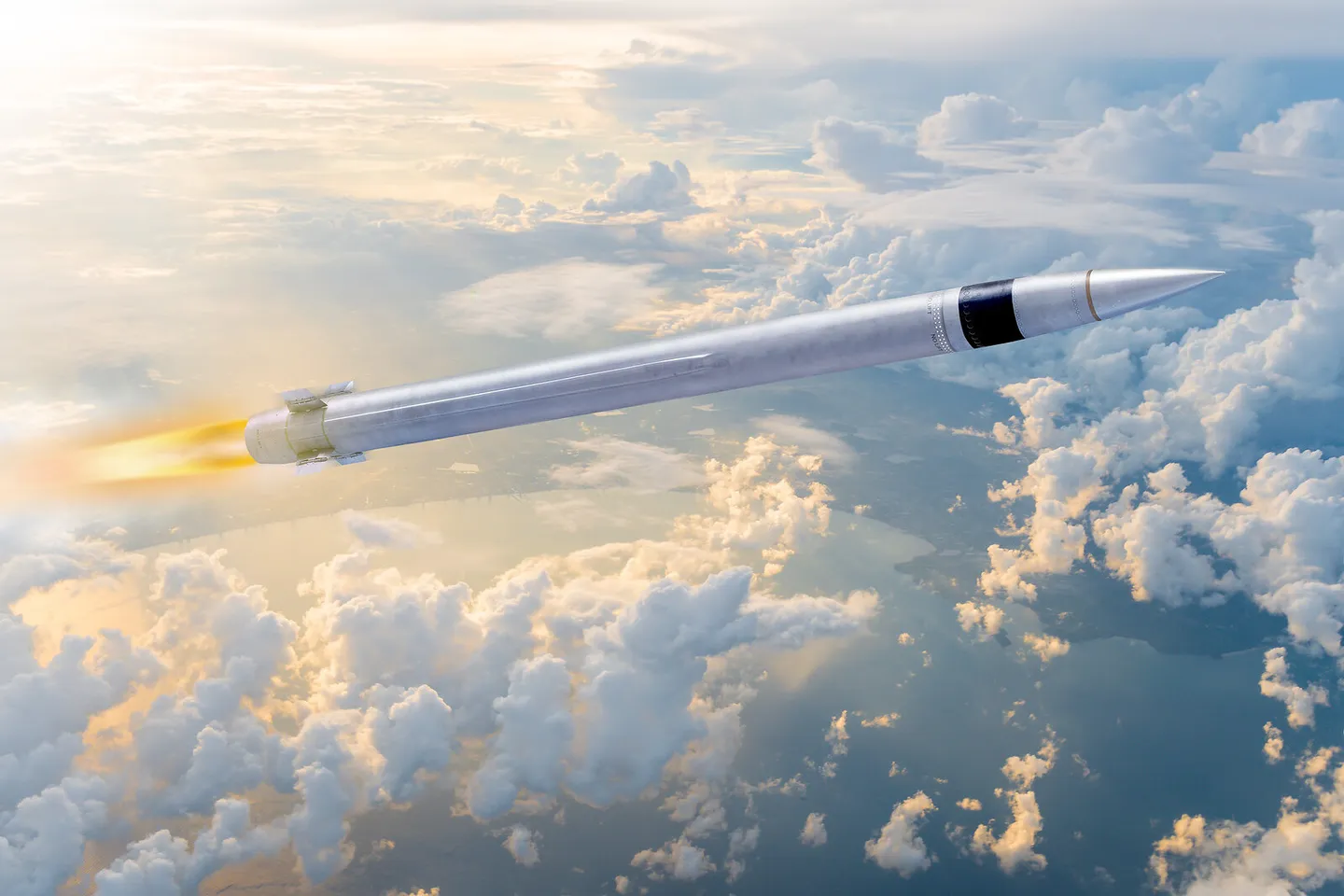
Lockheed Martin has unveiled PAC-3 Edge, a missile interceptor designed to defend against hypersonic and advanced missile threats, as the US military looks to strengthen its capabilities to counter emerging aerial threats.
Growing demand for air and missile defence systems amid conflicts in Ukraine and the Middle East has strained US weapons stockpiles, prompting the US Army to award Lockheed Martin a contract worth up to $58.6 billion in July to ramp up production of PAC-3 interceptors.
Lockheed Martin said PAC-3 Edge incorporates a new seeker, upgraded flight controls and a multi-pulse rocket motor supplied by Northrop Grumman, enhancing the interceptor's ability to counter advanced threats, including hypersonic missiles, at longer ranges and higher altitudes.
"The cost of this would be about that of the existing PAC-3 MSE," Tim Cahill, president of missiles and fire control at Lockheed Martin, told Reuters news agency.







"At full production, the annual rate would be about 2,000 units a year, comparable with PAC-3 MSE."
"Lockheed Martin's PAC-3 Edge interceptor leverages the combat-proven PAC-3 MSE, delivering even greater maneuverability, power and velocity to ensure the Army's layered defensive architecture remains the most advanced in the world," added Cahill.
In January, Lockheed Martin signed a seven-year framework agreement with the US Department of Defense to expand production of its PAC-3 missile interceptors, aiming to increase annual manufacturing capacity to 2,000 units from about 600.
Lockheed Martin said it will advance development and begin testing PAC-3 Edge in 2027 to prepare for rapid deployment by 2031.