 Faik Tanrikulu
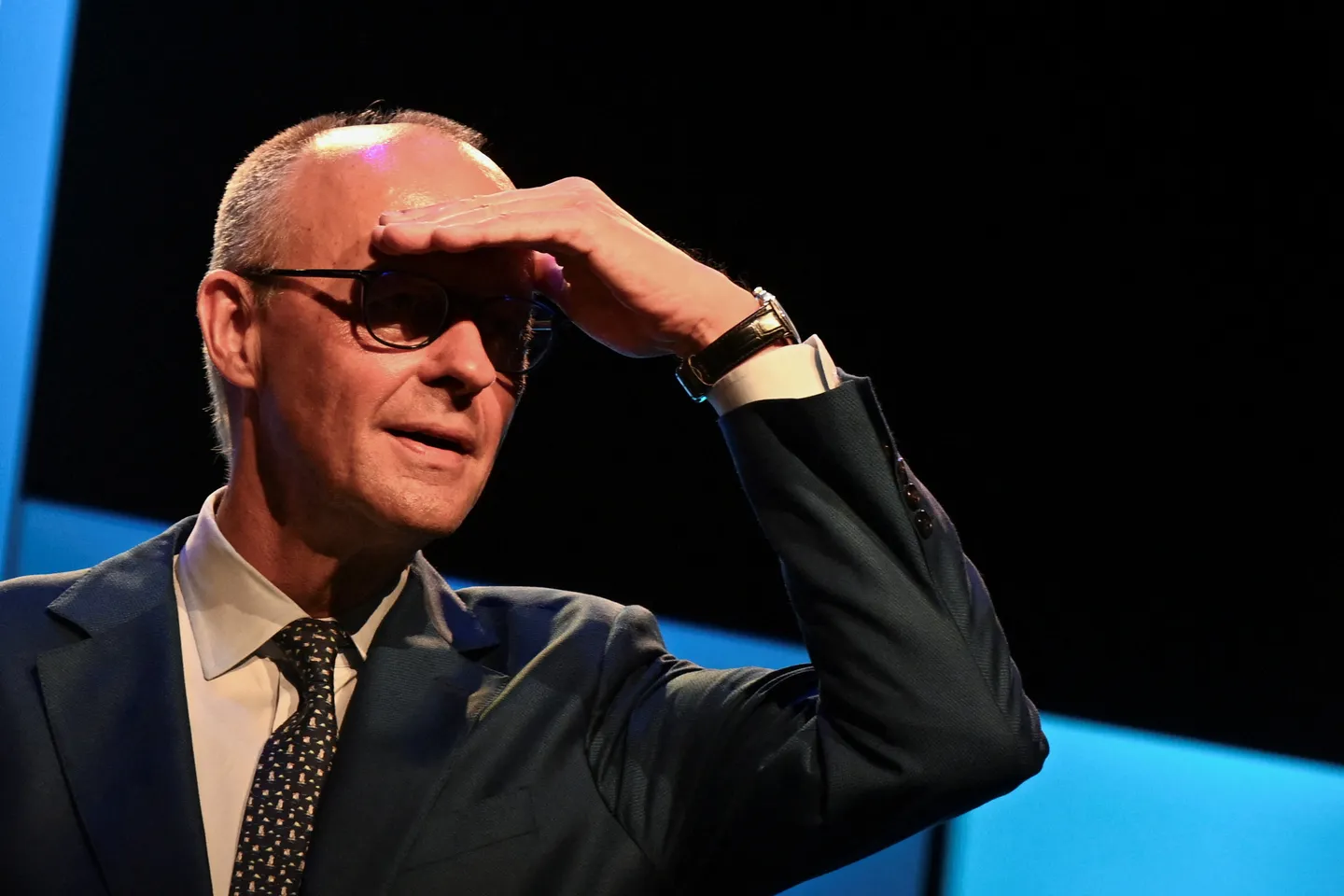
In his annual summer interview with ZDF recently, Chancellor Friedrich Merz did not distance himself from his earlier, sharply criticised statements.
Instead, he merely rejected criticism of his description of children of migrants as "little pashas," as well as his statement that migrants were changing the "cityscape," and his accusation that people in Germany don't work hard enough.
According to Merz, the problem does not lie in his choice of words. Rather, certain realities in Germany can no longer be openly discussed.
Political statements, however, should not be judged solely on their wording. They must also be considered within their political context and the objective they are made to serve.
Merz's statements come at a time when Germany is facing economic stagnation, internal government conflicts, and the worrying rise of the far-right AfD.
The debate about the "little pashas" – kleine Paschas in German – cannot therefore be dismissed as a mere communication error.
It is part of a strategy by the weakened political centre to regain support through migration, identity, and cultural conflicts.
How did it begin?
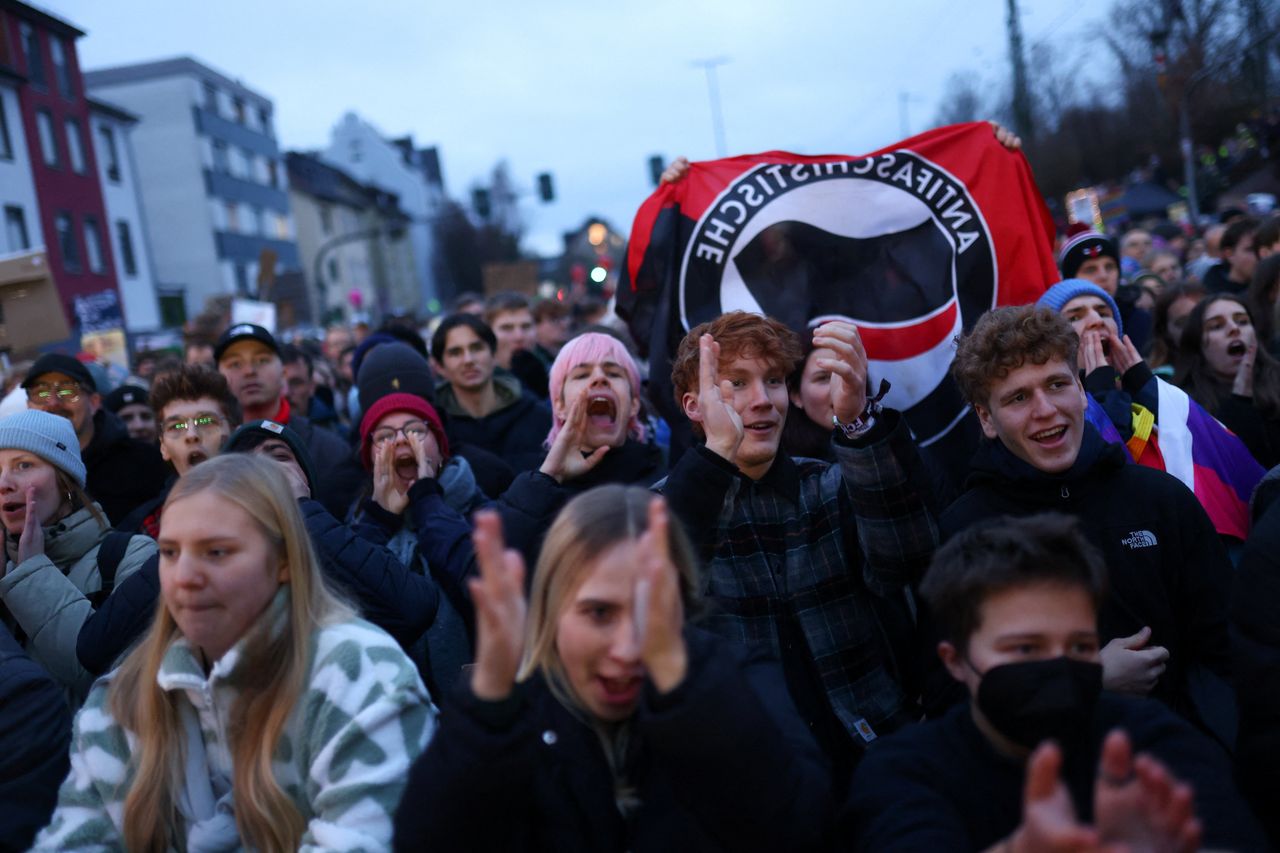
Merz first used the term “little pashas” at the end of 2022 after the riots on New Year's Eve in Berlin.
He claimed that some children with a migration background did not accept the authority of teachers, especially female teachers. He referred to these children as "little pashas".
The statement was sharply criticised. The accusation was that Merz was generalising about children based on their family background and equating Muslim and migrant communities with problems in schools and public order.
Merz did not retract his statement, however. Instead, he explained that he was addressing problems that were generally known, but which no one dared to talk about.
In doing so, he did not focus on specific education or integration policies, but rather on a cultural generalisation about people with a migration background.
Undoubtedly, Germany faces problems with education, integration, youth crime, and the acceptance of state authority.
However, the role of a political leader is not to draw conclusions about millions of people and their cultural backgrounds based on isolated cases.
Political leadership means more than just making problems visible. It also requires naming them precisely and responsibly.
Otherwise, integration will no longer be treated as a political task, but will become the subject of a culture war between social groups.
Merz is losing political support
Merz's recent statements are not solely due to his personal communication style. The Chancellor is increasingly under political pressure.
According to the latest ARD-DeutschlandTrend survey, only 13 percent of respondents were satisfied with Merz's performance as the chancellor. This was the lowest approval rating for a sitting chancellor in the survey's roughly 30-year history.
At the same time, the AfD garnered 27 percent of the vote, while the CDU and CSU only reached 22 percent. The far right was thus five percentage points ahead of the Union.
The figures show that Merz's more aggressive rhetoric is not having the desired effect on voters.
The CDU/CSU's rapprochement with the AfD on migration and internal security has not brought right-leaning voters back to the CDU.
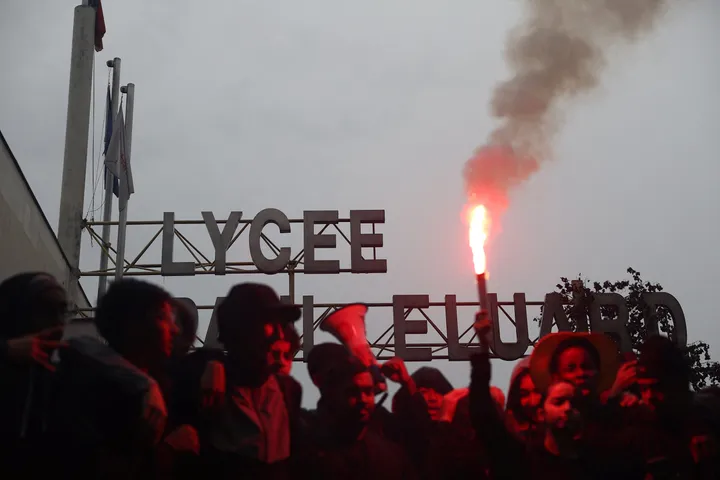
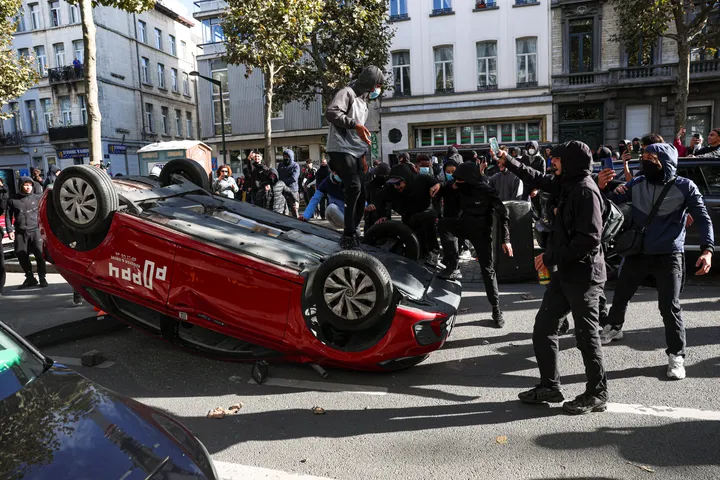





While the AfD is on its way to becoming the strongest political force in Germany, the Merz government is losing trust even among its own electorate.
The government, however, describes a different Germany than the voters.
In his press conference on July 15, Merz stated that the government had found its rhythm, the coalition had become more stable, and could point to a positive track record.
At the same time, he admitted that current polling figures would not be sufficient for another governing majority.
Merz addressed AfD voters directly, urging them not to judge the government's work solely through the perspective of social media.
However, there is a significant gap between the government's image and the public's perception.
In an ARD survey in June, only 13 percent of respondents rated Germany's economic situation positively. 38 percent expected their personal economic situation to worsen in the coming year. Only six percent anticipated an improvement.
At least 27 percent cited the economy as the country's most important problem. Migration and refugees followed in second place with 21 percent.
The figures make it clear: the biggest concern of the German population is not migration, but economic decline.
Nevertheless, the political debate focuses on children with a migration background, the appearance of German cities, and cultural integration.
This pushes the question of whether the government is still capable of effective economic policy into the background.
The German automotive and chemical industries are under immense global competitive pressure. High energy costs, a technological lag compared to China, cumbersome bureaucracy, infrastructure deficiencies, and a shortage of skilled workers are all putting a strain on the country's economic model.
The government's failure to react quickly enough to these structural problems exacerbates public disappointment. The migration debate temporarily becomes a political smokescreen behind which this discontent disappears.

Rise of AfD rhetoric
The AfD's success is not only reflected in its poll numbers. It is increasingly shaping the issues and terminology of the political centre.
When the CDU and other parties intensify their rhetoric on migration, integration, and public order, they do not necessarily weaken the AfD.
Rather, they legitimise the AfD's interpretations. Merz's insistence on the term "little pashas" reinforces the impression that central AfD tenets are now also gaining traction within the CDU/CSU.
While the firewall formally remains in place, it is beginning to crumble linguistically and socially.
At the same time, Germany faces a fundamental contradiction: due to a shortage of skilled workers and demographic change, the country needs immigration, but politically it often portrays migrants as a security and integration problem.
Such rhetoric deepens exclusion without solving economic or social problems.
Merz's approach therefore demonstrates that populism cannot be defeated with populist language.
Those who seek to push back the AfD by adopting its terminology ultimately strengthen its political legitimacy and weaken their own democratic boundaries. Merz is doing exactly that.
(This article was first published on TRT Deutsch)