 Kazim Alam
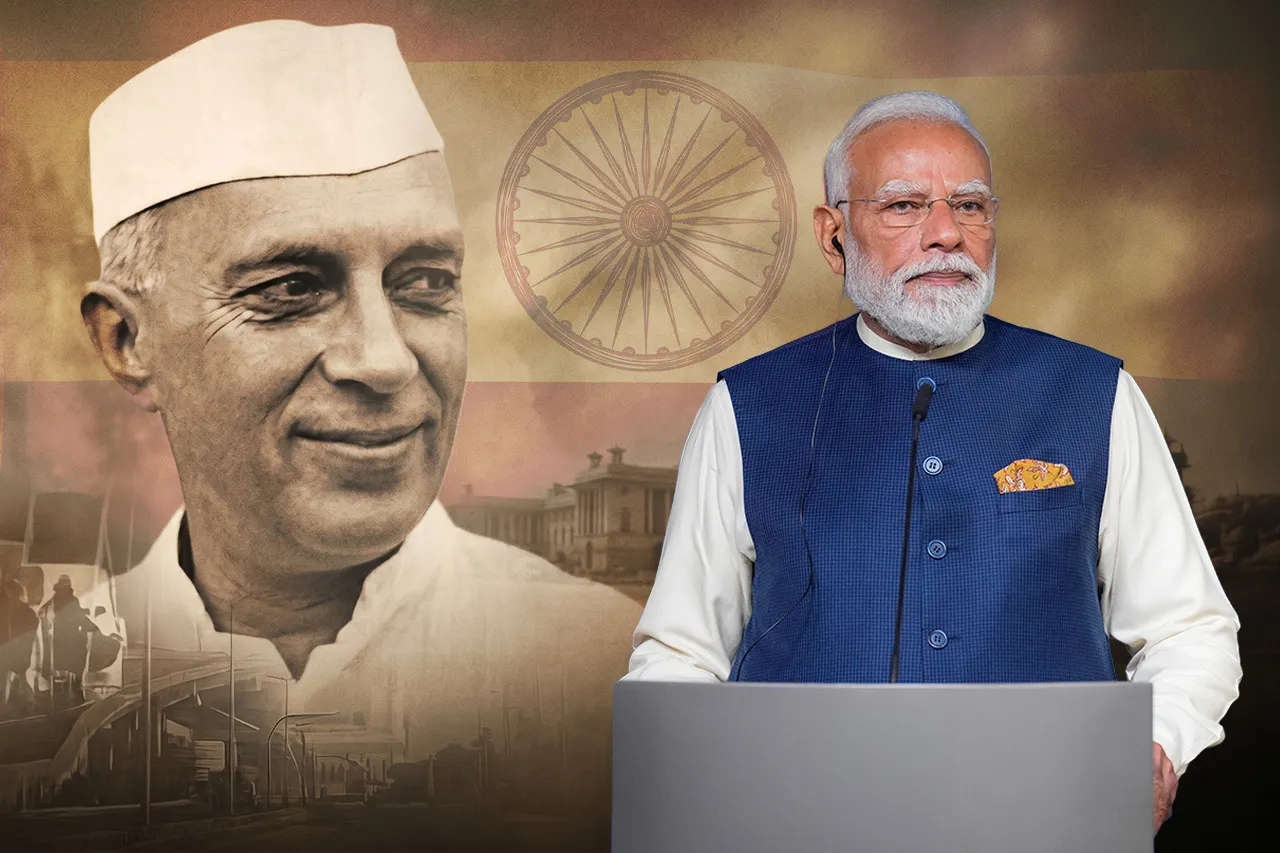
Narendra Modi recently became India’s longest-serving elected prime minister after surpassing the elected tenure of 4,398 days of Jawaharlal Nehru, the country’s first premier after it gained independence from British rule in 1947.
One of India’s founding leaders, Nehru helped shape the constitutional framework of the post-independence state, which guaranteed equal rights for all citizens regardless of caste, creed or colour.
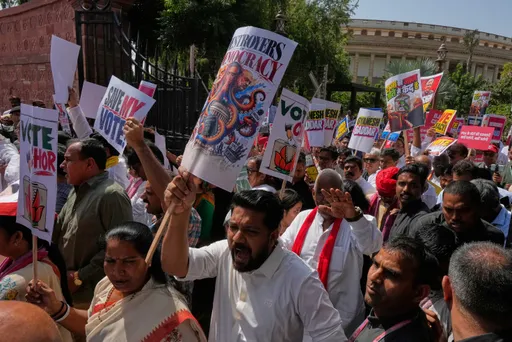
Modi’s Bharatiya Janata Party (BJP), which adheres to the extremist ideology of Hindutva that defines India's cultural and national identity through a Hindu majoritarian lens, celebrated the milestone with much fanfare.
Analysts say the political triumph of Modi, who first came to power in 2014 and is currently serving his third consecutive term, highlights a departure from the Nehruvian idea of a plural, secular India.
They say Modi’s long rule has entrenched majoritarianism and eroded the national character that Nehru – a towering figure among the 20th-century anti-colonial leaders– helped shape for a pluralistic state eight decades ago.
Kenneth Bo Nielsen, a South Asia expert associated with the University of Oslo, tells TRT World that Modi’s milestone is symbolically important for Hindutva groups.
“The operative word here is ‘elected’ because Nehru is still India’s longest-serving prime minister,” Nielsen says.
Nehru served as unelected premier from the country’s founding in 1947 to 1952 when he won the office through the first general election. He was re-elected prime minister in 1957 and 1962 general elections.
Nehru is widely credited with establishing the world’s biggest parliamentary democracy, promoting scientific research through government-funded technical institutes known as IITs, and championing the motto of “unity in diversity” in a vast, multi-ethnic country.
According to Nielsen, the BJP’s emphasis on Modi’s distinction as the longest-serving ‘elected’ prime minister stems from a deep ideological aversion to Nehru and his Congress party, the BJP’s arch-rival that presents itself as a defender of India’s secular constitutional tradition.
“The (BJP) party has a strong dislike for Nehru and everything he represented,” he says.
Modi’s extended stay in power reflects his personal popularity and the party’s hegemony, which has allowed it to advance its Hindutva agenda with minimal compromise, he adds.
Smita Gupta, a New Delhi-based political commentator, tells TRT World that Modi’s record in office sharply contrasts with Nehru’s legacy as a statesman.
She says BJP’s celebration of Modi’s so-called milestone is “a historical sleight of hand”, pointing to Nehru’s initial five years as interim leader during the country’s most turbulent post-independence period.
“His term came to an end in 1964 not because he lost an election but because he died,” Gupta says.
Modi’s three election wins, including a 2024 coalition-dependent victory, pale against Nehru’s achievements, she says.
She also criticises “overrated” political stability, which favours majoritarianism, over coalition politics better suited to India’s diversity.
A departure from Nehruvian principles




Experts say Modi’s long rule, 12 years and counting, comes at a steep cost to India’s secular fabric.
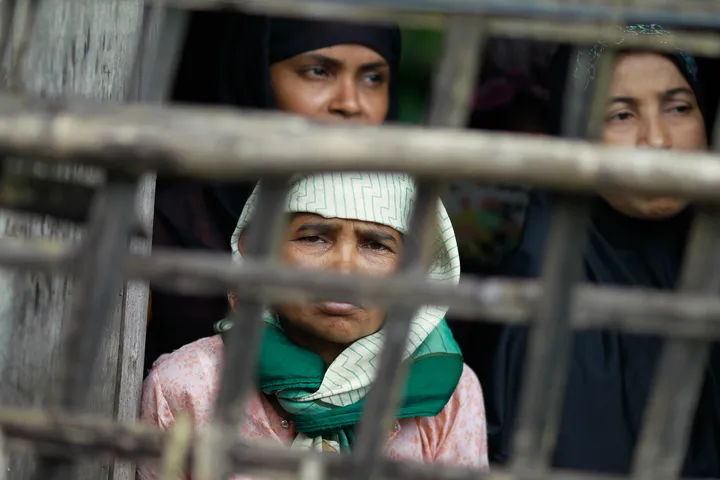
They say his legacy is overwhelmingly shaped by a deliberate Hindutva-driven approach that targets Muslims, who form about 15 percent of India’s total population of over 1.4 billion.
Nielsen observes that his government’s commitment to Hindutva and to making India a Hindu state has been at the heart of its political project all along.
Modi’s anti-Muslim bias manifested itself in India’s western state of Gujarat, where communal riots killed about 2,000 mostly Muslim people in 2002 when Modi was the chief minister, the state’s highest elected official.
Gupta says Modi’s legacy has “almost entirely” been defined by a deliberate Hindutva-driven anti-Muslim strategy.
She lists repeated offences against Indian Muslims: the Ram Temple’s construction on the site of the 16th-century Babri Mosque, the abrogation of Article 370 in Kashmir that revoked the special constitutional status of the Muslim-majority area, “love jihad” laws punishing Muslim men for marrying girls from other communities, cow slaughter bans fuelling public lynchings, and history textbook revisions erasing Muslim contributions to India.
“The most recent example of the way the BJP’s anti-Muslim strategy is deployed is being witnessed in West Bengal, where buildings in Muslim areas are being bulldozed,” she says.
Mujibur Rehman, an academic and author of Shikwa-e-Hind: The Political Future of Indian Muslims, tells TRT World that cow vigilantism and “bulldozer justice” have become normal in Modi’s India.
“Unofficially, India has become majoritarian,” he says.
Globally, India has faced criticism for rising communal tensions, straining its image despite economic successes.
Before becoming prime minister, Modi was denied a US visa for “severe violations of religious freedom”, effectively barring him from entering the US for nearly a decade.

Nielsen says many groups, particularly Muslims, are branded as “anti-national” in Modi’s India because Hindutva ideologues consider them a threat to the “Hindu nation” narrative.
This acceleration of the Hindutva ideology will be a “defining feature” of Modi’s legacy, he says.
Nielsen warns that while Modi will leave and the BJP may lose elections, Hindutva’s social entrenchment will endure beyond electoral politics.
“The struggle for a plural and secular India… needs to be conducted not only on the terrain of electoral politics, but also in civil society,” he notes.
Gupta says undoing what Modi has done to India’s secular character will be difficult going forward.
“It will require a Gandhi-like figure to restore the emotional health of the nation, repair the democratic institutions that have been destroyed, restore the federal spirit, and heal the rifts,” she says, referring to Mahatma Gandhi, the pacifist leader known as the ‘father of the nation’.