 Ahmed Bin Qasim
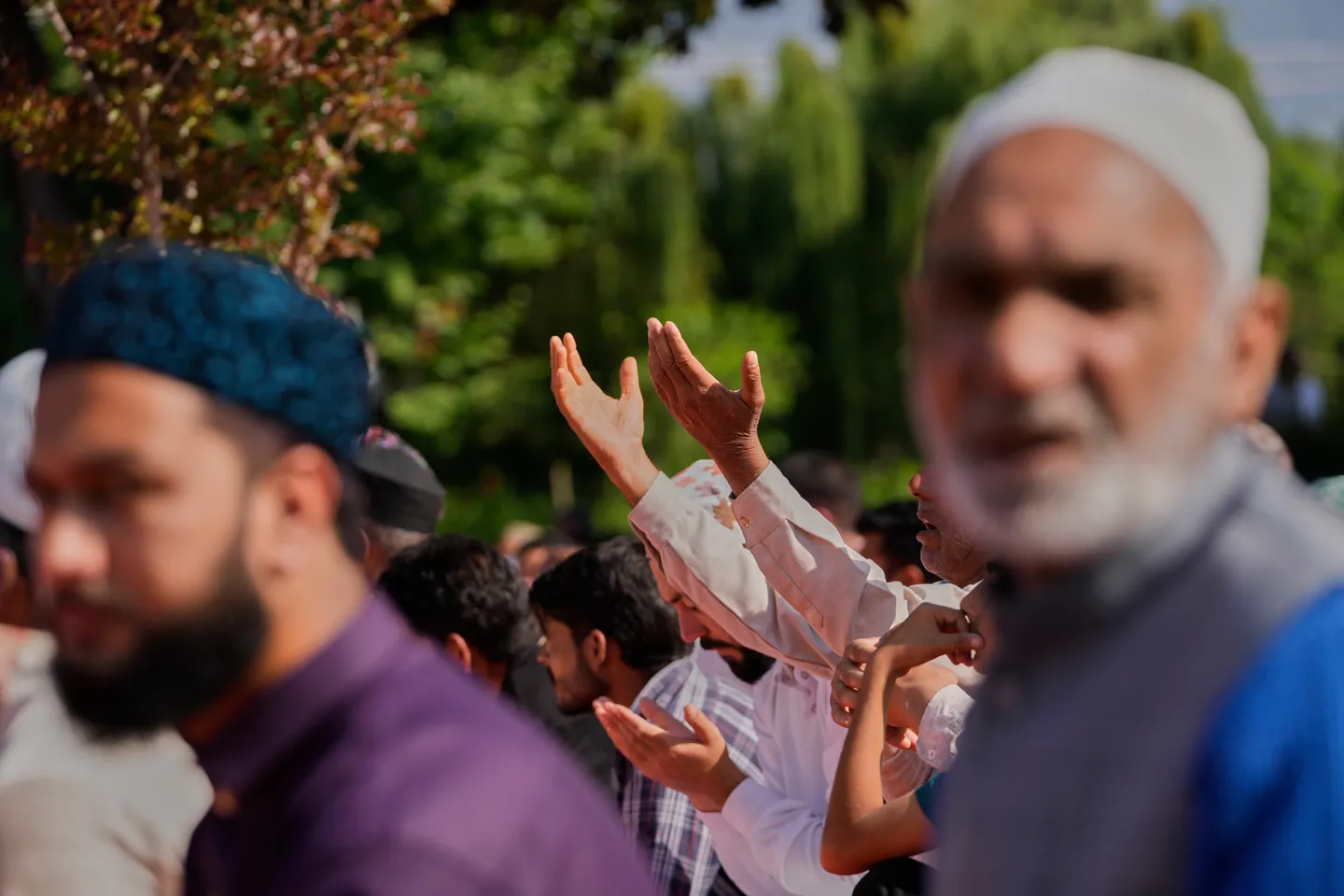
This week, the Jammu and Kashmir Waqf Board proposed standardising Friday sermons across the mosques and shrines it manages in India-administered Kashmir.
The Board is chaired by Syed Darakhshan Andrabi, a senior leader of the ruling Hindu-supremacist Bharatiya Janata Party (BJP), while its core members were nominated by the party.
The proposal drew condemnation from individuals and organisations across the valley, who described it as "interference in the religious affairs of Kashmiri Muslims".
That criticism is important but incomplete. The proposal should not be viewed as an isolated overreach.
It is part of a broader effort by the Indian state to determine how Kashmiri Muslims practise their faith and to cultivate a form of Islam that aligns with its own interests.
Seen this way, the uniform-sermon proposal is the latest in a series of interventions, some openly repressive, others more subtle and administrative.
The methods have changed over time, but the aim has remained largely the same: to prevent religious spaces from becoming platforms for ideas, expressions or activities the state considers problematic.
This matters particularly in Kashmir, where resistance has long drawn on religious spaces and the language of faith.
The mosque has long served as both a place of prayer and a platform for public speech, something the state has understood for decades.
What it permits, then, is a faith that either lends legitimacy to its rule or, at the very least, remains silent about the oppression of everyday life. A faith that only says yes, and never no.
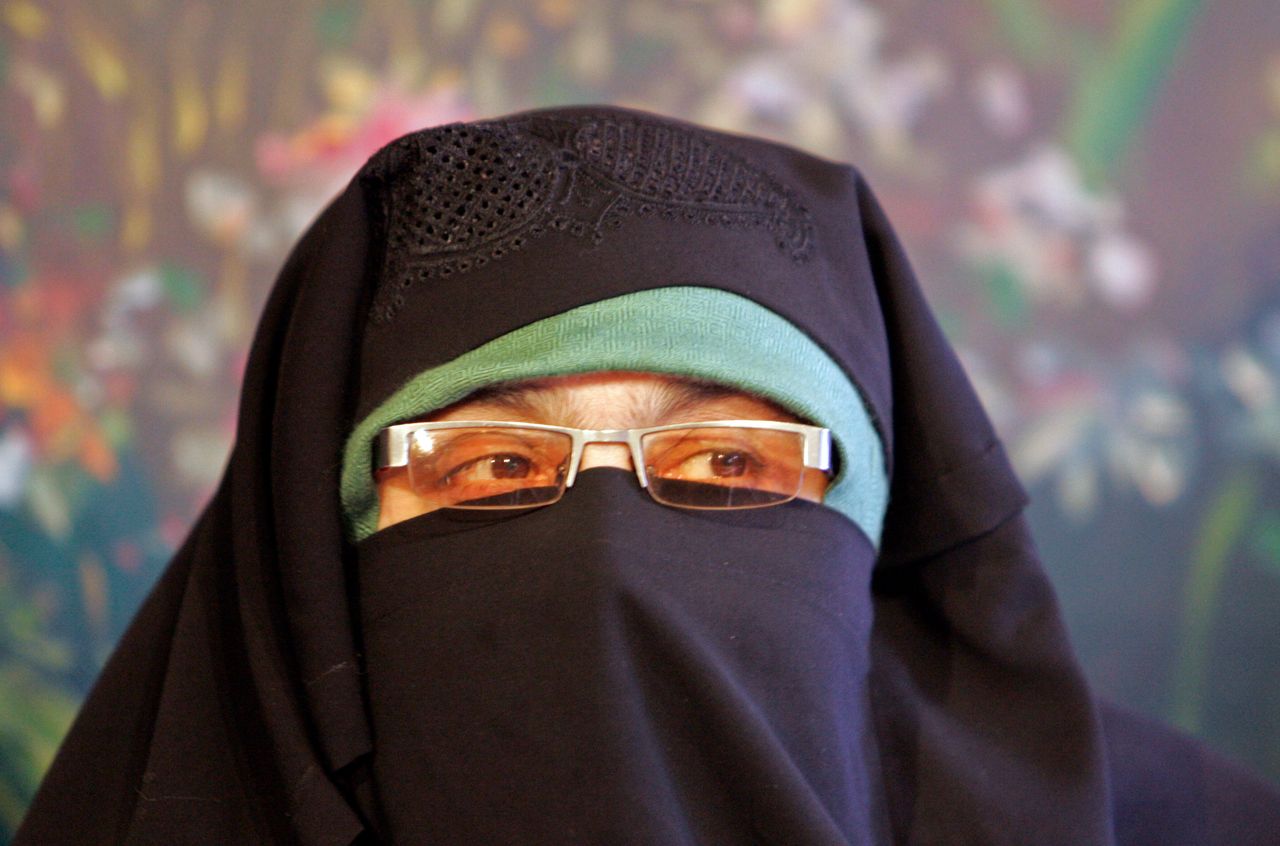
The struggle of oppressed
Consider a 2023 directive that barred Friday sermons from mentioning Palestine and required that any spoken prayers for Palestine be made only in Arabic, not Kashmiri.
Why should the language of a prayer matter? Most Kashmiris can recite Arabic but do not understand it.
Kashmiris have long seen Palestine as a reflection of their own condition, and the state's concern was that a prayer for Palestine, heard and understood, could become a statement about Kashmir. Here, prayer and protest are close.
The Muharram procession in Srinagar tells a similar story.
It was banned in 1989 on "law and order" grounds and allowed to resume only in 2023. Behind the ban was the government's fear that Muharram processions could turn into anti-occupation demonstrations.
What is revealing, however, are the conditions imposed on its return. Participants were barred from expressing anything deemed "anti-national" or "provocative", or displaying symbols of "banned organisations" or "terrorists".
These are the state's euphemisms for the people, ideas and organisations associated with the Kashmiri struggle for self-determination.
In earlier years, the procession had featured photographs of young men who resisted Indian rule and those killed by Indian forces.
Muharram commemorates Karbala, which, for many Muslims, represents the struggle of the oppressed against the oppressor. Kashmiris had long seen their own condition reflected in it. The procession was allowed to resume only on the condition that they stop doing so.
The state's management of Islam in Kashmir also works through endorsement.
In 2023, the same BJP-led Waqf Board invited Hashim Gilani, described as a descendant of Shaykh Abdul Qadir Gilani, the Hanbali jurist, preacher and Sufi master.
Kashmiris revere Shaykh Abdul Qadir Gilani as Dastgeer Sahib, and his shrine in Srinagar's Khanyar neighbourhood is among the valley's most visited.
In one of his addresses, Hashim Gilani said he had heard Kashmir described in terms of violence and conflict but had found only "peace" and "development".


Borrowed spiritual authority was put to work to reinforce the state's narrative of normalcy, a normalcy made possible by the abnormality of our lives: the militarisation of daily life, our loved ones held in prisons, homes demolished and property seized, and families denied the bodies of their dead.
Gilani was not the first. Visiting preachers from India, sponsored directly or indirectly, have used the minbar in Kashmir to make arguments the state could not make as convincingly itself.
Some have argued that geography is determined by God and cannot be altered by humans, meaning Kashmir's place within India must be accepted as fate. Others have called Kashmir the crown of India, asking who would willingly give up a crown.
Still others have described Kashmir as the land of peaceful Sufi saints, where violence has no place. By this, they mean the resistance of Kashmiris, never the violence of the state.
Scholars who preach this kind of Islam are promoted, while those who do not are jailed or lose their pulpits.

Repression in plain form
The Board itself is the product of gradual centralisation. It began under Dogra rule as the Muslim Auqaf Trust, established by Sheikh Abdullah's movement to manage religious endowments, and later became, in effect, an asset of his National Conference party.
In 2003, the PDP-Congress government took control of the Board and made the chief minister its chairman.
In 2019, the Reorganisation Act replaced Kashmir's Waqf law with the central law, while leaving the laws governing Hindu and Sikh shrines intact.
In less than a century, Kashmir's shrines had passed from a community trust to a political party, then to the local government and finally to New Delhi.
The Board's reach also extends to the economy of devotion.
In August 2022, it banned what it called "unethical practices" at shrines. Board officials, accompanied by police, removed donation boxes maintained by hereditary custodians.
The Board presented the move as a matter of transparency. In effect, it marked another step in the centralisation of power.
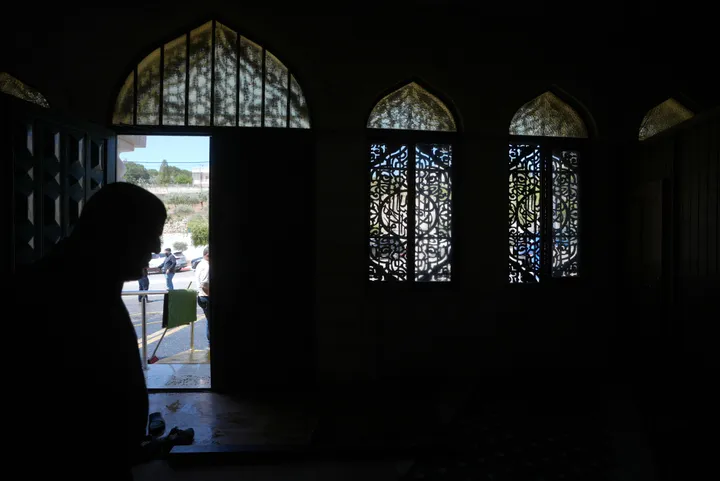
Then there is repression in its plainest form, such as the repeated closure of Jamia Masjid, one of Srinagar's most important mosques. Its gates are locked, and worshippers are turned away.
This kind of control is easy to see and oppose. A uniform sermon is harder to resist because it leaves the minbar functioning while controlling what is said from it.
But the closure of Jamia Masjid and the uniform-sermon proposal are expressions of the same power. One is justified in the name of "order", the other in the name of "harmony" and "unity". Both seek to define the limits of what Kashmiri Muslims may say and do in relation to their faith.
BJP rule has transformed much in Kashmir, but it has also inherited a great deal.
This is worth emphasising because popular discourse often treats Modi's rise to power or the abrogation of Kashmir's nominal autonomy in 2019 as the point where history begins.
Both brought significant changes. However, India's anxiety about the faith of Kashmiri Muslims is older and systemic.
Decades ago, a preacher invited to speak about the life of the Prophet on state-run Radio Kashmir was told to leave out the Battle of Badr, in which the early Muslim community defeated the Quraysh of Mecca.
The officers seem to have feared that a story of beleaguered Muslims prevailing over a stronger adversary would be understood in Kashmir as something more than history.
In some ways, the uniform-sermon proposal is a newer version of the same instruction.