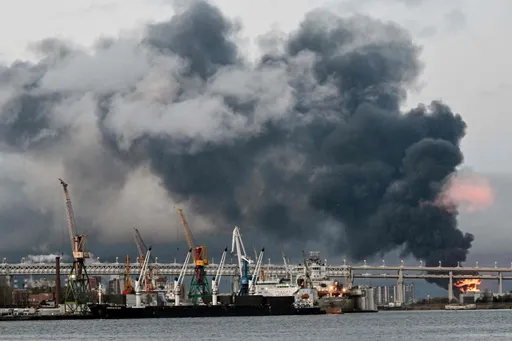
Yemen’s Houthis seized a key Red Sea island in the middle of the Bab al Mandeb Strait on Friday, completing a push to take control of a waterway crucial to Saudi oil exports, a local government official and eyewitnesses told AFP.
The Iran-backed Houthis, who have controlled large parts of northern Yemen for years, launched a large-scale offensive last week against Saudi-backed government forces, scoring a series of victories in fighting that has left hundreds dead.
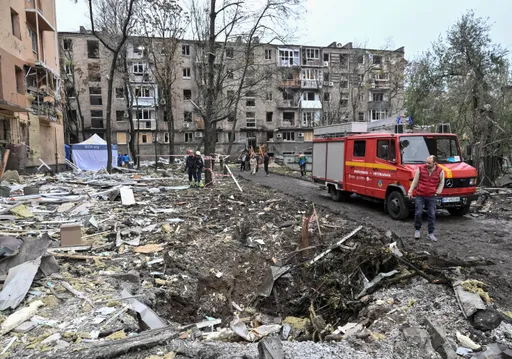
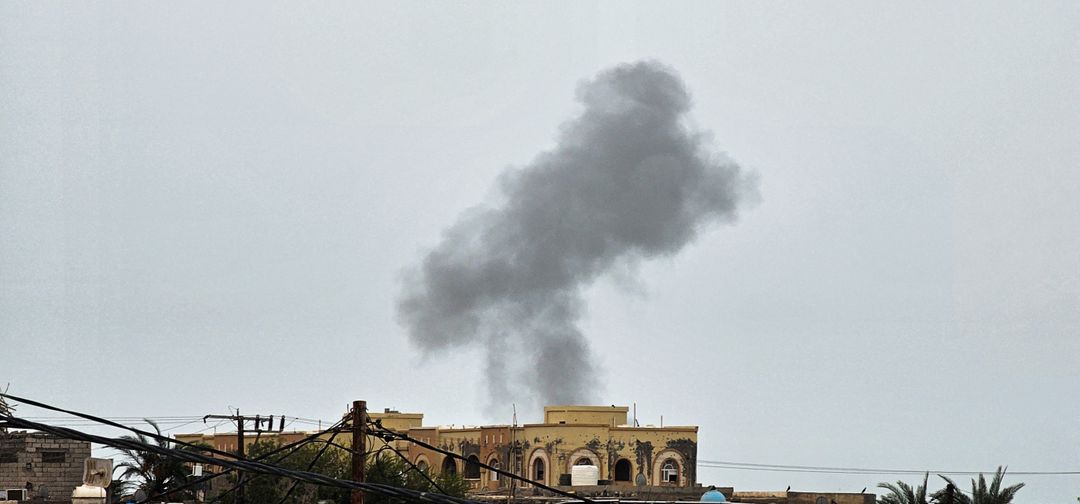
Saudi Arabia has responded with dozens of air strikes, with the latest two hitting Mocha airport, Houthi media reported on Friday.
The fighting in Yemen has taken centre stage in the wider Middle East war, which erupted with US-Israeli strikes on Iran and prompted the Islamic Republic to blockade another waterway crucial to global energy flows, the Strait of Hormuz.
“Boats carrying armed Houthi fighters reached Mayyun Island after government forces withdrew from it yesterday,” the local government official told AFP, referring to an island also known as Perim.
“The Houthis have completed their takeover of the Bab al Mandeb area and Mayyun Island, which is located in the middle of the strait,” the official added, speaking on condition of anonymity.
An eyewitness said gunmen were “deploying along the Bab al Mandeb shore and driving around in military vehicles”.
Bab al Mandeb connects Asia and Europe via the Red Sea and the Suez Canal. It has gained importance as a transit route for oil exports from Saudi Arabia, the world’s biggest oil exporter, since the Middle East war began.
Both Brent crude, the main international benchmark, and US West Texas Intermediate crude were trading above $100 on Friday.
‘Apocalyptic’
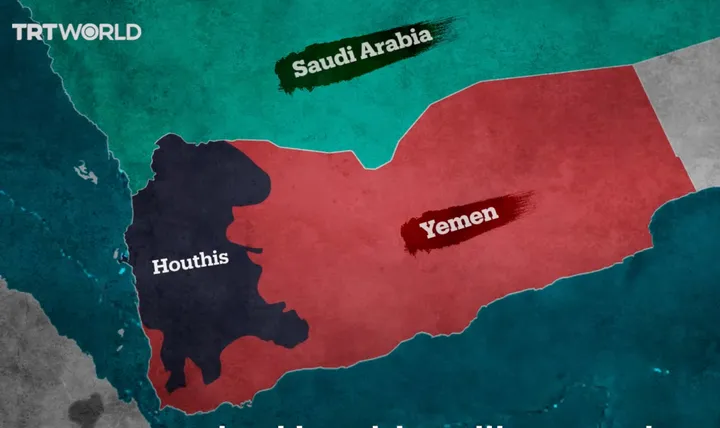
Before the offensive, the Houthis already controlled much of northern Yemen, including the capital, Sanaa, and the major Red Sea port city of Hudaida.
But they did not control any territory directly overlooking Bab al Mandeb.
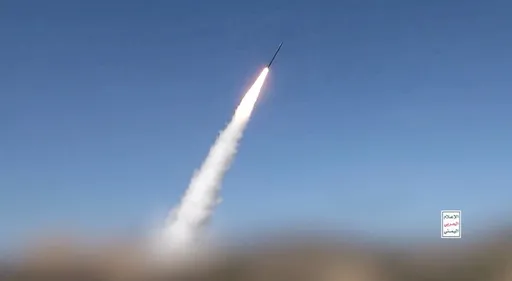
The Houthis have previously used drones and missiles to disrupt shipping in the Red Sea.
Although Saudi Arabia has retaliated with air strikes, it has failed to halt the Houthis’ rapid advance.
“I think the Saudis have tried everything they can to avoid this war, but I don’t think they have any more choice by now,” said Farea Al-Muslimi, a research fellow at the Chatham House think tank.







“The Houthis have pushed it to the limit, and whatever the cost in the Saudi mind thinking right now, it’s just cheaper than it will be in two years.”
The fighting in Yemen has killed more than 500 people since last week, mostly combatants, according to an AFP tally compiled from several sources.
It has also forced nearly 20,000 people to flee their homes, the International Organization for Migration said on Tuesday.
Mohamed, a 46-year-old Yemeni who fled Mocha in the middle of the night, told AFP there was an “apocalyptic” atmosphere in the port city.
Mujahid Tahami, who also fled towards Aden, said some families had fallen victim to “looting by gangs as they tried to flee”.
Humanitarian crisis
Yemen relapsed into war in July after years of relative calm punctuated by sporadic violence and deepening poverty.
The Saudi-led coalition fighting the Houthis said on Wednesday that the group had fired ballistic missiles and drones at several cities in southern Saudi Arabia.
Houthi military spokesperson Yahya Saree said on Thursday that Saudi Arabia had launched 64 strikes on Yemen over the previous 24 hours.
The UN Security Council met on Thursday to discuss the conflict. UN Special Envoy for Yemen Hans Grundberg called for “the active investment of every member of this body to contain what could be the precipice for a far more dangerous conflict”.
The emergency meeting was convened by the United Kingdom, which called on the Security Council to “send a clear and consistent message: the Houthis must de-escalate, cease their attacks, and return to a path towards peace”.
The hostilities began in July when the Houthis allowed an Iranian aircraft to land in defiance of Saudi control of Yemeni airspace.
The government retaliated by striking Sanaa airport, an attack the Houthis blamed on Saudi Arabia.
The continuing exchanges risk plunging Yemen back into a conflict that killed hundreds of thousands of people and triggered one of the world’s worst humanitarian crises.
The Houthis seized Yemen’s capital and forced out the government before fighting the Saudi-led coalition from 2015 until a UN-brokered ceasefire in 2022.