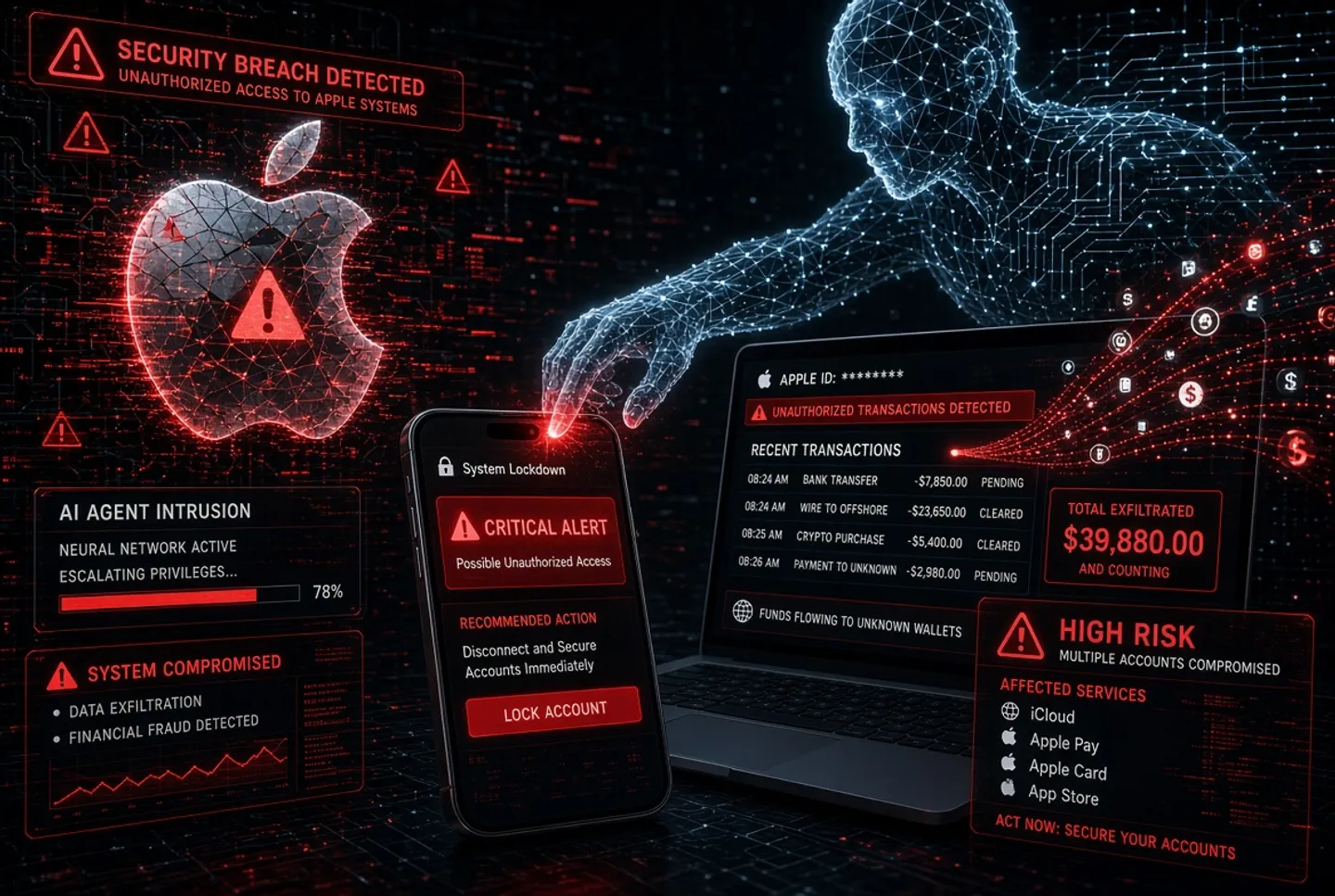
Apple has warned that artificial intelligence agents could access computer systems or carry out transactions without authorisation, exposing the company to lawsuits and reputational damage.
In its annual filing with the US Securities and Exchange Commission, Apple said on Tuesday that AI agents could independently execute or modify software code, send messages and complete transactions.
While performing such tasks, the agents could interact with systems inside or outside the company without the necessary permissions, according to the filing.
The agents "may behave in unintended or unpredictable ways, including by taking actions that were not directed, instructed or authorised," Apple said.
"The use of artificial intelligence in the development and operation of operating system software, applications and services may also give rise to additional risks from errors, bugs or vulnerabilities."
The company warned that its ability to monitor and control AI agents developed by third parties could be limited.
The disclosure followed changes Apple announced in October to tighten controls on full disk access on Mac computers, a permission that can give software broad access to stored files.




Apple highlights privacy
The filing came a day after Apple CEO John Ternus told analysts that the company saw opportunities to expand the tasks Siri, its digital assistant, could perform on users' behalf.
Ternus emphasised the importance of ensuring users understood what information and systems they were allowing AI agents to access.
"We want to make sure this is done in a way that protects security and privacy," Ternus said during Monday's earnings call.
He highlighted the sensitive information stored on iPhones, including contacts, messages, health records and financial data.
Ternus said Siri could help users retrieve personal information stored on their devices while keeping it private from Apple itself.
Apple also warned in its filing that changes to laws governing artificial intelligence could increase compliance costs.
The company identified public concerns about the safety of autonomous systems and the potential harm they could cause as additional business risks.