 Zeynep Conkar
Israeli forces killed five-year-old Hind Rajab alongside her family on January 29, 2024, in what has become one of the most shocking acts of violence against Palestinian civilians in Gaza in nearly three years.
Hind lived through the initial gunfire only to be left trapped among her family's dead bodies in the wreckage of the car, as she waited for a rescue that could never reach her.
Her final phone call pleading for someone to come, was heard by millions of people around the world, and it turned her into a symbol Israel has spent over two years trying, and failing, to bury along with her.
For most of that time, Israel denied its soldiers had even fired on the car, before shifting to acknowledging troops had been in the area, and only this week admitting, for the first time, that its own forces shot at the vehicle.
The military says a criminal investigation is now open into Hind's killing, citing "alleged failures in the coordination of the movement of the Palestine Red Crescent ambulance," alongside a separate probe into the killing of 15 medics and rescue workers in Rafah last year.
Announced two and a half years after Hind’s death, the investigation follows a pattern that the existing evidence has made all too familiar, according to Nasir Qadri, international law practitioner and critical legal scholar at Koc University.
“Every significant Israeli military investigation into the killing of journalists, civilians, and aid workers has followed an identical institutional sequence: initial denial, factual assessment by operational military personnel rather than criminal investigators, and referral to the Military Advocate General,” Qadri tells TRT World.
“This is followed by an extended review and eventual closure without prosecution, usually on grounds of insufficient evidence or legitimate combat decision-making,” he adds.
Why now?
The announcement by the genocidal army comes as Israel faces renewed legal scrutiny over its genocide in Gaza, its strikes in Lebanon and elsewhere.
Under the Rome Statute's complementarity regime, the International Criminal Court is only meant to step in when a state is "unwilling or unable" to genuinely investigate its own nationals, which means a state facing prosecution has a direct incentive to manufacture the appearance of domestic proceedings before the admissibility question is decided against it.
Qadri argues that it is precisely what is happening now, with Israel producing its first public accounting of wartime conduct at the exact moment its legal position before the Court has become hardest to defend.
“Israel is currently subject to active ICC proceedings, faces genocide referrals before the ICJ, and is operating under the July 2024 Advisory Opinion finding its occupation violates peremptory norms,” Qadri says.
“Under Article 17 of the Rome Statute, a state may challenge admissibility before the ICC by demonstrating that genuine domestic investigations are underway.”
The timing of the announcement lines up with Israel losing ground on its case before the ICC, not with any new evidence coming to light, he adds.
The Hind Rajab Foundation, a Brussels-based legal advocacy group that pursues international accountability for Israeli military conduct against Palestinians, has no faith in Israel’s investigation, calling the announcement "little more than a masquerade meant to deflect accountability and preserve its impunity."
That framing captures what two years of watching Israel investigate itself has taught rights groups and the family alike: an internal probe has never once translated into meaningful accountability for Palestinian deaths, and there is little in the record to suggest this case will be the exception.
According to an independent review the foundation cites, of 52 publicly known Israeli military investigations into violations in Gaza and the occupied West Bank, 88 percent were closed without any finding of wrongdoing or left open indefinitely with no outcome ever published, and only one produced a prison sentence.
“We see this new probe as a pattern, not a genuine pursuit of justice, but a charade meant to whitewash crimes against Palestinians,” a spokesperson of the Hind Rajab Foundation tells TRT World.
“The timing is obviously strategic. These announcements come when international pressure is high, and they serve to create the illusion of accountability.”
“Given Israel’s history of such probes ending without meaningful consequences, this appears designed to deflect criticism, not to deliver justice,” the spokesperson adds.
An illusion of accountability
Israel says it referred over 1,000 wartime incidents to its own internal review mechanism and opened 74 criminal cases as a result, but no comprehensive public accounting exists of where most of those cases actually stand.




Israel's own military conceded in 2022 there was a "high possibility" its soldiers killed Al Jazeera correspondent Shireen Abu Akleh, and it still declined to open a criminal investigation, closing the case without a single charge.
Also, the same week Israel opened a criminal probe into Hind's killing, it closed another case on the April 2024 strike that killed World Central Kitchen worker Zomi Frankcom and six colleagues, ruling out any criminal investigation despite the military's own earlier admission that it had killed them "unintentionally."
According to Qadri, Israeli investigations are structurally designed to produce the appearance of accountability while delivering impunity as their default output.
“Out of hundreds of cases raising criminal suspicion that Israeli soldiers killed Palestinian civilians, only three led to indictments, a prosecution rate of 0.87 percent,” Qadri says.
“Israel's own internal documents confirm that investigations do not need to produce convictions, they simply need to exist, exploiting Article 17 of the Rome Statute's complementarity principle to sustain domestic proceedings as a jurisdictional bar against the ICC,” he explains.
The Hind Rajab Foundation has already submitted to the ICC the names of Colonel Beni Aharon of the 401st Armored Brigade, Lieutenant Colonel Daniel Ella of the 52nd Battalion, Major Sean Glass of the “Vampire Empire” Company and 22 other soldiers whose names it is withholding for now.
“We know who killed Hind,” foundation director Dyab Abou Jahjah said, arguing that any real path to justice runs through the ICC and courts abroad rather than Israel’s own military justice system.
335 bullets tore through Hind’s car
Hind was fleeing Tel al-Hawa with her uncle, aunt and four cousins when Israeli forces opened fire.
Her 15-year-old cousin Layan Hamada stayed on the phone with the Palestinian Red Crescent, telling them a tank was closing in and that everyone in the car except her and Hind had been killed.
Seconds later, gunfire erupted again and Layan's screaming stopped.
A Forensic Architecture investigation later found that the Israeli tank was positioned just 13 to 23 metres from the car, close enough for a clear view of the two children inside. It also found that 335 bullets were fired at the vehicle, 64 of them in six seconds while Layan was still on the line.
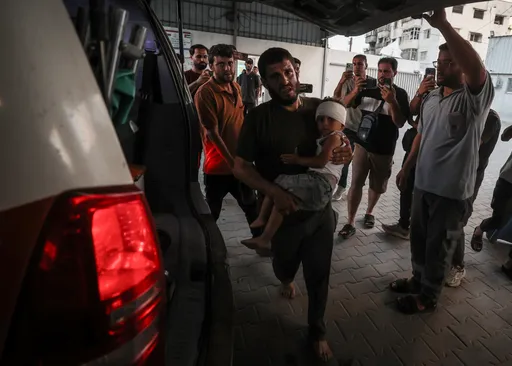
Paramedics Yusuf al-Zeino and Ahmed al-Madhoun drove out to reach Hind and were never heard from again.
Israeli forces held the area for two weeks before anyone could reach the wreckage. When rescue teams finally got in, they found the bodies of Hind and her family beside the burnt-out ambulance, the two paramedics still inside.
For international lawyers, prosecuting those directly involved would not be enough for justice.
“Individualised criminal prosecution, even where it succeeds, cannot deliver what Palestinians and other peoples living under military occupation actually need: self-determination,” Qadri says.
“Real accountability requires prosecuting the decision-makers who designed the rules of engagement, not only the soldiers who carried them out, and dismantling the arms transfers, trade relations, and diplomatic cover.”
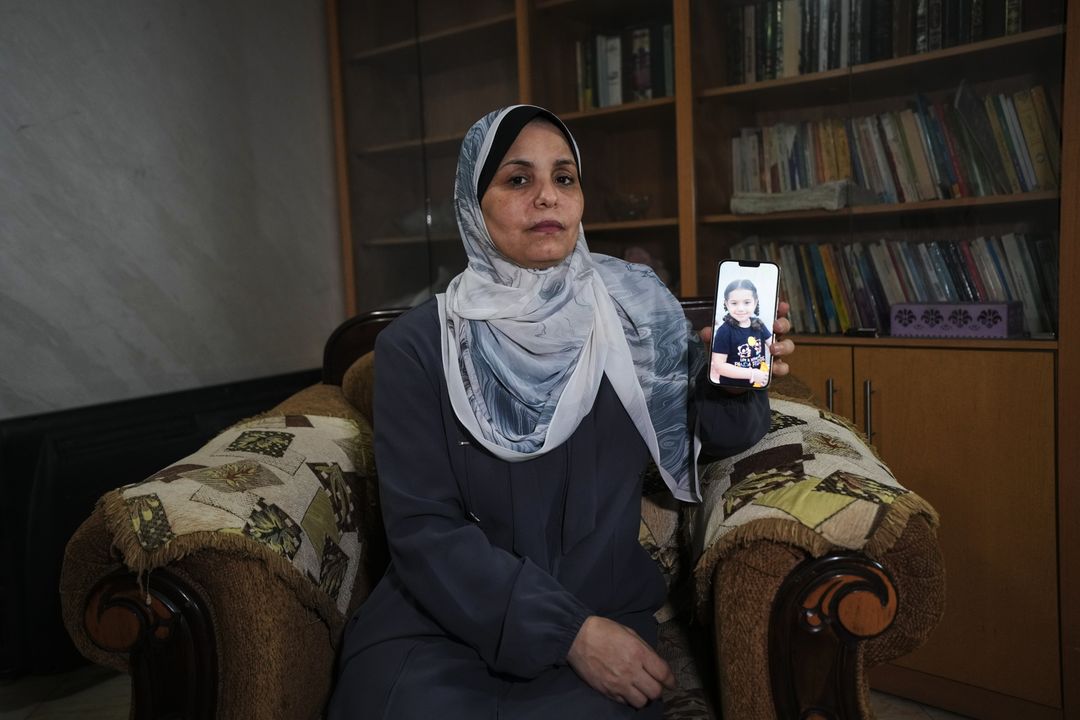
Hind's grandmother has already rejected the Israeli investigation. She told Anadolu that the family has no confidence in Israel's judiciary, that the car was deliberately targeted, and that only an independent international investigation can meet the moment.
"We are not demanding justice only in Hind's name as a child from Gaza," she said, "but in the name of all our child martyrs in Gaza."
Kaouther Ben Hania, the Tunisian director of The Voice of Hind Rajab, also rejected the investigation, calling it “a smokescreen.”
"Look at the cases the Israeli military is choosing to speak about today: they are precisely the ones that international public opinion has made impossible to ignore. And what about all the others? Those whose names we will never know because their deaths never broke through the wall of international indifference?" Ben Hania said.
“Real accountability would require independent, neutral bodies, not the same military that committed the crime. Genuine justice means investigation by the ICC and national courts abroad,” a Foundation spokesperson tells TRT World.
“We have already identified the Israeli unit and commanders responsible and submitted their names and evidence to the ICC, and will continue pursuing complaints in other countries until justice is served.”