 Ahmed Almallahi
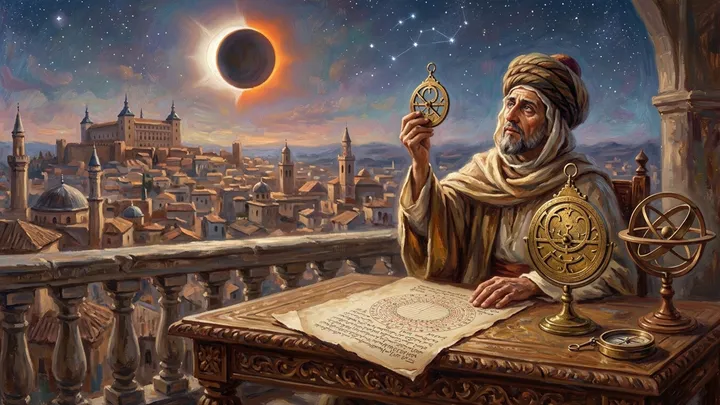
Washington, DC — A total solar eclipse will sweep across parts of the Northern Hemisphere, briefly turning day into night along a narrow path stretching from the Arctic through Iceland and into northern Spain.
The Moon will pass directly between Earth and the Sun, completely blocking the Sun's bright face for observers inside the path of totality.
Outside that band, a partial eclipse will be visible across much of Europe, northwestern Africa and portions of North America.
When and where?
The greatest eclipse will occur at about 17:46 UTC, with maximum totality lasting 2 minutes and 18 seconds near 65 degrees north latitude in the North Atlantic, west of Iceland, according to NASA.
The path of totality, roughly 294 kilometres wide at its broadest, crosses remote areas of northern Russia and the Arctic, eastern Greenland, western and northern Iceland, the Atlantic Ocean, northern Spain and a sliver of northeastern Portugal.
Cities expected to experience totality include Reykjavik, Leon, Zaragoza, Bilbao, Valencia and parts of the Balearic Islands.
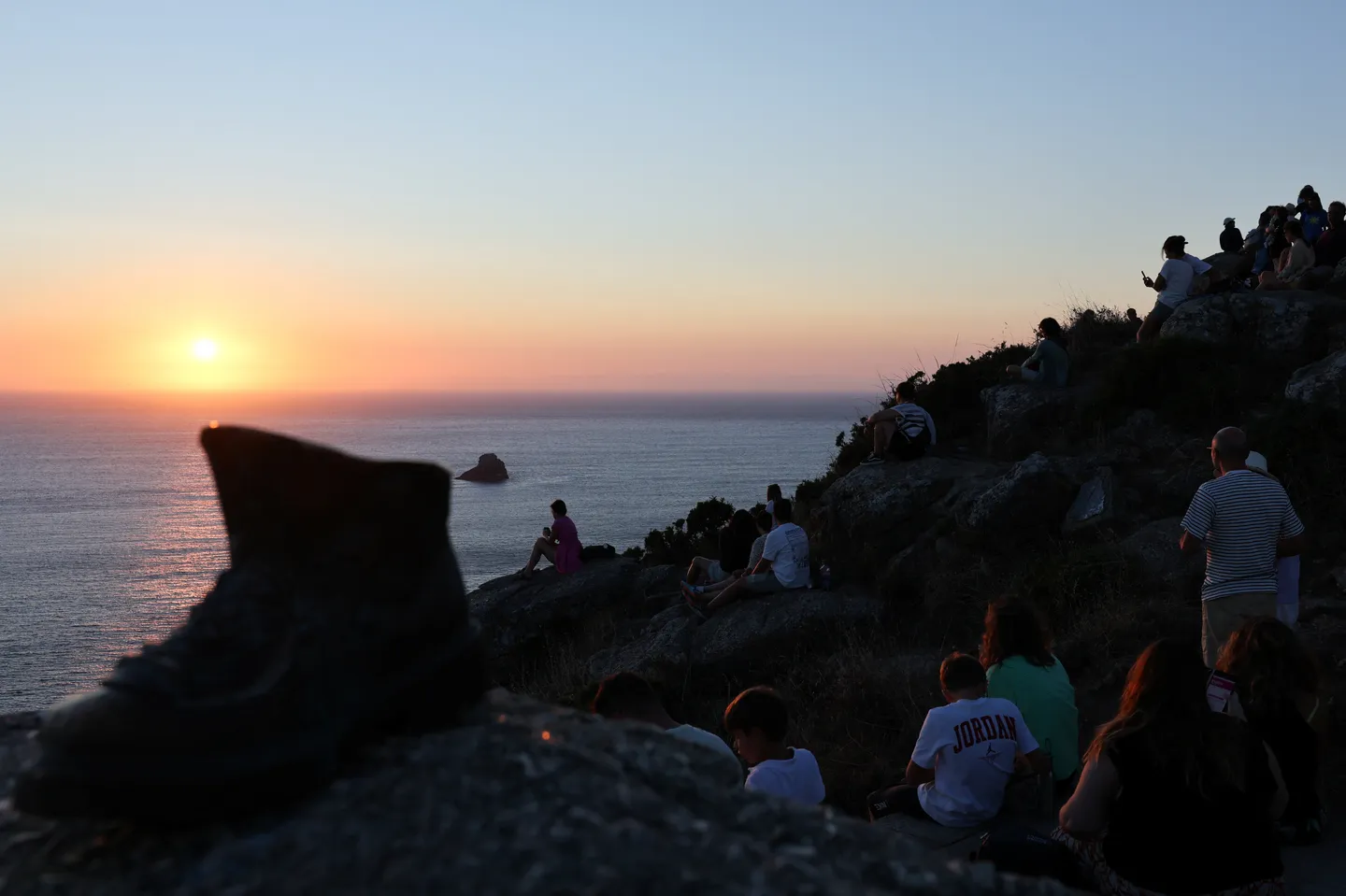
In Spain, the event occurs low on the western horizon shortly before sunset.
Nearly 1 billion people live in areas where at least part of the eclipse could be visible, including about 15 million within the narrow path of totality.
Coverage reaches more than 90 percent across much of western Europe and approaches 99 percent near Madrid and Barcelona, which lie just outside the total path.
Partial views extend to parts of Alaska, northern and eastern Canada, and the northeastern US.
This marks the first total solar eclipse visible from mainland Europe since 1999 and the first over the Iberian Peninsula in more than a century.
It is the only total eclipse Iceland will experience this century.
Why it matters
Total eclipses briefly expose the Sun's outer atmosphere, or corona, which is normally invisible against the Sun's glare.
Scientists use the rare alignment to study solar activity that shapes space weather on Earth.
NASA-funded teams plan to track the Moon's shadow using a high-altitude research jet and scientific balloons launched from Iceland to study how the sudden darkness affects the atmosphere.
"From our unique perspective on Earth during a total solar eclipse, scientists can study the Sun's corona in a way we can't from anywhere else in the solar system," Kelly Korreck, eclipse programme manager at NASA headquarters, said in a statement.
"The Sun impacts our daily life, satellites, and astronauts in space, and we can take advantage of this moment to advance our understanding of that influence."

Amir Caspi, a researcher involved in NASA's eclipse studies, said each eclipse offers new data.
"The Sun is always changing," Caspi said.
"Every eclipse is different. So we could see things we didn't see before."
How to watch and photograph safely
Experts stress that it is never safe to look directly at the Sun without certified eclipse glasses, except during the brief seconds of full totality.
Regular sunglasses do not offer adequate protection.
NASA recommends eclipse glasses that meet the ISO 12312-2 international safety standard, or an indirect method such as a pinhole projector.
Can you photograph the eclipse safely with your phone? Yes, but precautions are required.
Pointing a smartphone directly at the Sun during partial phases without protection can damage the camera sensor, just as concentrated sunlight harms human eyes.
Holding a spare ISO-certified solar filter or eclipse lens over the phone camera lens is necessary during all partial phases.
Only during the brief window of 100 percent totality — when the Sun is completely covered — can eye protection and camera filters safely come off to capture the glowing corona.
Cameras, telescopes and binoculars require their own professional solar filters to avoid permanent equipment damage.
Annual Perseid meteor shower
Iceland has leaned heavily into the rare event.
In Hellissandur, on the Snaefellsnes Peninsula, organisers are hosting the Iceland Eclipse festival with live music and talks from scientists and astronauts timed around totality.
Cruise operators have scheduled voyages along the Iceland-Spain corridor, and tourism authorities have published viewing guides as hotels and rental cars near the path have filled up in recent months.
The eclipse also coincides with the annual Perseid meteor shower, giving skywatchers a secondary celestial event overnight.