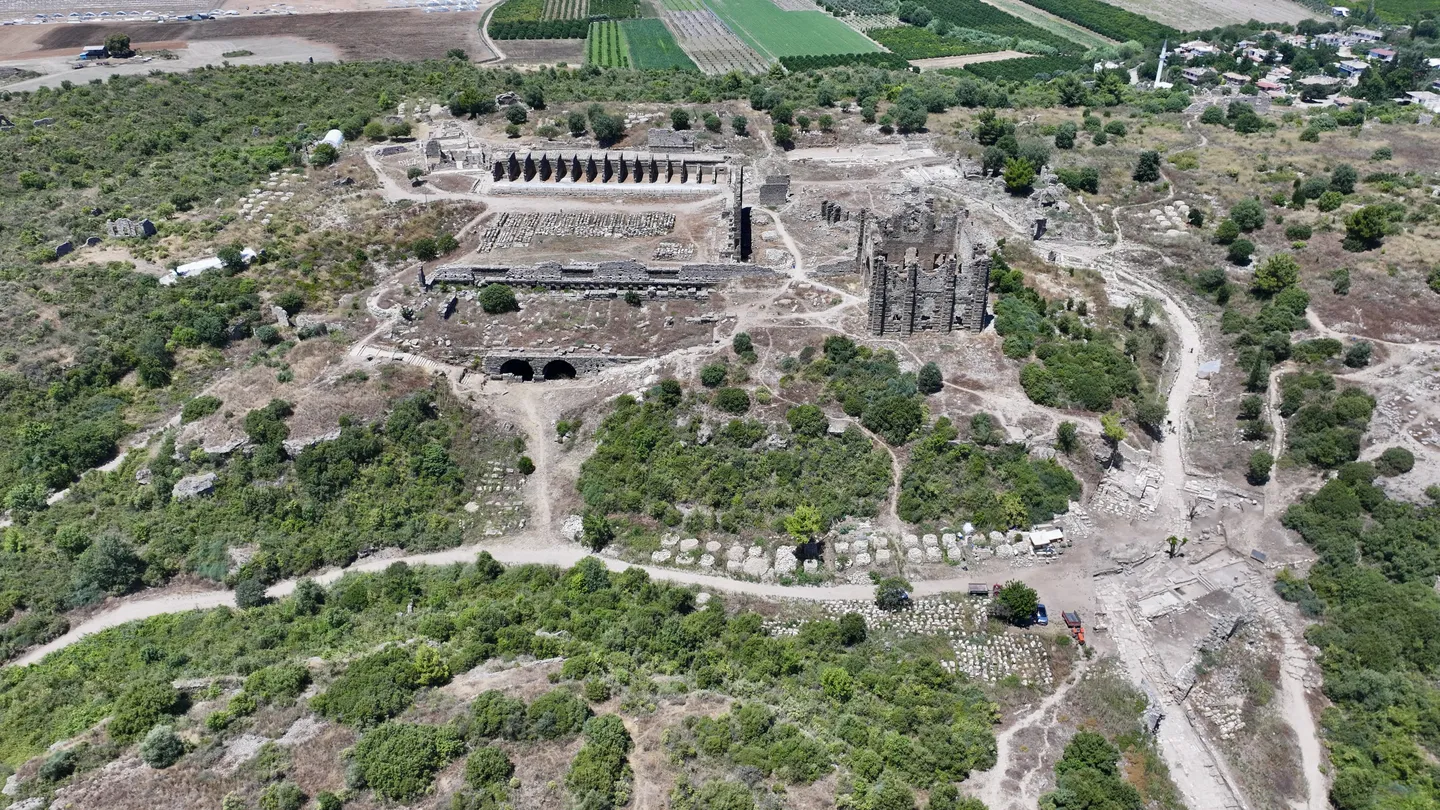
A nearly 2,000-year-old road connecting an ancient theatre and acropolis has been unearthed in the ancient city of Aspendos in Antalya, in the Mediterranean region of the Turkish Riviera.
Excavations at Aspendos, one of the most important ancient cities of the coastal Pamphylia region, have been carried out since 2022 under the leadership of Mustafa Bilgin, an archaeologist at Afyon Kocatepe University, and have gained new momentum under the Turkish Culture and Tourism Ministry's Heritage for the Future Project.
The excavations uncovered some 300 meters (nearly 1,000 feet) of the ancient road linking the theatre to the acropolis, along with significant discoveries including a well-preserved bakery, public buildings, residential houses, a monumental gate, and advanced infrastructure systems.
Speaking to Anadolu, Bilgin said the ancient city, long known for its theatre and aqueducts, will now offer visitors a new experience through its monumental structures located on the acropolis.
Stating that work on Theatre Street is nearing completion after two years of excavations, Bilgin said: "Visitors will now be able to walk from the theatre to the acropolis through an ancient road. In antiquity, this was one of Aspendos' busiest urban transportation arteries. Along the street, we have largely uncovered public buildings, residential houses, and a monumental gate."
Bilgin also said that they identified the eastern necropolis of the ancient city outside the eastern city gate, noting that a Classical-era tomb discovered there indicates the area was used as a cemetery since the late fifth century BCE.






Phoenician coin and glass perfume bottles unearthed
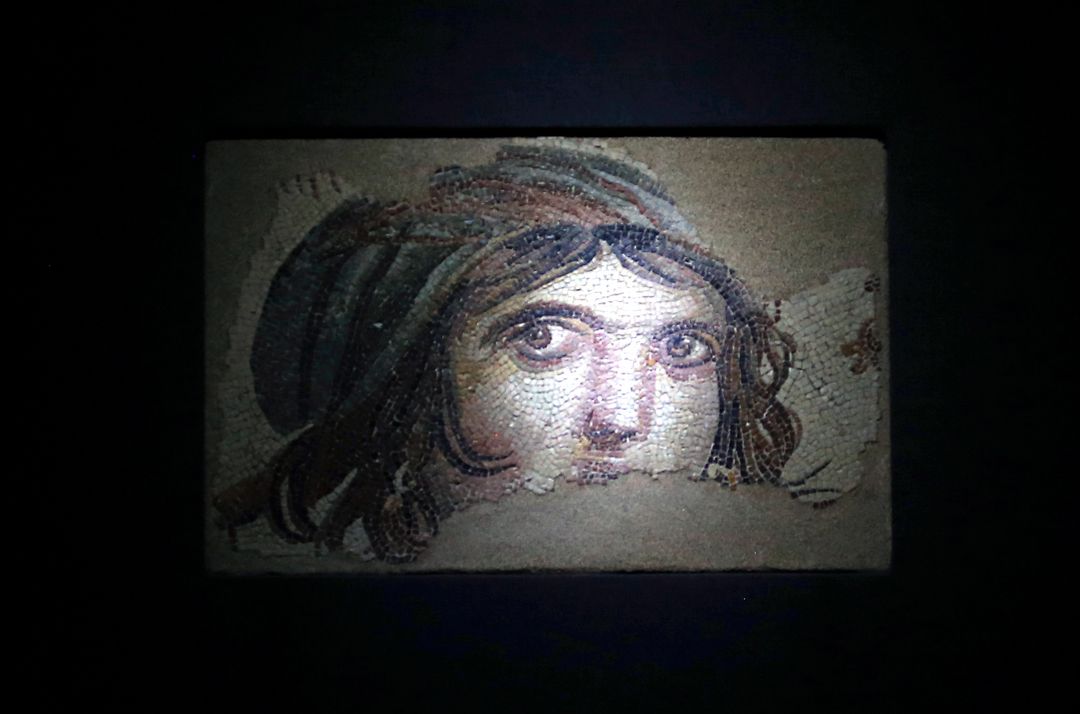
Bilgin said excavations in the Eastern Square uncovered the remains of a mosaic building and highlighted the street's engineering features.
"The street varies between 3 and 5 meters (10-16 feet) wide. We also identified a sewage system about 1 meter (3.28 ft) deep beneath the road. Thanks to the way the stone paving was laid in accordance with the slope, the surface has not shifted, despite earthquakes," he said.
Bilgin added that the excavations also yielded important evidence of Aspendos' commercial life, including a Phoenician coin and locally produced glass perfume bottles discovered in two-story shops and a stoa (covered walkway) complex.
He said the finds demonstrate Aspendos' commercial ties with the Eastern Mediterranean, including ancient Syria and Palestine, while the unearthed bakery provides important insights into daily life and architecture during antiquity.