 Carlos Ortega Sanchez
Spain's stance on Israel's genocide in Palestine has become a major point of contention in the country's parliament.
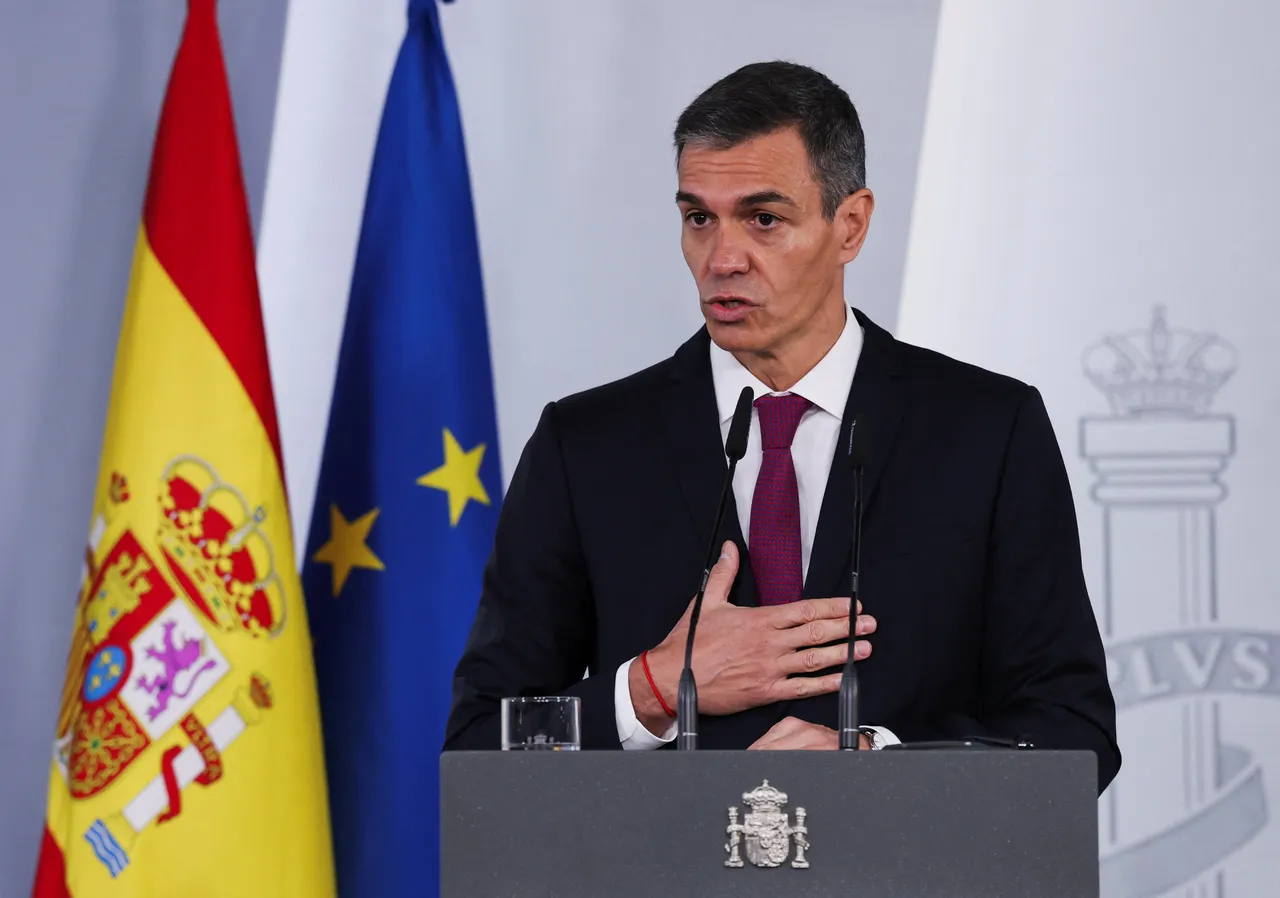
While Prime Minister Pedro Sanchez’s government has taken a tougher stance toward Israel, calling for respect for international law and human rights, Spain’s political right has increasingly shifted the debate away from international legality and the situation facing Palestinians toward domestic political polarisation.
Criticism from Spain’s People's Party and Vox reveals less a coherent alternative foreign policy than a broader tendency to align with Israel — even when that position appears to conflict with international human rights concerns and with stances the Spanish right itself defended in the past.
The right-wing response
When Sanchez announced on April 19, 2026, that Spain would propose to the European Union suspending the Association Agreement with Israel, the People's Party (PP), the main opposition party, did not respond by discussing the initiative's legal or diplomatic merits.
Its secretary general, Miguel Tellado, declined to comment on the agreement and accused the Spanish PM of seeking "an external enemy" to distract from his internal problems.
The statement is revealing: faced with a proposal also supported by Ireland and Slovenia, and based on Article 2 of the EU-Israel agreement, the Spanish right's main response was to turn a foreign policy issue into a domestic battle.

The proposal from Spain, Ireland, and Slovenia called on the EU to consider suspending the Association Agreement with Israel in response to executive, military, and legislative decisions that, according to the three governments, violate human rights and international law.
Article 2 of the agreement mandates respect for these principles, and the matter was to be addressed by the Foreign Affairs Council.
This episode helps to clarify the Spanish debate. While the government is seeking to articulate a more visible position on Palestine, international law, and European autonomy, the country's right wing is unable to offer a coherent foreign policy alternative, criticising the Sanchez administration's measures from a position aligned with Israel.
Since recognising the State of Palestine in May 2024, the Spanish government has attempted to establish a recognisable stance: advocating for the two-state solution, referencing the 1967 borders, explicitly rejecting the actions of the Palestinian group Hamas, and exerting diplomatic pressure on Israel.
Sanchez presented that recognition as a decision “not against Israel,” but rather one aimed at peace and linked to the United Nations.
This position does not automatically make Spain a fully consistent actor, but it does demonstrate a clear orientation: applying the same legal language to Palestine that Europe uses in other conflicts, such as the one in Ukraine.
The Spanish approach has not been limited to symbolic gestures either.
In September 2025, the Sanchez government announced measures within the framework of urgent actions “against the genocide in Gaza and in support of the Palestinian population” to legally consolidate the arms embargo on Israel, prohibit the transit through Spanish ports of fuel destined for its armed forces, ban products from illegal settlements, and reinforce humanitarian aid to Gaza.
However, this policy should not be presented as flawless. Pro-Palestinian organisations and critical media outlets have denounced the fact that the embargo has not completely severed arms relations with Israel.
The Centre Delas, a research centre specialising in militarism and the arms trade, has pointed to contracts, imports, industrial cooperation, and exceptions that call into question the true extent of the break, while pro-Palestinian groups have reported that Israeli forces had 450 soldiers registered as Spanish citizens, a fact that has fueled calls for investigations into possible crimes committed in Gaza.
But this criticism aims to demand greater consistency from the government, not to abandon the defence of Palestine or to delegitimise the pressure on Israel.
Furthermore, the Spanish position resonates with broad social sentiment.
The Elcano Royal Institute reported in 2024 that there was majority support for European recognition of the Palestinian state, and a 2025 poll found that a majority of Spaniards considered Israel's actions in Gaza to be genocide and supported sanctions and an arms embargo.
The Spanish right's erratic shifts on Palestine
The paradox is that recognising Palestine wasn't always a red line for the Spanish right.
In 2014, during the government of then-President Mariano Rajoy of the People's Party (PP), Congress almost unanimously approved a bill urging the government to recognise the State of Palestine (which wouldn't occur until 2024).
The vote passed with 319 in favour, 2 against, and 1 abstention. The PP supported a position that fit within the two-state solution framework.
Shortly after October 7, 2023, that consensus was undermined when the leader of the PP, Alberto Nunez Feijoo, declared: "We are shaken by the news coming from Israel after the indiscriminate bombing of the civilian population from Gaza. We condemn this massive attack by Hamas and express our solidarity with the victims. Terrorism is the enemy of all and must be defeated".
Leaders of the People's Party (PP) began to warn that recognising Palestine would reward Hamas.
From then on, the PP went from supporting Palestinian recognition, the two-state solution, and respect for international law, to adopting a position aligned with Israel.
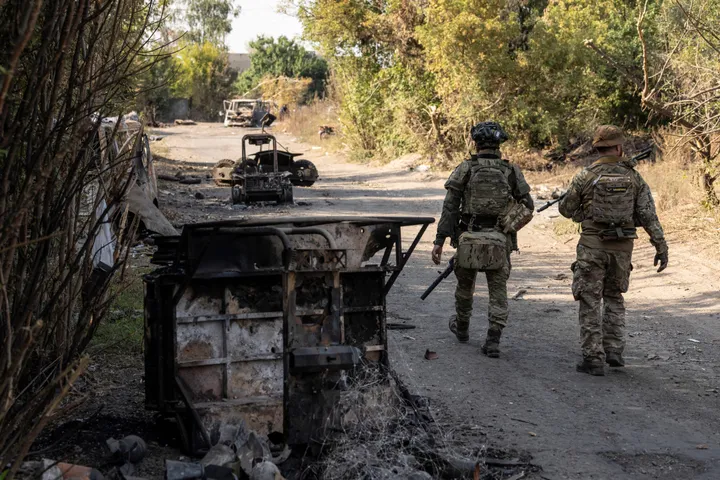


Vox has taken this logic even further. For the far-right, recognising Palestine is tantamount to siding with Hamas.
The arms embargo is portrayed as a threat to Spanish interests. Thus, their discursive consistency rests on an automatic alignment with the Israeli security narrative, even after the International Criminal Court issued arrest warrants for Prime Minister Benjamin Netanyahu for war crimes and crimes against humanity.
This alignment becomes even more striking when Israeli actions directly affect Spanish interests.
In April 2026, Israeli soldiers detained a Spanish peacekeeper from the United Nations mission in Lebanon for almost an hour, prompting the Ministry of Foreign Affairs to summon Israel's charge d'affaires and the Ministry of Defense to denounce a violation of international law.
The reaction from a segment of the right wing was revealing: the PP's parliamentary spokesperson, Ester Munoz, downplayed the incident, likening it to a traffic stop.
For a political group that constantly appeals to patriotism, trivialising the detention of a Spanish soldier on a UN mission shows how far the defence of Israel can take precedence over even a basic understanding of national interest.
Even the defence of religious freedom reveals the lack of ideological coherence on the Spanish right.
When Sanchez accused Israel of preventing the Catholic celebration of Palm Sunday in Jerusalem within the framework of religious freedom, Vox accepted the explanations of Netanyahu's government, and the People's Party failed to issue a clear condemnation through its official channels.
Spanish conservative politicians, who often invoke Christianity as a defining characteristic, were far more cautious when criticism threatened to upset Israel.
From Gaza to Trump: Nationalism without autonomy
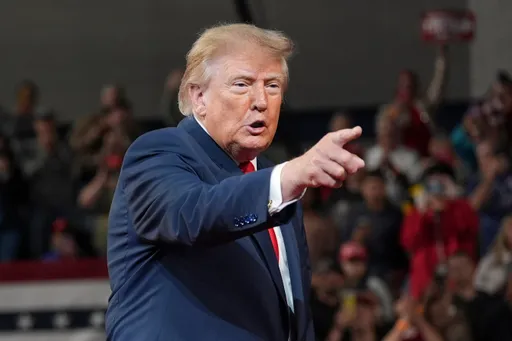
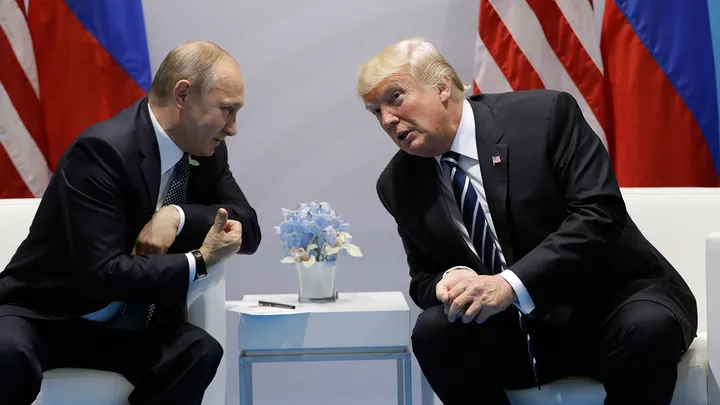
The same pattern emerges with US President Donald Trump.
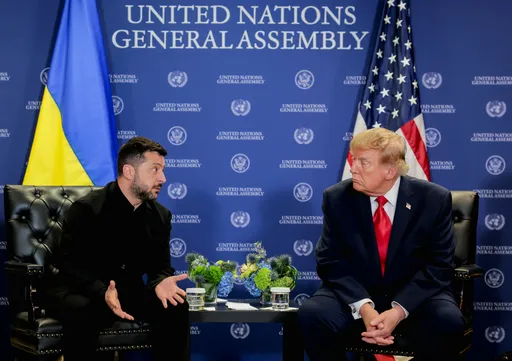
When he threatened Spain for refusing to meet NATO's 5 percent of GDP target for military spending, the People's Party (PP) and Vox did not adopt a common position against external pressure, instead blaming Sanchez for the deterioration of relations with Washington.
Trump even suggested that he would make Madrid pay more in trade terms for not accepting the increase in military spending, despite trade policy falling under the purview of the European Union.
This reveals a significant contradiction. The Spanish right tends to appropriate the language of sovereignty, nationhood, and national interest in its discourse.
However, when an external power exerts pressure on Spain, its response is not always to defend an autonomous Spanish position, but rather to turn that pressure into an argument against the government.
Nationalism, in that case, becomes selective: resolute against internal adversaries, yet far more cautious in the face of external threats.
The leak of an internal Pentagon email discussing measures against Spain for its disagreements regarding operations linked to Iran deepened this tension.
Among the options discussed was even a hypothetical suspension of Spain from NATO, although the alliance lacks a clear procedure for expelling or suspending a member. In such a context, a responsible opposition could criticise the government while rejecting any disproportionate pressure on Spain.
In Palestine, the right wing accuses Sanchez of breaking with the West by demanding accountability from Israel.
Regarding Trump, they accuse him of jeopardising relations with the United States by refusing to accept his military or trade demands without reservation.
In both cases, foreign policy is reduced to a narrow notion of alignment: with Israel when security is invoked, and with Washington when the Atlantic Alliance is invoked.
The Spanish far-right is wrong to criticise Sanchez's foreign policy, not because the government is beyond reproach, but because it conflates criticism with subservience.
A serious opposition could highlight the contradictions of the embargo, demand greater transparency over military contracts with Israel, or discuss the costs of Spain's policy within NATO.
Abandoning the development of an independent foreign policy and subordinating the foreign policy of the PP and Vox to alignment with Israel demonstrates a lack of a roadmap.
A party like the PP, in opposition yet with a strong chance of governing Spain, should have a coherent foreign policy perspective.
When everything becomes an extension of the polarisation against Sanchez, Spain ceases to act as a strategic subject and begins to echo other people's priorities.