 Zeynep Gizem Ozpinar
The European Commission officially closed a funding tap to Athens on 31 August 2026.
Nearly 36 billion euros (about $42 billion) in grants and low-interest loans allocated to Greece under the European Union’s Recovery and Resilience Facility (RRF), the largest financial instrument of the post-pandemic recovery process, have now reached the end of their funding period.
With this closure, Greece is once again displaying a habit that has persisted within the union for decades: a reflex to postpone from one crisis to the next and leave problems to the last minute instead of using resources efficiently.
Greece’s position shows enough continuity to deserve the description of the union’s spoiled child: a member state profile that is met with new packages and new displays of understanding rather than punitive sanctions, even when it commits irregularities.
This habit dates back to 1981, the year Greece joined the community. Athens has since become one of the largest beneficiaries of Brussels’ regional development and cohesion policies.
Yet the gap between resources transferred over 45 years of membership and the added value created in the country’s economy has never closed.
Despite considerable financial transfers, Greece has continued to face serious difficulties in raising prosperity and competitiveness.
New money, same weakness
The RRF, which expired on 31 August, was implemented in Greece through the Greece 2.0 national plan, which took effect in February 2021.
According to Commission data, the plan includes 18.22 billion euros ($21.14 billion) in grants, 17.73 billion euros ($20.58 billion) in loans, 104 investment streams, and 77 reforms.
Corresponding to 19.6 percent of the country’s 2019 gross domestic product, the allocation marks the highest share relative to national income across the union.
A resource of such size would have been expected to transform the economy’s production capacity, the functioning of public administration and the competitiveness of the private sector in a lasting way over a five-year implementation period.
Yet the picture that has emerged today shows a serious disproportion between the size of the resource and the result obtained. The problem stems from how Athens has managed that resource.
Over five years of implementation, it was possible to roll out investments gradually, apply reforms in a planned manner and strengthen administrative capacity. Instead, in the days before the closure, the Greek government launched a last-minute mobilisation to complete 123 milestones and targets.
This concentration of activity in the programme’s final weeks raises serious questions about Athens’ capacity for planning, coordination and implementation. More importantly, it shows that Greece’s long-standing approach of leaving the problem to the final stage has carried over into managing EU funds.
Those 123 items are decisive for releasing roughly 6.7 billion euros ($7.77 billion) in the final payment request to be submitted in September. So the issue goes well beyond completing a few bureaucratic procedures.
Entitlement to billions of euros has been compressed into the programme's closing days.
According to an Alpha Bank assessment, by mid-2026 53 percent of milestones had been completed and 68.5 percent of the funds had been received. At first glance, a disbursement rate of 68.5 percent can be read in Athens’ favour.
Yet a big difference exists between drawing funds from Brussels and having those funds produce a tangible transformation in the Greek economy.
Payments reaching final beneficiaries remained at about half of the grant budget and slightly above a third of the loan budget.
That figure shows the distance between money entering the treasury and money finding a real counterpart in the economy. Athens’ capacity to draw resources and convert them into productive investment do not appear to be at the same level.
The distribution of the resource is also contentious. Thirty companies that took the largest share of the loan arm reached 6.7 billion euros ($7.77 billion) and absorbed more than 40 percent of the package.
Although small and medium-sized enterprises accounted for more than half of the contracts, their share by value remained one-sixth.
Support for large companies is beside the point here. The question is whether European resources are being used to change existing balances of power in the Greek economy.
If actors with already high economic capacity secure more financing while the share of small and medium-sized enterprises remains limited, the fund’s goal of broad-based economic transformation must be questioned again.
For this reason, the narrative that Athens has managed the fund successfully is becoming less convincing.
A government collecting a significant portion of the resource can count as a technical achievement.
Political and economic success, however, is measured by whether that money strengthens production capacity, competitiveness and public administration. In Greece, a clear distance has opened between those two indicators.
Moreover, this approach recalls a broader problem that has recurred throughout Greece’s EU membership.
In the three memorandum programmes between 2010 and 2018, for instance, support transferred by the eurozone, the ESM and the IMF reached 288.7 billion euros ($334.8 billion). Similar consistency was not seen in implementing structural reforms, strengthening public administration or using resources efficiently.
Brussels’ responsibility should also be discussed here.
While providing financial assistance, the EU holds oversight mechanisms covering how resources are used, yet it avoids operating them in ways that would produce political consequences. Indeed, the Commission’s 2026 country-specific recommendations, as in earlier cycles, still call for stronger governance in managing EU funds.





Even so, the absence of substantial political pressure, despite years of delays and administrative problems in Greece, widens Athens’ room for manoeuvre.
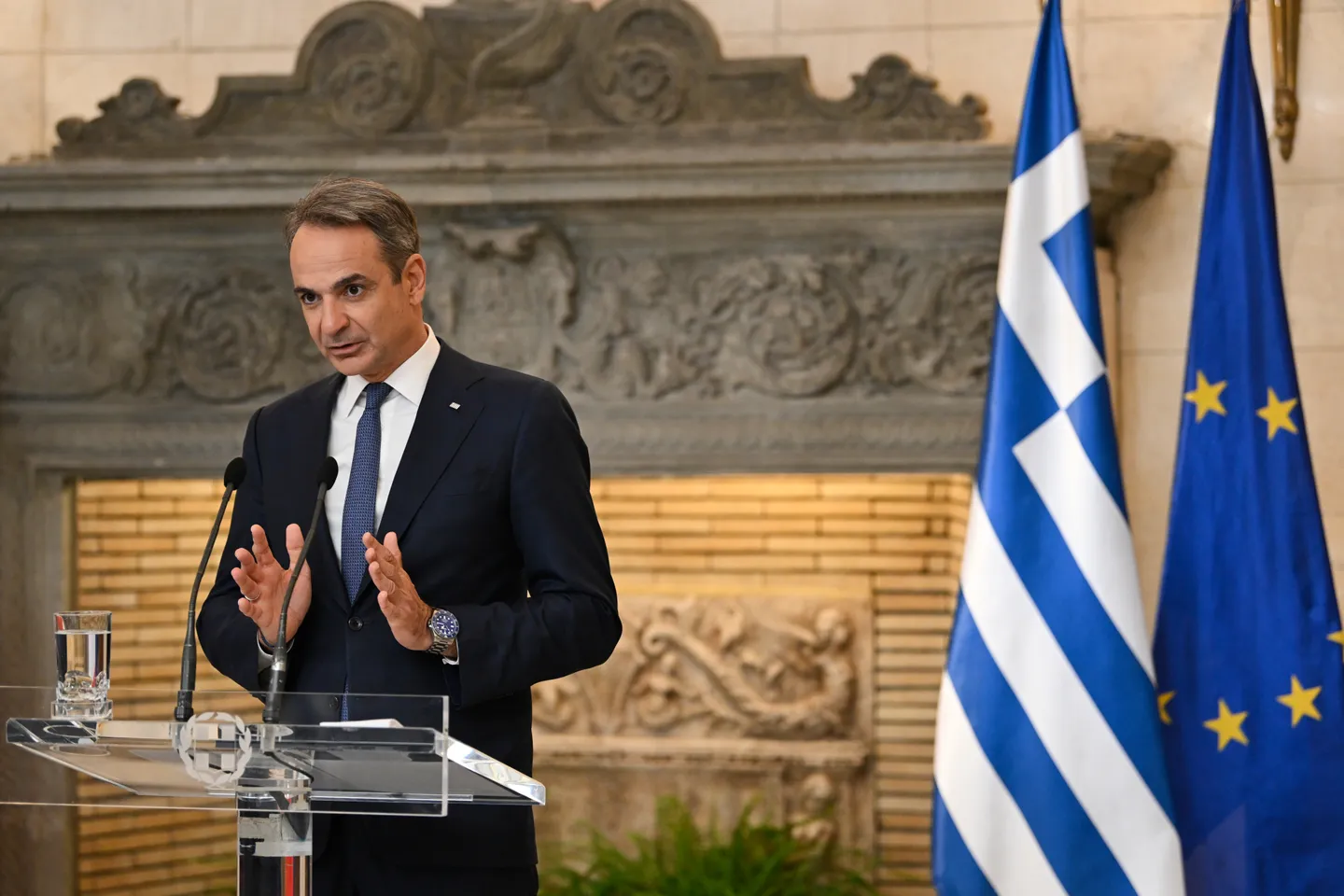
Despite all this, the Mitsotakis government is preparing to present 31 August as a success, even though there is little concrete result to show beyond a closed timetable.
That same language appears in the promotion of the 16.6 billion euro National Development Programme that will replace the fund.
An approach that boasts about the size of the resource while refusing to open its management style to debate will carry the new programme to the same point of failure.
Systemic corruption
Greece’s weakness in fund management does not stop at delay and inefficiency; it extends into outright irregularity and corruption. Its most concrete example occurred at OPEKEPE, the Greek payment and control agency that distributes more than 2 billion euros a year in EU farm support to hundreds of thousands of farmers.
When the common agricultural policy shifted subsidy calculation from livestock numbers to land area in 2014, a land registry system left unfinished for years allowed applicants to claim entitlements by presenting land in another part of the country as their own.
Chronic administrative weakness turned into direct infrastructure for plunder in agriculture. So why did irregularity spread over years become visible only in 2025?
Because Paraskevi Tycheropoulou, who headed the agency’s internal audit unit, was removed from her post after identifying and reporting suspicious tax numbers, and she chose to speak out.
She took the removal decision to court and also described, before the parliamentary inquiry committee, the pressure applied to employees who resisted opaque practices, saying the threats reached as far as her home telephone.
In 2026, the Athens Court of First Instance annulled the removal decision and ordered her reinstatement.
According to her testimony, the official who first reported the irregular payments in Crete had also faced a disciplinary investigation and threats. In other words, the problem lay in sidelining those who noticed, not in nobody noticing.
An audit system that suppressed an internal warning turned the matter from an administrative fault into a political choice.
Opening the case became possible only when the issue was carried to a body Athens could not interfere with, the European Public Prosecutor’s Office (EPPO).
Prosecutors opened their first case in March 2025. EPPO filed indictments against 100 suspects over 2.9 million euros ($3.37 million) in false declarations between 2017 and 2020, mostly Cretan stockbreeders, yet the real earthquake came later.
Searches in Athens and Crete revealed that between 2019 and 2022, numerous people presenting themselves as young or new farmers obtained payment entitlements from the national reserve through public pastures they had no ownership relationship with.
In the files, archaeological sites and military facilities were registered as pasture, and the slopes of Mount Olympus as banana plantations.
While a declaration-based system should have been run with cross-check mechanisms, those declarations turned into payments for years without meeting a single filter.
As events escalated, the government abolished OPEKEPE and transferred its functions to the Independent Authority for Public Revenue.
Closing the agency, however, did not remove the financial consequence. In June 2025, the European Commission applied a financial correction of 415 million euros ($481.6 million) through decision 2025/1147 over systemic control weaknesses in the 2016-2023 period.
Neither the officials running the agency nor those who received irregular payments carried the bill, and the deduction was charged directly to the national budget.
Producers ended up bearing the main cost. After officials examined applications one by one, payments were disrupted, and by the end of November thousands of tractors blocked roads in protest over a shortfall reaching 600 million euros ($696.3 million).
The geographic distribution of the figures aggravated the political bill. Eighty percent of pasture subsidies between 2017 and 2020 went to Crete, where Prime Minister Kyriakos Mitsotakis’ family has held political influence for over a century, and while the number of livestock farmers fell nationwide, 13,000 new farmers were registered on the island between 2019 and 2025.
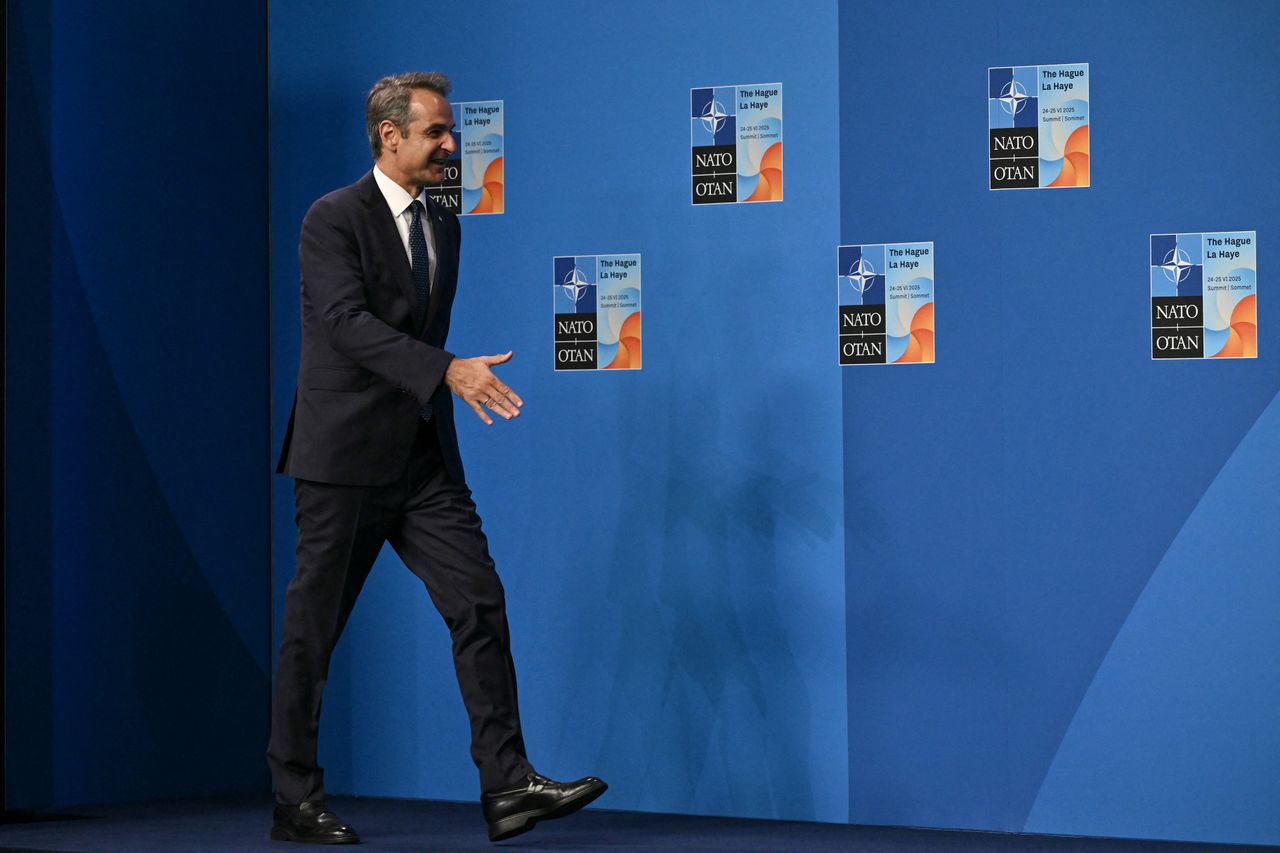
Although Mitsotakis stressed that the scandal began before his time, his statement tying the problem to the country’s deep-rooted culture of favouritism confirmed in his own words the structural dimension of an issue that goes beyond a single government.
In 2026, the investigation reached the level of political responsibility. After the European Chief Prosecutor requested the lifting of immunity of 11 members of parliament on 1 April, three ministers left office two days later, and parliament lifted the immunities on 24 April.
At the end of June, a court in Athens found 57 Cretan producers guilty of receiving 1.73 million euros ($2.01 million) in subsidies by declaring land in Kastoria without any ownership relationship. In July, EPPO issued an indictment against 22 people, including four sitting members of parliament and the agency’s former head.
That the will to hold anyone accountable came from a Luxembourg-based prosecution office rather than from national institutions revealed the scale of the matter on its own.
In fact, the outcome reflects the country’s general governance performance. In Transparency International’s 2025 Corruption Perceptions Index, Greece ranks 56th among 182 countries and, with 50 points out of 100, sits among the union’s weakest members.
So the scramble to close the Recovery Fund and the organised corruption in farm subsidies stem from a common root: weak institutional oversight, a bureaucratic culture open to political favouritism, and Brussels meeting these weaknesses with broad tolerance for years.
Ultimately, the picture that emerges shows how unevenly the EU’s discourse of fiscal discipline is applied among member states.
While imposing extremely strict standards on candidate countries, the union brushes aside decades of administrative weakness and irregularity in one of its long-standing members with relatively light sanctions.
As long as Brussels continues to approach this with tolerance, similar scandals will be no surprise.