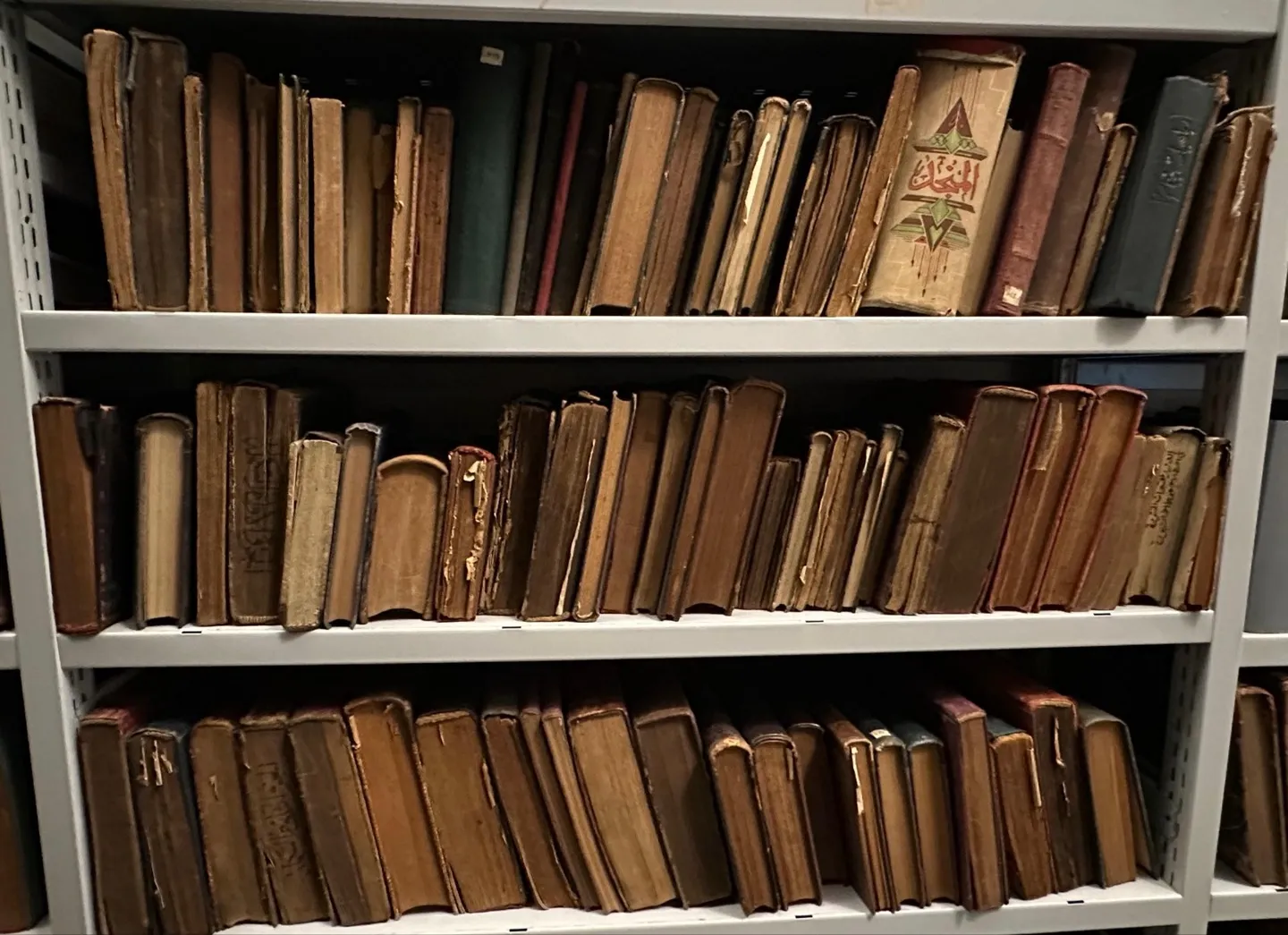
Artificial intelligence (AI) companies are increasingly buying thousands of used books, digitising them to train large language models and destroying the original copies, according to media reports, fuelling debate over copyright protections.
Since early this year, antiquarian booksellers across Europe have reported unusually large orders from Canadian company Zoom Books, according to US, German and Swiss media outlets.
Booksellers said the company has primarily sought nonfiction and academic titles published in the 1970s, often purchasing dozens or even hundreds of books from individual sellers. The books are reportedly shipped to temporary warehouses in Germany before being transported to Canada and the United States.
Industrial destruction
According to The Washington Post, many of the books undergo "destructive scanning", a process in which bindings are removed, pages are scanned using high-speed industrial equipment and the remaining physical copies are recycled.
The newspaper also reported that AI company Anthropic spent tens of millions of dollars under its "Project Panama" initiative to acquire and digitise millions of printed books. Court documents cited by the newspaper said the company hired specialists who had previously worked on Google's large-scale book digitisation project.
Zoom Books denied participating in the digitisation and destruction of books for AI development.

Copyright concerns intensify
The reported practice has intensified debate over whether existing copyright laws adequately regulate the use of books for AI training.
In a recent blog post titled AI Is Eating the Book World, Jannis Lennartz of Humboldt University in Berlin said the growing demand for used books reflects unresolved legal questions and broader cultural concerns.






Lennartz said AI developers are increasingly turning to physical books as digital sources of training material become exhausted. He said recent US court decisions involving Anthropic and Meta generally favoured AI companies under the fair use doctrine but did not grant unrestricted permission to use copyrighted works in every circumstance.
He also noted that European law takes a different approach. Rather than relying on the US fair use doctrine, the EU's Digital Single Market Directive permits text and data mining under certain conditions while allowing rights holders to opt out.
According to Lennartz, uncertainty remains over books published before the directive entered into force because many older editions contain no opt-out declaration and some publishers or authors are no longer able to exercise those rights.
The debate follows earlier litigation over Google's digitisation of more than 40 million books. US courts ultimately ruled the project constituted fair use because the searchable database and limited text previews were considered transformative and did not replace the market for the original works.

Authors push back
Authors and publishers have continued to oppose the expanding use of copyrighted material for AI development. Earlier this year, thousands of writers published a symbolic blank book titled Don't Steal This Book to protest the use of their work without permission or compensation.
The issue has also reached digital publishing platforms. In December 2025, Amazon introduced a Kindle feature allowing readers to interact with books using AI.
Some authors raised concerns that copyrighted material could be used to train AI models. Amazon, however, said the feature does not use book content for model training and described it as an extension of Kindle's existing search functions.